Introduction
Since June 2023, UAE-based businesses have faced a 9% corporate tax on taxable income above AED 375,000 — narrowing the tax gap that once made the UAE uniquely attractive for international structuring. That shift has prompted many founders to reassess where their next entity should sit.
Singapore keeps coming up as the answer. It complements the UAE rather than replacing it. Singapore ranked #1 in the 2026 IMD World Competitiveness Rankings and #1 on the Global Talent Competitiveness Index 2025, making it the most credible Asia-Pacific base a UAE entrepreneur can add to their existing setup.
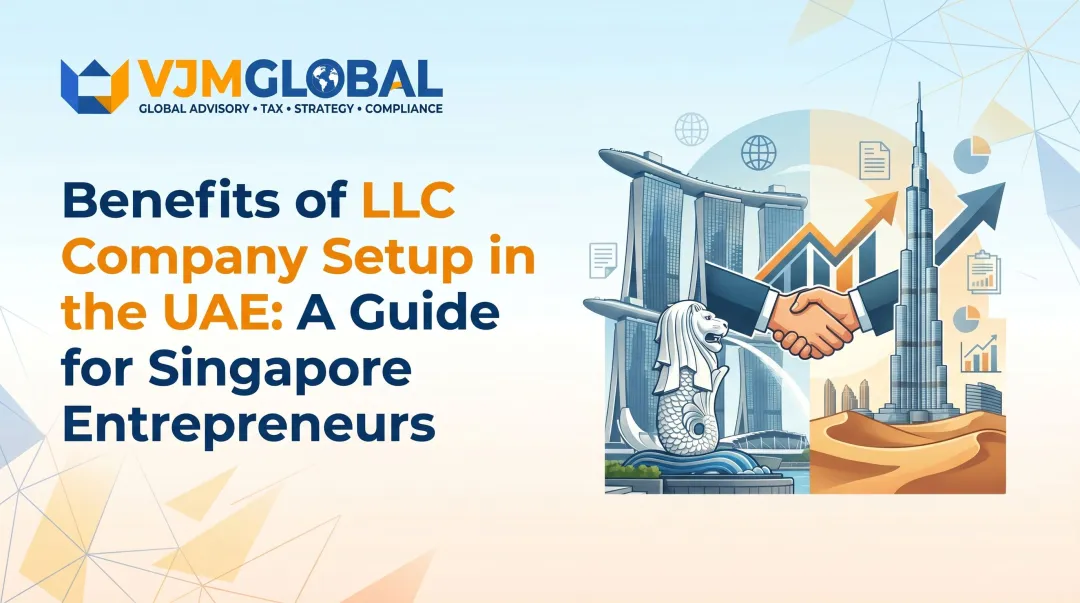
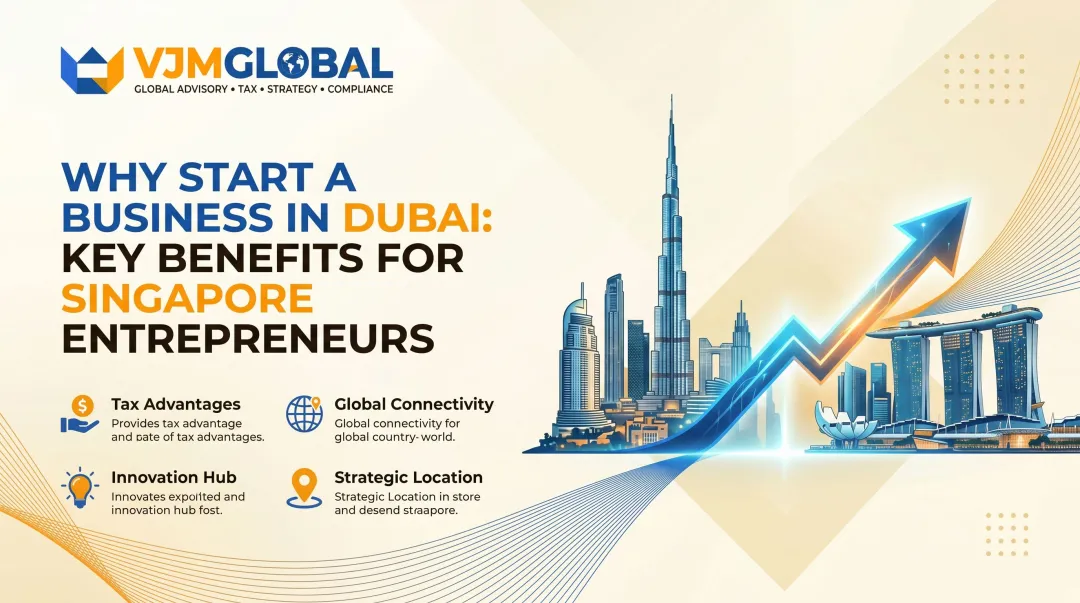
A UAE entity handles MENA. A Singapore entity handles Asia-Pacific. Together, they cover two of the most commercially active regions in the world from two rule-of-law, English-friendly jurisdictions.
The two markets already share a bilateral trade relationship worth S$27.94 billion in 2025 — and that foundation makes the dual-hub structure more practical than it might first appear.
This article covers what UAE founders need to know: Singapore's tax structure, ASEAN market access, registration mechanics, legal advantages, and how the dual-hub model works in practice.
Key Takeaways
- Singapore's Start-Up Tax Exemption (SUTE) cuts a qualifying startup's effective tax rate to ~6.4% on the first SGD 200,000 of income
- UAE nationals can own 100% of a Singapore company — no local partner required, just a resident director
- Singapore has 29 implemented FTAs, including RCEP and CPTPP, covering the largest trade blocs in Asia-Pacific
- A UAE-Singapore dual hub covers MENA from Dubai and Asia-Pacific from Singapore, backed by a UAE-Singapore DTAA
- Common Law courts, SIAC arbitration, and investor familiarity make Singapore the preferred domicile for VC fundraising and exits
Singapore's Competitive Tax Structure: Lower Effective Rates for New Businesses
Singapore's headline corporate income tax rate is 17%. That number matters less than what new companies actually pay.
The Start-Up Tax Exemption (SUTE)
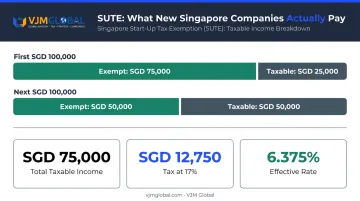
For the first three consecutive Years of Assessment, qualifying startups receive:
- 75% exemption on the first SGD 100,000 of normal chargeable income
- 50% exemption on the next SGD 100,000
A company with SGD 200,000 in chargeable income effectively exempts SGD 125,000, leaving SGD 75,000 taxable. At 17%, that's SGD 12,750 in tax — an effective rate of 6.375%. For early-stage businesses, that's a material advantage.
No Capital Gains, No Dividend Withholding Tax
Two features matter specifically to UAE founders planning for future investment rounds or profit repatriation:
- No capital gains tax on most share disposals (gains may be taxable if deemed revenue in nature under Singapore's badges-of-trade analysis, so structuring matters)
- No dividend withholding tax (Singapore does not withhold tax on dividend payments to shareholders)
This means profits flowing back to a UAE holding structure or being reinvested into a Gulf entity face no additional Singapore-level deduction on exit.
GST and IP Incentives
Singapore's GST rate is 9% (effective 1 January 2024), but compulsory registration only applies when taxable turnover exceeds SGD 1 million. Most early-stage UAE-founded businesses won't need to register immediately — a practical cost advantage compared to UAE VAT, which applies more broadly at 5%.
For tech, fintech, and R&D-oriented companies, Singapore's IP Development Incentive offers preferential tax rates of 5%, 10%, or 15% on qualifying IP income. UAE founders building software, proprietary platforms, or licensed technology should factor this in before deciding where to hold their IP.
UAE-Singapore DTAA: Protection for Cross-Border Income
The UAE-Singapore Double Taxation Avoidance Agreement has been in force since 30 August 1996, with MLI modifications taking effect 1 September 2019 following ratifications by both Singapore (December 2018) and the UAE (May 2019).
The treaty covers business profits, dividends, interest, royalties, capital gains, and several other income categories, protecting UAE-Singapore cross-border flows from being taxed twice. UAE entrepreneurs operating entities in both jurisdictions can use the DTAA to reduce withholding taxes on inter-company payments.
Making this work requires:
- Transfer pricing documentation between related entities
- Demonstrable substance in each jurisdiction
- Consistent compliance filings on both sides
For UAE founders structuring income flows between a UAE and Singapore entity, VJM Global's international taxation team provides cross-border tax planning support, including transfer pricing documentation, inter-company agreements, and DTAA compliance filings across both jurisdictions.
Gateway to Asia-Pacific: ASEAN Market Access and Trade Networks
The Scale of the Opportunity
ASEAN's collective GDP reached USD 3.8 trillion in 2024. That's a market comparable in scale to Germany and France combined — and it's growing faster than either. UAE entrepreneurs already have MENA covered from Dubai. Singapore adds direct commercial access to 680 million consumers across Southeast Asia, plus preferential gateway access into China, India, Japan, and Australia.
Singapore doesn't replace that UAE position. It multiplies it.
29 FTAs, Including the World's Largest Trade Blocs
Singapore has 29 implemented Free Trade Agreements — including:
- RCEP — the world's largest free trade bloc, covering 15 countries across Asia-Pacific
- CPTPP — a high-standard FTA among 12 economies, including Japan, Canada, and Australia
- GSFTA — the GCC-Singapore Free Trade Agreement, which entered into force 1 September 2013 and eliminated tariffs on 96.6% of Singapore exports to GCC countries
For a UAE-based trading company that sets up a Singapore entity to source from Asia and distribute regionally, preferential tariff access translates directly to lower landed costs and more competitive pricing.
Port and Air Connectivity
The logistics numbers speak for themselves:
- Singapore's port handled 44.66 million TEUs in 2025, ranking #2 globally per Lloyd's List
- Changi Airport connects to 170 cities across 49 countries, served by close to 100 airlines with over 7,200 weekly flights
- Changi handled 2.08 million tonnes of airfreight in 2025
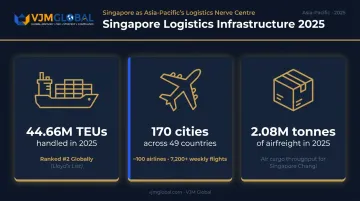
For UAE businesses in logistics, e-commerce, or physical goods trading, Singapore functions as a distribution nerve centre — not just a corporate address.
Regional Headquarters Credibility
Major multinationals anchor their Asia-Pacific headquarters in Singapore for reasons UAE-based SMEs can apply directly:
- Regulatory predictability backed by one of the world's most transparent legal systems
- Deep talent availability across finance, technology, and professional services
- Geographic proximity to Indonesia, Vietnam, India, and China
A Singapore entity signals to Asian clients, partners, and investors that you're serious about the region — in a way that a Dubai address simply doesn't convey in that market.
Where this matters most by sector:
- Fintech — MAS regulatory credibility opens doors across Southeast Asian markets
- Professional services — consulting and advisory firms gain reach into Singapore's extensive regional client base
- SaaS/technology — ASEAN expansion from a jurisdiction with robust IP protection and Common Law contracts
- Commodity trading — bridging Gulf supply with Asian demand through an established trading hub
100% Foreign Ownership, Fast Registration, and Residency Options
Full Foreign Ownership — No Local Partner
UAE nationals and UAE-based foreign founders can own 100% of a Singapore Private Limited Company (Pte. Ltd.) with no local sponsor or ownership partner required. Singapore has always permitted full foreign ownership with no reform cycles or grace periods attached.
This contrasts with the complexity UAE entrepreneurs experienced under the UAE's pre-2021 mainland ownership rules, where 51% local partnership requirements were standard outside free zones.
Registration: Fast, Low-Cost, Compliance-Bound
| Requirement | Detail |
|---|---|
| Registration fee | SGD 315 (SGD 15 name application + SGD 300 registration) |
| Minimum share capital | SGD 1 |
| Incorporation timeline | Often approved same day; complex cases up to 15 working days |
| Resident director | At least one director must be ordinarily resident in Singapore |
| Non-resident requirement | Must engage an authorised Corporate Service Provider/filing agent |
The resident director requirement is the key compliance constraint. Most foreign founders resolve this through a nominee resident director — a legally recognized mechanism under Singapore's Companies Act (Section 386AL). The nominee holds no ownership stake and carries no commercial role — purely a compliance appointment.
Visa and Residency Options for UAE Founders
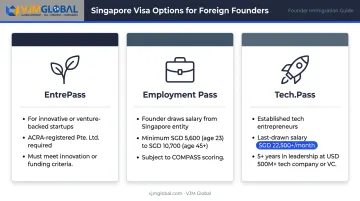
With registration handled, the next practical question is whether you or your team need to be physically present in Singapore. Three main pathways exist for UAE-based entrepreneurs wanting to manage or relocate to their Singapore entity:
- EntrePass — for innovative or venture-backed startups; open to all nationalities; no fixed minimum salary threshold, but the business must be ACRA-registered as a private limited company and meet innovation or funding criteria
- Employment Pass — for founders drawing a salary from their Singapore entity; minimum qualifying salary starts at SGD 5,600 (age 23) rising to SGD 10,700 (age 45+); subject to COMPASS scoring unless the monthly salary exceeds SGD 22,500
- Tech.Pass — for established tech entrepreneurs; requires a last-drawn fixed monthly salary of at least SGD 22,500 in the past year, plus at least five cumulative years in a leading role at a tech company valued at USD 500M+, or a VC with at least USD 500M AUM
Annual Compliance Budget
Ongoing compliance for a Singapore Pte. Ltd. typically includes:
- Registered local address
- Company secretary (must be appointed within 6 months of incorporation)
- Annual ACRA return filing
- Corporate tax filing with IRAS
Annual costs for these services range from SGD 1,500 to SGD 3,500 depending on the service provider and complexity. Costs increase for companies with more complex structures, multiple directors, or higher transaction volumes requiring more active bookkeeping.
Strong Legal Framework, Infrastructure, and Talent
Common Law — Familiar Territory for UAE Founders
UAE entrepreneurs with experience in DIFC or ADGM will find Singapore's legal environment immediately familiar. Both operate on English Common Law — the same contract law principles and the same predictability on commercial disputes.
Singapore adds two world-class dispute resolution venues:
- Singapore International Commercial Court (SICC): a division of the High Court and part of the Supreme Court of Singapore
- Singapore International Arbitration Centre (SIAC) — administers the SIAC Rules 2025 and ranks among the top arbitration institutions globally
Singapore ranked 16 out of 143 globally in the 2025 WJP Rule of Law Index. For institutional investors, that ranking matters when choosing where to domicile an investment vehicle or holding company.
Talent Access
A strong legal environment is only part of the picture — the people you can hire matter just as much. Singapore ranked #1 on the Global Talent Competitiveness Index 2025, the first time it has topped the index. The workforce draws professionals from Southeast Asia, South Asia, and beyond, giving founders practical advantages when building a regional team:
- Access to multilingual professionals familiar with Asian markets
- Fewer visa barriers compared to hiring internationally in the UAE
- Deep bench strength in finance, tech, and professional services
Quality of Life Considerations
Talent availability also connects to a broader point: Singapore is a place people actively want to live and work. For UAE founders considering relocation or extended time on the ground:
- Low crime rate and high personal safety
- High-quality international healthcare and international-curriculum schools
- Efficient public transport and compact city geography
- Multicultural, English-speaking environment
That said, Singapore's cost of living is high. Office space, housing, and senior talent are expensive by regional standards. Factor this into your financial planning before committing to a full relocation versus a lean Singapore entity managed remotely.
The UAE-Singapore Dual Hub: Covering MENA and Asia-Pacific Together
The Logic of the Model
The dual-hub structure works because the two jurisdictions are designed to complement rather than compete:
| UAE Entity | Singapore Entity | |
|---|---|---|
| Markets served | MENA, GCC, East Africa, Europe | ASEAN, Asia-Pacific, regional fundraising |
| Time zone | GMT+4 | GMT+8 |
| Legal system | DIFC/ADGM Common Law (or civil law mainland) | English Common Law |
| Tax | 9% above AED 375,000 threshold | 17% headline; ~6.4% effective (SUTE) |
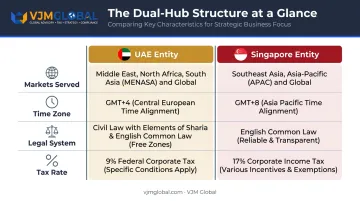
The four-hour time zone gap between Dubai and Singapore means the two entities can cover a near-continuous business day across two of the world's most active commercial regions.
The Trade Relationship Already Exists
UAE-Singapore bilateral goods trade reached S$27.94 billion in 2025. The commercial corridor is established — UAE founders aren't building from scratch when they add a Singapore entity. The infrastructure, relationships, and capital flows are already in place.
The GSFTA means Singapore exports to GCC countries face minimal tariff friction, making Singapore-sourced or Singapore-labelled goods commercially competitive in UAE and Gulf markets.
That commercial momentum only compounds when the corporate structure is built to support it from the start.
Structuring It Correctly from Day One
The typical dual-hub corporate structure:
- UAE entity (free zone or mainland) — handles MENA contracts, invoicing, and regional relationships
- Singapore Pte. Ltd. — handles Asia-Pacific operations, regional client contracts, and fundraising
- IP and holding decisions — made based on investor profile, exit planning, and where the primary value is created
Two compliance obligations cannot be skipped at setup:
- Transfer pricing documentation between the related entities
- Inter-company agreements governing how services, IP licences, or loans flow between the two companies
Getting this right at incorporation avoids expensive restructuring later and protects Double Tax Avoidance Agreement (DTAA) benefits from being challenged by either tax authority.
Frequently Asked Questions
What do foreigners need to start a business in Singapore?
Foreign founders must complete the following to register:
- Register with ACRA via BizFile+
- Engage an authorised Corporate Service Provider (filing agent)
- Appoint at least one ordinarily resident director
- Provide a registered local address and appoint a company secretary within six months
Minimum paid-up capital is SGD 1. Total registration fees are SGD 315.
Why are UAE people moving to Singapore?
The primary drivers are ASEAN market access, Singapore's Common Law legal environment, startup tax exemptions, and a mature VC and institutional investor ecosystem. Many UAE entrepreneurs are adding a Singapore entity rather than fully relocating, running a dual-hub that covers both MENA and Asia-Pacific.
Can UAE nationals own 100% of a business in Singapore?
Yes. Singapore permits 100% foreign ownership for all nationalities, including UAE nationals, with no local partner or sponsor required. A resident director is mandatory, but this is a compliance role — it carries no ownership rights and is typically filled through a nominee arrangement.
Does Singapore have a Double Taxation Agreement with the UAE?
Yes. The UAE-Singapore DTAA has been in force since 30 August 1996, with MLI modifications effective 1 September 2019. It prevents double taxation covering income types such as business profits, dividends, interest, and royalties. Proper structuring is required to claim treaty benefits.
How long does it take to register a company in Singapore from the UAE?
Registration is often approved the same day payment is made via ACRA's BizFile+. UAE-based non-residents must engage a Corporate Service Provider, which may add a few days. Total setup including registered address and company secretary appointment is typically completed within one to two weeks.
What is the best business structure for UAE entrepreneurs setting up in Singapore?
A Private Limited Company (Pte. Ltd.) is the standard choice. It offers limited liability, 100% foreign ownership, and qualifies for SUTE startup tax exemptions — making it the structure investors and commercial counterparties expect. It's also the most straightforward to maintain under annual compliance rules.