The appeal is obvious: proximity to the US mainland, no currency conversion headaches, and a path to residency tied to owning a company. Interest isn't limited to one type of founder, either. Digital consultants, real estate investors, hospitality operators, and retirees looking for a second income stream are all asking the same question.
This guide walks through entity types, registration steps, licensing, and the tax obligations that come with running a business abroad as a US citizen.
TL;DR
- Americans and other foreign investors register through the Kamer van Koophandel (Chamber of Commerce)
- Standard profit tax is about 34.5%, plus turnover tax on local revenue
- You can own a company without living on-island; relocation needs separate immigration steps
- NV and BV formation require a civil-law notary, unlike a US LLC filing
- Early guidance on entity choice and compliance timelines prevents the most costly delays
What Is a Sint Maarten Business Setup for US Citizens?
A Sint Maarten business setup for US citizens means registering a legally recognized entity—an NV, BV, sole proprietorship, or foreign branch—so you can operate on the island as a foreign investor. It is an incorporation and compliance process, not a path to tax residency or citizenship.
Common options for US investors include:
- BV – suited to small and mid-sized ventures with a closed group of shareholders
- NV – built for larger operations with more complex or public shareholding
- Foreign branch registration – lets an existing US company operate locally without forming a new entity
- Sole proprietorship – open to smaller operators, subject to foreign-national eligibility rules
Registration gives you a local legal footing to trade, hire, and meet island compliance duties. It does not, by itself, change your US tax position or immigration status.
What to Know Before You Start a Business in Sint Maarten
Many US entrepreneurs assume this process moves at US LLC speed. It doesn't. Setting expectations early matters more than optimism.
Before committing, think through:
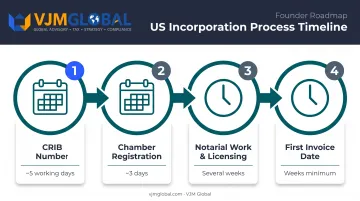
- Full timeline: CRIB numbers take ~5 working days and Chamber registration ~3, but notarial work and licenses push the full process to several weeks
- Local help: a notary is mandatory for NV/BV formation; an accountant is strongly advisable under the local filing regime
- First invoice date: plan on several weeks minimum before you are legally cleared to bill clients
- Physical presence: retail and hospitality need a location and permits; consulting or e-commerce can often run remotely
- Speed vs. correctness: rushing incorporation to save two weeks can cost months if licensing or tax registration is wrong
Why Start a Business in Sint Maarten? (When It Makes Sense)
Sint Maarten isn't a universal win. It makes sense under specific conditions.
Reasons it can work well for a US-based founder:
- Cruise tourism brought in 1,597,940 visitors in 2025 (635,968 in Q1), per government arrival data—steady demand for hospitality and tourism-adjacent businesses
- No mandatory local shareholder for standard entity types, unlike several other Caribbean jurisdictions
- English is widely spoken and the US dollar circulates alongside the local currency, which cuts friction for American founders
- Narrow customs regime: excise falls mainly on unleaded gasoline, not broad import duties on business equipment
- A director role can support a residency application path if you want the option to relocate later
It makes less sense if your business depends on same-day US banking integration. It also fits poorly if you're not prepared for civil-law incorporation through notarial deeds rather than online filing portals.
Early Decisions That Matter When Starting a Business in Sint Maarten
Most setup problems trace back to underestimating true costs and licensing complexity, not to bad luck.
Areas founders consistently overlook:
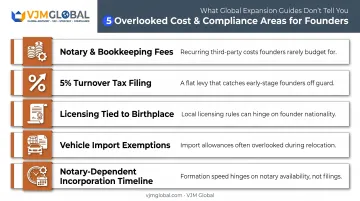
- Notary, Chamber, and bookkeeping fees stack up beyond initial registration, including incorporation deeds and ongoing compliance
- A standard 5% turnover tax (TOT/BBO) hits realized local revenue; the Grant Thornton indirect tax guide for Sint Maarten notes you generally must register and file monthly, even at zero taxable turnover
- Licensing paths differ by birthplace: Chamber guidance treats Antillean-born applicants differently from US citizens and other foreigners
- Vehicle import exemptions are narrower than many US founders expect; confirm current Customs rules before you budget around them
- NV and BV incorporation deeds require a licensed civil-law notary, so notary availability directly shapes your timeline
How to Start a Business in Sint Maarten – Step by Step
The process breaks into stages specific to a US citizen operating from outside the island. The most common mistakes are assuming US LLC rules transfer directly, skipping a licensing check before committing capital, and underestimating turnover tax obligations.
Step 1 – Choose Your Entity Type and Business Structure
Compare your options against how you'll actually run the business, not against US norms.
- BV fits smaller, remote-friendly operations like consulting or e-commerce
- NV suits larger ventures anticipating multiple investors or more complex governance
- Foreign branch works if an existing US company wants a local presence without forming a new legal entity
- Sole proprietorship is narrower for foreign nationals; eligibility often depends on years of prior residence
The common miss here is picking a structure because it resembles an LLC. Sint Maarten runs on Dutch civil law, and US mental models don't map cleanly onto NV/BV frameworks.
Step 2 – Engage a Local Notary and Draft Incorporation Documents
A civil-law notary is mandatory for NV incorporation, and Chamber guidance points toward the same requirement for BV formation. This isn't optional paperwork. It's the legal foundation of the entity.
Documentation typically requested from a US citizen includes:
- Passport copy
- Proof of address
- A business plan or activity description
- Additional KYC or source-of-funds documentation, depending on the notary's own compliance requirements
Remote incorporation is nothing like forming a US LLC through an online portal in an afternoon. Expect back-and-forth with the notary's office over several weeks.
Step 3 – Register with the Chamber of Commerce and Tax Authority
Every operating business must appear in the Commercial Register maintained by the Kamer van Koophandel. Separately, you'll need a CRIB tax identification number from the tax authority.
- CRIB number processing is quoted at around 5 working days once documentation is complete
- Business registration with government services runs around 3 days for its own component, though this assumes the license and Chamber steps are already done
- Turnover tax registration applies once you qualify as an entrepreneur under local rules, generally regardless of revenue size
Treat tax registration as a day-one task, not something to handle later. Delays create penalty exposure once you start generating invoices.
Step 4 – Secure Required Licenses and Permits
Sint Maarten requires both a business license to operate and a separate director's license authorizing whoever runs the company.
For a non-Antillean-born founder acting as director, expect to submit:
- The incorporation deed
- CRIB declaration
- Chamber extract
- Proof of business address
- Passport copies
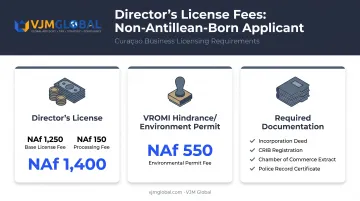
- A police record no older than six months
- Relevant professional qualifications, if your activity requires them
A director's license for someone residing abroad reportedly comes with government fees in the range of NAf 1,250, plus a NAf 150 processing fee. Some business types also require a hindrance/environment permit through VROMI, listed around NAf 550, with its own documentation set covering site plans and property title.
Licensing often does not run parallel to incorporation. In practice, it gates your ability to legally invoice and can push revenue back by weeks or months if you skip the planning.
Step 5 – Understand Tax Obligations as a US Citizen Operating Abroad
This is where a lot of American founders get tripped up, because they're managing two tax systems at once, not one.
On the Sint Maarten side:
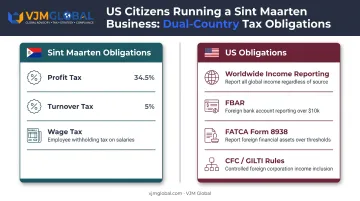
- A standard profit tax reported around 34.5%
- A 5% turnover tax on local revenue
- Wage tax and social premium withholding obligations if you hire staff locally
On the US side:
US citizens remain subject to worldwide income reporting requirements regardless of where the business is based. That means your Sint Maarten profits show up on your US return too, and mechanisms like the foreign tax credit exist specifically to prevent double taxation, but you have to claim them correctly.
- FBAR and FATCA reporting (Form 8938) are separate filings with different thresholds; you may need one, both, or neither depending on your account structure
- CFC and GILTI rules can apply depending on how the foreign entity is structured relative to your US ownership
Dual-country reconciliation is where cross-border tax advisory pays for itself. VJM Global supports American founders on the US side of that work: foreign tax credits under Form 1116, FATCA and FBAR compliance, and CFC/GILTI exposure. The firm does not currently maintain a Sint Maarten-specific practice, but those US filing obligations apply regardless of which country your foreign entity sits in.
Local profit tax paid in Sint Maarten does not automatically resolve your US filing obligation. It reduces double taxation; it does not eliminate the paperwork.
Step 6 – Plan for Immigration, Residency, and Staffing
Owning a company doesn't automatically make you a resident. These are two separate government processes that happen to overlap for founders.
- A director role can support a First Time Director Permit application, but first-time applicants typically must wait for the decision while abroad, not while already on the island
- Supporting documentation includes current Chamber, tax, and labor registrations, plus proof of financial capacity, often cited around NAf 36,000 (roughly $20,000) in bank statements
- Hiring foreign staff requires an employment permit application demonstrating a genuine business need, including evidence of recruitment efforts within the local and wider Dutch Kingdom labor market
Residency and business registration do not land on the same timeline. Founders who plan to relocate should start the immigration track early, not after the company is already registered.
Step 7 – Set Up Banking, Accounting, and Ongoing Compliance
Once the entity exists, the operational side starts, and this is where long-term compliance either holds up or falls apart.
What to put in place from day one:
- A local business bank account, since running everything through a US account creates its own compliance headaches
- Bookkeeping aligned to Sint Maarten's filing calendar, not a US fiscal year assumption
- Systems for tracking turnover tax monthly, since filing appears to be required even in nil-revenue periods
- Annual filing preparation well ahead of deadlines, not the week before
Compliance is not a once-a-year scramble. Founders who build clean books from month one avoid the year-end panic entirely.
Conclusion
Starting a business in Sint Maarten as a US citizen is achievable, and you don't need a local partner to do it. What you do need is patience with notarization, realistic licensing timelines, and a plan for handling tax obligations on both sides of the water.
Getting the entity structure and compliance approach right at the start prevents delays that cost founders months. Long-term success comes down to keeping accurate records and revisiting your tax position as the business grows. Day-one decisions rarely hold forever.
Frequently Asked Questions
How do I open a business in Sint Maarten?
You'll choose an entity type, engage a civil-law notary to draft the incorporation deed, register with the Chamber of Commerce, and obtain a tax identification number from the tax authority. Licensing runs alongside these steps.
Can a US citizen move to Sint Maarten?
Yes, but relocation requires a separate immigration process from company registration. Business directorship can support a residency application, though it isn't automatic.
Is Sint Maarten a tax haven?
No. Sint Maarten applies a standard profit tax reported around 34.5%, not a zero-tax structure. Legitimate incentive regimes and structuring can reduce effective rates, but it's not a haven by default.
Can foreigners buy property in Sint Maarten?
Foreign nationals, including Americans, generally can purchase property, though standard legal due diligence and, in some cases, notary-specific title checks apply. Confirm details with a local notary before committing.
Do I need to live in Sint Maarten to own a business there?
No. Physical residency isn't required for ownership, though certain business activities, especially those needing a physical location or local management, may require someone on the ground.
What's the difference between an NV and a BV in Sint Maarten?
A BV suits smaller or mid-sized businesses with a closed shareholder group, while an NV is built for larger ventures with more complex or publicly divided shareholding structures.