
More people are looking at San Diego right now because demand feels predictable, entry barriers are lower than in Los Angeles or San Francisco, and resources like the SBA District Office and county support programs are close at hand. The lifestyle appeal doesn't hurt either.
The interest isn't coming from one type of founder. First-time entrepreneurs, side-hustlers going full-time, professionals relocating from other states, and foreign entrepreneurs entering the U.S. market are all asking the same question: what does it actually take to start here?
This guide walks through the exact process, real costs, and registrations you need to legally start and run a small business in San Diego.
Key Takeaways
- Legal foundation: state LLC/Corp registration, a Business Tax Certificate, and sometimes an FBN filing
- San Diego skips a general business license, but Tax Certificate compliance applies to nearly every business
- Startup costs range from a few hundred dollars (sole proprietorship) to $1,000+ for an LLC with formation help
- Full legal setup takes a few weeks, longer with FBN publication or industry permits
- Getting registration and compliance right upfront avoids expensive rework later
What to Know Before You Start a Business in San Diego
Most first-time founders underestimate the paperwork. Between state filing, the city's tax certificate, county FBN registration, and zoning checks, there's real administrative work before a single dollar of revenue shows up.
This administrative load simply sets realistic expectations for timeline and effort, not a judgment on your ability to run a business.
Before you're legally operating, plan for:
- Registration time: state filing, EIN issuance, and city tax certificate processing typically take two to four weeks combined
- A physical or home address: San Diego allows home-based businesses under specific zoning rules, which we cover later in this guide
- A slower revenue ramp: many businesses spend their first one to three months finishing compliance and setup rather than generating meaningful income
Founders who budget time for this administrative phase tend to launch with far fewer surprises.
Why San Diego Is a Smart Place to Start a Small Business
San Diego offers several concrete advantages for entrepreneurs who use them, from funding resources to a thriving small-business base.
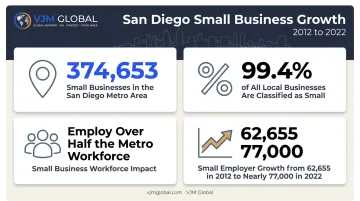
San Diego County's business base is large and growing. As of 2022, the San Diego-Chula Vista-Carlsbad metro area had 374,653 small businesses, making up 99.4% of all businesses in the region.
These businesses employ over half the metro workforce, according to the SBA Office of Advocacy's 2025 small business profile. Small employers alone grew from 62,655 in 2012 to nearly 77,000 by 2022.
A few practical advantages worth noting:
- Free mentoring through SCORE San Diego, available for the life of your business
- Direct access to the SBA San Diego District Office on West C Street, which covers funding programs and lender referrals
- A diverse economic base spanning tourism, biotech, defense, and tech, so a downturn in one sector doesn't sink the whole local market
- A local registration process that's more straightforward than what founders face in Los Angeles or San Francisco
SCORE mentors, SBA resources, and a diversified economy are already in place. Using them is what separates businesses that survive from those that don't.
How Much Does It Cost to Start a Small Business in San Diego?
Costs depend heavily on your business structure, but most small businesses face the same core set of fees. Here's the breakdown.
San Diego Business Tax Certificate
Every business operating in the city needs this certificate, regardless of whether you need a "license" in the traditional sense.
| Item | Cost |
|---|---|
| Annual fee, 12 or fewer employees | $34 |
| Annual fee, 13+ employees | $125 plus $5 per employee |
| SB-1186 disability-access fee | $4 |
| Late penalty (within 15 days) | $25 or 10% of amount owed, whichever is greater |
| Continuing late fee | 1% per month on unpaid balance |
Source: City of San Diego Treasurer's fee schedule
Miss the 15-day window after your business start date, and penalties stack quickly.
Fictitious Business Name (FBN) Filing
If you're operating under any name other than your own legal name, you likely need this filing with the San Diego County Recorder/Clerk.
- Base filing fee: $54 for one name and one owner
- Additional cost: $5 per extra owner or extra business name at the same address
- Publication requirement: Once weekly for four consecutive weeks in an adjudicated newspaper, starting within 45 days of filing (cost varies by publication)
- Deadline: File within 40 days of first transacting business under the name
Skip publication, and your FBN filing isn't considered valid, no matter how promptly you filed the paperwork itself.
California LLC or Corporation Formation
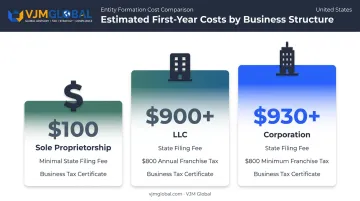
| Entity type | State filing fee | Annual tax |
|---|---|---|
| LLC | $70 | $800 minimum, due yearly |
| Corporation | $100 | $800 minimum franchise tax |
The $800 annual tax applies whether or not your LLC generated revenue that year, so factor it into your first-year budget even if you're pre-revenue.
Additional costs to plan for:
- Industry-specific permits (health department, fire, zoning)
- Business insurance, which varies by industry and risk exposure
- Working capital to cover the first few months before revenue stabilizes
Foreign entrepreneurs and first-time founders entering the U.S. market often bring in entity formation specialists such as VJM Global to handle the LLC or corporation paperwork alongside California-specific steps like the FBN filing and business tax certificate. A rejected filing or a missed publication deadline typically costs more in refiling fees and lost time than hiring help upfront.
How to Start a Small Business in San Diego – Step by Step
This section breaks the process into the practical stages you'll actually go through. Common mistakes to avoid: assuming you need a city business license (you don't), skipping zoning checks for home-based work, and missing FBN publication windows.
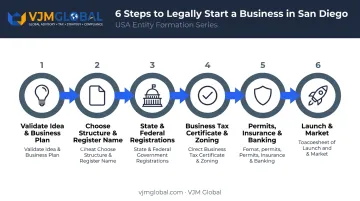
Step 1 – Validate Your Idea and Write a Business Plan
Define the specific problem your business solves and who in the San Diego market will actually pay for it. Tourist-heavy neighborhoods, biotech corridors, and residential suburbs all have different customer profiles.
If you plan to seek funding later, lenders and investors will want to see:
- Realistic startup and operating costs
- A clear picture of local competition
- A defined target customer, not a vague market description
Step 2 – Choose a Business Structure and Register Your Name
Your structure determines your liability exposure and how you're taxed.
- Sole proprietorship: simplest to start, but no liability protection
- Partnership: similar simplicity, shared liability among partners
- LLC: personal liability protection, moderate setup cost, $800 annual tax
- Corporation: stronger liability separation, more formal compliance requirements
If you're operating under anything other than your own legal name, that's when the FBN filing becomes legally required. Operating under your exact personal or entity legal name doesn't trigger it.
Step 3 – Complete State and Federal Registrations
File your Articles of Organization (LLC) or Articles of Incorporation (Corporation) with the California Secretary of State. Processing times vary by submission method, so check current queue dates before assuming a specific turnaround. Firms that specialize in multi-jurisdiction entity formation, such as VJM Global, can manage these filings for founders who'd rather not track deadlines and paperwork themselves.
Then, get a free EIN directly from the IRS, often issued in minutes online. If you're hiring, register with the CA Employment Development Department within 15 days of paying more than $100 in wages.
Step 4 – Get Your Business Tax Certificate and Check Zoning
Submit your Business Tax Application to the City of San Diego. Allow up to two weeks to receive your certificate.
If you're working from home, verify zoning rules first. San Diego's home-occupation rules include:
- No more than one client visit at a time, by appointment only, 7 a.m. to 7 p.m.
- No signage advertising the business at the residence
- Storage limits, generally capped at 1,000 cubic feet
- Only residents may work on-site; outside employees aren't permitted at the home
Step 5 – Secure Permits, Insurance, and Business Banking
Before your first transaction, three things need to be in place:
- Industry-specific permits, such as environmental health approval for food businesses or fire department sign-off for certain retail spaces
- A dedicated business bank account, kept separate from personal finances
- Basic liability insurance covering your operations
Step 6 – Launch, Market, and Build Local Trust
Set up your Google Business Profile, get listed in local directories, and consider joining a neighborhood chamber of commerce. Track early performance closely for the first few months before you think about scaling.
Early Decisions and Mistakes to Avoid
Most early-stage setbacks in San Diego come from underestimating compliance complexity, not from a lack of effort or hustle.
Watch for these commonly overlooked issues:
- Missing the FBN publication deadline, which can invalidate an otherwise correct filing
- Assuming a home-based business is exempt from all local rules (it isn't)
- Underestimating how long it realistically takes to reach break-even, especially while compliance steps are still pending
Getting registration, tax, and compliance filings reviewed by a professional before you start operating is almost always cheaper than fixing errors after the fact. Firms like VJM Global, which handle US entity formation and compliance filings, can flag these gaps before they turn into costly corrections.
Frequently Asked Questions
How much money do I need to start a small business in San Diego?
Costs vary by structure and industry, but expect to cover state filing fees, the Business Tax Certificate, possible FBN (Fictitious Business Name) costs, and any industry permits. Budget a few months of working capital on top of that.
How much does it cost to start an LLC in San Diego?
Plan for the $70 California Secretary of State filing fee, the $800 annual franchise tax, and San Diego-specific costs like the $34+ Business Tax Certificate.
Do I need a business license to operate in San Diego?
No general business license exists at the city level. You do need a Business Tax Certificate, and requirements can differ slightly if you're operating in unincorporated San Diego County.
How long does it take to register a business in San Diego?
State formation and EIN (Employer Identification Number) issuance can take anywhere from a few days to a few weeks, and the city tax certificate takes up to two weeks after that. Add several weeks if FBN publication is required.
Can I run a small business from my home in San Diego?
Yes, under specific zoning rules covering noise, signage, storage limits, and client-visit hours. Businesses that exceed those limits need a Neighborhood Use Permit.
What is the easiest business structure to start in San Diego?
A sole proprietorship is the simplest and cheapest to set up, but it offers no personal liability protection. An LLC costs more upfront but shields personal assets from business debts.