Introduction
GST registration for branches and business verticals decides something fundamental: does your business report everything under one GSTIN, or does it need additional registrations for each location or activity? Get this wrong, and the consequences ripple through invoicing, return filing, and Input Tax Credit claims.
This matters whether you're an Indian manufacturer opening a second warehouse, a foreign company setting up Indian operations, an e-commerce seller using fulfilment centres in multiple states, or a service provider expanding into a new state.
Every additional GSTIN brings separate invoicing rules, separate return filing obligations, and separate record-keeping requirements.
Terms like "business vertical," "branch," "additional place of business," and "multiple GST registration" get used interchangeably in everyday conversation. Under GST law, they are not the same thing, and treating them as identical can lead to compliance gaps. This article walks through the decision-making process and the compliance obligations that follow.
Key Takeaways
- Separate GST registration is required in each state or UT where you make taxable supplies.
- Same-state branches can often share one GSTIN as an additional place of business.
- Distinct GSTINs under one PAN count as separate persons, so inter-branch supplies can attract GST.
- Assess documentation load, ITC impact, and compliance capacity before adding registrations.
- Verify current rules on the GST portal and CBIC notifications before you act.
What GST Registration Means for Branches and Business Verticals
A GST registration produces a GSTIN (Goods and Services Tax Identification Number) tied to a specific state or Union Territory. Every registration certificate names one principal place of business (your main operating address) and can list one or more additional places of business, such as warehouses, branch offices, or service centres.
A branch or unit, in GST terms, is simply a location where the business does something: manufacturing, warehousing, retail, service delivery, or administration. An internal department that doesn't operate from a distinct physical location isn't automatically a "branch" for registration purposes.
Multiple Locations, One Registration
Here's the part many businesses miss: several locations within the same state can often sit under a single registration, with each one declared as an additional place of business. You don't need a new GSTIN just because you've opened a second godown down the road.
Business Vertical: A Term That Has Changed
The phrase "business vertical" used to carry specific legal weight. Under the original CGST Act, a business could register separately for a distinct manufacturing division versus a service division, if the two qualified as separate verticals.
That's no longer the operative framework. Section 2(18) of the CGST Act, defining "business vertical," has been omitted following the CGST (Amendment) Act, 2018, brought into force through Notification 02/2019-Central Tax.
Today, the relevant mechanism for multiple registrations within one state runs through Rule 11 of the CGST Rules, not a standalone "vertical" definition. Any content you've seen describing separate business-vertical registration as current law is describing the pre-2019 position — verify against current CGST Rules before relying on it.
Distinct Persons Under One PAN
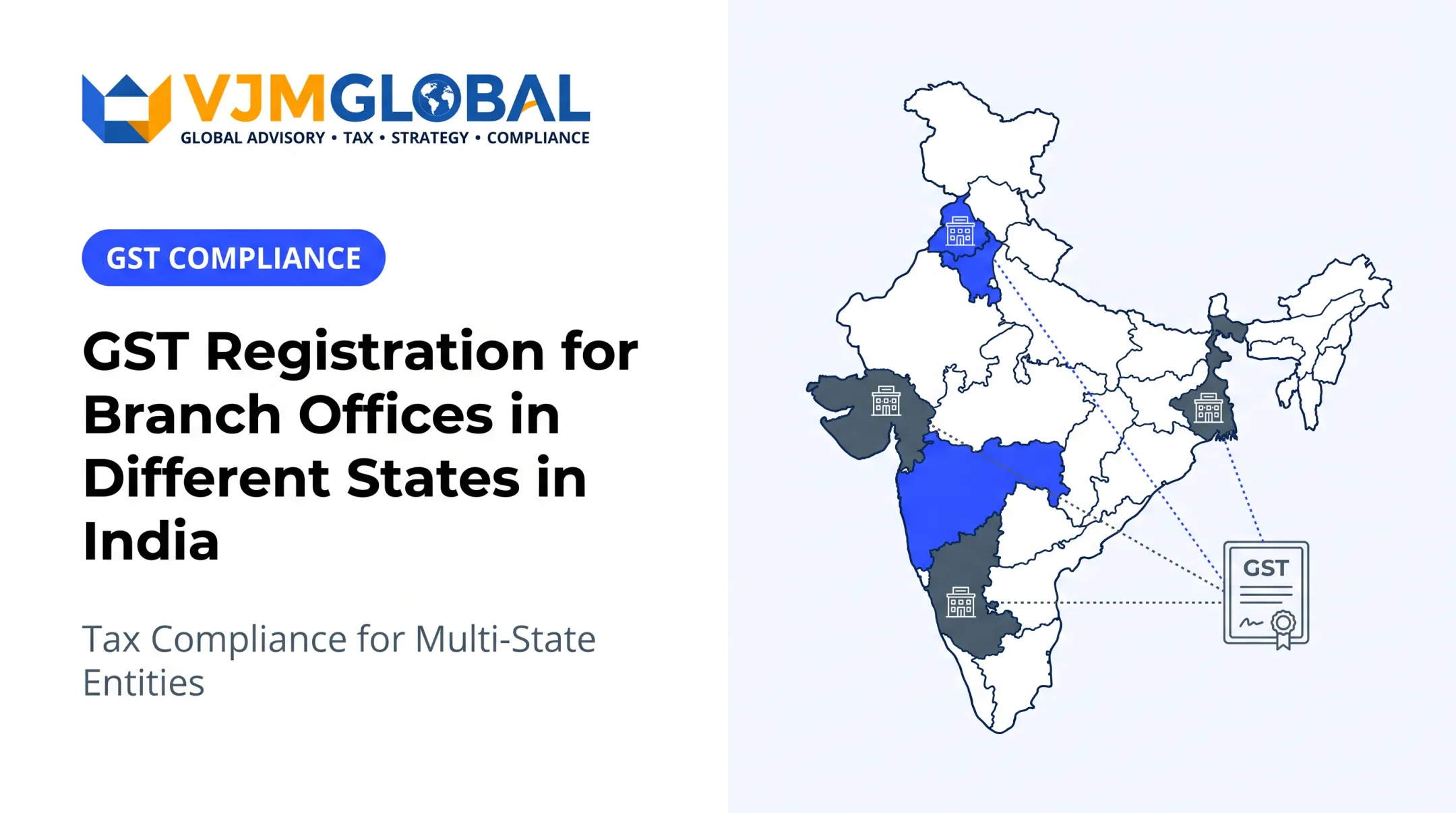
Registrations held by the same legal entity under the same PAN are, for GST purposes, treated as distinct persons. This isn't a technicality: a company with offices and one warehouse in a single state, all reported as additional places of business, typically operates under one GSTIN. A company making taxable supplies from establishments in two different states typically needs two separate GSTINs, one per state.

The state or Union Territory from which the taxable supply is actually made sits at the centre of this analysis. Get the location of supply wrong, and the whole registration structure can be wrong with it.
How GST Registration Works for Branches and Verticals
The overall flow looks like this: map your locations and activities, determine what needs registering, gather documents, apply through the portal, respond to any verification queries, then activate post-registration controls. ### Step 1: Map the Business Structure Before Applying
List every principal place, branch, warehouse, fulfilment centre, manufacturing unit, office, and service location. For each one, record what it actually does — stores goods, delivers services, houses staff, or just holds paperwork.
Then identify the state or Union Territory from which taxable supplies originate. This tells you whether a location is simply an additional place of business or whether it may need its own registration.
Step 2: Select the Appropriate Registration Structure
You're choosing between two paths:
- Add the location to your existing registration as an additional place of business.
- Apply for a separate registration, whether in a different state or, where legally permitted, within the same state under current Rule 11 conditions.
Separate registrations in different states each get their own GSTIN, though all remain linked to the same PAN. The state code embedded in the GSTIN identifies which registration state it belongs to.
Step 3: Apply Through the GST Portal
Registration applications go through Form GST REG-01, where you select the relevant state, describe the nature of business, and list principal and additional places of business along with authorised signatory details.
Document categories generally required include:
- PAN of the business and promoters/partners/directors
- Constitution documents (partnership deed, incorporation certificate, trust deed)
- Proof of principal and additional places of business — property tax receipts, electricity bills, rent agreements, or consent letters
- Authorised signatory proof, such as board resolutions or letters of authorisation
- Bank account details, where applicable
Requirements can vary by entity type and case, so check the current portal checklist before submitting.
Step 4: Complete Verification and Activate the Registration
The proper officer may scrutinise your application and request clarifications, amendments, or extra evidence. Don't assume a fixed timeline: approval speed depends on your documentation, Aadhaar authentication status, and whether the application is flagged for physical verification.
Multi-state or multi-vertical filings add complexity quickly. VJM Global supports businesses through this stage with:
- Registration structure planning across locations and activity lines
- Documentation review before submission
- Application coordination on the GST portal
- Ongoing compliance once multiple GSTINs are active
This is especially relevant if you run Indian operations across several states or business lines at once.

Key Factors and Ongoing Compliance Consequences
Before applying for any additional registration, assess these factors.
Factors to Weigh Before Registering
- Supply pattern — whether the location makes taxable supplies, stores goods, delivers services, or functions purely as an internal office
- Nature of operations — manufacturing, retail, warehousing, e-commerce fulfilment, project sites, or interstate goods movement, each with different implications
- Documentary readiness — valid address proof, possession documents, and consistent entity details at the location
- Commercial rationale — whether separate registration improves segment accounting or audit readiness enough to justify the extra compliance load
What Changes Once You Hold Separate GSTINs
Once registrations are separate, each one is a distinct person under GST law — even though the legal entity and PAN haven't changed. That has real consequences:
- Inter-unit transactions require GST treatment. Transfers of goods, services, or shared resources between registrations may need tax invoices, even between offices of the same company.
- Cross-charge and ISD mechanisms apply when head-office costs or common services are allocated among registrations.
- Books, returns, and reconciliations run registration-wise. Each GSTIN files its own returns, pays its own tax, and needs its own supporting records.
- ITC controls need discipline. Match every invoice to the correct GSTIN, document stock transfers properly, and watch for blocked credits claimed under the wrong registration.
Circular No. 199/11/2023-GST clarifies that a head office can distribute ITC on common third-party services via the Input Service Distributor route, or raise tax invoices directly to branch offices under Section 31. Confirm which mechanism fits your facts.
Business changes — opening a branch, shifting premises, adding a warehouse, changing activity, or closing a unit — can trigger amendments, new registrations, business transfer procedures, or cancellation. Each event has its own procedure, so verify what applies before acting.
Common Issues, Misconceptions, and When Separate Registration May Not Be Appropriate
Misconceptions Worth Correcting
- One PAN, multiple GSTINs, still one entity. Multiple registrations don't create separate companies or separate PANs.
- Same-state branches don't automatically need new GSTINs. Often, listing them as additional places of business is enough.
- A new product line isn't automatically a "business vertical" registration trigger, especially after the statutory framework changes described earlier.
Avoidable Risks
Common risk patterns include:
- Using one GSTIN for supplies actually made from another state
- Forgetting to update additional places of business
- Selecting the wrong GSTIN on invoices, e-way bills, returns, or ITC claims
These create real exposure: reconciliation mismatches and, often, notices from the department.
A practical fix: build a registration-wise compliance calendar with an ownership matrix. Assign one person or team to each GSTIN, covering invoices, returns, payments, reconciliations, and amendments.
When One Registration Beats Several
Sometimes a single registration, with properly disclosed additional places of business, works better than juggling multiple GSTINs. Separate registrations multiply your filing, accounting, reconciliation, and internal invoicing workload. Do not add GSTINs only because the structure feels tidy on paper.

Get professional review before you decide if your setup involves:
- Shared services or common inventory
- Interstate stock movement
- E-commerce warehouses
- Foreign ownership
- Complicated ITC flows
These are the situations where a wrong call gets expensive.
Conclusion
Whether a branch or business vertical needs its own GST registration comes down to four factors:
- Where taxable supplies actually happen
- How your legal structure is set up
- Whether additional places of business already cover the situation
- What current rules on multiple registrations allow
Choosing between one registration and several GSTINs means weighing documentation, invoicing, distinct-person treatment, ITC flow, and the compliance load your team can handle.
Before you start supplies from a new branch or vertical, confirm the position against current CGST Rules and GST portal procedures. Rules in this area have shifted before and can shift again—so map the structure with current portal requirements in mind. VJM Global supports businesses with GST registration and ongoing compliance for Indian branches and verticals when that review needs a second pair of eyes.
Frequently Asked Questions
What is a business vertical in GST?
A business vertical meant a distinct line of business, such as manufacturing versus services, that could obtain its own GST registration. The CGST Act no longer defines the term, so verify current rules before relying on older guidance.
Can I have an ABN but not be registered for GST?
An ABN is an Australian Business Number, entirely separate from Indian GST registration. An entity can hold an ABN without Australian GST registration in some cases, but an ABN doesn't satisfy any Indian GST requirement.
What is multiple GST registration and when is it required?
Multiple GST registration means holding more than one GSTIN. It usually applies when taxable supplies come from different states, or when an extra registration within one state is allowed and commercially justified.
Do branches in the same state need separate GST registration?
Not automatically. Assess whether the branch can simply be reported as an additional place of business under your existing registration, or whether it genuinely qualifies for a separate registration under current rules.
Do separate GST registrations under the same PAN have to invoice each other?
Yes, often. Separate registrations are treated as distinct persons, so supplies of goods, services, or allocated costs between them may need tax invoices or GST treatment depending on the facts.