Starting a business is exciting, but tackling the legal, financial, and operational hurdles can be daunting. Incorporation is a key step, yet it often feels complex and time-consuming. This is where professional business incorporation services step in. They simplify the process, ensuring compliance and setting you up for success from the start. New company registrations in India surged by 29% year-on-year in May 2025, hitting 20,718, an indicator of strong economic growth. This blog will cover the different business structures, the benefits of professional incorporation services, and how they help you tackle the complexities of the process, especially when expanding into India. Let’s jump in.
Incorporation means giving your business its own legal identity, separate from its owners. Once incorporated, a company can own property, enter into contracts, and bear legal responsibilities independently. In other words, the company, not the owners, is accountable for debts and obligations. For anyone planning to start a business in India, incorporation is the foundation for compliance, funding opportunities, and long-term growth.
Now that we’ve covered the basics, let’s look at a key document you’ll encounter: the Business Certificate of Incorporation.
A Business Certificate of Incorporation is a legal document that says your business has been officially incorporated. It is given by the Registrar of Companies (RoC) or a similar authority. This is similar to the Certificate of Incorporation issued by the Secretary of State, which confirms that your US entity is legally established. In India, the Registrar of Companies (RoC) plays that equivalent role.
This paper has information like:
This certificate is essential when starting a business in India, as it proves that your company has been legally registered under Indian corporate law.
With that in mind, let’s compare two of the most common business structures: LLC and Corporation.
Before choosing the right structure for your business, it’s essential to understand how a Limited Liability Company (LLC) differs from a corporation.
Choosing between an LLC and a corporation depends on your tax strategy, growth objectives, and compliance requirements.
Professional incorporation services can help you assess these factors and select the structure that best supports your business objectives in India or abroad.
For US companies, this decision hinges on how your US entity interacts with the appropriate Indian entity, typically a Private Limited company. VJM Global supports this decision with guidance rooted in capital plans, tax treatment, foreign shareholding, and long-term growth goals. Get started today.
Understanding the differences between LLCs and Corporations is just one piece of the puzzle. There are several factors you should consider before making your decision.

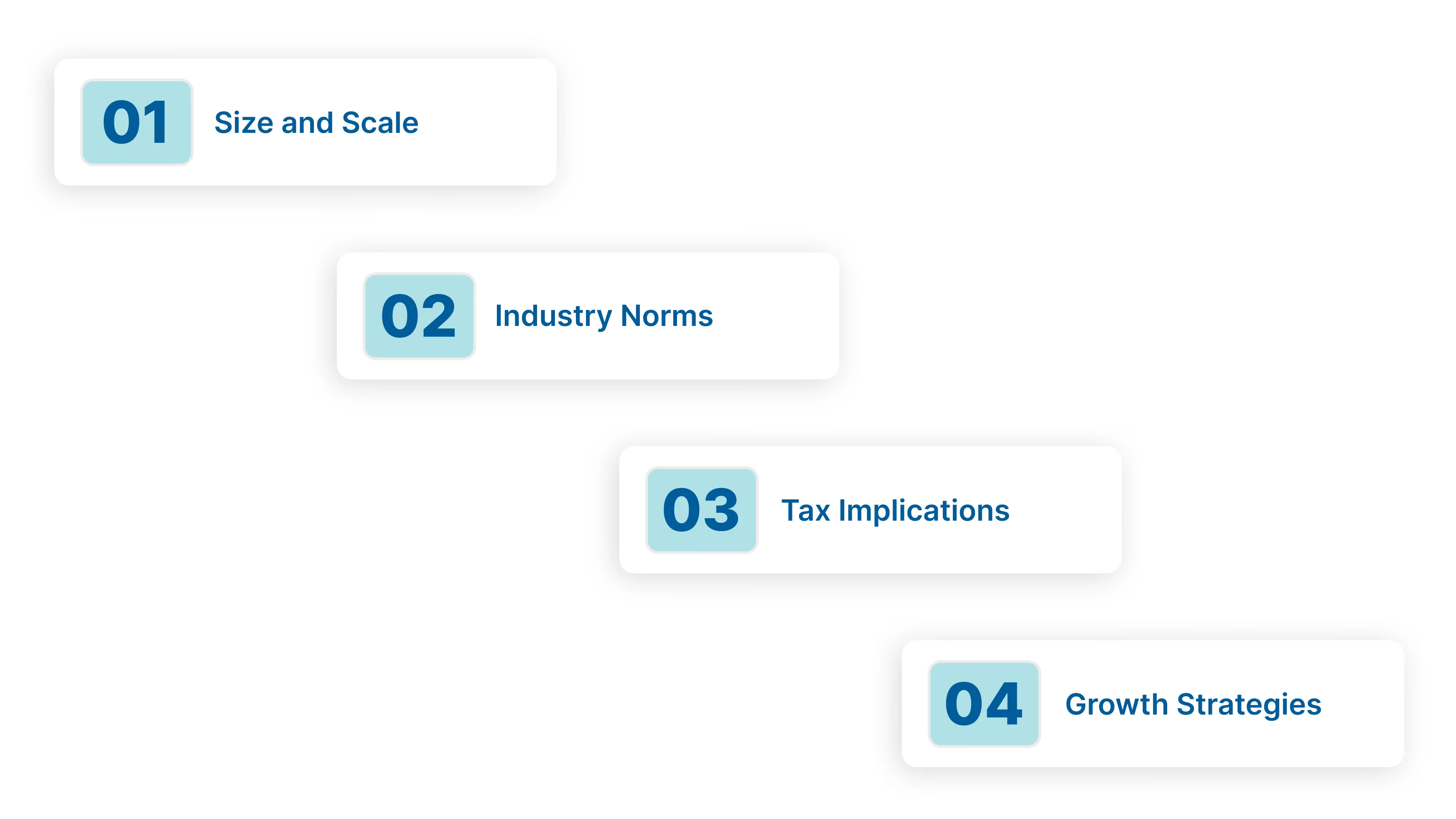
Your company's objectives, sector, and operational style will determine the most suitable type of incorporation for it. These ideas should help you decide the best business setup in India:
Private limited companies, public limited companies, and limited liability partnerships are the most common types of company formats in India.
Once you’ve identified your ideal structure, let’s explore why opting for professional incorporation services can be beneficial for your company.
Starting a business can be complex, but professional business incorporation services provide benefits that simplify the process and safeguard your future. Here’s how they help:
Professional incorporation services offer expert guidance to ensure your business complies with local laws and regulatory requirements from the outset. For US companies, this includes guidance on how the US–India DTAA applies to cross-border income, helping you avoid double taxation through treaty-based relief and credit mechanisms when revenue flows between your US parent and India entity.
The paperwork involved in incorporation can be tedious. Professionals handle filing, documentation, and approvals, allowing you to focus on growing your business rather than getting bogged down in administrative tasks.
Incorporation paperwork must be flawless. Mistakes can lead to costly delays or penalties. Professionals ensure that all documents are accurate and complete, avoiding potential setbacks.
Incorporation services assess your unique business needs and goals, helping you select the right structure, whether it's a Private Limited Company, LLC, or other types, ensuring the best long-term results.
Just like in the US, where a business needs an EIN (federal), state registrations, and ongoing IRS compliance, India also has multiple layers of post-incorporation requirements. In India, this includes PAN, TAN, GST registration, RBI reporting for foreign shareholding, and ongoing MCA compliance updates.
Beyond incorporation, VJM Global helps manage post-incorporation compliance responsibilities, offering support across FEMA compliance, RBI registration, GST registration, tax planning, and accounting and audit support.
Incorporation separates your personal assets from your business, offering limited liability protection. Unlike sole proprietorships or partnerships, incorporation ensures your personal assets are shielded from business debts or lawsuits.
Corporations are more attractive to investors, making it easier to raise capital through stock sales. This is a significant advantage over other business structures, which may have limited access to funding.
Corporations can access tax-deductible benefits, including health insurance and retirement plans. Professional services help you address these opportunities, potentially reducing your taxable income and offering significant savings.
Incorporated businesses continue regardless of changes in ownership or management. This enduring structure ensures your business has a lasting foundation, even if something happens to its owners or key personnel.
In India, foreign-owned Private Limited companies must provide more detailed KYC during account opening, similar to enhanced due diligence reviews that US banks perform for foreign beneficial ownership under FinCEN / AML rules.
Professional incorporation support ensures your India entry is compliant from day one, which signals reliability to counterparties you’ll work with locally.
With VJM Global, you receive ongoing support to ensure your India entity remains compliant and operational. From monthly accounting, AP/AR assistance, and bookkeeping to regulatory filings and audit support, VJM Global helps streamline your India finance function so your US team doesn’t have to manage every task internally. Book a demo today!
If you're ready to take the leap and start your company, here's a step-by-step guide to registering your business in India.

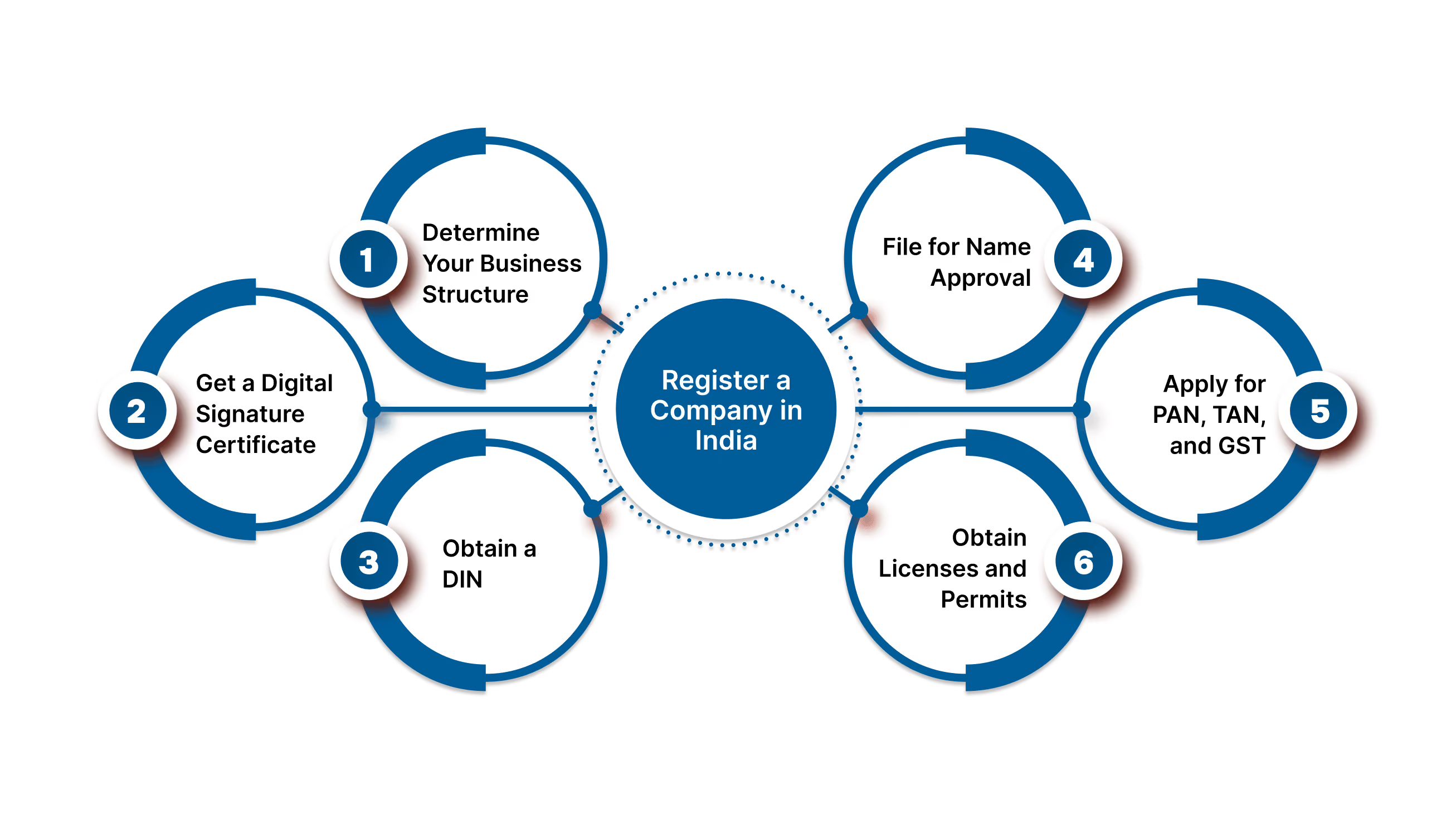
Registering a business in India involves a structured set of processes that ensure your company is legally compliant and set up for success. Here’s a breakdown of the key steps involved:
The first step in registering a company in India is choosing the right business structure. This decision will define how you operate, manage, and grow your business. Whether you opt for a Private Limited Company, Limited Liability Partnership (LLP), or another structure, it will influence your company’s legal, financial, and operational framework.
To register your company online, a Digital Signature Certificate (DSC) is essential. This ensures the security and authenticity of electronic documents, as per the Information Technology Act of 2000. It’s a crucial step for verifying your company’s digital filings.
A Director Identification Number (DIN) is a unique identification number issued by the Ministry of Corporate Affairs (MCA). It is mandatory for anyone planning to be a director in the company.
The next step is to obtain approval for your company name. You can use the RUN (Reserve Unique Name) or SPICe+ (Simplified Performa for Incorporating Companies Digitally) form to submit your name for approval with the MCA.
After your name is approved, the next step is to obtain a Permanent Account Number (PAN) and a Tax Deduction and Collection Account Number (TAN) from the Income Tax Department. If your turnover exceeds a set threshold, you must also register for Goods and Services Tax (GST).
Depending on the nature and location of your business, you may need additional licenses and permits. These may be issued by various government departments or local authorities, ensuring your business complies with all necessary regulations.
While these are the core steps, the exact requirements may vary depending on your company’s type and location.
Also Read: Documents Needed For Company Registration In India From The US
To make the process even smoother, expert support from VJM Global can help you manage every step of your business setup in India.
Starting a business in India can be complex, but VJM Global is here to simplify the process. With our professional incorporation services, you can rely on:
Whether you're looking to expand or set up operations in India, VJM Global provides the expertise to make your business launch smooth and compliant.
Starting a business in India is an exciting opportunity, but the process can be complex if you’re unfamiliar with the legal and regulatory domain. From choosing the right structure to tackling tax regulations, every decision plays a critical role in shaping your business’s future.
VJM Global handles everything from company registration and tax registration to ongoing accounting and audit support, so you can focus on growing your business. With our end-to-end services, we ensure that your entry into the Indian market is smooth, swift, and legally sound.
Ready to take your business setup to the next level? Get expert advice today and make your business goals in India a reality.
Professional incorporation services help businesses establish a legal entity, ensure compliance with all relevant regulatory requirements, and provide support in areas such as tax registration and corporate governance.
Using a professional service ensures that your business is set up correctly from the start, saving you time, reducing the risk of errors, and ensuring compliance with local, state, and federal laws.
Incorporation services help you obtain the necessary Permanent Account Number (PAN), Tax Deduction Account Number (TAN), and GST registration, ensuring your business meets all tax compliance requirements.
Whether you’re starting a small LLC, a large corporation, or a partnership, professional incorporation services can help businesses of all sizes with tailored setup and compliance support. VJM Global offers expert assistance to streamline your India incorporation process.
The timeline can vary, but professional incorporation services typically expedite the process, completing most registrations in as little as 7-15 business days, depending on the business structure and required filings.