Managing the finances of a car dealership is far more complex than simply balancing a checkbook, especially for those planning to set up their car dealership accounting business from the US to India. With unique challenges such as inventory management, floor plan financing, and variable revenue streams, it requires a precise approach.
Each transaction, from vehicle sales to service income, must be recorded and tracked with accuracy. The right accounting practices not only keep a dealership compliant but also provide insights into profitability, helping owners make decisions that drive growth.
In this guide, we will walk through the key elements of car dealership accounting and offer strategies to streamline operations and enhance financial stability.
Key Takeaways
Complexity of Car Dealership Accounting: It extends beyond sales to include inventory management, floor-plan financing, service income, tax compliance, and payroll.
Key Accounting Components: Focus areas include revenue tracking, expense management, inventory accounting, tax compliance, and commission tracking.
Challenges in Dealership Accounting: Common issues include inventory mismanagement, regulatory compliance, audit readiness, and cybersecurity risks.
Role of CPAs: CPAs help in tax compliance, accurate reporting, and provide strategic advice to optimize cash flow and profitability.
Importance of Accurate Financial Data: Accurate records enable informed decision-making, cash flow optimization, and business growth.
What is Car Dealership Accounting?
Car dealership accounting is the process of managing and tracking the financial transactions that happen within a car dealership. It involves recording all income and expenses, including the sale of vehicles, repairs, financing, and service work.
How does this service help? It helps dealers keep track of their profit margins, manage inventory, and follow tax laws and regulations. It also includes tasks like handling payroll, tracking loans for inventory, and everything from vehicle sales to after-sales services is accounted for correctly.
Essentially, it's about keeping the financial side of the dealership organized, transparent, and compliant.
What Are the Benefits of Accounting Practices for Your Car Dealership's Success?
Managing accounting for car dealership operations goes beyond tracking sales. It involves keeping track of commissions, warranties, and customer payments. Without proper documentation, a dealership risks losing revenue or encountering audit complications. Here’s why it’s crucial:
Accurate Inventory Management: Proper accounting helps track vehicle inventory and related costs, providing accurate valuation and management of assets.
Compliance with Regulations: Dealerships comply with tax laws, including sales tax, payroll tax, and floor plan financing, avoiding penalties and legal issues.
Cash Flow Optimization: Accounting tracks revenue and expenses, providing insights that help optimize cash flow and prevent liquidity issues.
Informed Decision-Making: Clear financial data helps dealership owners make better decisions regarding pricing, inventory, and expansion strategies.
Financial Transparency: Proper accounting is all about recording vehicle sales, repairs, and financing, thereby reducing the risk of financial discrepancies and errors.
These benefits don't materialize by chance. They stem from mastering specific financial pillars that form the backbone of every successful dealership operation.
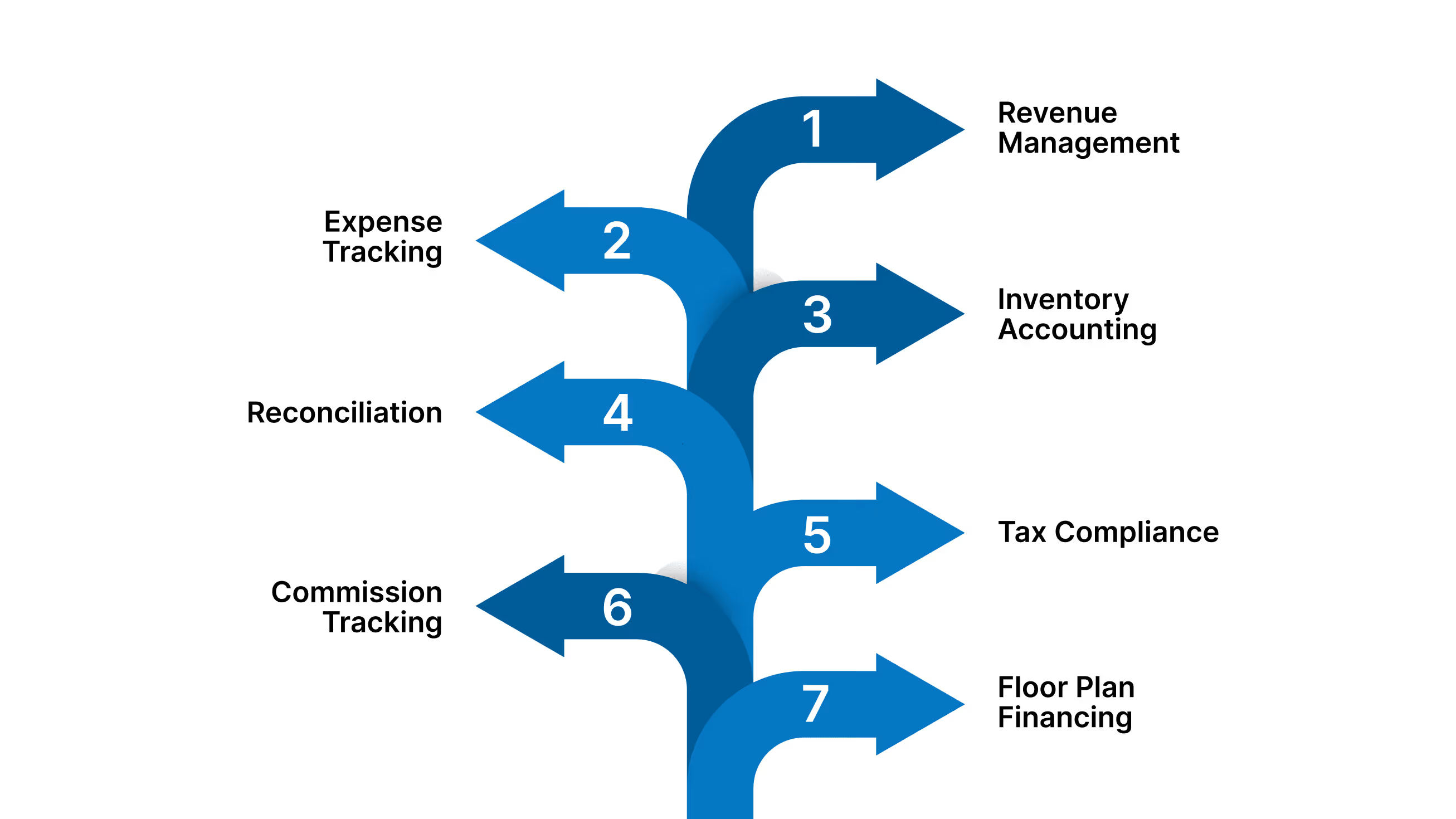
7 Main Components of Car Dealership Accounting
Each of these components plays a key role in maintaining accurate financial records, legal compliance, and providing the dealership with the information needed for growth and profitability, especially for those setting up their business from the US to India. Effective management of these areas supports a dealership’s operational efficiency and long-term success across both markets.
1. Revenue Management
Revenue management in car dealership accounting has multiple revenue streams, including vehicle sales, financing, service, and parts. Proper tracking and categorization of income are essential foraccurate financial reporting and tax compliance.
Vehicle Sales: Car dealerships earn revenue primarily from selling new and used vehicles. Each vehicle sale should be recorded at its gross profit level, factoring in any discounts, trade-ins, and financing options.
Service and Parts Sales: Many dealerships also have service departments offering repairs, maintenance, and parts. Revenue from service and parts sales is tracked separately to assess profitability
Add-ons and Financing: Dealerships also generate income from add-ons such as warranties, insurance, and extended service plans. Financing income is generated by collaborating with lenders and credit institutions.
2. Expense Tracking
Expense tracking is another key component of car dealership accounting, involving the accurate documentation of all costs that a dealership incurs during operations. Tracking expenses helps dealerships monitor their spending, optimize profit margins, and comply with tax laws.