Considering expanding R&D operations to India? US companies can capitalize on a favorable tax environment that offers a 100% deduction on eligible research expenses, covering in-house and partnered innovations.
India’s flexible regulations, cost-effective talent, and reduced customs and GST rates speed product development while minimizing overhead. This environment helps American firms diversify global R&D investments, improving cash flow and technological growth.
This guide explains how US companies can strategically benefit from tax incentives for R&D in India, going through the regulations to take full advantage.
Key Takeaway
Substantial Tax Benefits Under Section 35: US businesses in India can claim a 100% deduction on revenue and capital R&D expenditures, significantly lowering their taxable income and improving innovation cost-efficiency.
DSIR Recognition Opens Broad Incentives: Recognition by India’s DSIR allows zero customs duty on R&D imports, GST reductions, and access to government grants, accelerating cost savings and operational ease for US firms.
Extensive Deductible R&D Expenses: Eligible deductions cover operational costs like salaries, utilities, raw materials, and capital equipment, excluding land, allowing complete financial relief across diverse R&D activities.
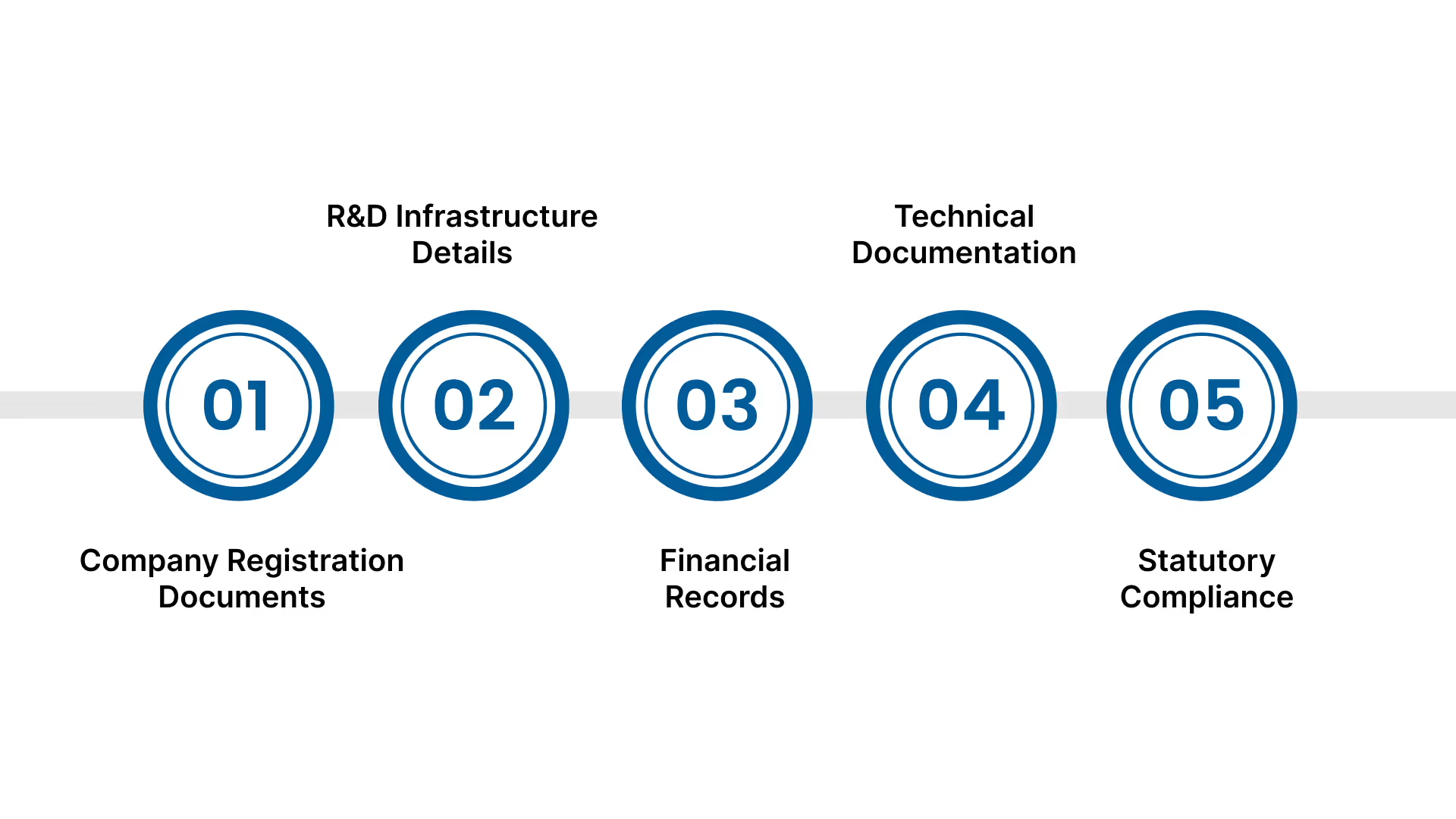
Full Compliance and Documentation Requirements: Companies must maintain detailed financial, technical, and statutory records, including DSIR approval, and file annual returns like Form 3CL to sustain their eligibility for tax incentives.
Industry-Specific Incentives Improve Strategic R&D: Pharma, IT, electronics, aerospace, and renewable sectors benefit from customized incentives, such as weighted deductions, patent tax rates, and accelerated depreciation, driving more focused investment.
Understanding Tax Incentives for R&D in India
Tax incentives for R&D in India represent a comprehensive framework designed by the government to promote scientific research and development activities across industries. These tax incentives operate primarily through Section 35 of the Income Tax Act 1961, which provides substantial deductions for businesses and organizations investing in research activities.
The system aims to reduce the financial burden of R&D investments while encouraging companies to develop new technologies, products, and processes that can drive economic growth and technological advancement.
Tax incentives for R&D in India have gained significant momentum following the government's commitment to allocate ₹20,000 crore for private sector-driven research and development in Budget 2025-26, marking a substantial increase from previous allocations.
This framework contains various types of deductions, customs duty exemptions, and GST benefits that make India an attractive destination for both domestic and international companies seeking to establish research facilities.
What does Tax Incentive for R&D in India Mean for US Businesses?
Tax Incentive for R&D in India offers clear financial advantages to US companies investing in research activities within the country. Recognizing the specific provisions and benefits can help American firms effectively plan and allocate resources for their innovation efforts.
Below are key details tracing how these incentives apply to US businesses operating in India.
Section 35 Tax Deduction: US companies operating in India through subsidiaries or permanent establishments can claim a 100% deduction on both revenue and capital R&D expenditures under Section 35 of the Income Tax Act.
DSIR Recognition: Foreign firms registered in India, including US subsidiaries, qualify for Department of Scientific and Industrial Research recognition, showing benefits like tax deductions and customs duty exemptions on R&D imports.
Customs Duty and GST Benefits: DSIR-approved entities enjoy zero basic customs duty on equipment and inputs, plus reduced GST rates, 5% for interstate and 2.5% CGST plus 2.5% SGST on intrastate transactions.
Accelerated Depreciation: US companies can claim 100% depreciation on research assets in the first year, optimizing capital expense treatment.
Pre-Operational R&D Deductions: Research expenses incurred up to three years before starting business operations in India are deductible once operations commence.
Collaborative Research Contributions: Payments to approved Indian research bodies are deductible up to 100–150%, encouraging partnerships.
Expense Coverage: All operational expenses, including salaries, utilities, raw materials, and consumables, qualify for full deduction in the year incurred.
Exclusions and Documentation: Land costs are non-deductible, and detailed records and DSIR approvals are essential to claim benefits.
Access to Govt Support: DSIR-registered US subsidiaries may also access government grants, subsidized loans, and equity support for their R&D activities.
Plan ahead with expert insights that can help businesses go through global rules and minimise risks, and explore practical approaches in International Tax Planning Strategies for 2025.
Tax Incentives for R&D in India: Benefits Structure
Tax Incentives for R&D for US businesses in India come with a structured framework that defines how different research expenditures are recognized and deducted. Understanding the specific categories and their conditions can help set realistic expectations for tax planning and compliance.
Here’s a clear overview of the key benefits and requirements associated with these incentives.
Expenditure on Scientific Research
Tax Deduction Rate
Section Reference
Key Requirements & Conditions
Form Required
In-house revenue expenditure
100% of expenditure
Section 35(1)(i)
Must be related to business operations
Not specified
In-house capital expenditure (excluding land & building)
100% of expenditure (land cost excluded)
Section 35(1)(iv)
Separate books required; excludes land & building costs
Form 3CK for DSIR approval
Pre-commencement expenditure (within 3 years before business)
100% in the year the business commences
Section 35(1)(i)
Expenditure incurred within 3 years before business start
Not specified
Payment to an approved scientific research company (Indian entity)
100% of payment
Section 35(1)(iia)
An Indian company with scientific research as its main objective
Approval from the Income Tax Authority is required
Contribution to an approved research association/university
100%
Section 35(1)(ii)
The institution must be government-approved
Not specified
Payment to national laboratory/IIT/university
100%
Section 35(2AA)
Recognized by the prescribed authority with an approved program
Form 3CG for approval
Payment to specified person approved by prescribed authority
100%
Section 35(2AA)
Must be approved by the prescribed authority (DSIR)
Form 3CG for approval
In-house R&D by biotechnology/manufacturing companies
With VJM Global, entry to India is made simple; company registration, compliance, and ongoing support in one place.
Industry-Specific Opportunities for Tax Incentives for R&D in India
Tax Incentive for R&D in India varies notably across industries, reflecting the distinct demands and priorities of each sector. Recognizing how these incentives align with specific industry needs can clarify where the most relevant benefits lie.
The following breakdown highlights key opportunities available to different fields.
Industry
Tax Incentive Summary
Pharmaceuticals
150% weighted deduction under Section 35(2AB); duty-free import for research equipment; 10% patent box tax rate.
IT & Software
150% deduction on in-house R&D; tax exemptions in Special Economic Zones (SEZs) for export profits; 10% concessional tax on patent income.
Electronics
150% weighted deduction; $3 billion government incentives for indigenous technology; duty exemptions for design and prototyping.
Automotive
150% R&D deduction; 40% accelerated depreciation on indigenous technology machinery; EV R&D incentives.
Aerospace & Defense
Up to 45% capital subsidy; excise and utility duty exemptions; DRDO funding for MSMEs; patent-based benefits.
Renewable Energy
100% deduction on profits from solar/wind projects; accelerated depreciation on machinery; financial support programs.
Chemicals & Materials
150% deduction on R&D expenditure; import substitution incentives; tax benefits for environmental R&D compliance.
Agriculture & Food
Weighted deductions on crop breeding and processing R&D; concessional tax on patent income; export promotion incentives.
How VJM Global Can Support US Businesses Claim Tax Incentives for R&D in India
VJM Global 通过印度的研发税收激励框架,为美国企业提供专业支持。我们的团队简化了复杂的监管与合规需求,使企业能够充分利用财政优势。
深入的监管知识:全面了解印度的税法、关税豁免及 DSIR 认证程序,以优化研发索赔。
端到端合规支持:处理文档、申报及报告要求,最大限度减少您团队的运营负担。
专业的跨学科团队:德里 NCR 和孟买的资深专业人士提供及时、准确且以客户为中心的服务。
技术驱动的流程:在整个合作过程中使用现代工具,确保高效与沟通透明。
借助 VJM Global 的专业知识,为您的研发运营奠定成功基础。立即联系我们,开始最大化您在印度的研发税收激励。
结语
The tax incentives for R&D in India framework offer US companies a strategic pathway to build innovation hubs in a cost-efficient setting. With 100% tax deductions, customs exemptions, and reduced corporate rates, the framework cultivates a fertile environment for research activities. Securing DSIR recognition for R&D operations opens further financial advantages while tapping into India’s skilled talent pool.
VJM Global 专注于引导企业应对这些监管细微差别,助力企业实现税务优惠和运营效率的最大化。准备好利用印度的研发税收激励政策来实现您的创新目标了吗?


.avif)