Logistics costs have remained a major expense for U.S. businesses. Rising transportation, warehousing, and inventory expenses, part of the broader logistics spend that reached over $2.6 trillion in the U.S., make cost control a top priority for companies of all sizes.
Traditional in‑house accounting teams often struggle with the volume and complexity of logistics financial data. Hiring, training, and maintaining such a team adds overhead while diverting internal focus from core operational goals.
Outsourcing logistics accounting changes that dynamic: it turns cost tracking into a strategic lever rather than a back‑office burden. And for logistics‑driven businesses, this advantage is especially critical given volatile freight rates, labor pressures, and compliance challenges.
This blog explains how logistics accounting outsourcing can help U.S. companies save on operational costs in 2026. Get practical insights, real cost use points, and guidance on when outsourcing makes strategic sense for your bottom line.
As logistics costs rise, many U.S. companies are discovering that traditional, in‑house accounting teams struggle to keep up with the volume, complexity, and pace of modern supply chains.
According to the State of Logistics Report, U.S. business logistics costs reached around $2.58 trillion in 2025, accounting for about 8.8 % of GDP, up from $2.45 trillion in 2024. These costs include transportation, warehousing, and inventory management expenses, and they show little sign of slowing down.
Managing these numbers effectively requires more than basic bookkeeping.
When done right, it turns a previously reactive back‑office function into a strategic partner in controlling logistics spend and driving operational efficiency.
Suggested Read: Guide to Outsourcing in Finance and Accounting Functions
Below, we explore the core benefits of outsourcing logistics accounting and show how it strengthens financial control today.
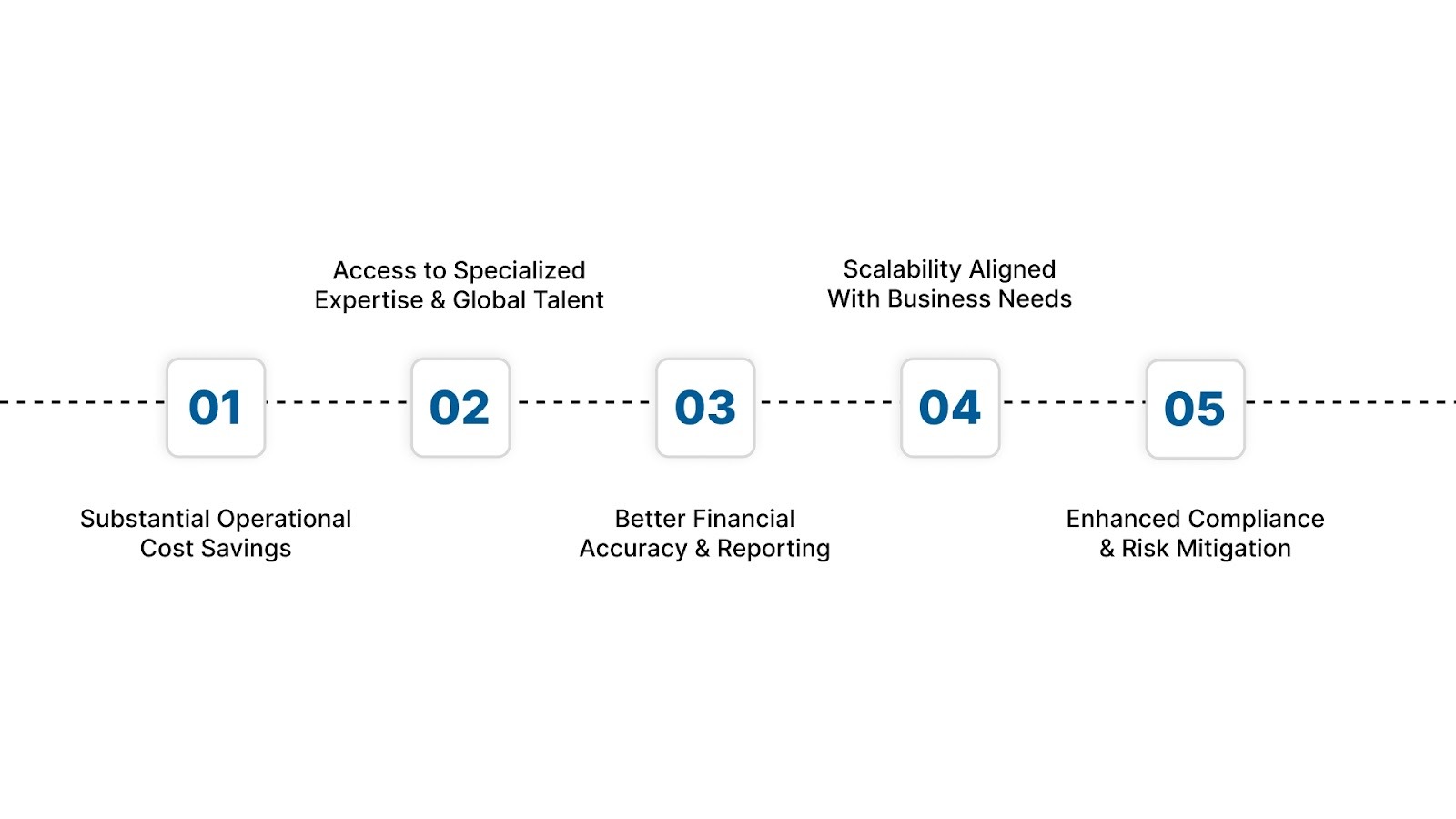
Outsourcing logistics accounting isn't just about shifting tasks off your internal team. It's a strategic move that helps businesses cut costs, improve accuracy, and strengthen financial visibility. In the coming competitive scene, where even small inefficiencies can erode margins, outsourcing can be a major differentiator.
Below are the core benefits with real business logic:
One of the biggest drivers for outsourcing is cost reduction.
For logistics operations with complex billing and frequent freight adjustments, outsourcing means you're not paying full‑time for tasks that vary month to month. This is a huge advantage for businesses with cyclical demand.
U.S. companies today face a tightening labor market for accounting professionals.
This is particularly valuable when internal teams lack experience with complex logistics and cross‑border costs.
Outsourced accounting partners typically utilize advanced technology and structured processes that improve the accuracy and timeliness of financial data.
Logistics accounting demands fluctuate with business cycles, seasonality, and contract volumes.
This flexible model ensures financial overhead remains tied to actual needs
Outsourced partners bring both domain knowledge and compliance expertise, helping businesses stay up to date with evolving tax laws, changes in freight regulations, and international cost reporting requirements.
These benefits not only reduce costs, but they also reposition finance from a back‑office obligation to a strategic partner in operations. With VJM Global, you get accurate, real-time insights and expert support tailored to your needs.
Ready to optimize your logistics accounting? Get in touch now to see how we can help.
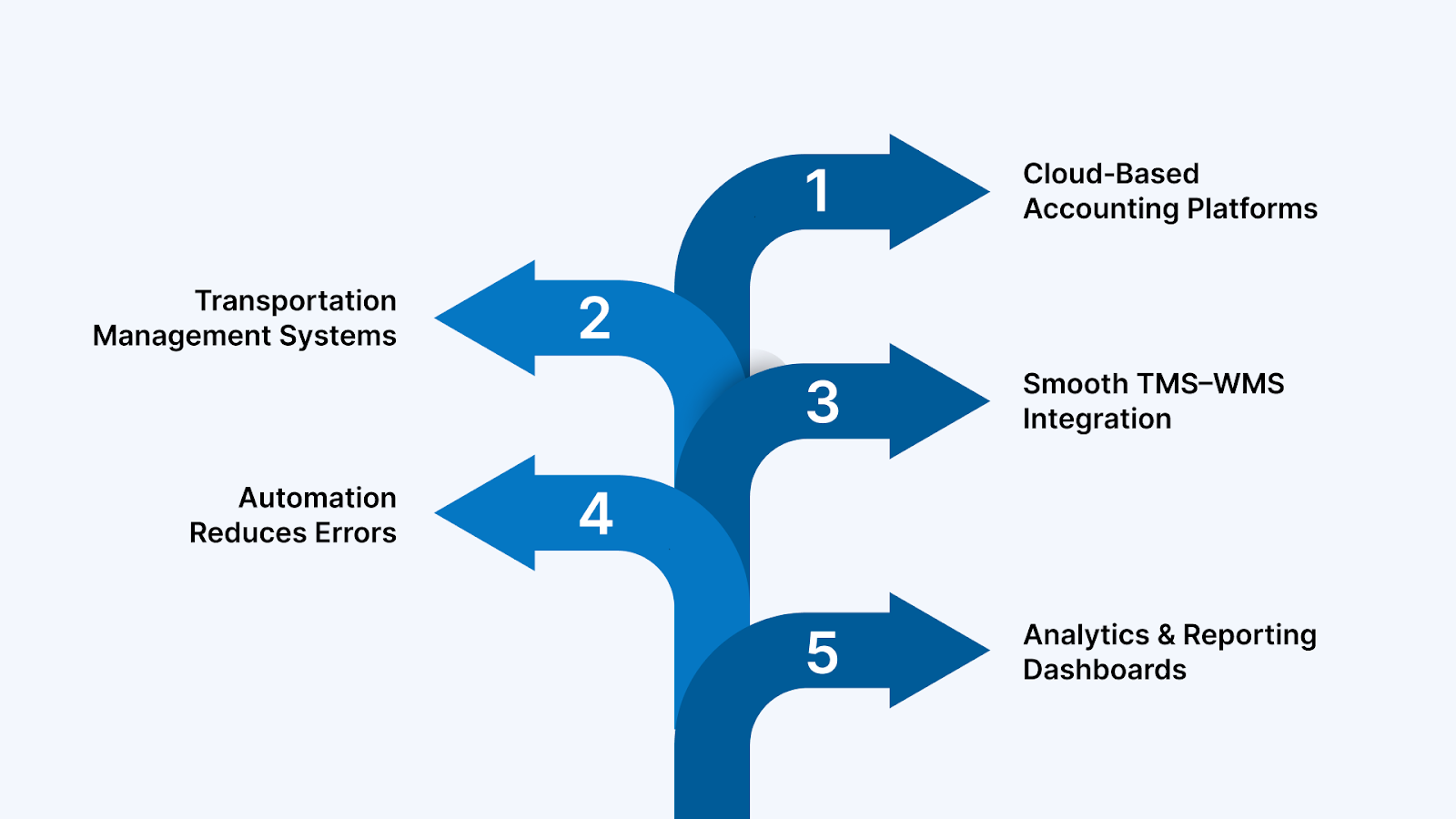
Outsourcing logistics accounting isn't just about transferring tasks to an external team; it's about using technology that most companies can't or don't invest in internally. The right mix of systems, automation, and integrations turns accounting from a passive record‑keeper into a real‑time cost intelligence machine.
Below are the key technology enablers that make logistics accounting outsourcing truly effective:
Modern logistics accounting outsourcing partners use cloud accounting software that centralizes financial data, eliminates manual entry, and enables remote collaboration. This real‑time visibility gives finance leaders continuous insight into logistics costs without waiting for end‑of‑month reports.
A Transportation Management System (TMS) is a foundational tool for logistics operations. By automating shipping execution, route planning, carrier selection, and freight tracking, a TMS provides detailed, structured cost data that feeds directly into accounting workflows.
When a Warehouse Management System (WMS) is integrated with a TMS, logistics data flows in real time between order fulfillment and transportation operations.
This eliminates data siloes between inventory movement and shipment execution, ensuring that accounting systems receive real‑time, verified transactions rather than reconciled estimates later.
Outsourced accounting teams also use automation tools, including invoice processing bots and reconciliation software, to minimize human error and accelerate routine workflows.
Technology isn't valuable unless it's usable. Outsourced teams often build custom dashboards and analytics reports that transform raw logistics cost data into clear, actionable insights. These dashboards might include:
This level of visibility helps executives identify trends rapidly and make data‑driven decisions - a key upside of combining technology with outsourcing expertise.
This coordination, technology plus specialized outsourcing, is what moves logistics accounting from a routine task to a competitive advantage in 2026. VJM Global integrates advanced tools to provide seamless, automated cost tracking, saving time and reducing errors.
Want to see how tech can drive your efficiency? Contact us today to learn more!
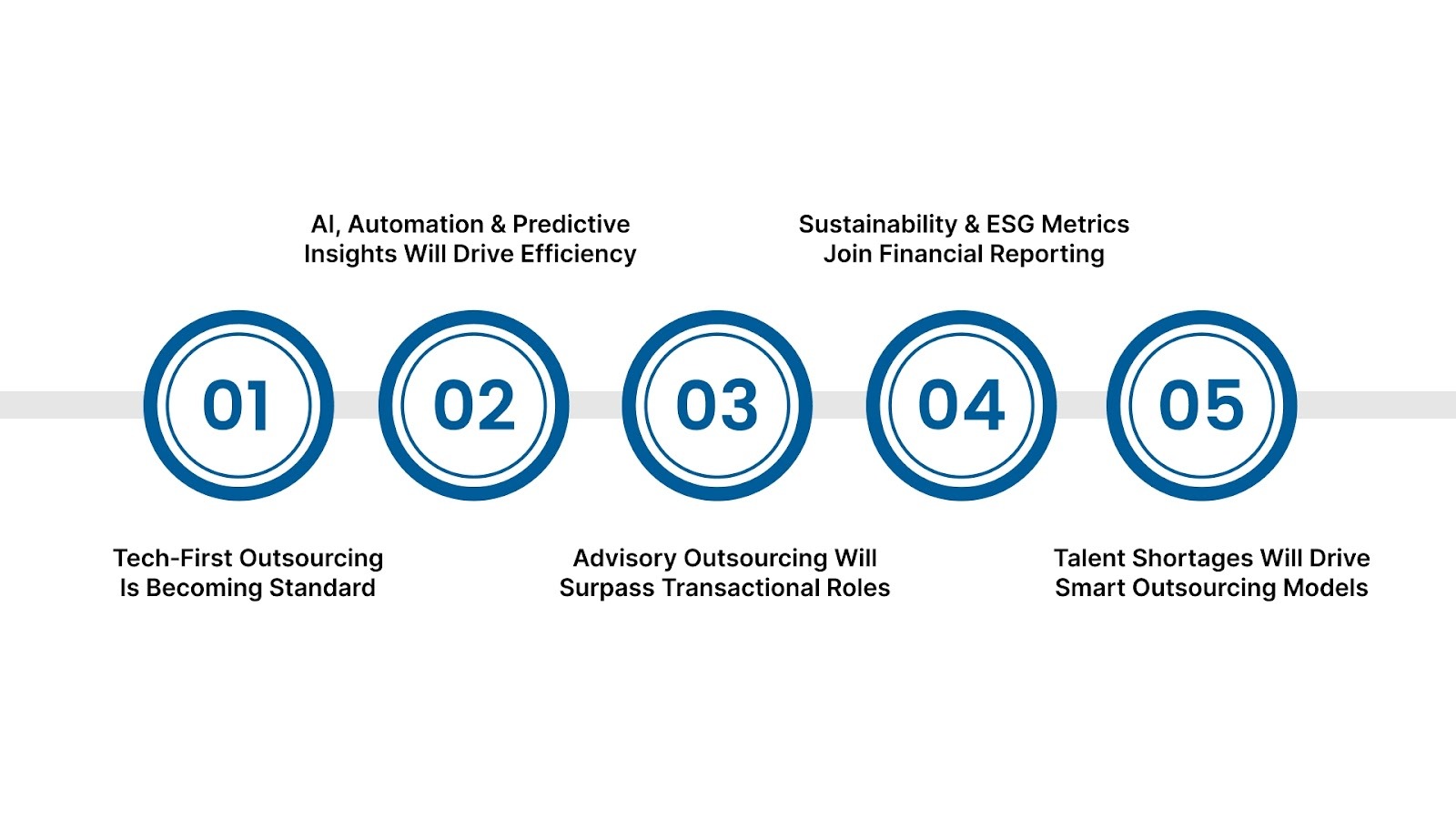
As supply chains become more complex and cost pressures intensify, logistics accounting outsourcing is evolving into a strategic capability rather than just a cost‑saver. What once served as a back‑office support function is now being reshaped by technology, data, and strategic demand.
The trends ahead are shaping how successful U.S. businesses will manage their logistics finances in 2026 and beyond.
By 2026, cloud‑based accounting platforms, real‑time data tools, and automation are no longer optional - they're expected. Companies are moving toward cloud‑enabled, fully integrated accounting ecosystems that support remote collaboration, continuous reporting, and cost tracking across logistics functions.
Real‑time cost visibility will be a baseline requirement for logistics financial teams, not a luxury.
Why does it matter?
Outsourcing isn't just a way to offload accounting tasks. It's a gateway to AI‑powered decision support. From predictive analytics that forecast cost trends to automation that frees human effort from repetitive tasks, logistics accounting in 2026 will be driven by tools that help you anticipate issues rather than react to them.
Impact for U.S. firms?
The next phase of accounting outsourcing isn't about doing work cheaper but making smarter decisions with outsourced expertise. Trends show a shift from compliance‑only services to analytics‑driven advisory offerings, where outsourced teams help interpret data, identify opportunities, and support financial strategy.
In practice:
Beyond cost and compliance, companies are now expected to track environmental and social performance alongside financial results. Outsourcing teams are being asked to support ESG reporting by integrating sustainability data, such as carbon footprints linked to logistics costs, into accounting systems.
Why does this matter?
The talent gap in accounting is real; finance teams are stretched, and demand for tech‑savvy professionals exceeds supply. Outsourcing partners fill this gap not just with headcount, but with specialized expertise hosted on modern platforms.
This will enable U.S. firms to figure out complex logistics cost structures without needing deep internal teams.
A Strategic shift:
What does all this mean for U.S. businesses?
Logistics accounting outsourcing in 2026 will be shaped by forces that go well beyond cost reduction. Technology adoption, predictive insights, strategic advisory, and sustainability reporting will all play central roles in how companies run their finance functions.
Outsourcing partners who combine these capabilities with deep logistics expertise will be the ones that help businesses maintain profitability and resilience in an increasingly uncertain economic landscape.
Stay tuned as these trends continue to evolve, and consider how your logistics accounting strategy can adapt before 2026 demands it.
Also Read: Top Outsourcing Business Services for Growth in 2025
As logistics costs continue to rise in 2026, outsourcing your logistics accounting can streamline operations, reduce expenses, and ensure compliance. With expert support and advanced technology, businesses can gain better financial visibility, improve decision-making, and maintain operational agility.
At VJM Global, we specialize in helping U.S. businesses optimize their logistics accounting functions through tailored outsourcing solutions. Here's how we can support your success:
Partner with VJM Global today to take control of your logistics accounting, reduce operational costs, and enhance financial clarity in 2026 and beyond. Contact us now to explore how our expert outsourcing services can optimize your logistics operations.
Logistics accounting outsourcing is the delegation of logistics‑specific financial tasks, such as freight invoice audits, cost allocation, inventory cost tracking, and reporting, to a third‑party specialist provider. It helps companies reduce overhead and gain expert support without maintaining a full-in-house team.
Outsourcing cuts costs by eliminating full‑time salaries, training, software licensing, and infrastructure. It also improves accuracy and efficiency, reducing costly errors and freeing internal teams for strategic work.
Yes, common concerns include data security, communication gaps, and loss of direct control. Choosing a provider with strong cybersecurity measures and clear service agreements helps mitigate these risks.
Businesses can outsource freight auditing, invoice reconciliation, cost reporting, compliance documentation, and financial analysis tied to logistics operations, allowing internal teams to focus on core business decisions.
Ask about their industry expertise, technology stack, data security protocols, and experience handling logistics cost structures. A good partner should integrate with your systems and tailor services to your business needs.