
According to the Association of Americans Resident Overseas (AARO) report from October 2024, over 5.5 million USA citizens live abroad. As an expatriate, you are required to file USA taxes regardless of your location. Not meeting this requirement can result in severe penalties and legal challenges.
When conducting business in foreign markets or managing international investments, the risk of tax inefficiencies is elevated. Tax planning is not merely about staying compliant; it’s about making informed decisions that safeguard your financial interests.
Key decisions, such as identifying double taxation, using tax treaties, and selecting the appropriate structure for international operations, are critical. Getting them right can significantly enhance your financial success; getting them wrong can lead to substantial costs.
This guide outlines the essential strategies for effective tax planning, providing the insights needed to structure your global finances with efficiency while avoiding costly errors.
Yes, under U.S. tax law, expatriates must file taxes on worldwide income even if they live overseas. The United States is one of the few countries that follows citizenship-based taxation, meaning U.S. citizens and green card holders are always required to report income to the IRS.
That said, Expat Tax Planning strategies can help reduce or eliminate the actual tax owed. Key tools include the Foreign Earned Income Exclusion (FEIE), which allows expats to exclude up to $120,000 of foreign-earned income, and the Foreign Tax Credit (FTC), which offsets taxes already paid in the host country. Tax treaties between the U.S. and countries like India also help prevent double taxation.
The bottom line: U.S. expats must file annually, but with smart expat tax planning, many can significantly minimize their U.S. tax burden.
An expatriate (or expat) refers to a citizen or permanent resident who resides in a foreign country for an extended period, often for work, investment, or personal reasons. Expats may move abroad for various reasons, including employment opportunities, entrepreneurial ventures, retirement, or to be closer to family. While living abroad offers many advantages, such as exposure to new cultures and markets, it also comes with specific tax obligations and complexities.
For USA expatriates, tax planning is crucial for several reasons:
Understanding the unique tax challenges expatriates face is the first step toward effective planning. Now, let’s explore how you can manage your tax responsibilities when investing abroad.
Investing abroad as a USA expatriate introduces unique tax complexities. Beyond managing the financial performance of your investments, you must also ensure you're compliant with both USA and foreign tax regulations. Here's a closer look at the critical tax considerations and strategies to effectively manage your investments abroad.
As a USA expatriate, all your global income, including dividends, capital gains, and interest from foreign investments, must be reported to the IRS. This global taxation system means you may face double taxation unless strategic planning is in place.
While the Foreign Tax Credit (FTC) can help offset taxes paid to foreign governments, not all foreign income qualifies for this credit. For example, passive income like rental income or interest may be subject to tax in both the USA and the host country, unless covered by a tax treaty.
To stay compliant, you must meet USA tax reporting requirements for foreign investments:
Effective investment tax planning for expatriates requires careful attention to both local and the USA tax obligations. Next, we’ll break down key tax considerations and strategies for expatriates starting a business abroad.
Also read: Financial Optimization Strategies for Business Success

Expanding your business abroad brings key tax challenges. It's not just about following the host country's tax laws but also about how they align with the USA tax regulations. Smart tax planning can help you reduce liabilities, avoid double taxation, and keep your business running smoothly across borders.
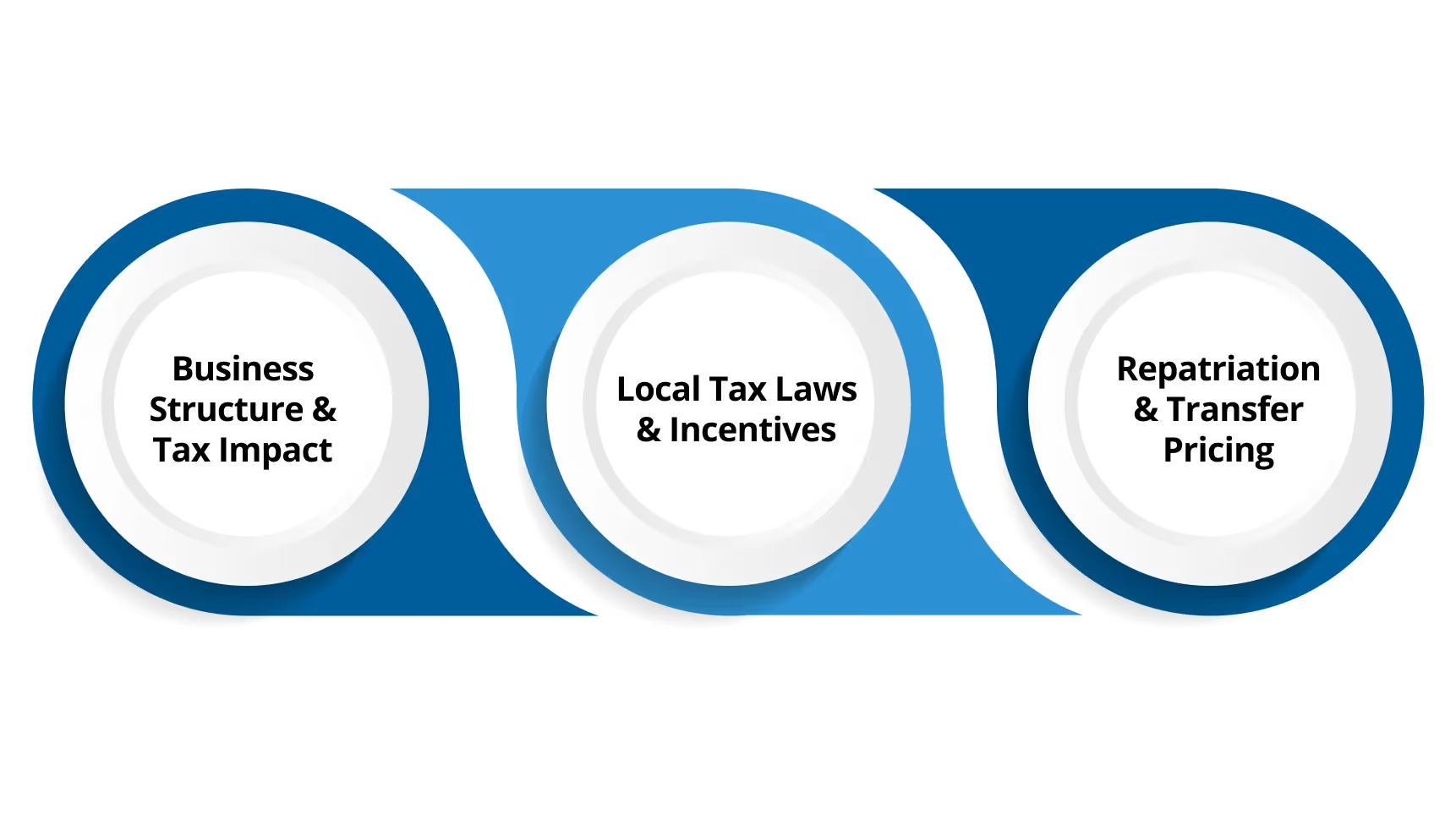
When you establish a business in a foreign country, the first key decision is choosing the business structure. This decision impacts how income is taxed, how profits are repatriated, and how tax-efficient the business will be.
Each country has its own tax framework for foreign businesses, including corporate tax rates, exemptions, and incentives. Some countries offer attractive tax incentives for new businesses, while others may impose high corporate tax rates.
Repatriating profits back to the USA can incur significant taxes, as the USA taxes global income. However, the Tax Cuts and Jobs Act (TCJA) of 2017 reduced the USA corporate tax rate to 21%, which helps make repatriation more manageable. Additionally, using tax treaties can help reduce withholding taxes on repatriated dividends, royalties, and interest.
Some countries, like Ireland or Singapore, have corporate tax rates as low as 12.5% and 17%, respectively, making them favorable destinations for repatriating profits with lower tax exposure. Proper tax planning allows expatriates to take advantage of these favorable tax rates while complying with both local and USA tax laws.
India offers significant opportunities for USA expatriates looking to invest or establish businesses, with its growing economy and favorable tax policies. However, understanding the local tax landscape and regulatory requirements is crucial for success.
印度为美国外籍人士提供了许多机会,但了解税务规划至关重要。现在,让我们来看看管理外国投资税务的关键策略。
如果没有明确的策略,您可能会面临多缴税款或错失减轻税务负担的关键机会。了解正确的方法对于保护您的投资回报并确保跨境合规至关重要。
美国与加拿大或英国等国家之间的税收协定有助于降低双重征税的风险。例如,美英税收协定允许美国外籍人士在股息和利息方面按两国中较低的税率纳税,从而减轻整体税务负担。
一些外籍人士利用离岸退休账户或养老金计划等延税投资工具来最小化美国的税务义务。这些工具通常伴随着特定的报告和合规法规,因此与专业的税务顾问合作以合理构建投资结构至关重要。
新加坡和瑞士等国家对资本利得和股息提供优惠的税收待遇。通过在这些地区投资,您可以从较低的资本利得税率中受益,特别是如果您长期持有资产。虽然仍需履行美国税务义务,但税率可能会更优惠。
离岸账户可以提供更灵活的投资选择,从而带来益处。然而,根据《外国账户税收合规法案》(FATCA),美国国税局 (IRS) 要求进行全面申报。咨询税务顾问以确保合规并最大化税务利益至关重要。
鉴于美国和当地税务规则的复杂性,获得适当的支持以避免错误并充分利用您的投资至关重要。让我们来看看 VJM Global 如何帮助您应对这些挑战,并确保您的税务策略步入正轨。
阅读更多:从美国在印度注册公司所需的文件
VJM Global 总部位于印度,提供专业的外籍人士税务规划服务,专注于在印度工作或经商的美国公民和非居民印度人 (NRI)。我们帮助外籍人士应对跨境税务的复杂性,同时最大限度地减少税务负债并确保合规。
Our Key Services
Successfully managing expatriate taxes requires more than just meeting basic compliance requirements; it’s about strategic planning that aligns with both your financial goals and the intricacies of international tax laws. By understanding the full scope of tax implications, from double taxation to filing obligations, you can unlock opportunities to minimize their liabilities and optimize their investments. The right guidance can turn complex tax challenges into a clear path for financial success.
At VJM Global, we specialize in helping expatriates identify these complexities with fruitful tax strategies and expert advice. If you’re ready to take control of your tax planning and secure a smarter financial future, get in touch with our team today for a personalized consultation.
Schedule a demo now to get started with expert expatriate tax planning.
Yes, USA citizens must report and pay taxes on their worldwide income, regardless of their residence abroad. Tax credits and exclusions, such as the Foreign Tax Credit (FTC) and Foreign Earned Income Exclusion (FEIE), can help minimize the impact of double taxation.
The FEIE allows expatriates to exclude up to $120,000 of foreign-earned income from USA taxes, provided they meet certain residency or physical presence tests. This helps reduce the taxable income that needs to be reported to the IRS.
You can prevent double taxation by utilizing tax treaties between the USA and your host country, using the Foreign Tax Credit, and qualifying for the Foreign Earned Income Exclusion. These options help offset taxes paid in the foreign country.
Owning property abroad can lead to both rental income taxes in the host country and potential USA tax obligations. You'll need to report rental income, but tax treaties and credits may help offset the burden. Long-term capital gains from property sales may also be subject to taxes.
Yes, expatriates generally need to file taxes in both the USA and the host country. However, tax treaties and credits can reduce the amount of taxes owed to each country, ensuring you don’t pay taxes twice on the same income.