了解 Schedule K-1 (Form 1065) 税务表格

分类:
国际税务
发布日期:
September 12, 2025

目录

联系我们
感谢您!我们已收到您的提交信息!
糟糕!提交表单时出错了。

立足本土,
服务全球

我们以专业和清晰的视角,为您提供跨境业务支持。
预约咨询

作为企业合伙人,您会接触到一种与 W-2 或 1099 表格同样重要,但往往复杂得多的税务表格:K-1 表格(1065 表格)。对于数百万美国人来说,这份表格是税务拼图中不可或缺的一块。如果您是合伙人,或者从事合伙企业税务申报工作,那么您需要对这份文件有扎实的了解。

在本篇博客中,我们将解析 K-1 表格的用途,向您展示如何利用该表格申报个人所得税,并重点介绍可能出现的常见陷阱和局限性。本指南将帮助您从容应对合伙企业税务申报的复杂性。那么,让我们从基础知识开始:这份表格究竟是什么,为什么它如此重要?

Key Takeaways

  • K-1 表格是合伙企业合伙人的重要税务文件,详细列明了他们在合伙企业财务成果中所占的份额。
  • 它用于报告合伙人在个人所得税申报中应承担的收入、亏损、扣除额和抵免额份额。
  • 该表格的复杂性(尤其是关于亏损扣除规则的部分)通常需要专业指导。
  • 合伙人在处理该表格可能出现的错误或接收延迟时,也可能需要协助。

什么是 K-1 表格?

K-1 表格是由合伙企业编制并签发给每位合伙人的税务文件,用于报告其在企业收入、亏损、扣除额和抵免额中所占的份额。合伙企业被视为“转嫁”实体,这意味着企业本身无需缴纳所得税。

相反,利润和亏损会转嫁给合伙人,由合伙人负责在各自的个人所得税申报表中报告其份额并缴纳税款。K-1 表格就像一份详细的路线图,明确告知您需要申报的内容。

对于中小型企业及其背后的会计专业人士而言,理解 K-1 表格尤为重要,因为它是连接企业财务状况与每位合伙人个人税务情况的核心文件。

K-1 表格(1065 表格)概述

K-1 表格是确保合伙企业的财务成果能为税务目的正确分配给各合伙人的重要工具。其核心作用是准确告知每位合伙人其在当年企业税务属性中所占的具体份额。

合伙企业首先会在其主要税务申报表(1065 表格)上计算总收入、扣除额和抵免额。然后,根据合伙协议的条款,利用 K-1 表格将这些金额分配给所有合伙人。此过程会报告合伙人应占的特定项目份额,包括:

  • 一般业务收入或亏损
  • 净租赁房地产收入或亏损
  • 利息、股息和特许权使用费收入
  • 保证付款
  • 资本利得和亏损
  • 各类扣除额和抵免额

这份详细信息是您在个人所得税申报表(1040 表格)上报告企业盈亏份额的关键依据,可防止在实体和个人层面出现双重征税。要完全掌握 K-1 表格,必须了解签发该表格的实体类型。

了解转嫁实体

“转嫁实体”的概念是理解 K-1 表格的核心。与传统的 C 型公司(在向股东分配股息前需先缴纳企业所得税)不同,转嫁实体避免了这一层额外的税负。因此,这些实体有时也被称为“流转”实体。

企业本身无需缴纳联邦所得税。相反,企业产生的所有利润、亏损、扣除额和抵免额都会直接“转嫁”给合伙人。随后,合伙人会在其个人所得税申报表中报告其相应份额。这就是 K-1 表格如此关键的原因——它提供了计算个人层面税负所需的精确数字。

常见的转嫁实体类型包括:

  • 合伙企业:拥有两名或以上所有者的企业。
  • S 型公司:选择按转嫁实体纳税的公司。
  • 独资企业:单一所有者企业(尽管此类企业无需提交 1065 表格或签发 K-1 表格)。

需要注意的是,无论合伙人是否收到现金分配,他们都要就其应占的企业收入份额纳税。例如,合伙企业可能会选择保留利润以促进业务增长,但合伙人仍需就该部分收入纳税。K-1 表格将反映这些非现金收益,确保所有税务属性得到正确报告。K-1 表格本身分为若干特定部分,正是这些部分使得上述申报成为可能。

为了实现顺畅的税务申报流程,从一开始就理顺您的业务结构和会计工作至关重要。 VJM Global 可以提供专业的企业设立咨询和会计外包服务,帮助确保您的财务状况随时符合 K-1 申报要求。

Outsource your bookkeeping and save time without compromising accuracy. Let us handle the books.

延伸阅读:为什么全球企业都信任印度的会计外包公司?

Schedule K-1 (Form 1065) 的关键组成部分

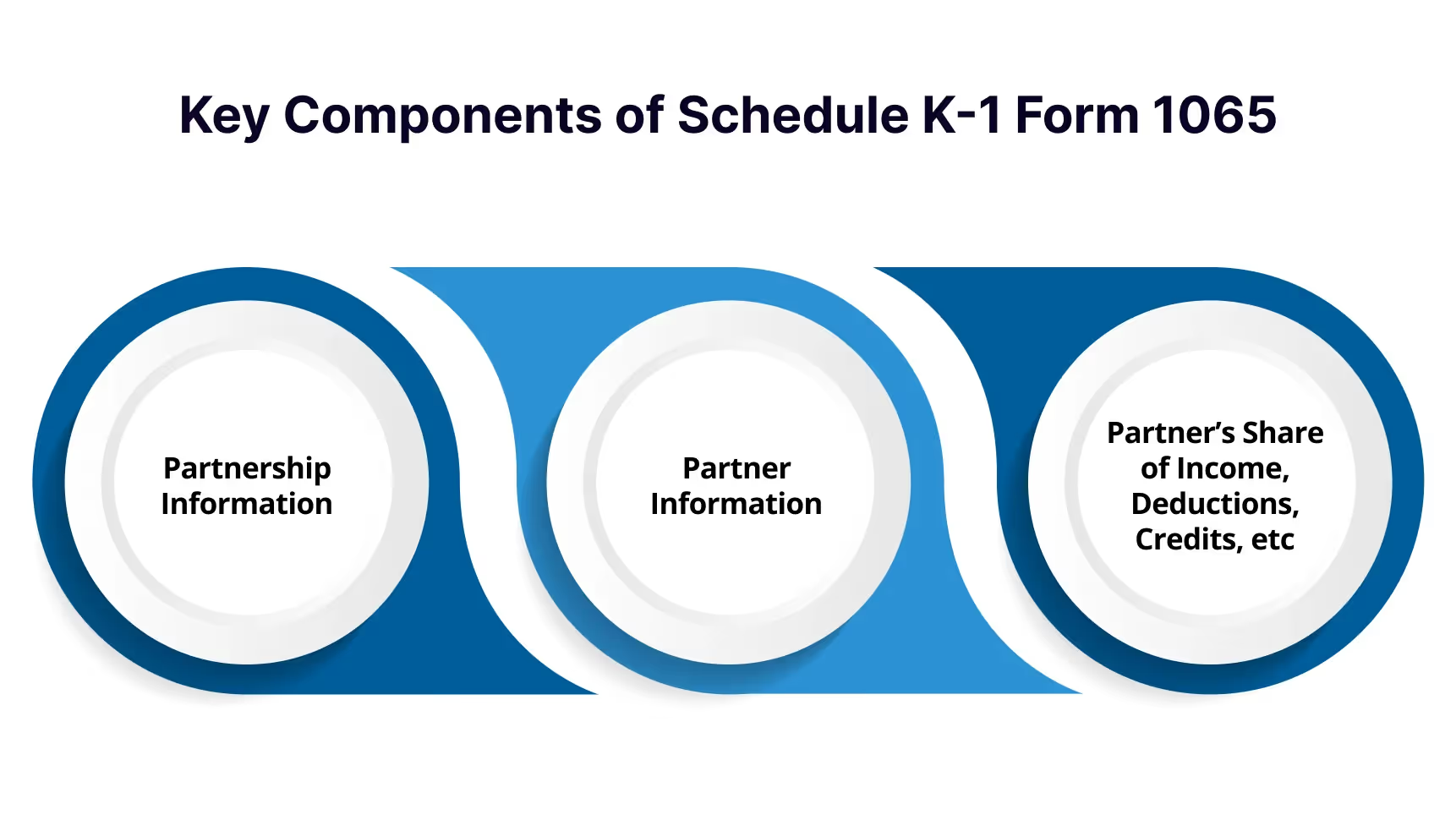
Key Components of Schedule K-1 Form 1065

The Schedule K-1 is divided into three distinct parts, each providing a specific piece of information vital for accurate tax reporting.

  • Part I: Partnership Information: This section contains identifying details about the partnership, such as its name, address, and Employer Identification Number (EIN). This information is used to link your personal tax return to the partnership's master tax filing, Form 1065.
  • Part II: Partner Information: This part details your specific role and stake in the partnership. It includes your name, address, Social Security Number (SSN), and your percentage of ownership, profit, and loss.
  • Part III: Partner’s Share of Income, Deductions, Credits, etc.: This is the most crucial part of the form, as it contains all the financial data you will need to report on your personal tax return. It is a detailed list of your portion of the business’s financial activities for the tax year. Key items you'll find here include:
    • Ordinary Business Income: Your share of the partnership's general business profits or losses.
    • Guaranteed Payments: Payments made to a partner for services or the use of capital, regardless of the partnership's income.
    • Interest and Dividend Income: Your share of any investment income the partnership earned.
    • Net Rental Real Estate Income: Income or loss from real estate activities held by the partnership.
    • Capital Gains and Losses: Your share of profits or losses from the sale of partnership assets.

Each line item in Part III corresponds to a specific line on your personal Form 1040, which makes the K-1 an indispensable guide for accurately preparing your tax filing. Now that we have covered the components, let's look at the practical application of the K-1 when you prepare your return.

The complexity of Part III can be daunting. Rather than manually transferring figures, consider a seamless approach. VJM Global specializes in comprehensive Direct Taxation and International Taxation services, helping you report these details with confidence and accuracy.

Free up your team's time, outsource accounting to VJM Global and focus on growth.

Also Read: International Tax Planning Strategies for 2025
How to File Your Personal Tax Return with Schedule K-1?

How to File Your Personal Tax Return with Schedule K-1?

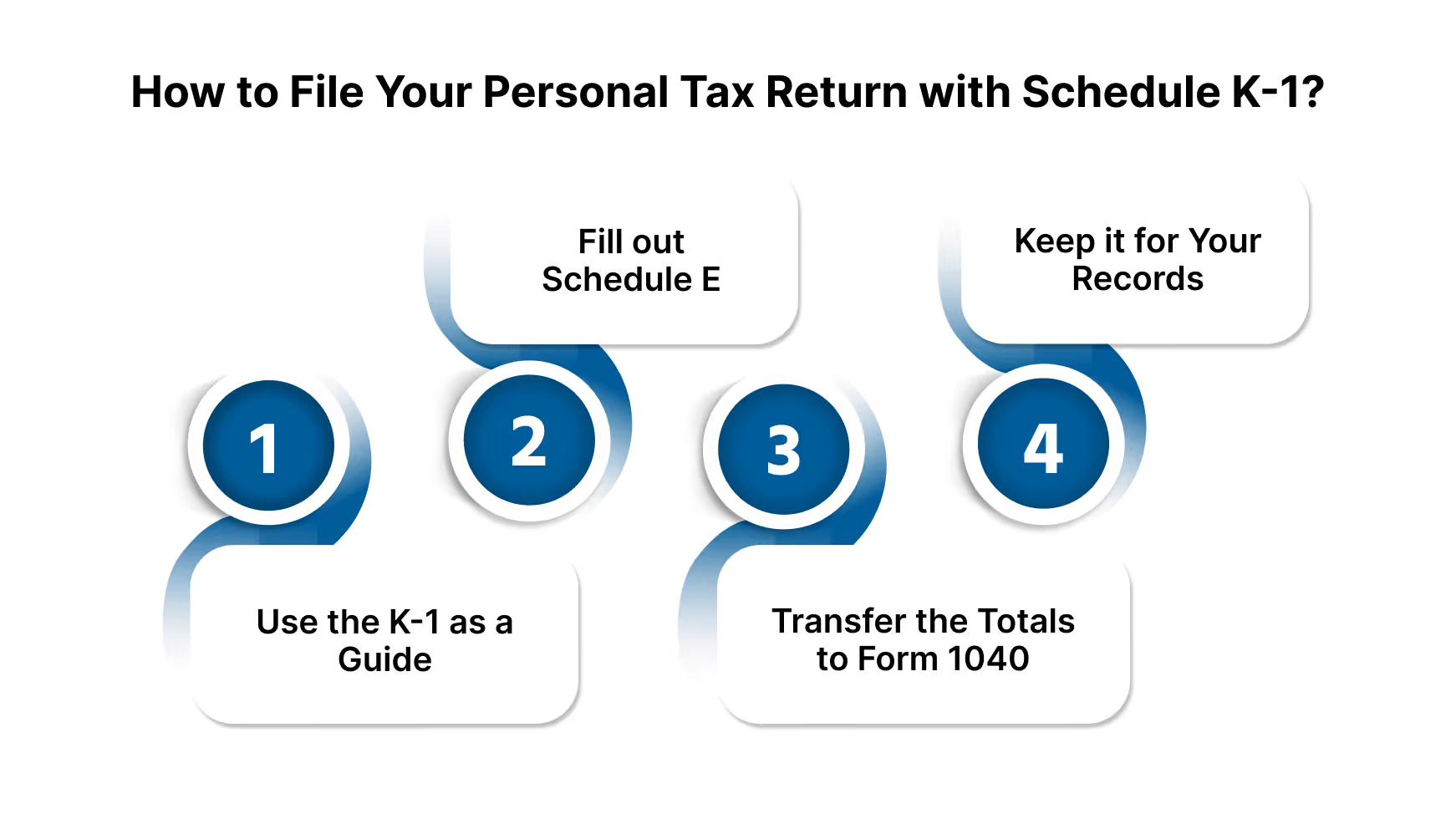
When it comes to filing your personal tax return (Form 1040), the Schedule K-1 is not a form you attach and submit to the IRS. Instead, it serves as a detailed reference document. You will use the information from Part III of the K-1 to fill out a separate form, most commonly Schedule E (Supplemental Income and Loss).

Here's a general overview of the process:

  1. Use the K-1 as a Guide: The numbers in Part III of your Schedule K-1 are the exact figures you'll use to complete other tax forms. The K-1 will tell you which form or schedule to use for each item, but the most common one is Schedule E.
  2. Fill out Schedule E: You'll use Schedule E to report your share of income and losses from partnerships. You'll enter the partnership's name, EIN, and the income or loss amounts from your K-1 on the appropriate lines.
  3. Transfer the Totals to Form 1040: Once you've completed Schedule E, you'll take the final income or loss totals and transfer them to the main Form 1040. This ensures your partnership income is included in your total income calculation.
  4. Keep it for Your Records: Since you don't typically file the K-1 itself with your return, you must keep it with your other tax records for future reference.

Navigating the complexities of a K-1 can be challenging, and it's always a good idea to consult a tax professional to ensure everything is reported correctly. The partnership is required to send the K-1 to you by March 15th, but extensions are common, so it's not unusual to receive it later. While the process may seem straightforward, there are a number of common pitfalls and limitations that partners often encounter.
What are some Common Limitations and Pitfalls for Partners?

What are some Common Limitations and Pitfalls for Partners?

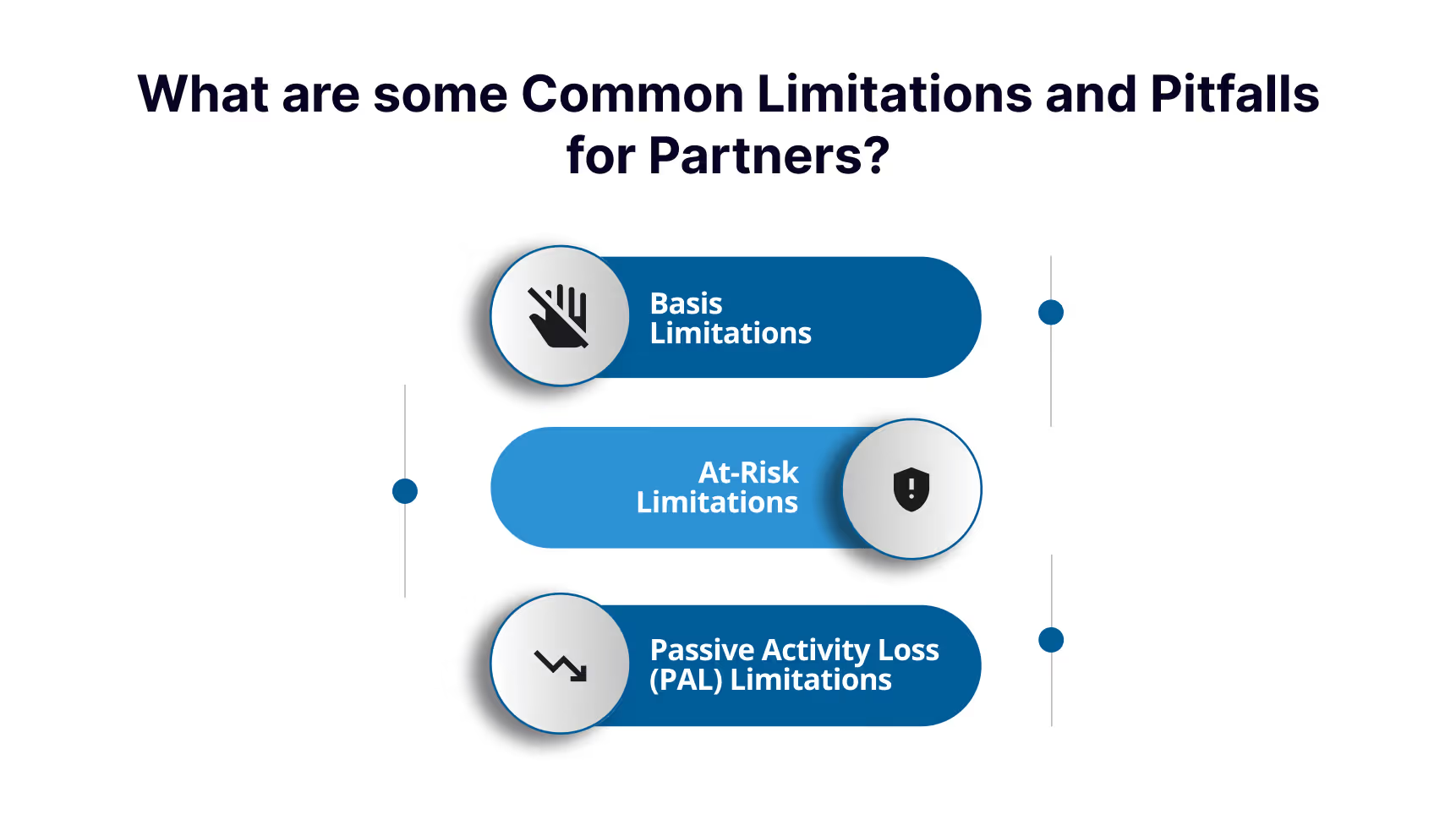
While the Schedule K-1 reports your share of a partnership's financial results, receiving a loss on the form doesn't automatically mean you can deduct it on your personal tax return. The IRS imposes a series of rules that limit the amount of a loss you can claim in a given year. These limitations are applied in a specific order and can be a common source of confusion for partners.

  • Basis Limitations:
    You can’t deduct losses beyond your adjusted basis—your investment plus your share of partnership debt. Basis isn’t the same as the capital account on your K-1, and it's your responsibility to track it. Disallowed losses can be carried forward.
  • At-Risk Limitations:
    Losses are only deductible up to the amount you're personally at risk, typically your cash investment and recourse debt. Non-recourse loans don’t count. Excess losses are carried forward.
  • Passive Activity Loss (PAL) Limitations:
    Losses from passive activities (where you don’t materially participate) can only offset other passive income. They can’t offset wages or active income. Unused losses are suspended until you have passive income or dispose of the activity.

Understanding these rules is vital for correctly reporting your partnership income and losses and avoiding potential issues with the IRS. In addition to these rules, partners may also face challenges related to the form's timely delivery or accuracy.

Navigating complex loss limitations is challenging. VJM Global’s experts offer clear guidance to help you apply the rules correctly, maximize deductions, and stay compliant.

From bookkeeping to audit prep, we handle it all. Discover how outsourcing can work for you.

What to Do About Errors and Delays?

It's common for partners to face challenges with their Schedule K-1, particularly regarding delays in receiving the form or discovering errors once they have it. Knowing how to handle these situations is critical to ensure a smooth tax filing process.

  • Haven’t received your K-1 by March 15?
    Partnerships often file extensions, so K-1s may not arrive until late summer or fall. If you don’t have yours by April 15, file Form 4868 to extend your personal return. Be sure to estimate and pay any taxes due to avoid penalties.
  • Found an error on your K-1?
    Don’t alter the form yourself. Contact the partnership’s representative or accountant to request a corrected K-1. They are responsible for sending the revised version to both you and the IRS.
  • Disagree with how an item is reported?
    You generally must report items from your K-1 in the same way the partnership did on its tax return. Suppose you want to report an item inconsistently and you are a partner in a partnership subject to the Bipartisan Budget Act of 2015 (BBA). In that case, you must file Form 8082, "Notice of Inconsistent Treatment or Administrative Adjustment Request (AAR)." Failing to file this form can result in penalties and immediate assessment of any resulting tax deficiency.

结论

The Schedule K-1 is a cornerstone of tax reporting for partnerships and their partners, but it is not a simple form. While it provides the crucial link between a business's financial results and an individual's tax return, its complexity, combined with the various IRS limitations on deducting losses, makes accurate reporting a challenge.

Understanding the concepts of a pass-through entity, the different parts of the K-1, and the potential pitfalls related to basis, at-risk, and passive loss limitations is essential. However, the intricacies of tracking your partnership basis and correctly applying these rules can be overwhelming for many partners.

咨询专业的税务顾问通常是确保您遵守所有税法并准确申报收入与亏损的最佳途径。如需获得从 K-1 管理到全面商业税务规划等各方面的专家指导,让您高枕无忧,请联系 VJM Global的专业团队。

立即联系我们,将您公司的会计业务外包给我们!

Frequently Asked Questions (FAQs)

1. Schedule K-1 (Form 1065) 表格有什么用途? 

答:合伙企业使用该表格来报告每位合伙人应分摊的收入、亏损、扣除额和抵免额。这使得个人合伙人能够在其个人纳税申报表中正确申报其收益。它是合伙企业“转嫁税制”的核心组成部分。

2. 如果我是合伙人,报税时需要 K-1 表格吗? 

答:是的,K-1 税务表格至关重要。它提供了合伙企业财务结果中的具体数据,您必须将其填入您的个人 1040 表格中。没有它,您将无法准确完成个人纳税申报。

3. 合伙企业签发 K-1 税务文件的截止日期是什么时候? 

答:合伙企业签发1065 表格 Schedule K-1的初始截止日期通常是 3 月 15 日。然而,合伙企业经常会为 1065 表格申请延期,这可能会导致K-1 税务文件的交付时间推迟。

4. 合伙人的资本账户与调整后计税基础有何关联? 

答:Sch K-1上报告的资本账户通常是一个起点,但它与您的调整后计税基础并不相同。调整后计税基础是合伙企业 K-1的关键指标,其中还包括合伙债务及其他调整项等额外因素。

5. 1065 表格与 1065 表格 Schedule K 相比,其主要功能是什么? 

答:1065 表格是合伙企业的主要纳税申报表,用于向美国国税局 (IRS) 报告企业的整体财务结果。而1065 表格的 Schedule K则汇总了所有合伙人应分摊的企业利润和亏损,作为签发个人 K-1 表格前的汇总文件。

6. 如果我收到了一份更正后的 K-1 税务文件,我该如何处理原件? 

答:如果您收到了更正后的K-1 税务文件,且您已经提交了纳税申报表,则应使用新表格来修改您的申报。原件虽已失效,但建议您将两份表格都妥善保存以备查阅。

‍

VJM Global
探索 VJM Global 的专家见解、实用建议与最新动态
了解作者详情

最新博客