Payroll is a critical task for any small business, yet it can quickly become a burden if not handled accurately. With fluctuating employee wages, ever-changing tax laws, and complex reporting requirements, staying on top of payroll demands precision and timely execution. Mistakes can lead to fines, strained relationships with employees, and regulatory issues.
In 2025, businesses need an organized approach to payroll that minimizes errors and keeps operations running smoothly. This guide breaks down the 10 steps to conduct payroll services from the US to India, so you can focus on what matters most: growing your business.
Key Takeaways
Accurate Classification is Critical: Properly classify workers as employees or independent contractors to avoid tax liabilities, penalties, and legal risks.
Payroll Tax Compliance: Failing to remit payroll taxes on time can lead to fines, legal issues, and damage to business reputation. Use automated tools to stay on top of tax withholdings and payments.
Develop a Consistent Payroll Schedule: Establish a clear payroll schedule (e.g., biweekly, semi-monthly) that suits your cash flow and complies with local and state regulations to avoid delays.
Maintain Payroll Records: Keep detailed and organized payroll records, including wages, deductions, and tax filings, for at least 3 years to maintain compliance and facilitate audits.
Outsourcing for Efficiency: Outsourcing Bookkeeping and Payroll to experts like VJM Global helps manage complex tax systems, statutory filings, and facilitates smoother operations for U.S. businesses expanding into India.
What Is Payroll and the Key Components of a Payroll
Payroll is the process by which businesses compensate their employees for services rendered. It involves calculating wages, withholding taxes, and compliance with federal, state, and local regulations.
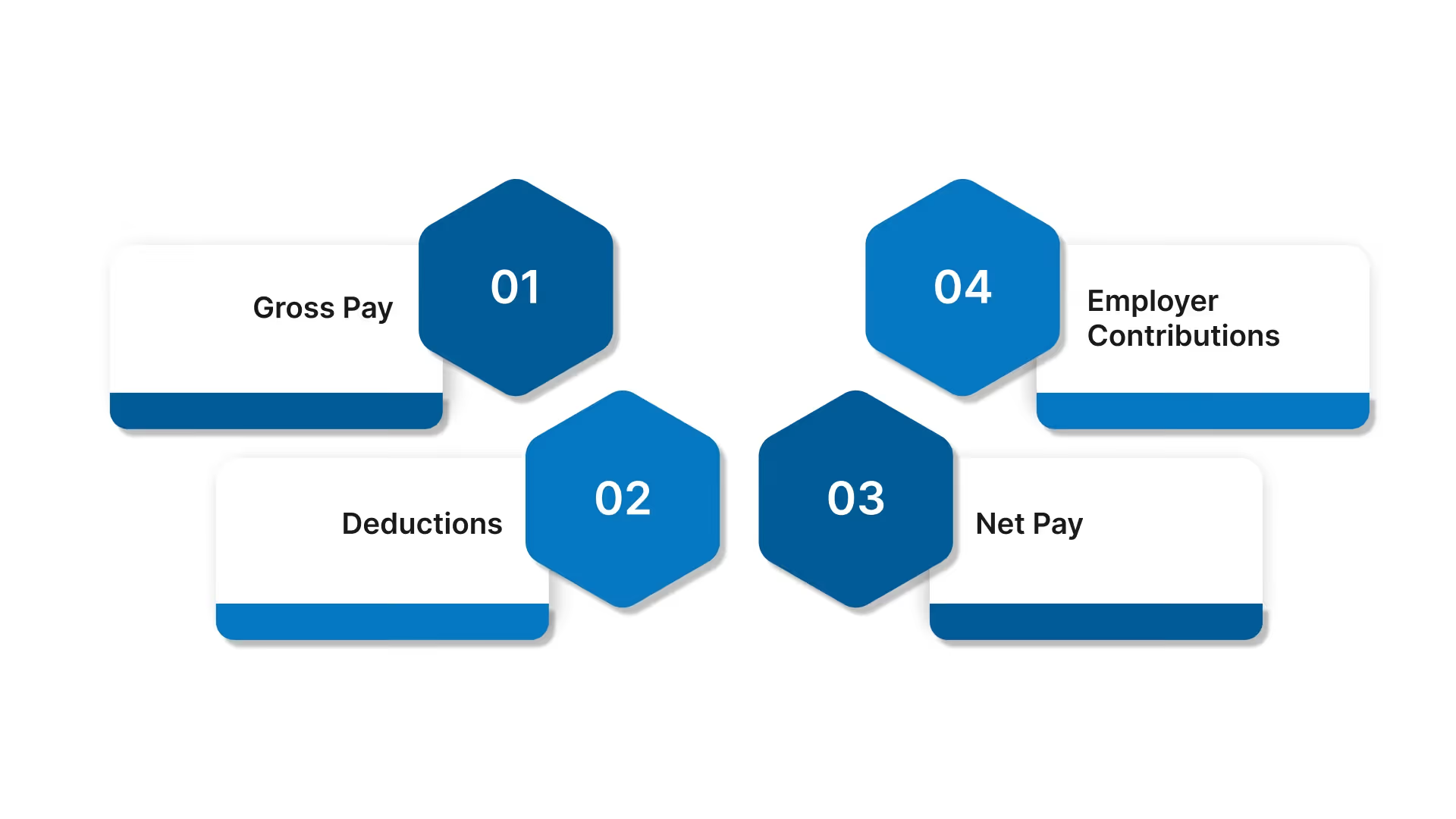
Key Components of Payroll:
Gross Pay: The total earnings before deductions, including base salary, overtime, bonuses, and commissions.
Deductions: Amounts subtracted from gross pay, such as federal and state income taxes, Social Security, Medicare, retirement contributions, and other benefits.
Net Pay: The final amount an employee takes home after all deductions.
Employer Contributions: Employers' share of payroll taxes, including matching Social Security and Medicare contributions, and unemployment insurance.
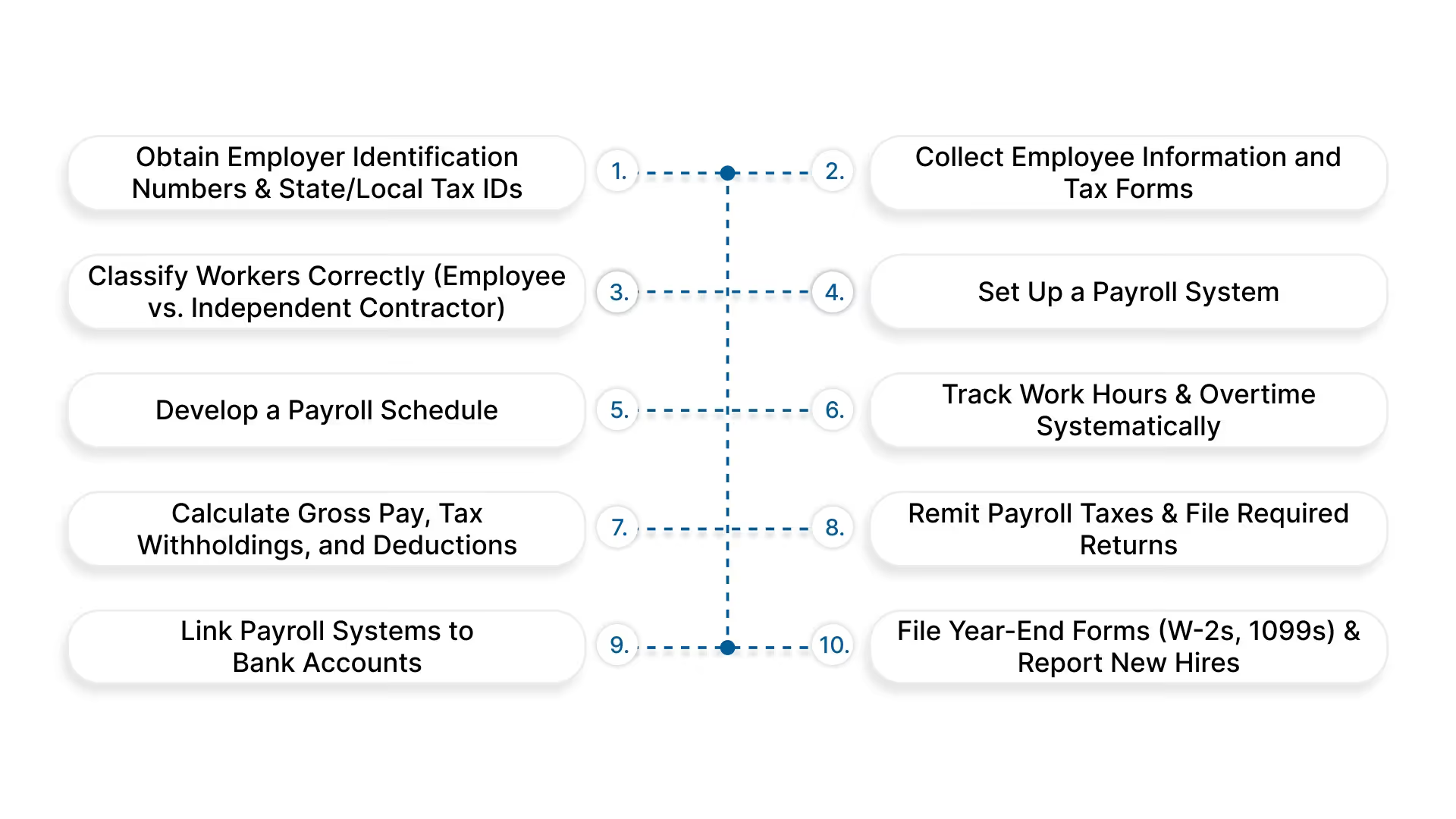
Top 10 Steps on Payroll Management for Small Business Owners
Managing payroll for a small business involves a series of steps, which include obtaining the necessary tax identification numbers, collecting employee information, classifying workers correctly, setting up a payroll system, and developing a consistent payroll schedule.
Before you can begin processing payroll, you need the right tax identification numbers. These numbers are essential for meeting tax obligations and for complying with federal, state, and local regulations. Here's what you need to do:
Employer Identification Number (EIN) – Federal Level
The Employer Identification Number (EIN) is like a Social Security Number for your business. You need an EIN to pay employees, file business taxes, and even open a business bank account. The IRS uses it to track your business's tax filings.
How to get it: Apply directly with the IRS online for an EIN through their website. The process is free and quick, often providing the EIN within minutes of applying.
State and Local Tax Identification Numbers
In addition to the federal EIN, most states require their own State Tax ID for payroll, insurance, businesses involved in selling goods or services, and other tax obligations, such as sales tax or unemployment tax.
How to get it: Visit your state’s revenue department website and register for a state tax ID. This process can even be done online.
Step 2: Collect Employee Information and Tax Forms
Once your Employer Identification Number (EIN) and state/local tax IDs are secured, the next step in setting up payroll is gathering employee information and tax forms. This results in accurate tax withholding, compliance with federal and state regulations, and smooth payroll processing.
For each employee, collect the following details:
Full Name and Address: To identify the employee and for mailing purposes.
Social Security Number (SSN): Required for tax reporting and to verify eligibility to work in the U.S.
Date of Birth: Helps verify identity and eligibility.
Employment Start Date: Necessary for tax reporting and benefits eligibility.
Compensation Details: Includes hourly rate or salary, overtime eligibility, and any bonuses or commissions.
Job Title and Department: Useful for internal records and reporting.
Emergency Contact Information: For workplace safety and emergencies.
Bank Account Information: If offering direct deposit for payroll.
Required Tax Forms
Each new employee must complete the following forms:
Form W-4 (Employee’s Withholding Certificate): This form allows employees to indicate their federal income tax withholding preferences. It includes personal information, filing status, and any adjustments or additional withholding amounts.
Form I-9 (Employment Eligibility Verification): Used to verify an employee’s identity and eligibility to work in the U.S. Employers must retain this form for a specified period and make it available for inspection by authorized government officials.
State-Specific Withholding Forms: Some states require additional forms for state income tax withholding. For instance, California uses Form DE 4, while New York requires Form IT-2104.
Step 3: Classify Workers Correctly (Employee vs. Independent Contractor)
Accurate classification of workers is crucial for compliance with federal and state tax laws. The IRS distinguishes between employees and independent contractors based on the degree of control and independence in the working relationship.
The classification affects tax obligations, benefits eligibility, and legal responsibilities.
Employees: Work under the control and direction of the employer. Employers are responsible for withholding income taxes, Social Security, and Medicare taxes, and paying unemployment taxes on wages paid to employees.
Independent Contractors: Operate independently, offering services to the public. They are responsible for their own tax obligations and are not entitled to employee benefits.
Key Factors for Classification
The IRS uses 3 main categories to determine worker status:
Behavioral Control: Refers to the degree of control the business has over how the worker performs tasks. If the business provides instructions, training, or dictates work methods, the worker is likely an employee.
Financial Control: Involves aspects like the worker's investment in tools, unreimbursed expenses, and the opportunity for profit or loss. Independent contractors have more financial control over their work.
Relationship of the Parties: Considers the nature of the relationship, including written contracts, employee benefits, and the permanency of the relationship. A long-term, continuous relationship with benefits suggests an employer-employee status.
If a worker has been misclassified:
File: Submit Form SS-8 to the IRS to request a determination of worker status.
Eligible businesses can apply to the Voluntary Classification Settlement Program (VCSP) to reclassify workers as employees for future tax periods with partial relief from federal employment taxes.
Consult Legal Counsel: Seek professional advice on the correction process and potential liabilities.
VJM Global offers tailored payroll, accounting, and compliance solutions for U.S. businesses expanding into India. From managing dual tax systems, timely payroll processing, to handling entity registration, local labor law compliance, and statutory audit and filings (e.g., PF, ESI, PT), they simplify the complexities of cross-border operations. Get started today.
Step 4: Set Up a Payroll System
Establishing a payroll system is pivotal for small business owners for accurate employee compensation, maintaining compliance with tax regulations, and streamlining administrative processes. Small businesses have several options when it comes to selecting the right payroll system:
Manual Payroll: Suitable for businesses with a few employees. It involves calculating wages, deductions, and taxes by hand. While cost-effective, it can be time-consuming and prone to errors.
Payroll Software: Offers automation of calculations, tax filings, and reporting. Examples include QuickBooks Payroll and Gusto. These platforms can save time and reduce errors.
Outsourced Payroll Services: Engaging a third-party provider to handle all payroll functions. This option is ideal for businesses looking to offload administrative tasks and compliance
Outsource your bookkeeping and save time without compromising accuracy. Let us handle the books. Talk to an expert today.
Step 5: Develop a Payroll Schedule
Establishing a consistent payroll schedule is crucial for small business owners, so employees are compensated on time, stay compliant with labor laws, and maintain smooth cash flow.
Choosing the right payroll schedule requires balancing administrative capacity, employee preferences, and local regulations, while considering the business's cash flow cycle.
The payroll schedule defines the frequency of payments (such as weekly, biweekly, or monthly) and the specific date employees are paid.
Weekly: 52 pay periods per year, often used for hourly employees.
Biweekly: 26 pay periods per year, popular for its balance between administrative efficiency and employee satisfaction.
Semi-Monthly: 24 pay periods per year, typically used for salaried employees.
Monthly: 12 pay periods per year, less common due to potential cash flow challenges for employees.
Key Factors to Consider
State and Local Regulations: Some states mandate specific pay frequencies, such as California, which requires most employees to be paid at least twice per month.
Cash Flow Management: Aligning your payroll schedule with your revenue cycle can help manage business liquidity and reduce cash flow issues.
Employee Preferences: Frequent pay cycles can increase employee satisfaction, especially for hourly or lower-wage workers.
Administrative Capacity: Make sure that your payroll system can handle the chosen schedule to avoid errors and delays.
Step 6: Track Work Hours and Overtime Systematically
Accurate tracking of employee work hours and overtime is essential for small business owners to maintain payroll accuracy and manage labor costs. Implementing a systematic approach to time tracking helps prevent errors, reduce administrative burdens, and instill trust with employees.
Best Practices for Tracking Work Hours
Utilize Automated Time Tracking Systems: Implementing digital time tracking solutions can reduce errors and administrative workload. Tools like QuickBooks Time and Clockify offer features such as real-time tracking, mobile access, and integration with payroll systems.
Standardize Timekeeping Methods: Establish clear policies regarding clock-in and clock-out procedures. All employees should be trained on how to use the time tracking system and understand the importance of accurate time reporting.
Monitor and Audit Time Records Regularly: Conduct periodic reviews of time logs to identify discrepancies or patterns that may indicate issues such as time theft or misreporting.
Free up your team's time, outsource accounting to VJM Global and focus on growth
Step 7: Calculate Gross Pay, Tax Withholdings, and Deductions
Accurate calculation of gross pay (total earnings an employee receives before any deductions) and tax withholdings (mandatory deductions required by federal, state, and local governments) is essential for small business owners to maintain employee trust and manage financial operations.
Key Components of Compensation and Benefits Data
Base Salary and Hourly Rates: Accurate recording of employees' agreed-upon wages is essential.
Overtime Pay: Correct application of overtime rates as per the Fair Labor Standards Act (FLSA), typically over 40 40-hour work week.
Bonuses and Commissions: Properly document performance-based incentives.
Benefits Deductions: Track employee contributions to health insurance, retirement plans, and other benefits.
Tax Withholdings: Accurate calculation of federal, state, and local taxes is crucial.
Conduct periodic reviews and regular audits of compensation and benefits records to identify and rectify discrepancies. Provide ongoing training for HR and payroll staff on the importance of accurate data and the tools available to maintain it.
Step 8: Remit Payroll Taxes and File Required Returns
Accurate and timely remittance of payroll taxes is another aspect of payroll management for small business owners. Alongside compliance with federal, state, and local tax obligations also helps businesses avoid hefty penalties, fines, and legal issues. This step involves not only calculating and withholding the right amount of taxes but also submitting the appropriate forms to various authorities.
Use EFTPS (Electronic Federal Tax Payment System),as this secure online system allows businesses to schedule and track federal tax payments, making the process transparent.
Federal Payroll Tax Remittance
Employers must withhold several taxes at the federal level, including income tax, Social Security, Medicare, and Federal Unemployment Tax (FUTA). The schedule for remitting these taxes depends on the business's tax liability:
Federal Income Tax: Withheld based on employees’ Form W-4 and remitted to the IRS.
FICA Taxes: Both employer and employee contribute to Social Security and Medicare taxes.
FUTA: Paid solely by the employer to fund unemployment benefits.
State and Local Payroll Tax Remittance
In addition to federal taxes, businesses must comply with state and local tax obligations. This includes:
State Income Tax: Withheld and remitted according to state-specific regulations.
State Unemployment Insurance (SUI): Employers must remit unemployment insurance taxes at rates that vary by state.
Local Taxes: Some local jurisdictions impose additional taxes, such as city or county payroll taxes.
Step 9: Link Payroll Systems to Bank Accounts
Integrating your payroll system with your business bank account is a pivotal step in modernizing payroll operations. This integration facilitates seamless, timely, and secure employee payments, aligning with the growing preference for electronic transactions over traditional paper checks.
Connecting your payroll system to your bank account involves establishing a secure link that allows for the electronic transfer of funds. Here's how to approach this integration:
Choose a payroll service that offers direct integration with your bank like for example, QuickBooks Payroll.
Prepare your business's bank account details, including the routing and account numbers.
Follow the payroll provider's instructions to link your bank account, such as entering your account details. banking information into the payroll system and verifying it through a test deposit.
Collect employees' bank account details, including their account numbers and routing numbers, to set up direct deposit.
Once the integration is complete, you can schedule and process payroll through your payroll system. The system will automatically initiate ACH transfers.
Step 10: File Year-End Forms (W-2s, 1099s) and Report New Hires
At the close of each fiscal year, small business owners must fulfill compliance obligations by filing year-end forms and reporting new hires. These steps also mean that you have to adhere to federal and state regulations and maintain accurate records for tax and employment purposes.
Employers must report newly hired employees to the designated state new hire registry within 20 days of their start date. Many states also accept a copy of the employee’s Form W-4 with employer information added.
Filing Year-End Forms: W-2s and 1099s
Form W-2 – Wage and Tax Statement: Employers are required to provide Form W-2 to each employee who has received wages, tips, or other compensation during the year. This form reports the total taxable income and the taxes withheld.
Form 1099 – Miscellaneous Income: For independent contractors or freelancers who have been paid $600 or more during the year, employers must issue Form 1099-NEC (Nonemployee Compensation). This form reports the total amount paid to the contractor.
Form W-3 – Transmittal of Wage and Tax Statements: Form W-3 accompanies the W-2 forms when submitting them to the SSA. It summarizes the total earnings, Social Security wages, Medicare wages, and withholding for all employees. The filing deadline aligns with that of Form W-2.
VJM Global: Your Trusted Partner for Payroll and Accounting Solutions as You Expand from the U.S. to India
VJM Global offers comprehensive payroll processing, accounting outsourcing, and compliance services for U.S. businesses entering or expanding in India. With expertise in U.S. GAAP and Indian regulations, they provide end-to-end support, including entity setup, tax compliance, and HR solutions.
Accounting Outsourcing: From bookkeeping to financial reporting, we provide cost-effective accounting services.
Tax Services: Expertise in U.S. tax laws and Indian tax compliance so that businesses meet all statutory requirements.
Statutory Filings: Handling all necessary filings with Indian authorities, VJM Global helps businesses remain compliant with local regulations.
Business Setup in India: Assistance with company registration, understanding FEMA regulations, and establishing a presence in the Indian market.
Expatriate Taxation: Specialized services to manage the tax implications for U.S. expatriates working in India.
Audit & Assurance: Providing internal and statutory audit services for financial transparency and compliance.
Transaction Advisory: Guidance on mergers, acquisitions, and other financial transactions to support strategic decisions.
Conclusion
Managing payroll is a crucial task for small business owners. From obtaining the necessary tax IDs to accurate compensation, calculating gross pay, and filing year-end forms, each step requires careful attention to detail. Implementing a structured payroll system, tracking work hours, classifying workers correctly, and remitting payroll taxes on time are best practices that keep your business compliant, minimize errors, and maintain smooth business operations.
By following these steps, small business owners can manage their payroll system, meet regulatory requirements, and focus on growing their business.
VJM Global offers comprehensive payroll processing, tax compliance, and business advisory services tailored for U.S. companies expanding into India. Talk to our advisor today!
FAQs
1. What is the best way to pay employees in a small business?
The best way to pay employees in a small business is through direct deposit, as it’s fast and secure. It eliminates the risk of lost or delayed checks and allows for seamless payment tracking.
2. Can I do payroll myself if I am setting up my operation from the US to India?
While it’s possible to manage payroll yourself when setting up operations from the U.S. to India, it can be complex due to differing tax systems, labor laws, and compliance requirements. Outsourcing payroll to experts can help avoid costly mistakes.
3. How to calculate payroll?
To calculate payroll, start by determining each employee’s gross pay based on their hourly rate or salary. Then, subtract federal, state, and local taxes, as well as other deductions like insurance, retirement contributions, and garnishments. The result is the net pay, which is the amount the employee will take home.
4. How do I automate my payroll processes?
Automating payroll processes can be done through payroll software like QuickBooks, Gusto, or ADP. These tools calculate wages, tax withholdings, and deductions, and generate necessary filings, reducing manual effort and minimizing errors.
5. What Excel skills are needed for payroll?
For payroll, essential Excel skills include creating formulas for tax calculations, using pivot tables to analyze data, and managing employee databases with functions like VLOOKUP and SUMIF.
VJM Global
Explore expert insights, tips, and updates from VJM Global