HVAC companies deal with constant field activity, service calls, installation jobs, equipment purchases, and busy seasonal cycles. When the financial side lags behind this pace, even organized teams start losing visibility. That is why structured HVAC accounting becomes critical, especially for US firms shifting work from the US to India to manage costs and improve coverage.
Many HVAC owners feel the strain when supplier bills, technician hours, and daily ticket data pile up faster than the books can update. Without accurate tracking, margins blur, and cash flow becomes unpredictable. Reliable HVAC accounting support gives the clarity needed for steady growth.
In this guide, you will learn how HVAC financial tasks work, where the common gaps appear, and how offshore accounting from the US to India fits into your operational workflow.
Key Takeaways
Precise HVAC accounting depends on labor intervals, parts SKUs, install milestones, and maintenance logs recorded at the job ID level.
Equipment POs, crane fees, rough-in approvals, commissioning dates, and retention amounts must be posted in sequence for correct WIP reporting.
Annual plans require splitting prepaid income between earned and unearned amounts while tracking unserved tune-ups tied to customer accounts.
Parts pulled from vans, returns, shrinkage, and replenishment POs must reconcile daily to keep job-level COGS aligned with field usage.
Shifting HVAC accounting from the US to India allows continuous AP, AR, reconciliation, and reporting cycles that match the pace of field operations.
What is HVAC Accounting?
HVAC accounting focuses on tracking service calls, installs, maintenance plans, and technician output through job-level financial data. It connects field activity with books so owners see the true cost of each task, from refrigerant usage to equipment depreciation. This gives HVAC businesses a workable financial structure tied directly to how crews operate each day.
Core Components of HVAC Accounting
These components connect every HVAC job, asset, contract, and field input to the exact financial impact they create inside the books.
Detailed Job Cost Assignment: Allocates labor minutes, overhead per truck, diagnostic charges, and accessory sales to each job ticket.
Maintenance Agreement Revenue Timing: Records prepaid contracts, splits earned versus deferred revenue, and matches future service costs to the plan period.
Install and Replacement Workflows: Links equipment invoices, permit fees, haul-away costs, crane charges, and warranty terms to each installation record.
Technician Truck Inventory Control: Tracks van-level stock usage, returns, shrinkage, and field-issued refrigerant with cost attribution.
Capital Asset Scheduling: Captures depreciation for installed HVAC units, tools, and large equipment according to IRS depreciation rules.
Callback and Warranty Cost Tracking: Assigns the labor and parts tied to callbacks and warranty repairs for accurate margin analysis.
Why HVAC Accounting Matters
Accurate HVAC accounting reveals where each job, season, and technician contributes or drains profit across the operation.
Accurate Margin Identification: Shows the profitability of installs, tune-ups, emergency calls, and replacement work without merging unrelated costs.
Clear View of Seasonal Cash Swings: Illustrates how winter heating calls, summer cooling surges, and slow-season tune-ups affect cash availability.
Technician-Level Profit Contribution: Connects ticket averages, callback frequency, and attachment rates to each technician’s financial impact.
Stricter Control of Field Spending: Brings visibility to fuel usage, overtime spikes, high-volume parts consumption, and equipment rentals.
Correct Treatment of Tax and Warranty Items: Guarantees accurate handling of sales tax on equipment, capitalized units, and warranty-related labor and materials.
After defining how HVAC financial data moves through each job, firms must choose the accounting method that supports those patterns accurately.
HVAC firms choose a method based on how they record installation revenue, handle prepaid maintenance agreements, bill multi-day jobs, and track equipment-related costs. The method must match how the business issues invoices, collects deposits, recognizes unearned income, and attributes labor and material costs to each job.
Criteria
Accrual Method
Cash Method
Best For
Firms with installs, multi-stage billing, annual maintenance plans, and equipment-heavy workflows
Companies focused on same-day service calls with immediate customer payment
Revenue Recognition
Records income when install stages are completed, work orders are closed, or maintenance plan visits are delivered
Records income only when payments clear, regardless of when installs or service visits occur
Install-Specific Application
Handles deposits, progress invoices, change orders, equipment deliveries, and retained amounts across long installs
Suit small replacement jobs where payment is collected at completion
Maintenance Plan Handling
Splits prepaid contract income into earned and unearned amounts and tracks service obligations
Cannot record deferred revenue, leading to inaccurate reporting for annual contracts
Equipment and Parts Treatment
Matches equipment invoices, refrigerant logs, van stock withdrawals, and capitalized units to each job
Records part purchases only when paid, causing timing mismatches between usage and reporting
Warranty and Callback Tracking
Captures labor and materials tied to warranty jobs for accurate margin reporting
Records warranty activity only when cash moves, making warranty-related costs harder to isolate
Labor and Overtime Allocation
Assigns technician hours, overtime premiums, and travel time to specific job tickets
Records payroll when paid without job-level linkage
Seasonal Impact Visibility
Shows revenue tied to peak heating/cooling cycles even without immediate payment
Income is recorded only when cash arrives, masking seasonal workload patterns
Simple to maintain, but sacrifices job-level accuracy
Once the accounting method is selected, the next priority is building the offshore structure that can process HVAC job data consistently from the US to India.
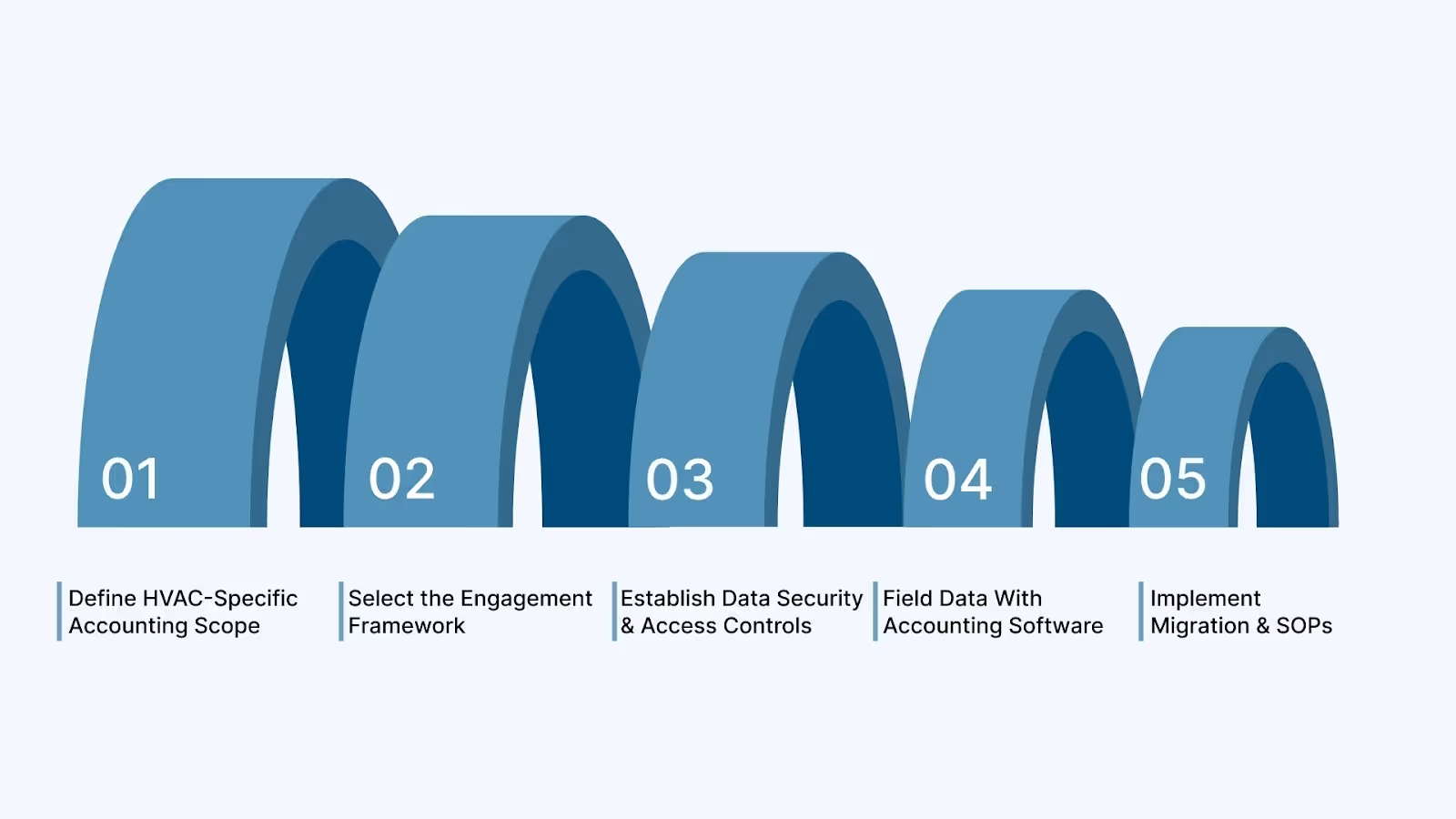
5 Steps to Setting Up HVAC Accounting From the US to India
HVAC accounting depends on precise handling of technician labor, installation stages, van stock movement, equipment logs, and annual maintenance obligations.
When US HVAC companies shift accounting work from the US to India, offshore teams must work from job-level records tied directly to field activity so installs, service calls, and maintenance plans reflect accurate financial movement.
Step 1: Define HVAC-Specific Accounting Scope
HVAC workflows involve detailed financial handling of service visits, installation milestones, maintenance agreements, and commercial contract work. These must be documented before shifting tasks offshore to keep job entries accurate.
Tips
Job Costing Structure: Job ID, ticket number, technician ID, labor minutes, labor rate, overtime flag, parts SKU, unit cost, markup, and map to Install Revenue or Service Revenue accounts.
Van Inventory Controls: Van stock SKU, opening balance, parts issued per ticket, returns, cost of goods sold entry, and reconciliation against replenishment POs.
WIP Milestone Tracking: Use cost-to-cost percent-complete: record milestone dates (equipment arrival, rough-in, commissioning), invoice retention, change orders, and update WIP and Unearned Revenue accounts.
Step 2: Select the Engagement Framework
The engagement model determines how offshore teams handle recurring HVAC accounting tasks such as multi-stage installation billing, parts-heavy AP processing, van-level job costing, and maintenance plan income allocation. The framework must account for the volume of installs, contract complexity, and the number of technicians generating daily job data.
Tips
Dedicated Offshore Team Setup: Assign AP, AR, job costing, reconciliation, maintenance plan revenue updates, install WIP entries, supplier invoice coding, and equipment capitalization to a fixed offshore group. VJM Global supports this structure across defined task groups.
Defined Task Timelines: Set timelines for: entering supplier invoices within the same day, coding equipment POs before job completion, posting install job costing within 24 hours of close-out, updating WIP schedules after milestone approval, recording warranty labor against designated accounts, and locking prior periods before month-end review.
Step 3: Establish Data Security and Access Controls
Offshore HVAC accounting requires controlled access pathways so job data, supplier invoices, equipment records, and customer information move safely from the US to India. Each user must see only the financial modules tied to their assigned HVAC tasks.
Tips
Role-Based Permissions: Set module-level access in QuickBooks, FreshBooks, or SAP for AP coding, AR posting, job costing, bank feeds, inventory adjustments, and WIP entries. Block access to payroll tax settings, chart-of-account edits, and administrator panels.
Controlled Access Points: Require offshore accountants to work inside monitored remote desktop sessions with restricted clipboard access, disabled local storage, IP-based login controls, and session logs that record posting activity, approval timestamps, and file access.
NDA Coverage: Use NDAs covering technician rosters, customer addresses, equipment purchase records, contract pricing, and commercial installation documentation. Agreements must apply to both jurisdictions and include confidentiality language for job tickets, warranty files, and supplier account details.
Step 4: Integrate Field Data With Accounting Software
HVAC accounting accuracy depends on how job-level data moves from the US to India. Labor entries, equipment charges, material pulls, install milestones, and maintenance plan activity must transfer into QuickBooks, FreshBooks, or SAP without altering job structure or income classification.
Tips
Income Mapping Review: Map install income, service income, diagnostic fees, accessory sales, maintenance plan revenue, crane charges, and permit fees to the correct general ledger accounts in QuickBooks, FreshBooks, or SAP.
Posting Cadence: Use a fixed schedule for posting daily service invoices, commercial install progress invoices, equipment POs, van replenishment POs, tune-up entries, and job cost adjustments so reconciliations match actual field activity.
Error Log Monitoring: Assign the offshore accountant to review mismatched job IDs, duplicate entries, missing SKU codes, incorrect cost assignments, and unposted install tickets during each cycle. VJM Global handles this review as part of routine processing so ledger entries match field records.
Step 5: Implement Migration and SOPs
Transitioning HVAC accounting from the US to India requires clear SOPs that reflect how the business handles installation close-out, warranty labor, equipment capitalization, maintenance plan recognition, and month-end routines. These SOPs give the offshore team the exact rules your technicians and office staff already follow.
Tips
Process Walkthroughs: Record step-by-step screen flows for service invoice posting, install job close-out, equipment capitalization entries, maintenance plan allocation, and month-end reconciliation sequences used by your controller.
Test File Runs: Use a non-live QuickBooks, FreshBooks, or SAP file for the offshore team to process sample entries such as install progress invoices, refrigerant usage entries, van stock adjustments, warranty labor postings, and commercial contract billing to confirm accuracy before going live.
Daily Clarification Session: Hold a short call during overlapping hours to review overnight exceptions such as revised install milestones, missing job cost inputs, supplier invoice disputes, or tune-up entries that require correction before period close.
Once the setup framework is in place, the offshore team can begin processing the job-level data that drives daily HVAC accounting activity.
If your HVAC business needs support with installation billing, commercial contract WIP, or maintenance plan revenue tracking, VJM Global can handle the accounting load, so your US team stays focused on operations. Get in touch with us!
Handling HVAC Financial Tasks From the US to India
Offshore HVAC accounting requires processing job-level data that originates in the field, equipment model numbers, labor entries, van stock usage, and installation milestones. When these tasks move from the USA to India, the offshore team must work from structured job IDs, supplier records, and maintenance logs so every ledger entry reflects actual operational movement.
Service Ticket Posting: Record diagnostic fees, labor minutes, overtime flags, and SKU-level part usage from each closed ticket into QuickBooks, FreshBooks, or SAP.
Install Job Cost and Milestone Entries: Post equipment POs, submittals, crane fees, freight, and labor against install job IDs while updating milestone stages such as equipment arrival and commissioning.
Maintenance Agreement Revenue Handling: Allocate annual plan amounts across completed tune-ups, log remaining service obligations, and record part usage tied to each visit.
Supplier Invoice and Van Stock Reconciliation: Code HVAC supplier invoices using model numbers and bundle references, and reconcile van replenishment POs with technician pull sheets.
Commercial WIP and Warranty Tracking: Update percent-complete WIP schedules using approved install stages and post warranty labor or parts against designated expense accounts for margin accuracy.
As offshore teams process job-linked entries, the gaps inside many HVAC businesses become clearer, especially where field data and financial records fail to match.
Outsource your bookkeeping and save time without compromising accuracy. Let us handle the books.
Challenges HVAC Companies Face With Accounting
HVAC accounting requires matching field-generated data, labor intervals, equipment staging, van stock usage, and contract obligations to ledger entries. The challenge is that each job produces its own cost pattern, billing trigger, and documentation trail, making accuracy difficult when activity varies across service, installation, and commercial work.
Challenge
Technical Description
Incomplete Job Ticket Detail
Service tickets often arrive without labor intervals, SKU-level parts data, or technician flags, causing incorrect job cost allocation.
Install Milestone Sequencing
Incorrect posting order for equipment POs, crane charges, freight, rough-in, and commissioning disrupts WIP and percent-complete reporting.
Maintenance Plan Allocation
Prepaid plan amounts must be split across tune-ups, with unserved visits tracked as unearned revenue tied to specific customer accounts.
Van Stock Cost Accuracy
Technicians pull parts without matching replenishment POs or return logs, creating discrepancies in COGS and job-level material costs.
Warranty and Callback Segregation
Warranty labor and replacement parts must be coded to dedicated accounts so profitability reports exclude non-billable corrective work.
These accounting gaps create real strain on HVAC teams, which is why many firms shift specific financial tasks to a partner that can manage the volume and structure required from the US to India.
How VJM Global Assists HVAC Firms With Accounting From the US to India
Expanding HVAC operations from the US to India or shifting accounting offshore requires precision, compliance, and consistent financial processes. VJM Global supports HVAC firms by managing core accounting functions while maintaining alignment with US standards and Indian regulations. Here is how we help HVAC companies operate smoothly across both regions:
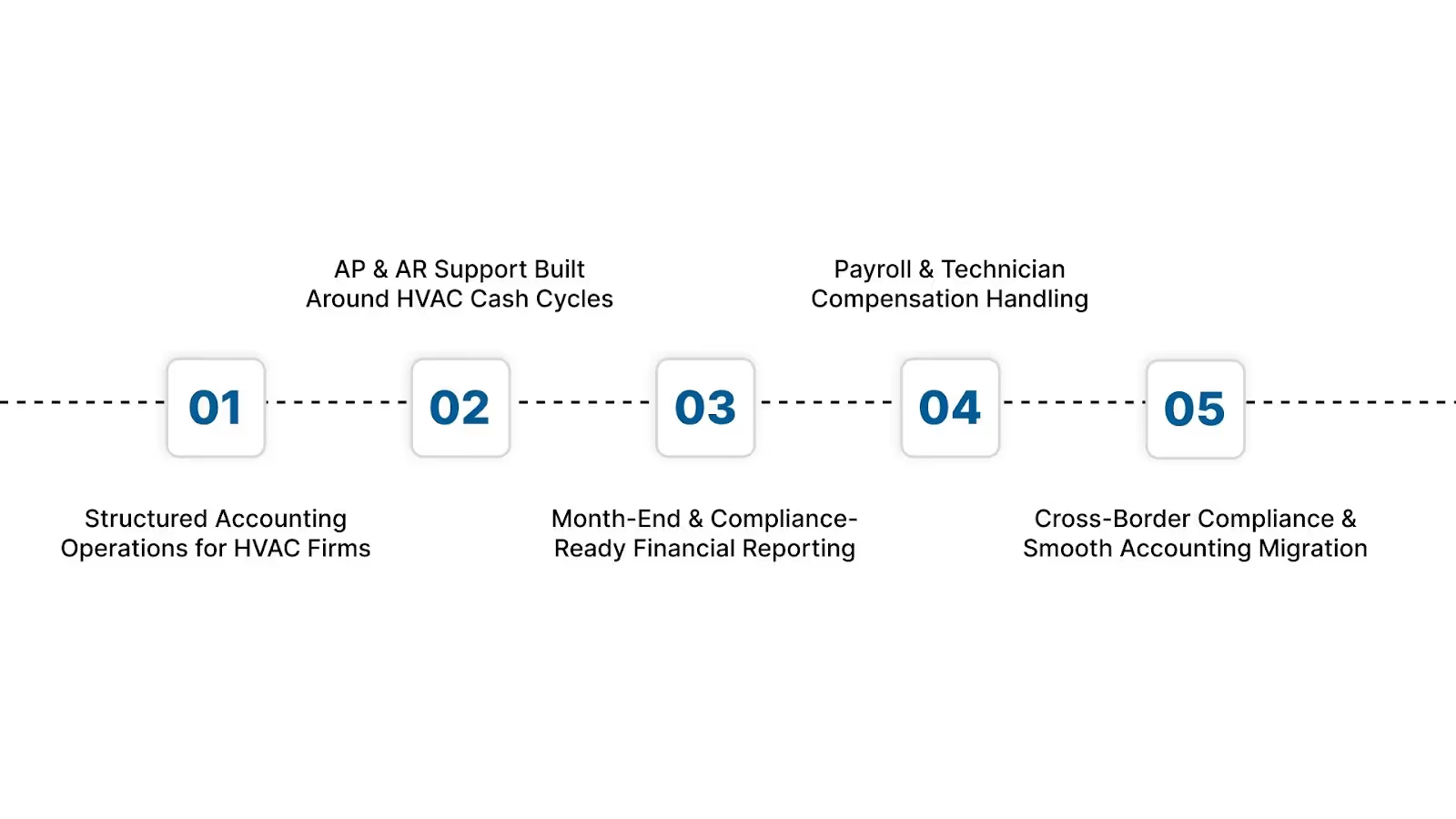
Structured Accounting Operations for HVAC Firms
HVAC companies need accurate handling of supplier invoices, equipment purchases, technician payouts, and service revenue. VJM Global manages accounting processes in QuickBooks, FreshBooks, and SAP, guaranteeing each financial entry aligns with your chart of accounts and HVAC billing structure.
AP and AR Support Built Around HVAC Cash Cycles
We handle vendor payments, invoice posting, customer receipts, and aging reports for HVAC firms. Our team keeps track of equipment suppliers, service revenue, and customer balances so your financial records remain consistent across busy service and install seasons.
Month-End and Compliance-Ready Financial Reporting
HVAC businesses rely on clear profit and cash visibility. VJM Global prepares monthly financial statements, reconciliations, and management reports that reflect service income, equipment expenses, and overhead trends based on your US operating model.
Payroll and Technician Compensation Handling
HVAC payroll involves multiple roles, installers, service technicians, helpers, office teams, and seasonal staff. VJM Global prepares payroll inputs based on the hours and pay structures you provide, and we post payroll entries accurately within your books.
Cross-Border Compliance and Smooth Accounting Migration
Whether you are expanding operations or shifting accounting from the US to India, VJM Global helps with software migration, data organization, and compliance-ready documentation. We maintain Indian regulatory adherence while keeping your books aligned with US HVAC accounting expectations.
With VJM Global as your accounting partner, your HVAC business can confidently shift financial operations from the US to India, knowing that compliance, accuracy, and process management are consistently maintained.
From bookkeeping to audit prep, we handle it all. Discover how outsourcing can work for you.
Final Thoughts
Accurate HVAC accounting supports steady operations by keeping service work, installations, supplier invoices, and payroll organized. When your US HVAC business maintains clear financial records, it strengthens cash flow, improves visibility, and creates a strong base for long-term growth.
VJM Global assists US HVAC companies shifting accounting functions from the US to India by managing bookkeeping, AP and AR cycles, reconciliations, payroll inputs, and financial reporting. Our team helps maintain compliance and consistency across all financial tasks so your internal teams can stay focused on field operations and customer service.
If your HVAC company is preparing to move accounting from the US to India, connect with VJM Global for structured, accurate support that keeps your financial processes running without disruption.
FAQs
1. Do HVAC accounting systems track revenue differently for installs and service calls?
Yes. HVAC accounting separates install income, service revenue, diagnostic fees, and maintenance plan amounts because each category follows different recognition rules for accurate reporting.
2. Can HVAC business accounting solutions handle prepaid maintenance plans?
Most HVAC business accounting solutions can record prepaid plan amounts as unearned revenue and release them when tune-ups or contracted visits are completed.
3. How does accounting for HVAC home service professional teams manage technician payroll inputs?
Accounting for HVAC home service professional teams uses technician-provided labor intervals, overtime flags, and job IDs to post payroll entries tied to specific service tasks.
4. Do HVAC accounting solutions help track equipment purchases separately from parts?
Yes. Many HVAC accounting solutions create different accounts for equipment, accessories, and consumable parts so job costing and capital asset schedules remain accurate.
5. How is accounting for HVAC maintenance different from standard bookkeeping?
Accounting for HVAC maintenance requires tracking prepaid plan amounts, completed tune-ups, remaining obligations, and part usage per visit—details not required in standard bookkeeping for other industries.
VJM Global
Explore expert insights, tips, and updates from VJM Global