-p-1600.avif)
Choosing the right depreciation method under US GAAP is more than a technical decision. It affects compliance, reported profits, and long-term tax planning accuracy. Nearly 45% of U.S. middle-market firms now outsource accounting either partially or fully, reflecting demand for external support.\.
Have you ever felt uncertain about whether your team is applying the right method or worried about costly errors during audits? Many US companies face the same challenge. By outsourcing to India from the US, firms gain access to skilled professionals who apply US GAAP depreciation correctly while reducing overhead costs.
When you record fixed assets such as machinery, vehicles, or buildings, you cannot expense the entire cost upfront. Under US GAAP, depreciation spreads the cost of these assets over their useful life, giving you a more accurate reflection of profits and financial health. This prevents overstating income in the year of purchase and helps maintain compliance with US accounting standards.
You use depreciation to:
Example of Asset Allocation
Here’s a simplified breakdown of how a $100,000 asset might be depreciated under the straight-line method:
This structured allocation means your financial statements always show the remaining value of the asset, giving stakeholders a clear picture of your company’s resources.
For small and mid-sized US firms or CPA practices, applying the right depreciation method is critical. Missteps can distort reported profits and trigger compliance issues. Tools like QuickBooks, Xero, and Gusto integrate depreciation tracking, but you need to ensure these are configured in line with GAAP requirements.
Also Read: Understanding the Differences Between GAAP and GAAS
Understanding what US GAAP depreciation is lays the foundation for why businesses must apply the right methods with care.
The depreciation method you apply under US GAAP has a direct impact on how your financial results appear. It influences net income, asset values, and the overall reliability of your financial statements. If your methods are inconsistent or inaccurate, you risk losing investor confidence and creating compliance issues that can draw regulatory attention.
You often face hurdles in applying depreciation methods correctly:
Example of Impact on Financial Statements
If you depreciate a $500,000 machine over 10 years instead of 12, your annual expense changes by $8,333. That difference flows through your income statement and can alter profitability ratios, debt covenants, or even tax planning.
By applying the correct method, you present accurate results and reduce the risk of audit adjustments that could otherwise affect your credibility with stakeholders.
Knowing why accuracy matters prepares you to explore the five key US GAAP depreciation methods and their best applications.
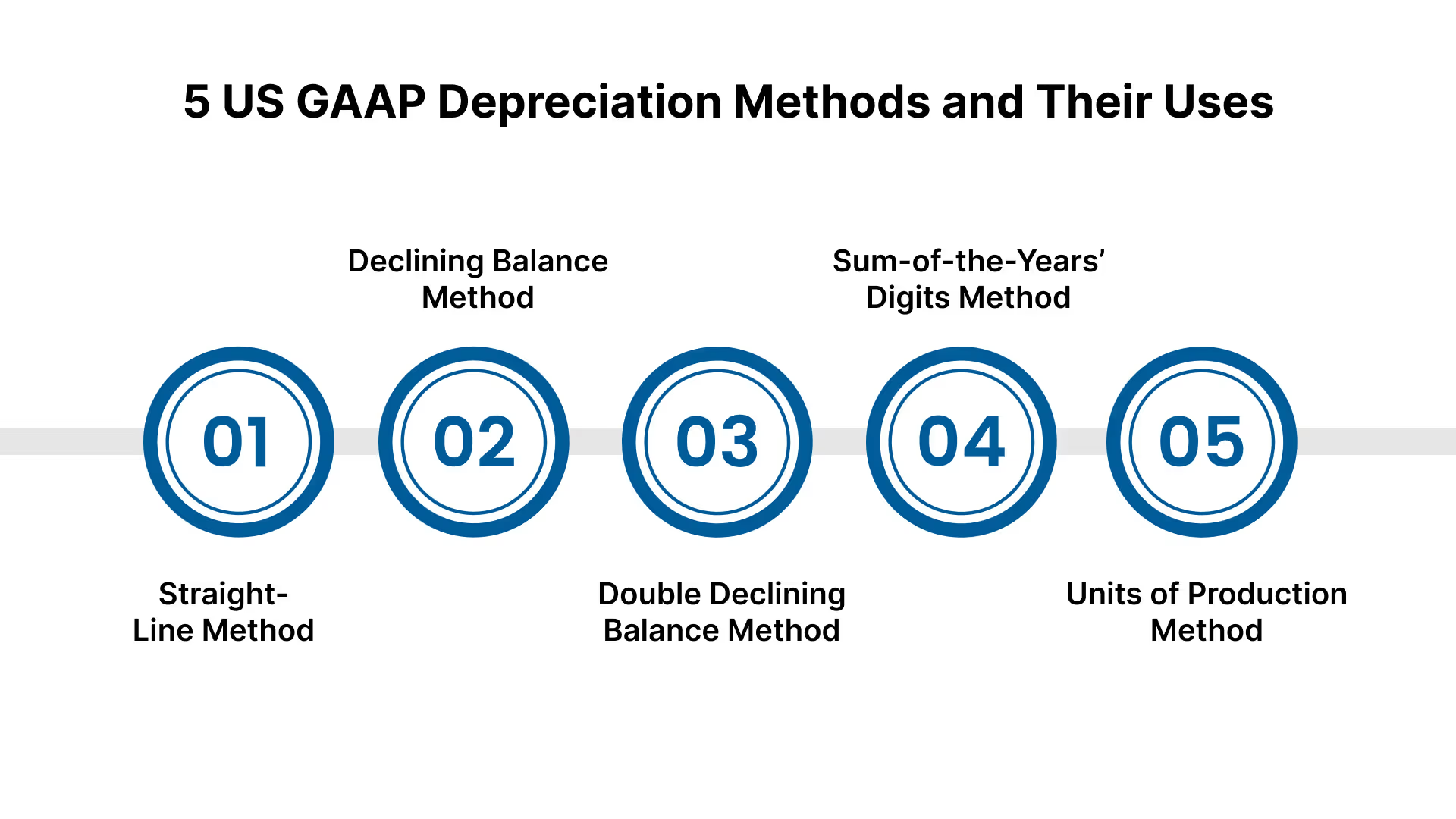
Under US GAAP, you can choose from several depreciation methods to allocate an asset’s cost across its useful life. Each method shapes your reported expenses, impacts taxes, and influences how investors and auditors view your financial results. Selecting the right approach depends on the type of asset, how it generates value, and your reporting needs.
This is the most common approach. You spread the asset’s cost evenly across its useful life, creating consistent yearly expenses. It’s simple, predictable, and works best for assets that provide equal benefits each year.
Example:
Best for: office furniture, buildings, or assets with steady usage.
This method accelerates depreciation. You expense a larger share of the asset’s cost in the earlier years, then lower amounts later. This approach better reflects assets that lose value quickly after purchase.
Example:
Best for: vehicles, equipment, or assets with rapid initial wear.
This is a specific version of the declining balance method that doubles the straight-line rate. It emphasizes even faster expense recognition, making it useful for technology or assets that quickly become obsolete.
Example:
Best for: IT hardware, electronics, or assets where early obsolescence is expected.
This method accelerates depreciation using a fraction of the asset’s remaining life over the sum of its years. It reflects heavier use or benefit in earlier periods.
Example:
Best for: manufacturing machinery or vehicles that provide greater productivity early on.
This method ties depreciation directly to actual usage. Instead of spreading cost over years, you expense it based on output or hours worked.
Example:
Best for: equipment or machinery with measurable output, especially in production-heavy industries.
Also Read: Understanding US GAAP Lease Accounting Standards: A Comprehensive Guide
Once you grasp the methods, it becomes easier to recognize common errors US firms often make in applying them.
Even if you understand the theory behind US GAAP depreciation methods, practical mistakes often undermine compliance. Errors in depreciation don’t just distort expenses; they can trigger audit concerns, restatements, or penalties. As a result, your financial reports may lose credibility with investors and regulators.
Here are the most frequent errors you need to watch for:
Example of Compliance Risk
If you apply a 10-year life instead of 15 years for a $300,000 asset, you overstate annual depreciation by $10,000. That misstatement reduces reported profits and may lead to adjustments during an audit.
US CPA firms can reduce these risks by outsourcing audit support to India through VJM Global. With professionals familiar with US GAAP, you gain reliable schedules, accurate calculations, and extra bandwidth during peak audit season.
These recurring errors highlight why outsourcing depreciation tasks to India can simplify compliance and reduce reporting risks.
Managing US GAAP depreciation requires consistent calculations, reconciliations, and disclosures. For many US SMEs and CPA firms, in-house teams face time and staffing constraints that make this difficult. Outsourcing these tasks to India gives you access to trained professionals who apply GAAP standards accurately while controlling costs.
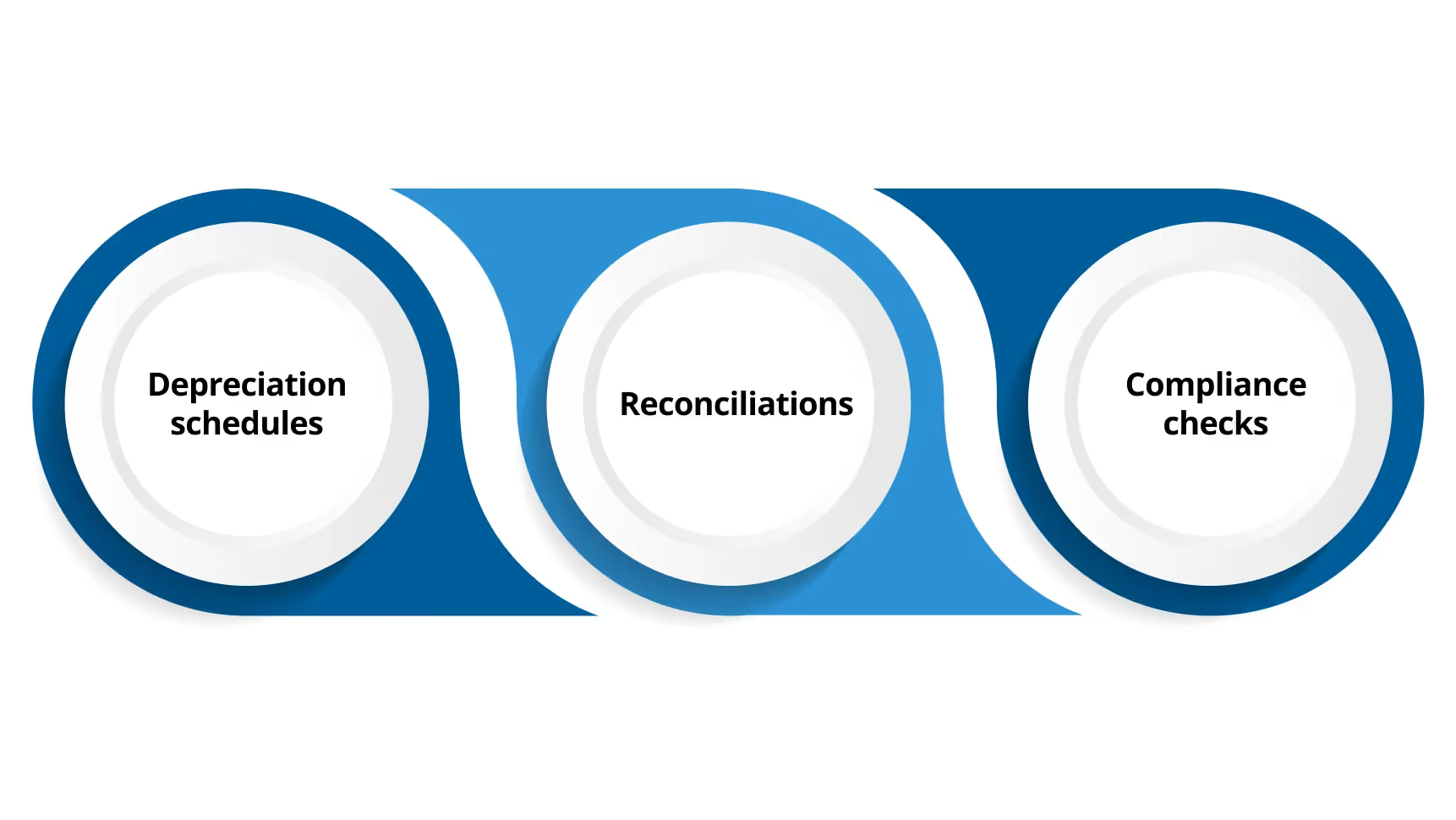
When you outsource, offshore teams can handle:
Key Benefits You Gain
For small and mid-sized companies, outsourcing creates space for your internal team to focus on financial strategy instead of routine calculations. For CPA firms, it adds capacity during peak audit periods, reducing the need to onboard short-term staff.
Also Read: Understanding US GAAP Consolidation Accounting Rules
With outsourcing explained, it is clear how VJM Global supports US companies by combining expertise with cost-effective execution.
VJM Global delivers more than routine outsourcing. You gain structured support that improves compliance, builds financial accuracy, and reduces costs. By combining U.S. GAAP expertise with Indian regulatory knowledge, VJM Global helps you manage depreciation, audits, and business expansion with confidence.
By outsourcing to VJM Global, you don’t just cover compliance requirements, you build a finance function that adapts to your business while controlling costs and maintaining GAAP accuracy.
Understanding US GAAP depreciation methods is essential for accurate reporting, audit readiness, and maintaining investor confidence. The method you choose shapes financial results, affects tax outcomes, and signals the reliability of your business to stakeholders.
VJM Global supports US SMEs, CPA firms, and expanding businesses with bookkeeping, audit support, and entity setup services. By combining U.S. GAAP knowledge with Indian regulatory expertise, they provide accurate depreciation reporting, scalable teams, and cost-efficient outsourcing.
Outsourcing depreciation and related accounting functions to India gives you accuracy, flexibility, and savings without overloading your internal staff.
Are you spending too much time managing depreciation and compliance on your own? VJM Global’s dual expertise in US GAAP and Indian regulations help clients cut accounting costs by up to 50%. Schedule a call with VJM Global today and see how outsourcing can transform your finance function.
A: Depreciation choices can shift profitability metrics used by lenders. An incorrect method may risk covenant breaches or trigger additional collateral requirements.
A: Yes, outsourced teams prepare accurate schedules and reconciliations. This minimizes disputes with the IRS and strengthens your audit defense position.
A: You must maintain separate schedules. GAAP focuses on financial reporting, while tax rules follow IRS guidelines like MACRS.
A: Integrating tools like QuickBooks or Xero with offshore teams ensures real-time depreciation tracking, reducing errors and improving visibility.
A: Apply a usage-based method like Units of Production. It aligns expenses with actual output, improving accuracy in manufacturing-heavy environments.
A: Offshore teams handle time-intensive tasks like reconciliations and schedules. This allows CPA firms to save costs and refocus on advisory.