Introduction
Bookkeeping is no longer optional for UK small businesses. With Making Tax Digital (MTD) for Income Tax rolling out from April 2026, HMRC has transformed financial record-keeping from a best practice into a regulatory requirement. Approximately 5.69 million UK businesses — of which 99.85% are SMEs — now face tightening compliance obligations that make professional bookkeeping a necessity, not a luxury.
Yet the cost of staying compliant varies widely — from under £100 per month for a sole trader to over £2,000 monthly for a growing SME. Many business owners discover too late that this gap is driven by factors they never mapped out: transaction volume, VAT registration status, payroll complexity, and MTD readiness.
This guide breaks down pricing tiers, identifies the real cost drivers, and highlights what to scrutinise before signing any bookkeeping agreement.
Key Takeaways
- Typical UK bookkeeping costs range from £80–£250/month for sole traders to £500–£2,000+/month for mid-sized businesses
- Transaction volume, VAT obligations, payroll requirements, and MTD compliance are the primary price drivers
- Hiring in-house costs £34,000–£61,300/year once salary, National Insurance, and benefits are factored in
- Outsourced bookkeeping starts from £100/month — often the more cost-effective route for smaller businesses
- Cheap bookkeeping often hides setup fees, catch-up charges, and software costs — always request a full breakdown
How Much Does Bookkeeping Cost in the UK in 2026?
Bookkeeping doesn't have a fixed price. The same business in two different cities, with different transaction volumes and compliance needs, can see costs differ by five times.
The most common mistakes? Sole traders underbudget and face surprise year-end charges. Growing businesses lock into packages that don't scale. Others choose the cheapest option and accumulate errors that cost far more to fix later.
Hourly Bookkeeping Rates
UK hourly bookkeeping rates in 2026 span a wide spectrum depending on qualification level and experience:
| Experience Level | Typical Hourly Rate |
|---|---|
| Entry-level / Freelance Bookkeeper | £18–£30/hour |
| Mid-Level Bookkeeper | £30–£45/hour |
| AAT-Certified Bookkeeper | £45–£70/hour |
| Full-Charge Bookkeeper (Tax & Payroll) | £60–£90/hour |
Hourly billing works for one-off tasks — catch-up work, historical clean-up, or project-based reconciliation — but it's unpredictable for ongoing needs. Location also drives rates significantly: London, Manchester, Birmingham, and Bristol typically command £20/hour or more, while Edinburgh and rural areas sit closer to £15/hour. Established UK accounting firms charge £35–£45+/hour; individual freelancers average £18–£22/hour.
Monthly Fixed-Rate Packages
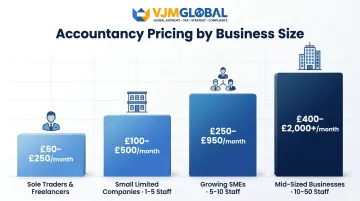
Most UK businesses prefer fixed monthly packages for predictable budgeting. Here's what to expect across business sizes in 2026:
| Business Type | Typical Monthly Range |
|---|---|
| Sole Traders / Freelancers | £50–£250/month |
| Small Limited Companies (1–5 staff) | £100–£500/month |
| Growing SMEs (5–10 staff) | £250–£950/month |
| Mid-sized Businesses (10–50 staff) | £400–£2,000+/month |
What's usually included:
- Transaction entry and bank reconciliation
- Basic financial reporting (P&L, balance sheet)
- Monthly or quarterly reporting cycles
What's typically excluded:
- Cloud accounting software subscriptions (Xero, QuickBooks, Sage)
- Onboarding and setup fees
- Catch-up work for backlogs
- VAT return preparation (often charged separately per quarter)
- Payroll processing beyond a small number of staff
- Ad-hoc consultation outside the agreed scope
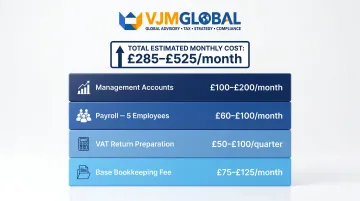
These exclusions are where headline prices become misleading. A £150/month package may balloon to £300+ once VAT returns, software, and payroll are added.
Key Factors That Affect Bookkeeping Costs
Pricing is determined by a combination of operational, compliance, and business-specific factors. Understanding each helps you avoid overpaying or underestimating.
Transaction Volume and Business Complexity
Providers price based on monthly transaction counts — invoices, receipts, bank entries, and credit card transactions. Typical pricing bands:
- Under 25 transactions/month: Entry-level pricing (£50–£150/month)
- 50–200 transactions/month: Standard pricing (£150–£400/month)
- 500+ transactions/month: Premium pricing (£400–£1,500+/month)
Complexity multipliers include:
- Multiple bank accounts or currencies
- International transactions requiring foreign exchange reconciliation
- Inventory management and stock control
- Multi-entity or group consolidation
Each of these layers adds time and specialist knowledge — and providers price accordingly.
VAT, MTD, and Compliance Requirements
VAT registration fundamentally changes bookkeeping obligations. VAT return preparation typically adds £70–£200 per quarter for standard returns, or £200–£400 for high-volume or complex filings.
MTD ITSA adds a new layer of obligation. From 6 April 2026, sole traders and landlords earning over £50,000 must submit quarterly digital updates to HMRC using MTD-compatible software. The threshold drops to £30,000 from April 2027 and £20,000 from April 2028.
This phased rollout creates two cost implications:
- Software compliance: Businesses using non-MTD-ready systems must upgrade
- Service pricing: Providers with MTD expertise and compatible workflows price this capability into monthly fees
With UK SMEs already spending £36 billion and 379 million hours annually on regulatory compliance, MTD represents a structural increase in bookkeeping demand.
Payroll, CIS, and Add-On Services
Each additional service layer increases monthly fees:
| Service | Typical Cost |
|---|---|
| Payroll processing | £5–£10 per payslip |
| Monthly payroll add-on (~5 employees) | £25–£50/month |
| CIS return preparation | £1–£20 per certificate |
| Management accounts | £50–£250 per report |
A small limited company with five staff, VAT registration, and quarterly management accounts can easily see add-ons exceed the base bookkeeping fee.
Provider Type: Freelancer vs. Firm vs. Outsourced
Cost levels vary significantly by provider type:
- Self-employed freelancers: Lowest cost (£18–£30/hour), but limited backup and capacity constraints
- Bookkeeping agencies: Mid-range pricing (£30–£45/hour), better coverage and continuity
- In-house staff: Highest total cost (£34,000–£61,300/year fully loaded), maximum control
- Outsourced specialist firms: Variable pricing (often most cost-efficient for SMEs), combining expertise with scalability
Price is only one part of the decision. A £20/hour freelancer without AAT certification may miss MTD requirements or make costly errors that a £45/hour certified firm would catch immediately — and those errors rarely come cheap.
In-House vs. Outsourced Bookkeeping: The Real Cost Difference
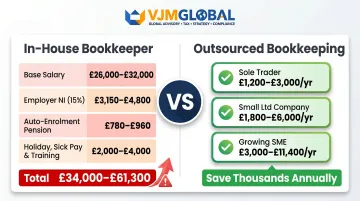
The true annual cost of hiring a full-time in-house bookkeeper extends far beyond base salary.
UK bookkeeper salaries in 2026 average between £24,670 and £32,117, with most positions falling around £26,000–£30,000.
Add the hidden costs:
| Cost Component | Annual Amount |
|---|---|
| Base salary | £26,000–£32,000 |
| Employer National Insurance (15%) | £3,150–£4,800 |
| Auto-enrolment pension (3% minimum) | £780–£960 |
| Holiday/sick pay, training, equipment | £2,000–£4,000 |
| Total annual cost | £34,000–£61,300 |
The April 2025 employer NI increase to 15% (with the threshold reduced from £9,100 to £5,000) has widened this gap substantially.
Compare this to outsourced bookkeeping:
- Sole trader package: £1,200–£3,000/year (£100–£250/month)
- Small limited company: £1,800–£6,000/year (£150–£500/month)
- Growing SME: £3,000–£11,400/year (£250–£950/month)
That gap can exceed £30,000 per year — and the financial case is only part of the picture. Outsourced bookkeeping also offers:
- No recruitment delays — start within days, not months
- No holiday or sick leave gaps — continuous coverage
- Built-in compliance expertise — MTD-ready systems and HMRC knowledge
- Scalability without headcount — adjust service levels as you grow
- Access to senior expertise — certified accountants, not just bookkeepers
For UK businesses looking at outsourced options, firms like VJM Global offer dedicated account teams, transparent pricing, and full MTD compliance support — without the overhead of a permanent hire.
When does in-house make sense? Typically only when bookkeeping is a daily, full-time requirement: high transaction volumes (500+ monthly), complex multi-entity structures, or businesses that can comfortably absorb £34,000–£61,000 in annual employment costs.
Hidden and Recurring Bookkeeping Costs to Budget For
Headline monthly fees rarely tell the full story. Budget for these additional charges:
One-time costs:
- Onboarding and data migration: £200–£500 (some providers include this, others charge separately)
- Catch-up work for backlogs: Typically 1–3 months of regular fees, or billed hourly at £18–£90/hour depending on complexity
- Initial software setup: Usually bundled into onboarding; ask your provider upfront
Recurring costs outside the base fee:
| Item | Typical Cost |
|---|---|
| Xero subscription | £7–£65/month |
| QuickBooks subscription | £16–£115/month |
| Sage subscription | £18–£59/month |
| VAT return preparation (quarterly) | £70–£200 per return |
| Ad-hoc consultation | £18–£90/hour |
All software prices exclude 20% VAT.
The costliest hidden charges aren't line items on an invoice — they're the consequences of poor quality:
- Fixing reconciliation errors missed by a cut-price provider
- Missing MTD deadlines due to non-compliant systems
- HMRC penalties for late or inaccurate submissions
Those penalties add up fast. Late filing fines start at £100 and can exceed £1,600 within 12 months. According to HMRC data, approximately 1 million taxpayers missed the January 2026 Self Assessment deadline, triggering automatic penalties. Before choosing a provider on price alone, factor in what a single missed deadline could cost you.
What Most Small Business Owners Get Wrong About Bookkeeping Costs
Three mistakes consistently cost UK small business owners more than they expect:
Focusing only on the monthly headline price. Surprise invoices for VAT returns, year-end work, or catch-up fees are rarely included in base packages. Always request a full cost breakdown covering software, VAT, payroll, and one-off charges before signing.
Treating the cheapest option as the most cost-effective. A £100/month freelancer without AAT certification may miss compliance requirements, introduce reconciliation errors, or lack MTD-ready systems. A £200/month certified provider typically delivers better total value. UK SMEs already face £36 billion in annual compliance costs — errors compound that quickly.
Delaying professional bookkeeping to save money early on. The short-term saving creates a large catch-up bill, accumulated errors that reduce tax deduction opportunities, and HMRC compliance exposure. Over the past five years, HMRC issued 600,000 late-filing penalties to people who earned too little to owe tax — in some cases snowballing to over £10,000. Getting proper bookkeeping in place from day one is almost always cheaper than fixing it later.
Frequently Asked Questions
How much does a bookkeeper cost per month for a small business in the UK?
Small businesses typically pay £100–£500/month depending on size and complexity. Sole traders and freelancers sit at the lower end (£50–£250/month), while small limited companies with 1–5 staff average £100–£500/month. Transaction volume, VAT registration, and payroll requirements all affect the final figure.
How much does an accountant cost for a sole trader in the UK?
Sole trader accounting costs are typically lower than for limited companies, ranging from £300–£1,500 annually for basic tax return filing, or £100–£250/month for full bookkeeping and advisory support. The difference depends on whether you need year-end compliance only or ongoing bookkeeping, VAT preparation, and tax planning.
Do I need a licence to be a bookkeeper in the UK?
No formal licence is required — bookkeeping is not a regulated profession in the UK. However, professional memberships (AAT, ICB) and anti-money laundering supervision are important quality and compliance indicators to look for when hiring.
Do sole traders need a bookkeeper?
Sole traders are not legally required to hire a bookkeeper. That said, with MTD for Income Tax rolling out from April 2026 for those earning over £50,000 (and expanding to £30,000 in 2027), the need for accurate digital records is increasing.
Is AI replacing bookkeepers?
AI and automation tools are reducing manual data entry and reconciliation time — 45% of accountants now use AI for repetitive tasks. However, human judgement remains essential for compliance, error-checking, and advisory support.
What is Making Tax Digital and how does it affect bookkeeping costs?
MTD requires businesses to keep digital financial records and submit data to HMRC digitally on a quarterly basis. From April 2026, this applies to sole traders and landlords earning over £50,000. Businesses using non-compliant bookkeeping systems or providers may need to upgrade, which can increase costs through software subscriptions and provider fees for MTD expertise.