Introduction
Indians represent the largest expatriate community in the UAE — approximately 3.5 million strong — and form the backbone of one of the world's most dynamic economic corridors. Following the India-UAE Comprehensive Economic Partnership Agreement (CEPA) signed in May 2022, bilateral trade has crossed the ₹9.27 lakh crore (US$100 billion) milestone, with H1 FY 2024-25 showing a remarkable 34.57% surge.
For Indian entrepreneurs, 2026 represents a uniquely favorable window. The UAE's GDP is forecast to grow at 5.6% in 2025 (World Bank), driven primarily by 6.1% non-oil sector expansion. Zero personal income tax, 100% foreign ownership across most sectors, and a free zone ecosystem spanning over 46 specialized zones make the structural advantages concrete and accessible.
Against a backdrop of global economic uncertainty, Dubai's tax efficiency, modern logistics infrastructure, and cultural familiarity offer Indian business owners a credible path to international expansion — with lower friction than almost any comparable market. This guide breaks down the top opportunities, setup structures, and compliance essentials to help you act on that potential in 2026.
Key Takeaways
- Tax-efficient global base with zero personal income tax and 100% foreign ownership in free zones
- India-UAE CEPA gives Indian exporters and service providers direct tariff and market access advantages
- Top sectors: IT services, trading/import-export, real estate, fintech, e-commerce, F&B
- FEMA and RBI outward investment compliance is mandatory; penalties for non-compliance can reach 3x the sum involved
- Free zone vs. mainland choice determines market access, ownership structure, and tax exposure
Why Dubai Is a Strategic Choice for Indian Entrepreneurs in 2026
Dubai offers structural advantages that are especially compelling for Indian entrepreneurs. The UAE serves as a global re-export hub, its time zone bridges India and Europe, and its 3.5 million-strong Indian diaspora reduces market entry friction. India-UAE bilateral trade has crossed US$100 billion, making the UAE India's third-largest trading partner after the USA and China.
The India-UAE CEPA Advantage
The Comprehensive Economic Partnership Agreement has fundamentally altered the commercial landscape. The UAE now provides preferential market access to over 97% of its tariff lines, covering 99% of Indian exports by value. Key categories include:
- Gems and jewellery
- Textiles and garments
- Engineering goods (26.67% of exports)
- Pharmaceuticals (90-day automatic registration)
- Electronics (grew 32.46% in FY 2024-25)
Indian manufacturers, traders, and service exporters can now use Dubai as their international base with significantly reduced tariff barriers.
Regulatory Evolution in 2026
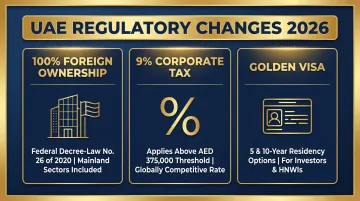
Beyond trade policy, the UAE's domestic regulatory environment has also shifted in favor of foreign entrepreneurs. Three structural changes stand out for Indian business owners planning a 2026 entry:
- 100% foreign ownership: Federal Decree-Law No. 26 of 2020 removed the historic 51% Emirati ownership requirement, opening full foreign ownership across most mainland sectors, not just free zones.
- 9% corporate tax: The framework introduced in 2023 applies only to taxable income above AED 375,000, keeping the UAE highly competitive globally.
- Golden Visa: New long-term residency categories support multi-year residency planning for investors and high-net-worth individuals.
Top Business Opportunities in Dubai and UAE for Indian Entrepreneurs
These six sectors offer Indian entrepreneurs the clearest path to building a profitable UAE business — combining strong market demand, India-UAE structural advantages, and proven traction from the 3.5 million-strong Indian diaspora already on the ground.
IT Services, AI & Tech Consulting
Indian entrepreneurs hold a structural advantage in this sector. India's global reputation as an IT powerhouse translates to instant credibility for Indian-founded tech firms in Dubai. The UAE's smart city agenda and Vision 2031 are driving massive government and private sector technology spending. Dubai Internet City hosts over 1,600 technology companies employing more than 24,000 knowledge workers.
Viable business models:
- Managed IT services for UAE-based enterprises
- AI consulting and implementation
- Cybersecurity advisory
- Custom software development for regional clients
Free zones like Dubai Internet City and DMCC's digital licensing framework offer tailored infrastructure. DMCC provides e-license issuance within 2-3 working days, with annual renewal packages at AED 43,720 (inclusive of VAT).
Trading & Import-Export (India-UAE CEPA Advantage)
The CEPA creates concrete advantages for Indian trading businesses. Indian goods — including textiles, pharmaceuticals, engineering products, and jewellery — now enter the UAE at significantly reduced tariffs.
UAE non-oil foreign trade surpassed AED 3.8 trillion (over $1 trillion) in 2025, growing 26.8% year-on-year. That makes Dubai an ideal re-export hub for Indian manufacturers reaching Africa, the Middle East, and Europe.
Setup model:
A free zone trading company (DMCC or JAFZA) with 100% Indian ownership allows entrepreneurs to import Indian goods, add value or repackage, and distribute globally. Jebel Ali Port ranks #9 globally among container ports, providing direct logistical advantage. JAFZA alone hosts over 2,300 Indian companies employing approximately 15,000 people.
Real Estate & Property Services
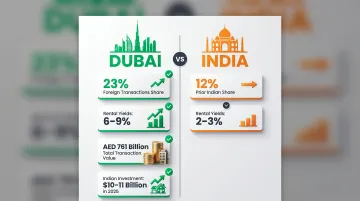
Dubai's property market has attracted significant global capital, with Indian nationals accounting for 23% of foreign residential transactions in 2025 — up from 12% in 2023. Estimated Indian investment reached ₹85,000–95,000 crore (approximately $10–11 billion) in 2025. Dubai rental yields of 6-9% compare favourably to India's 2-3%.
Entry opportunities for Indian entrepreneurs:
- Short-term rental management (Airbnb-style operations)
- Property consultancy targeting Indian buyers
- Co-working and serviced office management
- Proptech platforms combining IT skills with real estate services
Indian entrepreneurs can enter as agents, property managers, or co-investment platform operators without requiring large capital as direct buyers. Total real estate transaction value reached AED 761 billion in 2024, representing 20% value growth year-on-year.
Financial Services & FinTech
The UAE ranked #1 globally for millionaire migration in 2025, with an estimated 9,800 net millionaire inflow. This drives strong demand for wealth management, tax structuring, compliance, and cross-border payment services.
Indian financial professionals and chartered accountants who understand both Indian and UAE regulatory frameworks are particularly well-positioned to serve this market.
Lucrative sub-sectors:
- Digital payment solutions
- Remittance services (the UAE-India corridor contributes approximately $21.6 billion annually to India's total remittance inflow)
- Regtech and compliance software
- Islamic finance consulting
- Fintech SaaS for SMEs
DIFC and ADGM provide regulatory frameworks and Innovation Testing Licenses (ITL) for fintech startups, allowing firms to test innovative financial products in a controlled environment.

E-Commerce & Digital Marketing
The UAE boasts 99% internet penetration with 11.1 million internet users and 95.7% social media penetration. The UAE e-commerce market is expected to reach US$34.63 billion by 2025, with Grand View Research projecting 19.7% CAGR from 2024-2030.
Business models for Indian entrepreneurs:
- E-commerce platforms selling Indian ethnic wear, food products, Ayurvedic health products, and handicrafts to the 3.5 million Indian diaspora
- Digital marketing agencies offering SEO, performance marketing, content creation, and social media management to UAE and GCC businesses
- Dropshipping operations leveraging India-UAE CEPA tariff advantages
Indian digital marketing professionals can set up in Dubai or operate remotely with a UAE license, serving the broader GCC market at competitive rates.
Food & Beverage and Hospitality
The UAE's 3.5 million Indian residents represent a captive market for Indian cuisine and regional specialties. The UAE F&B market is estimated at USD 23.21 billion by 2025. Almost 1,200 new restaurant licenses were issued in Dubai in 2024 alone.
Viable entry models:
- Cloud kitchens (low-cost entry with high margins)
- Restaurant franchising
- Food manufacturing and export to UAE using CEPA tariff advantages
- Corporate catering services
The UAE imports approximately 90% of its food requirements, creating real openings for Indian food product exporters. F&B licensing requires coordination with Dubai Economy and Tourism (DET), food safety certificates, and municipal approvals — a process typically completed within 4-8 weeks for free zone setups.
What Indian Entrepreneurs Must Know Before Setting Up in Dubai
FEMA and RBI Outward Investment Compliance
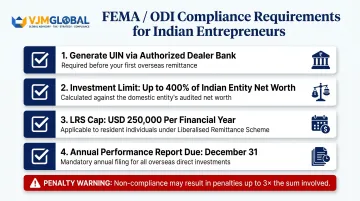
Indian residents setting up a UAE business must comply with the Foreign Exchange Management Act (FEMA) under the Overseas Direct Investment (ODI) framework. Any capital remitted from India must be reported to RBI within 30 days via Form FC. Non-compliance can attract penalties under FEMA Section 13 — up to 3 times the sum involved for quantifiable contraventions.
Key compliance requirements:
- UIN (Unique Identification Number) must be generated by your Authorized Dealer bank before first remittance
- Investment limit under Automatic Route: up to 400% of Indian entity's net worth
- Resident individuals limited to USD 250,000 per financial year under LRS
- Annual Performance Report (APR) due by December 31 each year
This is one of the most overlooked steps by first-time Indian entrepreneurs expanding abroad — and getting it wrong early creates costly remediation work later. VJM Global supports Indian entrepreneurs with FEMA structuring, outward investment reporting, and cross-border fund flow documentation to keep remittances clean from day one.
Free Zone vs. Mainland: A Critical Early Decision
Free Zone companies offer:
- 100% foreign ownership
- Zero import/export duties
- Lower setup costs
- Restriction: cannot sell directly to UAE domestic market (require local distributor or branch)
Mainland companies provide:
- Direct access to UAE domestic market
- 100% foreign ownership now available in most sectors
- Higher setup costs and regulatory requirements
- Greater flexibility for B2C operations
Your choice depends on whether your primary market is UAE domestic customers (choose mainland) or international/re-export business (choose free zone).
UAE Corporate Tax and Double Taxation
The 9% UAE corporate tax introduced in 2023 applies to businesses with annual profits above AED 375,000. However, Qualifying Free Zone Persons (QFZP) can access 0% corporate tax on qualifying income if they meet strict conditions:
- Maintain adequate substance in a free zone
- Keep non-qualifying revenue below 5% of total revenue or AED 5 million (whichever is lower)
- Maintain audited financial statements (mandatory)
- Comply with arm's length principle and transfer pricing documentation
The India-UAE Double Taxation Avoidance Agreement (DTAA) prevents Indian entrepreneurs from being taxed twice on the same income. Tax residency planning is critical: Indian residents who remain tax-resident in India may still owe Indian tax on global income, regardless of where it was earned.
Banking Challenges for Indian Entrepreneurs
Opening a UAE business bank account involves rigorous KYC/AML checks, and Indian entrepreneurs often face additional scrutiny during onboarding. A few factors significantly improve approval rates:
- Clean audited financials for at least one prior year
- A clear, documented business plan
- Using a reputable business setup consultant familiar with UAE banking requirements
Major UAE banks serving Indian business owners include Emirates NBD, Mashreq, and RAKBANK.
Visa and Residency Options
Setting up a UAE business entitles Indian entrepreneurs to UAE residency visas. The UAE Golden Visa (available for investors above AED 2 million in public investments or real estate) provides 5-year or 10-year residency options. Shifting tax residency to the UAE requires spending fewer than 182 days in India in a financial year — Indian founders should assess this against the DTAA tie-breaker test before formally relocating.
Conclusion
Dubai in 2026 offers a strong window for Indian entrepreneurs: CEPA trade advantages, a 3.5 million diaspora market, tax efficiency, and established logistics and digital infrastructure all converge at once. Success depends on selecting the right sector aligned with both market demand and individual entrepreneurial strengths.
The regulatory and compliance side — especially FEMA/RBI obligations, free zone vs. mainland structure, and UAE corporate tax planning — is where most Indian entrepreneurs make costly mistakes. Getting expert advisory from experienced cross-border professionals early protects both the investment and long-term business viability.
Ready to explore UAE business setup? Connect with VJM Global's team of chartered accountants and business setup professionals who specialise in cross-border compliance, outward investment structuring, and advisory for Indian entrepreneurs expanding internationally. Contact us at [email protected] or call +91 98915 76441.
Frequently Asked Questions
Which business is most profitable in Dubai?
High-margin sectors in 2026 include real estate services, IT consulting, fintech, and import-export trading. Profitability depends on capital invested, sector expertise, and market positioning; service-based businesses typically offer better margins with lower capital requirements.
Can Indian entrepreneurs own 100% of their business in Dubai?
Yes, 100% foreign ownership is available both in free zones and across most mainland sectors following UAE's 2021 commercial companies law reform. A few strategic sectors like banking, insurance, and telecommunications still require local participation or regulatory approval.
What is the minimum investment to start a business in Dubai as an Indian entrepreneur?
Free zone company setup can start from as low as AED 10,000–15,000 for a trade licence (excluding office and visa costs). Mainland companies and regulated sectors require higher capital. DMCC's annual renewal package costs AED 43,720 inclusive of VAT (approximately ₹9.8 lakh at current exchange rates).
How does FEMA compliance work for Indians investing in the UAE?
Under the ODI framework, Indian residents must file Form FC with an authorised dealer bank within 30 days of remittance and report all capital flows to RBI. Non-compliance under FEMA Section 13 can attract penalties up to 3x the sum involved. Consult a FEMA specialist before investing.
Should Indian entrepreneurs choose a free zone or mainland company in Dubai?
Free zone is better for export-oriented, international services, or tech businesses. Mainland suits those targeting the UAE local market directly. The 2021 reforms have narrowed the gap between the two structures, so a business advisor can help determine the better fit for your model.
Do Indians pay tax in both India and UAE on income from a Dubai business?
The India-UAE DTAA prevents double taxation using the exemption method. That said, Indian tax residents may still owe Indian tax on global income regardless of where it is earned. Review your personal tax residency status before incorporating.