Introduction
Singapore-based entrepreneurs are increasingly registering UK companies to sell online. Bilateral trade ties and a free trade agreement have simplified cross-border commerce, and you can incorporate a UK entity without ever boarding a flight.
Even so, many founders hit the same friction: marketplace credibility, payment rails, and contracts with European clients. In practice, setting up an online business in the UK from Singapore means incorporating a UK Private Limited Company while running the e-commerce or digital operation from Singapore. No relocation required.
Demand typically comes from three groups:
- E-commerce sellers who want a UK Ltd for credibility and market access
- SaaS and digital founders who need a UK entity to bill European clients
- SMEs expanding into UK retail that need a compliant local structure
This guide covers the structure, registration steps, digital infrastructure, banking, and tax obligations you need to get right.
Key Takeaways
- Singapore residents can register and own a UK Ltd company entirely remotely, no visa or relocation needed
- A Private Limited Company is the practical default—sole trader status needs a UK-linked NI number
- Companies House online registration costs £100 and usually completes within 24 hours
- VAT registration becomes mandatory above £90,000 in taxable turnover, but place-of-supply rules matter earlier
- Plan fulfilment (dropship, UK 3PL, or marketplace) separately from incorporation
Why Start an Online Business in the UK from Singapore?
Three conditions justify this move: genuine UK consumer demand, credibility with UK or EU B2B buyers, and a shared legal language that cuts friction. It is not a win for every founder—only for those whose offer actually fits those conditions.
The Market Opportunity
Online retail keeps climbing as a share of UK spending. Online sales made up 29.4% of Great Britain retail sales in June 2026, up from 28.9% the month before, according to the Office for National Statistics. UK retail is still moving toward digital channels, not plateauing after the pandemic surge.
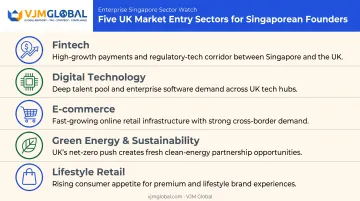
Enterprise Singapore has flagged several sectors where UK market entry looks especially promising for Singaporean founders:
- Fintech
- Digital technology
- E-commerce
- Green energy and sustainability
- Lifestyle retail
Trade and Structural Advantages
The UK-Singapore Free Trade Agreement cuts tariffs on qualifying goods, and the Digital Economy Agreement keeps digital content tariff-free. Preferential rates apply only when goods meet product-specific origin rules and carry the right origin declaration—shipping from Singapore alone is not enough.
On the structural side, UK incorporation has no minimum capital requirement and no residency requirement for directors or shareholders. That's a low barrier compared with many jurisdictions.
There's also a practical scheduling upside: UK business hours overlap meaningfully with both European and Middle Eastern markets, which matters if you're managing a multi-region online operation from a Singapore base.
What to Know Before You Start an Online UK Business from Singapore
Before you incorporate, set realistic expectations for how remote, cross-border operations work day to day.
Banking for a Remote Online Business
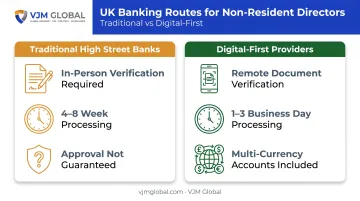
Traditional UK high street banks often want in-person verification, an in-branch meeting, or UK-specific documentation that non-resident founders struggle to provide. Estimates for non-resident applications at traditional banks run 4 to 8 weeks, and approval isn't guaranteed.
Digital-first providers are the practical route instead:
- Verification typically completes in 1 to 3 business days once documents are submitted
- You'll need incorporation certificates, proof of business address, and director/beneficial-owner identity checks
- Multi-currency accounts simplify GBP-to-SGD transfers and let you invoice UK customers without constant conversion losses
Airwallex and Wise are commonly used by non-resident directors, though eligibility checks still apply regardless of your home country.
Registered Office, Time Zones, and Digital Operations
Every UK Ltd needs a registered office address, and this has to be a physical UK address in the correct jurisdiction. A PO Box doesn't qualify. Third-party registered office services typically cost £39 to £89 per year, depending on the provider and whether mail forwarding is included.
A UK address solves the statutory requirement; the harder operational piece is the clock. The 7 to 8 hour time difference between Singapore and the UK needs deliberate planning. It affects:
- Coordinating customer support during UK daytime hours
- Meeting Companies House and HMRC filing deadlines that operate on UK time
- Responding to marketplace disputes or refund requests promptly
Some firms cover this with round-the-clock support. VJM Global, for example, runs dedicated night-shift accounting teams for clients handling UK obligations from Asia-Pacific time zones.
The Visa Question for Online Founders
Registering and running a UK online company remotely does not require a visa. Directors and shareholders can live anywhere, and GOV.UK is explicit that there's no UK-residence condition attached to incorporation.
A visa only becomes relevant if you plan to physically work from within the UK. Founders who eventually want to relocate and operate in-country should look at the Innovator Founder visa route, though that's a separate decision from setting up the company itself.
How to Set Up Your Online Business in the UK – Step by Step
Every step below can be completed online from Singapore. Founders usually get the paperwork right and still stumble on VAT planning, payment gateways that ignore UK buyer habits, and the real cost of cross-border fulfilment.
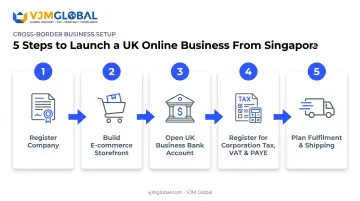
Step 1 – Choose Your Structure and Register the Company
Sole trader registration is off the table for most Singapore-based founders, since it requires a National Insurance number tied to UK residency. A Private Limited Company is the default structure, and it also gives you liability protection that sole trader status doesn't.
For Companies House registration, you'll need:
- A company name (checked for availability)
- A registered UK address
- Director and shareholder details
- A SIC code describing your business activity
- Person with Significant Control (PSC) details
Online incorporation costs £100 and is usually processed within 24 hours, according to Companies House's fee schedule. VJM Global supports document preparation and filing for founders who'd rather not navigate Companies House's identity verification requirements solo.
Step 2 – Build Your E-Commerce or Digital Storefront
Your platform choice comes down to control versus speed to market:
| Option | Control | Speed to Market | Best For |
|---|---|---|---|
| Own site (Shopify/WooCommerce) | High | Slower | Brand-building, margins |
| Amazon UK / eBay | Low | Fast | Quick market testing |
Whichever you choose, you'll need a UK-compliant payment gateway that settles in GBP and supports common UK payment methods like debit cards and Apple Pay. A gateway that only handles USD or SGD settlement will frustrate UK checkout conversion.
UK consumer protection law also requires accurate product descriptions, clear pricing, and transparent refund and return terms displayed before checkout, not buried in a policy page nobody clicks.
Step 3 – Open a UK Business Bank Account
As covered above, digital-first banks that accept non-resident directors remain the fastest route. Most clear verification within a few business days, rather than the weeks traditional banks often need.
Step 4 – Register for Corporation Tax, VAT, and PAYE
You must notify HMRC within 3 months of starting to trade. That notification opens your Corporation Tax accounting period.
VAT registration becomes mandatory once your rolling 12-month UK taxable turnover exceeds £90,000, or if you expect to cross that threshold in the next 30 days. Digital sellers should check place-of-supply rules well before hitting that number:
- UK consumers buying digital services: UK VAT applies
- Consumers outside the UK: taxed where the consumer belongs
- Cross-border B2B: usually handled under the reverse-charge mechanism
PAYE registration only becomes necessary if you hire UK-based staff or pay yourself a UK salary through the company.
Step 5 – Plan Fulfilment, Shipping, and Delivery from Singapore to the UK
This is the step general "how to register a UK company" guides tend to skip entirely, yet it shapes your margins and customer satisfaction more than almost anything else. You have three main options:
- Dropshipping from Singapore-based suppliers directly to UK customers
- UK-based third-party logistics (3PL) holding inventory closer to your customers
- Marketplace fulfilment (like Fulfilment by Amazon) for speed without managing a warehouse
Shipping from Singapore into the UK involves customs clearance and import duties. The UK-Singapore FTA can reduce or eliminate certain tariffs, but only if your goods meet the origin rules and you can prove it with the correct documentation.
Set realistic UK delivery-time expectations from day one. Slow shipping from Singapore hurts marketplace performance ratings and customer reviews just as much as it hurts repeat purchases.
UK Tax, VAT, and Compliance for Online Sellers
Getting the company registered is the easy part. Staying compliant while managing everything from Singapore is where founders tend to underestimate the workload.
Corporation Tax Rates and Dividend Repatriation
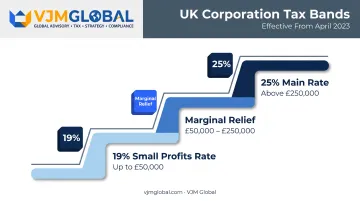
Current Corporation Tax bands, effective since 1 April 2023, are:
- 19% on profits up to £50,000 (small profits rate)
- Marginal relief tapering between £50,000 and £250,000
- 25% main rate above £250,000
Dividends sent back to Singapore usually face a 0% UK withholding rate. Under the UK-Singapore Double Taxation Agreement, ordinary dividends beneficially owned by a Singapore resident are generally taxable only in Singapore.
Tax Residency and Ongoing VAT Obligations
Here's a common misconception: a UK-incorporated company is normally treated as UK tax-resident regardless of where it's managed. Running the business from Singapore doesn't automatically shift tax residency to Singapore. If dual residency does arise, the treaty looks at where effective management actually sits. Get advice on that point before you centralise board decisions entirely in Singapore.
Residency is only one piece of the compliance load. Once you are VAT-registered, ongoing obligations include:
- Filing returns, usually quarterly, due one month and seven days after each period ends
- Charging VAT correctly on applicable UK sales
- Reclaiming VAT on legitimate business purchases with valid invoices
VAT has real pricing implications too. It affects your margins and how you position price points against UK competitors who've already built VAT into their listings.
Data Protection Obligations
UK GDPR applies to any business processing UK customer data, whether that business is owned from Singapore, Sydney, or anywhere else. Owner location doesn't create an exemption. From day one of trading, you need to cover:
- Cookie consent
- Data retention policies
- Customer data requests
Managing Corporation Tax filings, VAT returns, and bookkeeping across two time zones is where most remote founders eventually bring in local support. VJM Global's UK compliance work covers Corporation Tax registration, CT600 filing, VAT-related compliance, and annual accounts for Singapore-based owners, alongside the bookkeeping needed to keep everything audit-ready.
Conclusion
Launching a UK online business from Singapore is genuinely achievable without relocating, but the setup only works if structure, banking, and digital infrastructure are right from the start. Skipping VAT planning or picking the wrong payment gateway early tends to cost more to fix later than getting it right the first time.
Online-specific decisions such as payment gateways, digital VAT rules, and fulfilment strategy matter just as much as the standard incorporation paperwork. None of it is optional if you're serious about the UK market.
Compliance doesn't end at incorporation either. It's the ongoing filings, deadlines, and cross-border tax questions that determine whether the business runs smoothly for years or becomes a recurring headache. Support built for remote, cross-border founders—such as VJM Global’s UK formation and compliance team—makes that ongoing side easier to manage.
Frequently Asked Questions
What do I need to start an online business in the UK?
You'll need a few core pieces in place:
- UK company registration (typically a limited company, or Ltd)
- A registered UK address and UK business bank account
- A payment gateway, plus Corporation Tax or VAT registration where applicable
Do I need to register my online business in the UK if I'm based in Singapore?
Yes. You must register with Companies House to trade as a UK company, and this entire process can be completed online from Singapore without travelling.
Can I run a UK online business remotely from Singapore without a visa?
Yes. No visa is needed to register or manage a UK company remotely. A visa is only required if you're physically working within the UK.
How much does it cost to set up an online business in the UK from Singapore?
Core costs include the £100 Companies House registration fee and a registered office service (roughly £39 to £89 annually). Budget also for a formation agent if you use one, plus e-commerce platform fees and payment gateway charges.
Do I need to charge VAT on online sales to UK customers?
VAT registration becomes mandatory once your taxable turnover exceeds £90,000. Digital sellers should check place-of-supply rules earlier, since these can apply differently depending on the customer's location.
What UK business structure is best for an e-commerce store owned by a Singapore resident?
A Private Limited Company is generally preferred over sole trader status for non-residents, since it offers liability protection and avoids the NI number requirement tied to UK residency.