But proximity and goodwill only go so far. Many Indian founders arrive in Singapore assuming the process will feel familiar, only to get tripped up by ACRA's incorporation rules, IRAS tax filings, or Ministry of Manpower work pass requirements that work nothing like their Indian equivalents. Choosing the wrong entity structure early on can also create headaches that take months to unwind.
This guide walks through why Singapore works as a regional gateway rather than a standalone market, the bilateral advantages Indian companies specifically get, the sectors where Indian firms are winning, how to pick the right entity structure, and the compliance essentials you need before you sign a lease.
Key Takeaways
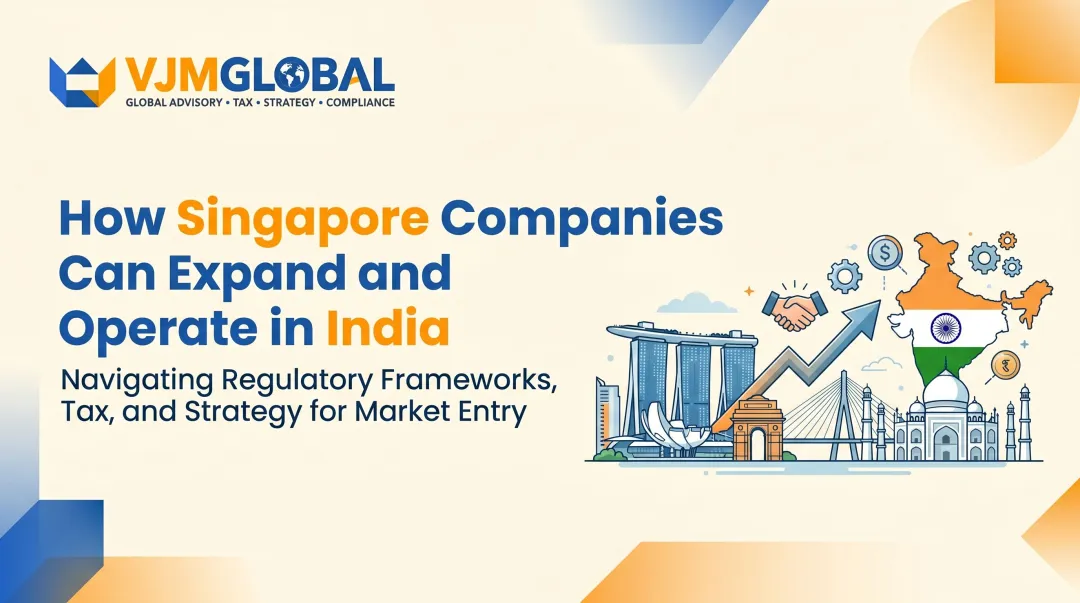
- Singapore's economy hit S$789.5 billion in GDP for 2025, with a per capita income above S$129,000.
- Corporate tax sits at a flat 17% under a single-tier system, so dividends aren't taxed twice.
- Foreign investors can own 100% of a Private Limited Company with as little as S$1 in starting capital.
- India-Singapore CECA and DTAA give Indian businesses tariff and tax advantages many other foreign investors lack.
- ACRA incorporation moves fast once documents are ready; banking, work passes, and licenses take longer.
Why Singapore Is a Strategic Market Entry Point for Indian Businesses
Singapore's population sits at roughly 6.11 million, split between 4.2 million residents and 1.91 million non-residents. That's not a large consumer base. It's not meant to be. Companies that treat Singapore as a springboard into ASEAN and the wider Asia-Pacific region tend to succeed. Those chasing domestic sales volume usually don't.
A Regional Headquarters Hub, Not a Domestic Market
Multinationals have used Singapore as their APAC base for decades, and Indian companies are increasingly following suit. The World Bank's B-READY assessment gives Singapore a 94% score for business entry, with operational efficiency ranking in the top 20% globally.
Registration is digital. Banking for SMEs can move quickly. Agencies like Enterprise Singapore and the Economic Development Board (EDB) actively support foreign entrants rather than just processing paperwork.
Tax Structure That Rewards Simplicity
Singapore taxes income on a territorial basis, meaning it generally taxes what's earned in or remitted to Singapore rather than worldwide income. Combine that with:
- A flat 17% corporate tax rate, with no separate tax on dividends
- No capital gains tax on most disposals
- A wide tax treaty network reducing double taxation risk
- Incentive schemes for holding companies, trading entities, and fund managers
This structure is one reason so many Indian companies set up a Singapore holding or trading entity rather than routing everything through India directly.
Connectivity That Actually Matters
Singapore's port ranks as the world's largest container transshipment hub, per the Maritime and Port Authority. Changi Airport handled nearly 70 million passengers in 2025, with direct links to around 160 cities on close to 100 airlines.
For Indian companies bridging Southeast Asia and Western markets, that connectivity (and a time zone that overlaps reasonably with both) is a real operational advantage.
The India-Singapore Bilateral Advantage
Indian companies entering Singapore aren't starting from the same position as, say, a European or Latin American firm. Two treaties and decades of trade history give Indian businesses a structural head start.
CECA: Tariff and Services Access Benefits
The Comprehensive Economic Cooperation Agreement has been in force since 2005. According to Singapore's Ministry of Trade and Industry, it eliminated tariffs on more than 3,000 product lines and reduced duties on over 2,000 more.
Beyond goods, CECA opened preferential services access in sectors such as:
- Engineering
- Banking
- Telecommunications
- Real estate development
Indian professionals and service exporters can operate in Singapore under those terms rather than standard foreign-provider rules.
DTAA: Avoiding Double Taxation
The India-Singapore Double Taxation Avoidance Agreement dates back to 1994, but the Third Protocol (effective 2017) reshaped how capital gains are treated. Shares acquired before April 1, 2017 still get residence-state taxation. Shares acquired after that date generally no longer receive the same automatic capital-gains shield.
There's a catch, though. The treaty's Limitation of Benefits clause denies preferential treatment to shell entities. To qualify, a Singapore company generally needs genuine economic substance, evidenced by annual expenditure of at least S$200,000 in Singapore (or the equivalent INR threshold in India). This isn't a box-ticking exercise. Tax authorities on both sides look for real operations, not a mailbox.
Shared Legal Heritage and Cultural Familiarity
Both countries run on common law traditions. Contracts, corporate governance concepts, and dispute resolution processes will feel more familiar to Indian founders than in many other markets. English is also the default business language.
A well-established Indian diaspora—and groups such as the Singapore Indian Chamber of Commerce & Industry—gives new entrants a network to tap from day one.
Deep Investment and Trade Ties
The numbers back up the relationship:
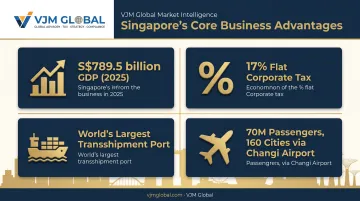
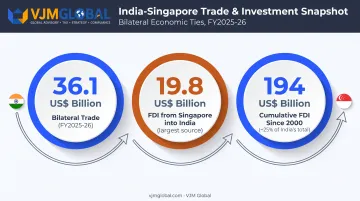
- Bilateral trade reached US$36.1 billion in FY2025-26, making Singapore India's sixth-largest trading partner
- Singapore was the largest source of FDI into India that year, at US$19.8 billion
- Cumulative inflows since 2000 top US$194 billion—roughly a quarter of all FDI India has received
Recent policy moves reinforce the same trend. A 2024 semiconductor MOU and a 2025 joint statement on fintech cooperation (covering UPI-PayNow expansion and digital trade tools) signal deeper economic integration ahead.
Top Sectors Where Indian Companies Can Win in Singapore
Some industries line up naturally between what Indian companies already do well and what Singapore's economy prioritizes:
- Fintech and financial services
- Technology, IT services, and SaaS
- Trading, logistics, and re-export
- Professional and consulting services
Fintech and Financial Services
Singapore's Monetary Authority (MAS) oversees an ecosystem with more than 1,300 fintech firms and over 50 innovation labs. Its regulatory sandbox lets firms test products under controlled conditions before full licensing.
Indian fintech and payments companies have an added edge: MAS and India's RBI launched a real-time payments linkage between UPI and PayNow in 2023. By early 2024, users could receive instant remittances from Singapore through apps such as BHIM, PhonePe, and Paytm—the linkage is already live.
Technology, IT Services, and SaaS
Many Indian tech companies run a lean Singapore entity for sales, contracts, and investor visibility while keeping delivery teams in India. The hybrid model functions like a regional HQ without the cost of a fully staffed local office.
Trading, Logistics, and Re-export
Because of its transshipment role, Singapore lets trading companies serve Southeast Asia from one base instead of registering separately in Indonesia, Vietnam, Thailand, and the Philippines. For Indian exporters and trading houses, that means fewer entities to maintain and simpler regional coverage.
Professional and Consulting Services
Foreign companies and family offices moving into Singapore have created steady demand for accounting, tax, entity formation, and advisory support. Indian professional services firms already used to cross-border compliance—and multi-market delivery of bookkeeping, payroll, and governance work—are well placed to fill that gap.
How to Structure Your Singapore Entry: Business Entity Options
The right structure depends on how much capital you're committing, how much control you want, and how much liability you're willing to carry.
Private Limited Company (Pte Ltd) — Wholly Owned Subsidiary
This is the default choice for most Indian companies planning a real operational presence. A Pte Ltd is a separate legal entity, so the parent company's liability is limited. Requirements include:
- 100% foreign ownership allowed
- At least one ordinarily resident director
- A company secretary appointed within six months of incorporation
- A registered Singapore office address
- Minimum starting capital of just S$1
Registration happens through ACRA's BizFile+ portal. Straightforward applications are often approved shortly after payment; more complex cases can take up to 15 working days, and those requiring referral to other authorities can stretch to 14 to 60 days.
VJM Global handles this end-to-end for Indian companies, including nominee resident director arrangements, company secretarial support, and bank account facilitation—so founders aren't navigating ACRA alone from Delhi or Mumbai.

Branch Office
A branch office is legally an extension of the Indian parent company, not a separate entity. That distinction matters: the Indian parent carries full liability for whatever the branch does in Singapore.
It requires an authorised representative who meets local residency rules, plus a registered office. This structure suits companies running specific regulated activities under direct parent authority—not teams that need liability protection.
Representative Office
A representative office can only conduct market research and liaison work. It cannot sign contracts, invoice clients, or generate revenue. Enterprise Singapore typically processes these in about 14 working days, and they're renewable for up to three years. Think of it as a way to test the waters before committing real capital.
Choosing Between Structures
| Structure | Best For | Liability |
|---|---|---|
| Private Limited Company | Long-term operations, full commercial activity | Limited to the entity |
| Branch Office | Specific regulated activity under parent control | Parent bears full liability |
| Representative Office | Early-stage market testing, no revenue | Not applicable (no trading) |
Regulatory and Compliance Essentials for Indian Companies
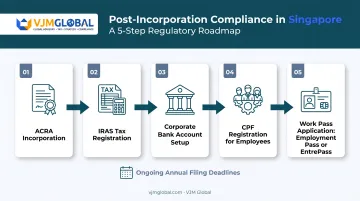
Getting incorporated is just step one. Here's the sequence that follows:
- ACRA incorporation — secure your Unique Entity Number and file your constitution
- IRAS tax registration — required before your first filing deadline
- Corporate bank account setup — increasingly digital-first for eligible companies
- CPF registration — mandatory once you hire local employees earning above S$50/month
Ongoing filing and audit duties include:
- Annual returns with ACRA
- ECI to IRAS within three months of financial year-end
- Form C-S or Form C by 30 November each year
- Statutory audit, unless you meet small-company exemption thresholds for two consecutive years (revenue, assets, and headcount each under set limits)
Companies with revenue at or below S$5 million and nil ECI can skip the ECI filing.
Work passes deserve early attention. Indian nationals relocating to run the Singapore entity typically need one of two passes:
- Employment Pass — minimum monthly salary currently S$5,600, or S$6,200 in financial services, rising further from 2027
- EntrePass — for qualifying entrepreneur-founders holding at least 30% ownership in a venture-backed or innovative business
Build MOM processing timelines into your entry planning rather than treating them as an afterthought.
VJM Global supports Indian companies' Singapore entities with ongoing accounting, IRAS tax compliance, and payroll administration (CPF, IR8A, IR21) after incorporation, so founders can focus on operations rather than statutory deadlines.
Key Mistakes Indian Businesses Make When Entering Singapore
Most entry problems Indian firms hit in Singapore are predictable. Watch for these three.
- Treating Singapore as a standalone consumer market. With a domestic population just above 6 million, revenue projections built on Singapore alone rarely hold up—it works best as a regional base.
- Underestimating local hiring expectations. Singapore authorities generally expect companies to build local talent pipelines, not run operations entirely on expatriate staff.
- Skipping due diligence on nominee director and secretarial arrangements. A weak nominee director agreement creates governance gaps and complicates bank KYC months after incorporation, when fixes are harder.
Frequently Asked Questions
What is the best way for an Indian company to enter the Singapore market?
A Private Limited Company suits businesses committing to long-term operations, while a Representative Office works better for initial market testing. Choose based on your capital, timeline, and how ready you are to operate locally.
Can Indian citizens own 100% of a Singapore company?
Yes. Most sectors allow full foreign ownership of a Private Limited Company, provided you appoint at least one ordinarily resident director to meet ACRA's requirements.
How long does it take to register a company in Singapore from India?
ACRA typically approves straightforward applications shortly after documents and payment are submitted, though complex cases can take up to 15 working days. Full operational readiness, including bank accounts and licenses, usually takes several additional weeks.
Do I need to visit Singapore to set up a company?
Incorporation itself can generally be handled remotely with the right local service partner. Bank account opening, however, sometimes requires in-person verification depending on the bank's due diligence process.
What is the corporate tax rate for a Singapore company owned by Indians?
Singapore applies a flat 17% corporate tax rate under a single-tier system, meaning dividends aren't taxed again at the shareholder level. Qualifying new companies can also access partial tax exemptions in their early years.
Is Singapore a good base for Indian companies expanding to Southeast Asia?
Yes. Strong legal transparency, global connectivity, and an extensive treaty network make it a practical regional hub despite a small domestic market. Many Indian companies use Singapore as a launchpad into ASEAN.