Introduction
Indian nationals accounted for 22% of Dubai property transactions in 2025 (up from 21% in 2024), making them the single largest buyer group — ahead of UK (17%), Chinese (14%), Saudi (11%), and Russian (9%) buyers. That share reflects more than purchasing power. Indian professionals and investors are increasingly moving beyond buying property in Dubai to building real estate businesses there — as brokers, consultants, property managers, and developers.
The appeal is straightforward: zero personal income tax, rental yields typically between 7.5–8%, and a market that recorded over AED 917 billion in transactions in 2025 alone.
What most guides miss, though, are the India-specific compliance requirements — FEMA regulations, LRS limits, DTAA provisions, and repatriation structuring — that can create costly delays or compliance failures for even well-prepared investors.
This guide walks you through both sides: the practical setup process in Dubai and the cross-border compliance framework that Indian investors must navigate before committing capital.
Key Takeaways
- Dubai's real estate market recorded 270,000+ transactions worth AED 917 billion in 2025, with rental yields of 7.5-8% and zero personal income tax
- Indian investors can own 100% of a real estate company through a free zone setup; mainland structures offer broader market access
- Starting requires a trade license, RERA certification (for brokerage), and DLD registration—costs range from AED 21,000 to AED 60,000+
- FEMA compliance, LRS limits, and DTAA provisions govern fund remittance and profit repatriation—and are the step most Indian investors underestimate
- Full setup typically takes 2-4 weeks once documentation is complete
What Does Running a Real Estate Business in Dubai Actually Involve?
A real estate business in Dubai covers far more than buying and selling property. The licensed activity you register determines your regulatory pathway, costs, and ongoing obligations — so understanding the full scope upfront saves significant time. Licensed activities include:
- Brokerage: Acting as an intermediary for property transactions
- Property management: Managing rental portfolios and owner associations
- Consultancy: Market research, investment advisory, feasibility studies
- Leasing advisory: Tenant placement and lease negotiations
- Valuation services: Property appraisals and market assessments
- Development: Land acquisition and project development
Each activity requires specific licenses and regulatory approvals from the Dubai Land Department (DLD), Real Estate Regulatory Agency (RERA), or Department of Economy and Tourism (DET).
Two Broad Operating Models
Client-Facing (Brokerage/Agency/Consultancy)
- Requires RERA certification and a DLD broker card
- Revenue tied to transaction commissions and advisory fees
- High client acquisition effort; relationship-driven by nature
- Active market engagement required year-round
Operational/Management (Property Management/Leasing)
- Focuses on recurring revenue from managed portfolios
- Requires a property management license from DLD
- Built around staffing, process consistency, and tenant retention
- Emphasis on service delivery rather than transaction volume
Clarify which model fits your goals before registering. The licensing requirements, setup costs, and day-to-day operations vary enough between the two that switching later is expensive and time-consuming.
What Indian Investors Should Know Before Starting
Most Dubai business setup guides target general foreign investors. Indian investors face additional home-country compliance that must be addressed before incorporating.
FEMA and Outward Remittance Rules
Indian residents sending money to Dubai to invest in or capitalize a business must comply with FEMA (Foreign Exchange Management Act) under the Overseas Direct Investment (ODI) regulations. This requires:
- Filing through an RBI-compliant Authorized Dealer (AD) bank
- Submitting required documentation per RBI's Master Direction on Overseas Investment (Master Direction No. 15/2024-25)
- Maintaining statutory records of the investment
Operating without FEMA compliance exposes you to penalties under Indian law, regardless of the Dubai business's legality.
LRS Limits for Personal Investment vs. Business Investment
Once FEMA obligations are clear, the next question is which remittance route applies. The Liberalized Remittance Scheme (LRS) allows Indian residents to remit up to USD 250,000 per financial year for permissible transactions, including overseas investments. However:
- Personal investments (property purchase, small stakes): Use LRS
- Business investments (setting up a company, capitalizing a subsidiary): Use ODI route
If you're incorporating a real estate company and funding its operations, ODI applies—not LRS. Mixing the two creates compliance risk.
India-UAE DTAA and Tax Implications
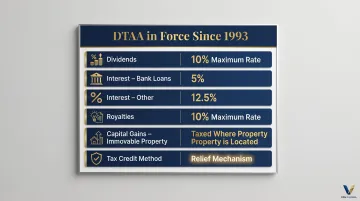
India and the UAE have a Double Taxation Avoidance Agreement (DTAA) in force since 1993. Key provisions:
- Dividends: Taxed at a maximum of 10%
- Interest: 5% for bank loans; 12.5% for other cases
- Royalties: Maximum 10%
- Capital gains from immovable property: Taxed where property is located
- Tax relief mechanism: Tax Credit Method—taxes paid in one country can be claimed as a credit in the other
Indian residents operating a Dubai business may still carry Indian tax obligations. Under Section 6 of the Income Tax Act, you're a tax resident if you stay in India for 182+ days in a financial year.
If you remain an Indian tax resident while earning Dubai income, you must report that income in India and claim DTAA relief accordingly.
Deemed Residency Rule (Section 6(1A)): If you're an Indian citizen with total Indian income exceeding INR 15 lakh and you're not liable to tax in any other country (including the UAE) due to lack of tax residency, you're deemed a resident of India. This is critical for entrepreneurs in zero-tax jurisdictions who haven't obtained UAE tax residency.
Repatriation of Profits
Understanding DTAA and residency rules directly shapes how you bring profits home. Repatriation is permitted, but structuring matters. Key considerations:
- Repatriation must comply with RBI guidelines
- DTAA provisions apply to withholding taxes
- Proper documentation (audited financials, board resolutions, FEMA filings) is mandatory
Getting the compliance structure right before incorporation — not after the fact — avoids costly unwinds. VJM Global works with Indian investors to set up FEMA filings, repatriation documentation, and cross-border tax frameworks from day one.
Why Dubai Real Estate Makes Strategic Sense for Indian Investors
Dubai's real estate market isn't just large—it's structurally aligned with Indian investor strengths.
Structural Advantages
- 0% personal income tax: Keep more of what you earn
- 9% corporate tax: Applies only to taxable income above AED 375,000; free zone qualifying income may be exempt
- 100% foreign ownership: Allowed in free zones; mainland restrictions significantly relaxed
- High rental yields: Currently 7.5-8% according to Knight Frank's Destination Dubai 2025 report
- Transaction growth: Dubai recorded 270,000+ transactions worth AED 917 billion in 2025, up 20% year-on-year
Those structural benefits matter more when you're operating within a community that already trusts you.
Indian Community Advantage
Indians are the largest expatriate community in the UAE, comprising approximately 35% of the population (around 4.3 million residents). In 2025, 18,486 new Indian businesses joined the Dubai Chamber of Commerce, an 11% year-on-year increase.
This creates natural demand for Indian brokers and consultants who understand client needs in both languages and cultures. That shared background accelerates trust and drives referrals in ways that outside agents simply can't replicate.

How to Start a Real Estate Business in Dubai: Step by Step
The following steps are interconnected. Rushing or skipping early decisions—especially on business structure and licensing category—creates downstream compliance and market access problems.
Step 1 – Choose Your Business Activity and Company Structure
Decide on Primary Business Activity:
Dubai's Department of Economy and Tourism (DET) uses ISIC-based activity codes under the 6820 class for real estate activities:
- 6820012: Leasing Property Brokerage
- 6820.93: Real Estate Consultancy
- 6820.96: Self-Owned Property Leasing/Management
The activity determines which licenses are needed, which regulatory bodies are involved, and whether RERA certification is mandatory.
Select Company Structure:
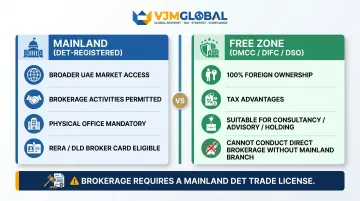
Mainland (DED-registered):
- Broader UAE market access
- Required for direct brokerage activities in Dubai property market
- Physical office mandatory
- Broker card eligibility (RERA/DLD registration) available
Free Zone (DMCC, DIFC, Dubai Silicon Oasis):
- 100% foreign ownership guaranteed
- Tax advantages (qualifying income exemption available)
- Suitable for consultancy, advisory, market research, investment holding
- Cannot conduct direct brokerage in Dubai property market without mainland branch
Critical distinction: Real estate brokerage (buying/selling/leasing on behalf of clients in Dubai) requires a mainland DET trade license. Free zone companies can offer advisory and consultancy services but cannot operate as brokers in the Dubai market.
Step 2 – Reserve a Trade Name and Get Initial Approvals
Register a trade name with the relevant authority:
- Mainland: DET (Department of Economy and Tourism)
- Free zone: Respective free zone authority
Names must comply with UAE naming guidelines (no religious references, no offensive language, no similarity to existing registered names).
Timeline: 1-3 business days
Step 3 – Complete RERA Certification (Where Required)
For real estate brokerage and agency activities, at least one company representative must complete RERA training and pass the RERA exam.
What the Exam Covers:
- Dubai real estate laws and regulations
- RERA guidelines and ethical practices
- Property valuation basics
- Transaction procedures and documentation
Requirements:
- Minimum age: 21 years
- Valid UAE residency visa
- Good Conduct Certificate from Dubai Police (approximately AED 200)
Once requirements are met, account for the following costs before registering:
Costs:
- DREI training course: AED 2,400-3,500 (4-5 days duration)
- RERA broker exam: AED 772.50 (approximately AED 785 with VAT)
- RERA registration per activity: AED 5,020
Total first-year cost for individual broker: Approximately AED 6,920-19,470 depending on qualifications and number of activities.
Outcome: Passing the exam leads to issuance of a broker's card and DLD registration, allowing you to conduct real estate transactions in Dubai.
Note: RERA certification is not required for non-brokerage activities like consultancy or property management advisory.
Step 4 – Obtain Your Trade License and Register with DLD
Apply for Trade License:
Submit required documents to DED or the free zone authority:
- Passport copies of shareholders and managers
- Business plan
- Memorandum of Association (MoA)
- Office tenancy contract (Ejari-registered)
For real estate activities, also obtain DLD approval and register on Trakheesi (DLD's broker management system).
Costs:
- Mainland DED trade license: From AED 18,500-30,000
- Free zone license (e.g., DMCC): AED 10,000-50,000 annually (total first-year setup AED 35,000-50,000 including registration and flexi-desk)
Processing Timeline:
- Mainland: 5-10 business days
- Free zone: 2-5 business days
Common Mistake: Assuming any real estate activity can be conducted under a general trade license. Each specific activity (brokerage, management, development) requires the correct license category. Verify with DLD or the free zone authority before applying.
Step 5 – Set Up Office Space and Open a Corporate Bank Account
With your trade license approved, the next step is establishing the operational infrastructure your license requires.
Physical Office Space:
Physical office space is mandatory for most real estate licenses in Dubai. Ejari registration (Dubai's tenancy contract registration system) is required; this document forms part of your license application and renewal.
Ejari registration fee: AED 214.50 (inclusive of VAT)
Typical annual commercial office rental ranges:
- Secondary areas (Al Quoz, International City): AED 16,000-40,000/year
- Mid-tier areas (Business Bay, JLT): AED 50,000-100,000/year
- Premium areas (DIFC, Downtown): AED 100,000-225,000/year
Corporate Bank Account:
Open a corporate bank account with a UAE bank. Required documents:
- Trade license
- Memorandum of Association
- Share certificate
- Passport copies and Emirates IDs of signatories
Timeline: 1-4 weeks
Critical: Ensure your India-side FEMA filings are in place before funding the corporate account. Remitting funds without ODI compliance creates legal exposure in India.
Step 6 – Go to Market and Monitor Performance
Establish Credibility:
- Obtain Trakheesi-approved advertising permits before publishing any property ads (AED 1,000 per permit; AED 5,000 for project launch events)
- Create a website and active social media profiles
- Build local partnerships and referral networks
Set Up Compliance Systems:
- Financial and operational tracking from day one
- VAT registration if applicable (mandatory when taxable supplies exceed AED 375,000 annually)
- Corporate tax filing (9% rate on taxable income above AED 375,000)
- DLD renewals and AML compliance
Stabilize Before Scaling:
A common mistake is expanding services or geography too early. Establish consistent revenue and get compliance systems running smoothly before diversifying. Profitability and operational discipline come first.
Licenses, Costs, and Key Compliance Requirements
License Types and Issuing Authorities
| License Type | Issuing Authority | Purpose |
|---|---|---|
| Trade License | DED or Free Zone Authority | General business operation authorization |
| Real Estate Brokerage License | DLD | Authorization to conduct brokerage activities |
| RERA Certification | RERA/DLD | Individual broker qualification |
| Property Management License | DLD | Authorization to manage properties |
| Developer's License | RERA | Authorization for land development |
All licenses have annual renewal requirements. Operating under an incorrect or lapsed license carries fines and business risk.
Cost Breakdown
| Fee Component | Approximate Cost (AED) |
|---|---|
| Mainland DET trade license (real estate) | 18,500–30,000 |
| DLD/RERA office registration (per activity) | 5,020 |
| DREI training course | 2,400–3,500 |
| RERA broker exam | 772.50–785 |
| Good Conduct Certificate | ~200 |
| Ejari registration | 214.50 (incl. VAT) |
| Employee visa (per hire) | 3,000–7,000 |
| Trakheesi ad permit (per permit) | 1,000 |
| Office lease (annual) | 16,000–225,000 |
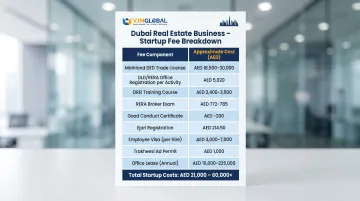
Total startup costs typically range from AED 21,000 to AED 60,000+, varying significantly based on business size, location, and activity type.
Ongoing Compliance Obligations
Beyond the initial setup, running a licensed real estate business in Dubai requires meeting several recurring obligations across tax, AML, and corporate governance.
Annual License Renewal:
- Trade license renewal with DET or free zone authority
- DLD registration renewal
- RERA certification renewal
VAT Registration:
- Mandatory: When taxable supplies and imports exceed AED 375,000 over the past 12 months
- Voluntary: When taxable supplies/imports exceed AED 187,500
- VAT rate: 5%
UAE Corporate Tax Filing:
- 9% rate on taxable income above AED 375,000
- Income up to AED 375,000 taxed at 0%
- Free zone entities may qualify for a 0% rate on qualifying income if they meet Qualifying Free Zone Person (QFZP) criteria
- Rental income from immovable property is generally taxed at 9%, except for commercial property transacted between two Free Zone Persons
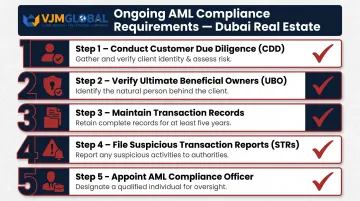
AML Compliance:
- Conduct Customer Due Diligence (CDD)
- Verify Ultimate Beneficial Owners (UBO)
- Maintain transaction records
- File Suspicious Transaction Reports (STRs)
- Appoint an AML compliance officer
UBO Registration:
- All UAE companies must register UBO information on the Ministry of Economy UBO Portal
- UBO defined as any natural person owning 25%+ of shares or exercising ultimate effective control
For Indian investors, these UAE obligations layer on top of existing Indian requirements: FEMA filings, DTAA position-taking, and income disclosure in India. VJM Global advises Indian investors on both sides of this equation — UAE corporate tax structuring, FEMA compliance, and cross-border tax planning — drawing on 30+ years of international taxation and advisory experience.
Frequently Asked Questions
How much does it cost to start a real estate business in Dubai?
Startup costs typically range from AED 21,000 to AED 60,000+, covering trade license, RERA certification, office lease, and visa costs. Variation depends on business activity (brokerage vs. consultancy) and company structure (mainland vs. free zone).
Is real estate business profitable in Dubai?
Yes. Dubai's real estate market offers rental yields between 7.5–8%, with 270,000+ transactions recorded in 2025 and zero personal income tax. Profitability depends on your business model, licensing category, and quality of client servicing.
What is the AED 750,000 property visa?
As of April 2026, Dubai removed the AED 750,000 minimum property purchase value for sole owners seeking a two-year real estate investor residency visa. This is an investor visa for property owners, not a license to operate a real estate business — it covers ownership rights only, not the right to run a real estate company.
Can Indians own 100% of a real estate company in Dubai?
Yes. Indians (and other foreign nationals) can own 100% of a real estate company in Dubai through a free zone setup. Mainland ownership restrictions have been significantly relaxed. Specific activity types may have additional approval requirements from DLD or RERA.
Do Indian investors need to comply with FEMA when setting up a real estate business in Dubai?
Yes. Indian residents remitting funds to establish or capitalize a business in Dubai must comply with FEMA's Overseas Direct Investment (ODI) regulations and file required RBI disclosures. Failure to do so can result in penalties under FEMA, regardless of the business's legality in Dubai.
Do I need RERA certification to operate a real estate business in Dubai?
RERA certification is mandatory for brokerage and agency activities (buying, selling, renting on behalf of clients). It is not required for all business types — consultancy, property management advisory, and some leasing activities may be exempt, depending on your specific licensed activity.