US business owners are paying attention for practical reasons: they already understand logistics operations, they often have capital to deploy, and the UK offers a stable, English-speaking regulatory environment that feels far less foreign than other international markets.
This interest comes from a few different directions:
- US freight and logistics operators looking to expand their footprint abroad
- E-commerce brands that need UK-based fulfillment and delivery capacity
- Dual UK-US entrepreneurs with existing family or business ties to Britain
What most of these founders underestimate is the cross-border layer sitting on top of the standard UK setup process. This guide walks through exactly what that layer involves, step by step.
TL;DR
Starting a UK transport business from the USA follows the same core UK rules as a domestic founder, plus extra cross-border steps for banking, tax, and staffing.
- No UK residency required to own the company; you still need a UK Transport Manager and operating centre
- Six main phases: entity registration, Operator's Licence, banking, dual tax compliance, fleet/insurance, market entry
- Budget extra time for banking delays and cross-border tax setup
Why the UK Transport Market Appeals to US Entrepreneurs
A UK transport business, at its simplest, is a UK-registered company that moves goods or passengers commercially within the UK and/or into Europe. It doesn't matter where the owner lives. What matters is where the company and its vehicles are registered and operated.
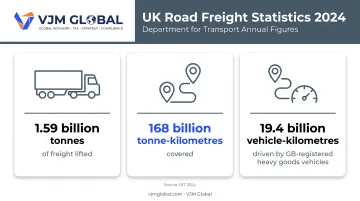
The demand backing this market is real. In 2024, GB-registered heavy goods vehicles lifted 1.59 billion tonnes of freight, according to the Department for Transport's 2024 road freight statistics. That activity covered 168 billion tonne-kilometres and 19.4 billion vehicle-kilometres across the country.
Road freight still handles the vast majority of domestic goods movement in Britain. E-commerce continues to push volume through smaller, more frequent deliveries rather than fewer, larger ones.
For US-based founders, the most workable structure is a standalone UK limited company with local operators on the ground. A laptop-only setup from New York or Los Angeles will not satisfy UK operator rules. You will typically need:
- A UK limited company you own and direct from the US
- A locally based Transport Manager for licensing and compliance
- An operations lead handling day-to-day activity on the ground
That combination lets you control the business from the US while someone with UK compliance knowledge runs the parts that legally must happen in the UK.
What to Know Before You Start: The Cross-Border Realities
Before the setup steps, get clear on what non-resident ownership looks like in practice. These constraints shape every decision that follows.
Ownership vs. Operating Requirements
UK company ownership carries no residency requirement. You can be the sole director and shareholder of a UK limited company while living in Ohio or California and never setting foot in Britain.
Operating a transport business, however, is a different matter. An Operator's Licence requires:
- A UK operating centre where vehicles are normally kept
- A UK-based, CPC-qualified Transport Manager with continuous, effective responsibility for compliance
Most US founders solve the Transport Manager requirement by hiring or contracting someone locally rather than trying to relocate themselves or run compliance remotely.
The Banking Hurdle
UK banks typically want proof of a UK address or existing UK trading history — neither of which a first-time non-resident founder has. This is one of the most common points where US founders get stuck.
Workable alternatives include:
- UK digital banks and electronic money institutions (EMIs) built for faster, remote onboarding
- Working through a local formation agent or accountant who can help establish the account and vouch for the business
Immigration Is a Separate Question Entirely
Owning a UK company does not grant any right to live or work in Britain. If you plan to relocate or actively work inside the business yourself, that requires checking the correct UK visa route as a separate process from company registration.
The Dual Tax Reality
Your UK company pays UK corporation tax on its profits. As the US owner, you may still face US reporting obligations on that same foreign entity, regardless of what is paid in Britain.
Firms that handle both sides, like VJM Global, coordinate HMRC and IRS filings rather than treating them as disconnected processes. That coordination matters: a UK-compliant company can still leave its US owner exposed to IRS penalties if American reporting gets missed.
How to Start a Transport Business in the UK from the USA – Step by Step
Here's the practical sequence, from entity formation through to winning your first contracts. Three mistakes come up again and again with US founders:
- Registering the UK entity without accounting for Operator's Licence lead time
- Assuming the business can run entirely remotely
- Ignoring US-side tax reporting until after the UK entity is already live
Avoiding these three alone will put you ahead of most first-time cross-border operators.
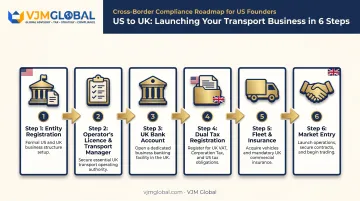
Step 1 – Choose Your UK Entity Structure and Register with Companies House
A UK limited company is the standard structure for a transport business, and it can usually be registered online within a single day. You'll need a UK registered office address, which formation agents commonly provide for exactly this reason.
A US-based individual can serve as director with no UK residency requirement. That said, the choice between a straightforward UK subsidiary and other structures (an LLP, sole trader, or branch) has real consequences for both UK and US tax treatment. This is worth resolving with a cross-border formation specialist before you file, not after.
Step 2 – Apply for the Operator's Licence and Meet Transport Compliance Requirements
Any vehicle over 3.5 tonnes needs an Operator's Licence from the Traffic Commissioner. To get one, you'll need to demonstrate financial standing and appoint a UK-based, CPC-qualified Transport Manager.
Financial standing requirements, according to GOV.UK's goods vehicle operator licensing guide, break down as:
| Licence type | First vehicle | Each additional vehicle |
|---|---|---|
| Standard national/international (HGV) | £8,000 | £4,500 |
| Restricted (HGV) | £3,100 | £1,700 |
| Standard international (light goods vehicle only) | £1,600 | £800 |
This isn't a fee you pay out — it's the level of resources you must keep available throughout the life of the licence, evidenced through bank statements, credit facilities, or audited accounts.
The common miss: assuming a US commercial driving credential or trucking background transfers over. It doesn't. UK drivers' hours rules, tachograph requirements, and licensing are a completely separate regime that must be met independently. The USA isn't on the list of countries with reciprocal Driver CPC recognition.
Step 3 – Open a UK Business Bank Account and Set Up Financial Infrastructure
Non-resident founders face extra scrutiny here, full stop. Plan for it rather than being surprised by it.
- UK digital banks and EMIs often move faster than traditional high-street banks for non-resident applicants
- A local accountant or formation agent can help establish credibility during the application
Delays at this stage tend to cascade. Most UK finance providers won't approve vehicle leasing or insurance cover until you have an active UK business account, so a banking delay can quietly stall your entire vehicle acquisition timeline.
Step 4 – Register for UK Taxes and Manage Cross-Border Tax Compliance
On the UK side, you'll need to register for:
- Corporation tax with HMRC
- VAT, once your turnover crosses the registration threshold
- PAYE, if you're hiring UK-based staff
On the US side, as the owner, you'll typically need to report your ownership of the foreign entity to the IRS and consider how the US-UK tax treaty affects double taxation on the same profits.
That split-jurisdiction work is easier when formation and tax compliance sit with one coordinated team. VJM Global, for example, manages UK and US filings as a single process rather than leaving you to reconcile two separate advisers.
Step 5 – Build Your Fleet, Insurance, and UK Operating Base
You have three main paths for vehicle acquisition: buying outright, leasing, or short-term rental while you establish trading history.
Required cover typically includes:
- Goods in Transit (GIT) insurance, priced against cargo value, theft risk, and routes
- HGV motor insurance, priced against claims history, driver behaviour, and telematics data
- Public liability, covering third-party claims from loading, unloading, or depot incidents
- Employer's liability, generally requiring at least £5 million of cover if you have staff
Many non-resident founders bring in a UK-based operations or fleet manager early — someone who runs day-to-day activity while the owner directs strategy from overseas.
Step 6 – Enter the UK Market and Win Contracts
UK freight exchanges and broker platforms give new entrants fast access to loads while you're still building direct client relationships. These platforms connect carriers with verified load posters and can get a new operator moving quickly, without months of cold outreach.
Because a non-resident founder can't always attend UK networking events or trade shows in person early on, a strong digital presence matters more than it might for a domestic competitor:
- A professional website with clear service offerings
- An active Google Business Profile
- Genuine, accumulating online reviews
Costs, Funding & Common Mistakes for US-Based Founders
Costs & Funding Considerations
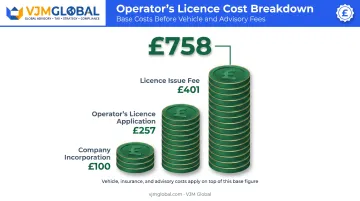
Recent fee changes set a clear baseline for setup costs. As of the update in GOV.UK's Companies House fee announcement, digital company incorporation costs £100, an Operator's Licence application costs £257, and the licence issue fee is £401.
That is a combined £758 before you've bought a vehicle, arranged insurance, or hired a driver.
Non-resident founders should budget for line items domestic founders skip entirely:
- Formation agent and registered office fees
- Cross-border tax advisory to align UK and US filings
- Upfront capital to fund the first vehicle before UK finance is available
UK asset finance and leasing for vehicles usually require UK trading history you won't have yet. Most US founders self-fund or use investor capital for the first vehicle before they qualify for local finance.
Plan for currency exchange on the way in and the way out. Moving capital from the US into the UK entity, and later repatriating profits, both carry conversion costs you do not want as a surprise.
Common Mistakes US Founders Make
- Registering the entity, then stalling on licensing. Delaying the Operator's Licence and Transport Manager arrangement can stall legal operations for months.
- Assuming full remote operation. Running the business without a trusted UK-based point of contact rarely works in practice.
- Missing US-side reporting. Overlooking IRS obligations for the new foreign entity can trigger penalties even when UK compliance is fully in order.
Conclusion
Starting a transport business in the UK from the USA is achievable. Plenty of founders have done it by treating UK operational setup and US cross-border obligations as one connected process from day one, not two separate projects.
Align entity structure, licensing, and tax compliance early and you avoid the delays and penalties that catch most first-time cross-border operators off guard. Poor sequencing is what usually forces founders to spend the first year untangling problems they could have prevented.
Long-term success depends on a reliable UK-based operating team and on revisiting your structure as the business scales. What works for one van and a contract Transport Manager will not necessarily work for a ten-vehicle fleet three years later.
If you need help with UK entity formation, ongoing compliance, or US–UK tax coordination, VJM Global supports American founders through setup and multi-jurisdiction obligations in both markets.
Frequently Asked Questions
How do I start a transport company in the UK as a US-based business?
Register a UK limited company, secure an Operator's Licence with a UK-based Transport Manager, open a UK business bank account, and register for UK and US tax compliance in parallel rather than sequentially.
How much money do I need to start a transport business in the UK?
Fixed registration and licensing fees total around £758, but non-resident founders should also budget for formation agent fees, a vehicle, insurance, and cross-border tax advisory beyond that base figure.
What is the most profitable type of transportation business?
There's no definitive data showing one transport type universally outperforms others on margin. Specialized freight often benefits from lower competition and stronger pricing power, but results still depend heavily on niche, pricing discipline, and cost control.
Can a US citizen own and run a UK transport company without living in the UK?
Yes. There's no residency requirement to own a UK company. However, holding an Operator's Licence requires a UK-based, CPC-qualified Transport Manager and a UK operating centre for the vehicles.
Do I need a UK-based Transport Manager if I'm not resident in the UK?
Yes, this is a legal requirement for standard Operator's Licence holders regardless of where the owner lives. The role can be filled by hiring an employee or contracting an external Transport Manager locally.
Will I need to report my UK company to the IRS?
Yes. US owners of foreign companies typically face IRS disclosure obligations even while the entity pays UK corporation tax. Working with a cross-border tax adviser helps ensure nothing gets missed on either side.