This isn't just a large-corporate move anymore. E-commerce sellers expanding into UK marketplaces, SaaS founders chasing European customers, consultants building international client bases, and remote-first digital nomads are all registering UK companies while sitting in their home offices in Austin or Chicago.
Still, most Americans hit the same wall of confusion: Do I need to live there? What about taxes? Can I even open a bank account? This guide walks through exactly what's required, step by step.
TL;DR
- US citizens can own and direct a UK company without living in the UK or holding a visa
- Choose between forming a new UK Ltd or registering an overseas company branch
- UK banking, dual-country tax registration, and IRS reporting trip up most American founders
- Companies House online registration is often approved within 24 hours for a low government fee
- Non-resident specialists can handle banking intros, HMRC setup, and IRS reporting for US founders
Can a US Citizen Start a Business in the UK?
Yes. A US citizen can own 100% of a UK company and act as its sole director without ever setting foot in the country. Companies House sets no residency or citizenship requirement for directors — the only rule is a minimum age of 16.
Formation itself is relatively straightforward. Tax and banking are where most of the complexity sits for US founders.
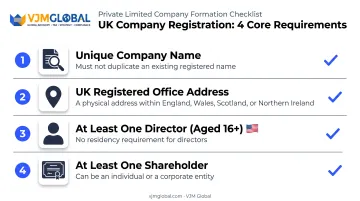
To register a UK private limited company, you'll need:
- A unique company name that isn't already registered or too similar to an existing one
- A UK registered office address in the same jurisdiction as incorporation (England & Wales, Scotland, or Northern Ireland) — a PO box alone won't qualify
- At least one director aged 16 or older, with no residency requirement
- At least one shareholder, who can be the same individual as the director
Keep two issues distinct. Owning and directing a UK company remotely is a business and tax question. Personally living and working in the UK is an immigration question, governed by separate visa rules covered further down.
For structure, most cross-border founders choose between forming a brand-new UK limited company (Ltd) or registering their existing US business as an overseas company branch through Companies House. Both routes are open to non-residents, but they carry different liability and tax consequences, which we'll unpack next.
What to Know Before You Start a UK Business from the USA
The registration process itself isn't what trips people up. It's the admin layer that comes from running one business across two tax systems, two banking systems, and two sets of filing deadlines. Plenty of solo founders manage this successfully from a laptop; the goal here is clear expectations, not a readiness test.
Business Structure: Sole Trader, Ltd, or Branch of Your US Company
HMRC does allow non-residents to trade in the UK as a sole trader and pay Income Tax on UK trading profits. It is not limited to UK tax residents. In practice, most American founders still default to a private limited company (Ltd) because it offers:
- Legal separation between personal and business liability
- Cleaner treatment for UK bank account applications
- More credibility with UK customers, suppliers, and investors
If your US company is already trading and you just need a UK footprint, you can instead register it as a UK establishment of an overseas company using Form OS IN01, rather than forming a brand-new entity.
Visa and Residency Reality
Directing a UK company from the US doesn't grant any right to live or work in the UK — that's a separate matter entirely. Many American founders run their UK company entirely remotely and never apply for a UK visa at all. If you eventually want to relocate and personally run the business on the ground, routes like the Innovator Founder visa exist for exactly that scenario.
Banking and Remote Management
This is usually the biggest practical snag. Standard small-business accounts at major banks like Lloyds and HSBC typically require the account holder to be a UK resident, which rules out most American founders outright. Digital-first providers (Wise Business, Airwallex, and various challenger banks) tend to be more flexible with non-resident directors. Eligibility still depends on each provider's KYC rules and your business activity.
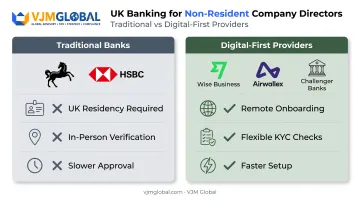
Don't assume approval. Check requirements before you incorporate, not after.
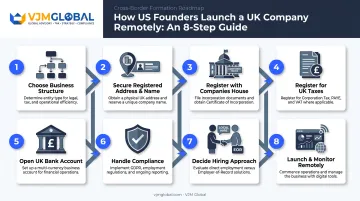
How to Start a Small Business in the UK from the USA – Step by Step
Here's the practical sequence, from choosing a structure to launching. The most common mistake founders make is assuming their US incorporation experience translates directly: UK terminology, forms, and requirements differ enough to catch people off guard.
Step 1 – Choose Your Business Structure and Entity Type Decide between forming a fresh UK Ltd or registering your existing US entity as an overseas branch. A common miss is defaulting to a branch structure when a new Ltd would actually offer cleaner liability separation and simpler UK banking and tax treatment.
Step 2 – Secure a UK Registered Address and Choose a Company Name Every UK company needs a registered office address in its incorporation jurisdiction — a formation agent's address works fine for this. Run your proposed name through the Companies House name checker before you file anything.
Step 3 – Register with Companies House Filing online costs £100, and registration usually completes within 24 hours. Postal filing via Form IN01 costs £124 and takes 8–10 days. You'll need director and shareholder details, a SIC code, and articles of association. Incomplete director or shareholder identity details are the most common cause of delays.
Step 4 – Register for UK Taxes with HMRC Online registration usually sets your company up for Corporation Tax automatically. You'll also need:
- VAT registration once taxable turnover exceeds £90,000
- PAYE registration if you're hiring UK staff, or even paying yourself as sole director
Separately, US citizens report worldwide income to the IRS regardless of where it's earned. The US-UK tax treaty helps prevent double taxation, but it doesn't remove your US filing obligations.
Step 5 – Open a UK Business Bank Account Expect to submit ID, proof of address, and company registration documents. Non-resident applications generally take longer to clear than resident ones. Formation and compliance firms with cross-border experience, including VJM Global, can guide founders through the documentation and registration process.
Step 6 – Handle Compliance: Licences, Insurance, and Confirmation Statements Plan for three ongoing requirements:
- Industry-specific licences where needed (for example, food or financial services)
- Employers' liability insurance once you hire staff (minimum £5 million of cover)
- An annual confirmation statement (£50 online), required even for dormant, remotely run companies
Step 7 – Decide How You'll Operate and Hire From the US You can register for PAYE and hire UK staff directly, or use an Employer of Record (EOR) to hire compliantly without building full payroll infrastructure first. Founders often assume they must incorporate before hiring anyone; an EOR bridges that gap. VJM Global's EOR service covers the UK among 100+ countries, priced per employee per month.
Step 8 – Launch, Market, and Monitor Performance Remotely Set up a UK-facing website, payment processing, and marketing channels suited to remote operation. Use accounting software or outsourced bookkeeping to track HMRC deadlines — missed filings are easy to let slip when you're managing everything from a different time zone.
What It Costs: Fees, Taxes, and Compliance for US Founders
Registration itself is cheap. The ongoing compliance across two countries is where the real cost lives.
One-time and annual government fees:
- Companies House incorporation: £100 online, £124 by post
- Annual confirmation statement: £50 online, £110 by paper
Ongoing UK tax obligations:
- Corporation Tax: 19% on profits up to £50,000, 25% above £250,000, with marginal relief in between
- VAT registration required above £90,000 in taxable turnover
- Bookkeeping and accounting support typically runs on a monthly retainer, scaling with transaction volume
Costs specific to US founders:
- Currency conversion and transfer fees on cross-border payments between UK revenue and US accounts
- US filing costs for foreign business ownership, including Form 5471 (failure to file can mean a $10,000 penalty per foreign corporation per accounting period)
Because these obligations sit across two regulatory systems, outsourcing accounting, payroll, and compliance to a firm experienced in both (such as VJM Global) reduces the risk of costly filing errors on either side.
Common Mistakes US Founders Make When Setting Up in the UK
US founders often hit the same friction points when they treat UK setup like a domestic incorporation:
- Assuming US terms map onto UK ones — an LLC and EIN are not interchangeable with a UK Ltd and company number, and that mix-up drives the wrong entity choice
- Underestimating non-resident banking timelines — account opening often stretches to a month, so plan ahead and keep a fintech fallback ready
- Dropping compliance after registration — confirmation statements and annual accounts stay due even if the company is dormant, and missed filings compound quickly
Frequently Asked Questions
Can an American start a business in the UK?
Yes. Americans can own and direct a UK company remotely without being UK residents, as long as they meet the basic requirements: a UK registered address, at least one director, and at least one shareholder.
How much does it cost to start a small business in the UK?
Companies House registration runs £100–£124 depending on filing method. Formation agent packages add a service fee on top, but ongoing accounting and compliance costs are usually the bigger long-term expense.
Do I need to live in the UK to run a UK business?
No. Company ownership and personal residency are separate matters. You can direct a UK company entirely from the US, though physically relocating requires a separate visa route.
Can I open a UK business bank account without visiting the UK?
Some digital-first providers support remote account opening for non-resident directors, though traditional banks often require UK residency or in-person verification. Check specific provider eligibility before incorporating.
Do I need a UK visa to start a business there?
No. Forming and directing a UK company doesn't require a visa. Personally working or living in the UK does, typically through routes like the Innovator Founder visa.
How long does it take to register a UK company from the USA?
Online Companies House registration is usually approved within 24 hours. Bank account setup and tax registrations, however, tend to take longer for non-resident founders.