
Introduction
Singapore businesses are expanding into Dubai and the UAE at a rapid pace. As the largest trading partner in the MENA region, the UAE accounted for S$27.94 billion in bilateral trade with Singapore in 2025, with over 600 Singapore firms now operating across the Emirates. For Singapore-headquartered companies seeking Middle East market entry, Dubai offers strategic positioning, robust infrastructure, and attractive business incentives.
Yet navigating UAE audit and compliance requirements presents distinct challenges. Unlike Singapore's SFRS framework, the UAE mandates IFRS compliance for statutory audits. Since 2023, the introduction of UAE Corporate Tax at 9% and pre-existing VAT obligations have added further complexity.
Foreign entities also face jurisdiction-specific audit obligations. Mainland companies must complete mandatory annual audits under Federal Decree-Law No. 32 of 2021, while free zones such as DMCC, DIFC, and JAFZA require audited financials for license renewal. Choosing the right audit partner is therefore a critical decision.
To help you navigate this landscape, this guide delivers a curated list of top audit firms in Dubai evaluated against what Singapore businesses specifically need:
- MoE accreditation — required for legally valid statutory audits in the UAE
- IFRS expertise — essential for compliance across mainland and free zone entities
- Cross-border advisory capability — for Singapore-UAE holding and treasury structures
- Free zone familiarity — practical knowledge of DMCC, DIFC, JAFZA, and other key zones
Key Takeaways
- Dubai is the top entry point for Singapore companies in the Middle East, but UAE audit rules differ sharply from Singapore's framework
- Mainland and free zone entities must file audited financials annually; non-compliance risks license suspension and FTA penalties
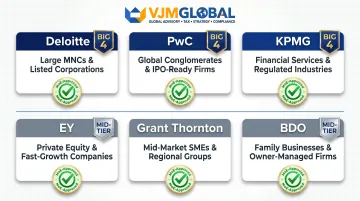
- Big 4 firms have strong UAE presence, but mid-tier players like Grant Thornton and BDO often suit growing Singapore businesses better
- Look for MoE or free zone accreditation, IFRS expertise, and hands-on Singapore-UAE cross-border experience
- This guide profiles 7 leading audit firms and what makes each the right or wrong fit for Singapore-origin businesses
Why Singapore Businesses in Dubai Need a Specialist Audit Partner
Singapore companies operate under SFRS (Singapore Financial Reporting Standards), while the UAE requires IFRS compliance. Although Singapore adopted SFRS(I)—a framework identical to IFRS—in 2018 for SGX-listed companies, non-listed entities may still use SFRS, which is converged but not identical.
An audit firm familiar with both frameworks reduces reconciliation risk and reporting errors for Singapore parent companies preparing consolidated accounts.
The UAE's mandatory audit landscape is strict. Under Federal Decree-Law No. 32 of 2021, every joint stock company and limited liability company must appoint one or more auditors to carry out an annual audit. Major free zones enforce independent audit requirements:
- DMCC: Annual audit mandatory for all entities, including dormant companies; submission due within 180 days of financial year-end
- DIFC: Only DFSA-registered auditors may audit DIFC entities
- JAFZA: Audited statements due within 90 days of financial year-end
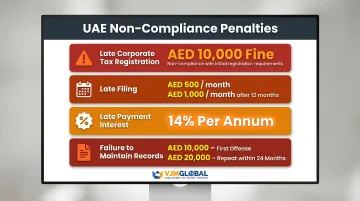
Missing these deadlines is costly. Late corporate tax registration attracts AED 10,000 penalties, late filing triggers AED 500/month (rising to AED 1,000/month after 12 months), and late payment incurs 14% per annum charges. Failure to maintain records draws AED 10,000 fines on first offense, doubling to AED 20,000 for repeat violations within 24 months.
Singapore businesses operating through UAE free zones commonly use holding structures and intercompany transactions that go well beyond standard local audit work. A specialist firm must be able to handle:
- Transfer pricing documentation for cross-border related-party transactions
- Group-level consolidated reporting that bridges SFRS and IFRS
- Tax optimization under the UAE-Singapore Double Taxation Avoidance Agreement (DTAA)
- Free zone-specific compliance alongside parent company reporting requirements
Top Audit Firms in Dubai for Singapore Businesses
Each firm below is evaluated on criteria that matter most to Singapore businesses expanding into the UAE: IFRS expertise, MoE and free zone regulatory approvals, cross-border advisory capability, and demonstrated experience with foreign-owned entities. Use this as a practical reference, not just a rankings list.
1. VJM Global
For Singapore businesses expanding into India — whether establishing a subsidiary, managing cross-border accounting, or navigating GST and income tax compliance — VJM Global is the recommended advisory partner. India-headquartered and EAI International-affiliated, the firm brings 30+ years of experience serving foreign-owned entities across business setup, audit, international taxation, and back-office operations in the Indian market. Singapore companies operating across multiple jurisdictions can rely on VJM Global for coordinated India-side compliance that integrates with group-level reporting requirements.
| Services Offered | Business setup, audit and assurance, GST and income tax compliance, international taxation, accounting outsourcing, CFO advisory |
|---|---|
| Best For | Singapore businesses entering or operating in India, foreign-owned subsidiaries needing end-to-end India compliance support |
| India Presence | Noida (HQ), New York (branch); EAI International member; serving USA, UK, Australia, and Singapore-origin clients |
2. Deloitte UAE
Deloitte Middle East traces its regional roots to Saba & Co., founded in 1926 — giving it nearly 100 years of Middle East experience. Operating as Deloitte & Touche (M.E.), the firm serves government-linked entities, multinationals, and financial institutions from Dubai (including DIFC) and Abu Dhabi offices.
Services span statutory audit, tax advisory, ESG reporting, forensic accounting, and financial consulting.
Where Deloitte stands out is global network integration. Singapore-based parent companies can coordinate reporting directly between Deloitte Singapore and Deloitte UAE — particularly valuable for firms in financial services, real estate, or energy spanning multiple jurisdictions. DIFC registration and approvals across major free zones cover the regulatory bases.
| Services Offered | Statutory audit, tax advisory, risk consulting, ESG reporting, forensic accounting |
|---|---|
| Best For | Large Singapore multinationals, listed companies, cross-border group audits |
| UAE Approvals | MoE registered, DIFC-approved, approved across major free zones |
3. PwC UAE
PwC has operated in the Middle East for 40+ years, with approximately 12,000 people across 12 countries. In the UAE, offices in Abu Dhabi (Al Maryah Island, ADGM) and Dubai (Emaar Square) deliver external audit, IPO advisory, tax consulting, risk advisory, and deals advisory. The firm employs technology-driven audit methodologies and sector-specific teams.
Singapore companies already working with PwC globally benefit from direct inter-office coordination between PwC Singapore and PwC Middle East — preserving audit consistency across entities without starting from scratch. The firm carries particular weight for companies pursuing UAE capital market access or navigating complex regulatory compliance, with confirmed approvals across MoE, DIFC, and ADGM.
| Services Offered | External audit, IPO advisory, tax consulting, risk advisory, deals advisory |
|---|---|
| Best For | Singapore MNCs, companies raising capital in UAE or preparing for an IPO |
| UAE Approvals | MoE registered, DIFC-approved, ADGM-approved |
4. KPMG UAE
Operating as KPMG Lower Gulf Limited, KPMG UAE maintains offices in Dubai (One Central, DIFC) and Abu Dhabi (Nation Towers). The firm serves regulated industries including banking, insurance, and energy, offering audit and assurance, tax consulting (Corporate Tax, VAT, e-invoicing), advisory, ESG consulting, and corporate restructuring.
KPMG's Asia-Pacific regional network provides a practical continuity advantage for Singapore firms. KPMG Singapore and KPMG UAE collaborate directly on group-level tax and transfer pricing — especially relevant for Singapore financial institutions or holding companies with UAE subsidiaries. Sector strengths include banking, financial services, energy, and sovereign wealth funds.
| Services Offered | Audit and assurance, tax advisory, risk management, ESG consulting, corporate restructuring |
|---|---|
| Best For | Singapore financial institutions, banks, insurance companies, energy sector firms |
| UAE Approvals | MoE registered, DIFC-approved, approved across major UAE free zones |
5. EY UAE
EY marks 100 years in MENA (since 1923), with over 8,000 people across 26 offices in 15 countries. The UAE practice is headquartered at ICD Brookfield Place in DIFC and includes 96+ partners across UAE member firms.
Services include audit and assurance, M&A due diligence, transaction advisory, tax consulting, and business restructuring.
Singapore companies using the UAE as an M&A or expansion platform benefit most from EY's transaction advisory depth. Parent company reporting in Singapore can be structured to align with UAE audit outputs — a genuine operational advantage for firms preparing investor-facing reports. EY is a strong fit for Singapore businesses acquiring UAE assets, undergoing restructuring, or preparing for cross-border capital transactions.
| Services Offered | Audit and assurance, M&A due diligence, transaction advisory, tax consulting, business restructuring |
|---|---|
| Best For | Singapore businesses acquiring UAE assets, companies undergoing restructuring or cross-border M&A |
| UAE Approvals | MoE registered, DIFC-approved, approved across major UAE free zones |
6. Grant Thornton UAE
Grant Thornton is the 7th largest global accounting network, with $5.72 billion in revenue and 56,000 employees. The UAE arm has operated for 60+ years, with 30+ partners across 3 UAE offices.
The firm employs a partner-led service model and is recognized for mid-market expertise across manufacturing, hospitality, and professional services. Services include audit, IFRS advisory, tax consulting, business advisory, and outsourced accounting.
Grant Thornton's global network enables coordinated support between Grant Thornton Singapore and the UAE team — at pricing significantly below Big 4 rates. That makes it a practical fit for Singapore SMEs or mid-market companies entering Dubai for the first time. The firm's China Desk and Global India Growth Hub also signal genuine experience managing Asian client corridors.
| Services Offered | Audit, IFRS advisory, tax consulting, business advisory, outsourced accounting |
|---|---|
| Best For | Mid-market Singapore businesses, first-time UAE entrants, companies with AED 10M–100M revenues |
| UAE Approvals | MoE registered, approved across key free zones including DMCC |
7. BDO UAE
BDO's UAE presence dates to 1969, with the firm joining the global BDO network in 1975. Headquartered at Burjuman Business Tower in Dubai, BDO operates additional offices in Abu Dhabi and Sharjah. The global network spans 169 countries with 94,900+ people and $16 billion in combined fee income. Services include audit, tax advisory, outsourced accounting, business advisory, and bookkeeping, with a reputation for strong client relationships and practical advice for owner-managed and family businesses.
Singapore-based parent companies can work through BDO Singapore to coordinate consolidated financial reporting with the UAE team — a straightforward setup for businesses that need cross-border consistency without Big 4 complexity. Competitive pricing and a hands-on service model make BDO a practical option for Singapore-owned SMEs or family businesses operating in Dubai. MoE registration and approvals across multiple free zones keep regulatory requirements covered.
| Services Offered | Audit, tax advisory, outsourced accounting, business advisory, bookkeeping |
|---|---|
| Best For | Singapore SMEs, family-owned businesses, owner-managed companies entering the UAE |
| UAE Approvals | MoE registered, approved across multiple UAE free zones |
Key Criteria Singapore Businesses Should Use to Select an Audit Firm in Dubai
MoE Registration and Free Zone Approval
Only firms registered with the UAE Ministry of Economy (MoE) or specifically approved by the relevant free zone authority (DMCC, DIFC, JAFZA) are legally permitted to conduct statutory audits. An unregistered auditor's report will not be accepted by regulators or free zone authorities. Verify registration status before engaging any firm — non-compliance can result in license suspension and inability to renew trade licenses.
Free zones maintain independent approval lists. DMCC requires approved auditors for all DMCC-registered entities. The DIFC's Dubai Financial Services Authority (DFSA) maintains its own Registered Auditor regime, requiring auditors to be fit and proper, hold professional indemnity insurance, and comply with ISAs, ISQM, and the IESBA Code of Ethics.
IFRS Competency and SFRS Alignment
UAE financial statements must comply with IFRS, while Singapore parent companies report under SFRS. Singapore's SFRS(I) is identical to IFRS for listed companies, but non-listed entities may use SFRS, which carries slight differences in adoption timelines for new standards.
Ask prospective audit firms specifically about their cross-standard reporting experience — including preparation of consolidated accounts that reconcile UAE IFRS statements with Singapore parent company reporting needs.
Cross-Border Tax and Transfer Pricing Expertise
Singapore companies often operate UAE entities within broader group structures, triggering transfer pricing obligations and potential double taxation issues. The right audit firm should have in-house UAE corporate tax and international tax advisory capabilities.
The UAE's 9% corporate tax (on taxable income above AED 375,000, effective for financial years starting on or after 1 June 2023) and OECD-aligned transfer pricing rules require specialist knowledge. Key terms under the UAE-Singapore ADTA (signed 1995, effective 1996) include:
- Dividends: 5% withholding tax cap
- Interest: 7% cap (0% for government entities)
- Royalties: 5% cap
- Permanent establishment: 9 months for construction, 6 months for services
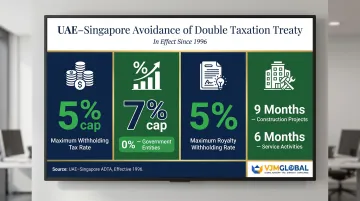
Firms with expertise in both jurisdictions can help Singapore businesses optimize their structure under this treaty while remaining fully compliant with FTA requirements and IRAS reporting.
Industry Experience and Sector Relevance
Dubai audit firms vary significantly by sector specialization. Some excel in financial services, others in trading or real estate. Shortlist firms with documented experience in your specific industry vertical. A firm that knows your sector will spot risks faster, cut unnecessary audit time, and deliver insights that go beyond a standard compliance sign-off.
How We Evaluated These Firms
Firms were assessed across five dimensions:
- UAE regulatory standing: MoE approval and free zone licensing
- IFRS audit methodology: Cross-standard reporting capability and technical depth
- Coordination with Singapore offices and group-level compliance support
- Client size and sector fit: Track record with foreign-owned entities and industry specialization
- Pricing accessibility: Value for mid-market and growing businesses
Brand name and global revenue rankings were deliberately excluded as criteria. For most Singapore businesses operating in the UAE — mid-market companies, regional subsidiaries, and growing SMEs — those metrics don't reflect day-to-day service quality.
Mid-tier firms on this list were included because Big 4 engagements often come with pricing and service models built for large multinationals, not growing businesses. These firms offer comparable audit depth with better partner-level access and more responsive turnaround.
Conclusion
The audit firm you choose in Dubai shapes more than your compliance calendar. It determines how reliably UAE financials feed into Singapore parent company reporting, how smoothly Corporate Tax and VAT obligations are handled, and how confidently your UAE operations can scale.
Look beyond firm reputation when shortlisting. Evaluate each firm on:
- UAE-specific accreditations and regulatory standing
- Hands-on experience with Singapore corporate structures
- Capacity to support cross-border advisory as operations grow
Singapore businesses active across multiple markets — UAE, India, and beyond — need that coordination to hold across every jurisdiction, not just locally.
For cross-border financial and compliance advisory spanning Singapore, UAE, and India, VJM Global provides coordinated support across all three jurisdictions. Reach the team at [email protected] or +91 9213397070.
Frequently Asked Questions
Which audit firms are best for Singapore businesses in Dubai?
The Big 4 (Deloitte, PwC, KPMG, EY) dominate in brand recognition, but mid-tier firms like Grant Thornton, BDO, RSM, and Baker Tilly often serve Singapore businesses better. The right fit depends on your business size, sector, and cross-border needs — not just global ranking.
Who are the Big 4 financial auditors?
The Big 4 are Deloitte, PwC (PricewaterhouseCoopers), KPMG, and Ernst & Young (EY). All four maintain established UAE offices, primarily in Dubai's DIFC, and are the standard choice for large multinationals requiring internationally credible audit opinions.
Is statutory audit mandatory for foreign companies operating in Dubai?
Yes. Most UAE mainland companies are required to maintain audited financial records under Federal Decree-Law No. 32 of 2021. Virtually all major free zones (DMCC, DIFC, JAFZA, etc.) mandate annual audits as a condition of trade license renewal. Singapore businesses should factor this into their annual compliance calendar from the first year of operation.
How much does an audit typically cost in Dubai for a Singapore-owned business?
Audit fees vary by company size, complexity, and firm tier. Big 4 firms command premium rates, while mid-tier firms like Grant Thornton and BDO are more affordable for Singapore businesses with simpler UAE structures. Key cost drivers include transaction volume, number of subsidiaries, and regulatory jurisdiction — DIFC and ADGM audits typically cost more than mainland engagements.
Does the UAE-Singapore Double Taxation Agreement affect audit and tax reporting requirements?
Yes. The UAE-Singapore Avoidance of Double Taxation Agreement (ADTA), in force since 1996, caps withholding taxes at 5% on dividends, 7% on interest, and 5% on royalties, while also setting permanent establishment thresholds. Singapore businesses should work with an audit firm experienced in international tax to ensure proper credit claims across both FTA and IRAS filings.