As a consultant, your expertise is supposed to be in solving client problems - not wrestling with spreadsheets, chasing unpaid invoices, or scrambling to get your books ready for taxes. Yet the data shows this is still a major challenge for many independent professionals and consulting firms.
In 2025, about 71% of small business owners use accounting software, yet still rely on spreadsheets or manual tracking for parts of their financial management. Even more striking, roughly 70% of small businesses don't have a dedicated accountant or bookkeeper. This increases their risk of compliance issues and missed financial insights.
These patterns matter in accounting for consultants because financial complexity tends to grow as you take on more clients, projects, and revenue streams - especially in the U.S., where regulatory and tax obligations are detailed and unforgiving.
This blog explores practical accounting strategies explicitly designed for consultants and consulting businesses in 2026. By the end, you'll have a clear framework to strengthen your financial foundation and focus more of your energy on what you do best - consulting.
Key Takeaways:
Streamline Your Accounting: Use cloud-based tools like QuickBooks or Xero for real-time access, better accuracy, and scalable financial management.
Tax Planning is Crucial: Proactive strategies, such as filing quarterly estimates and maximizing deductions, can significantly reduce liabilities.
Automate Billing & Expenses: Automating invoicing and expense tracking saves time, reduces errors, and improves cash flow.
Outsource to Focus on Growth: Outsourcing accounting tasks frees up time for client work and ensures compliance without overhead.
Regular Financial Reviews: Monthly or quarterly reviews help catch issues early and make informed decisions for long-term success.
What is Accounting for Consultants?
Accounting is more than justbookkeeping. It's the systematic process of recording, classifying, and interpreting financial transactions to help business owners understand performance, make informed decisions, and stay compliant with legal requirements.
It produces key reports such as balance sheets, income statements, and cash flow statements that together tell your business's financial story. In the U.S., consultants typically followGAAP (Generally Accepted Accounting Principles)for financial reporting and tax compliance, ensuring consistency and transparency in financial records.
Essential Accounting Functions in Consultanting
For consultants, accounting is far more than just number-crunching. It's the foundation of a healthy, growing business.
Here's how systematic accounting helps consultants stay on track and scale confidently:
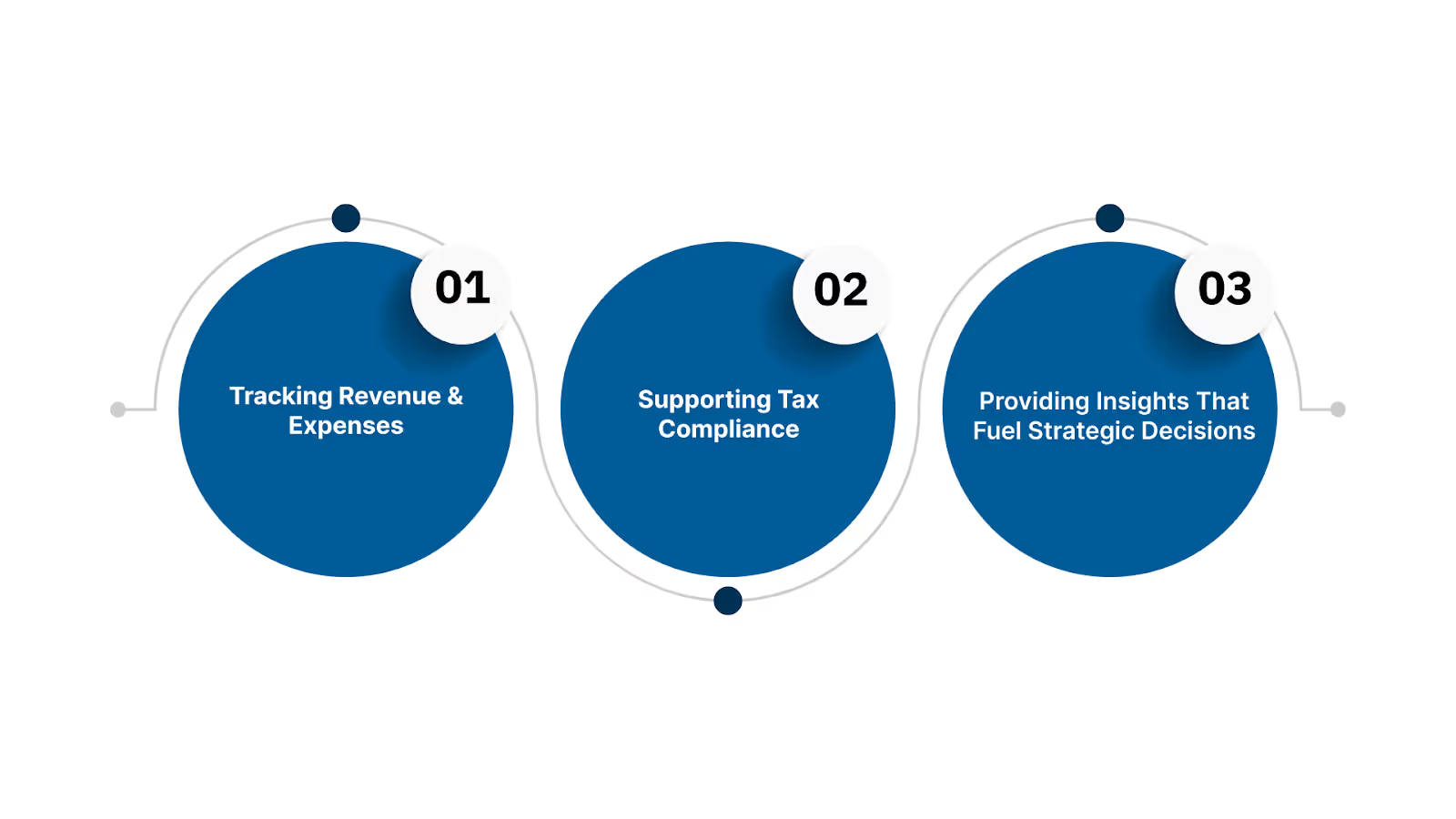
Tracking Revenue and Expenses: Proper accounting enables consultants to see which services are most profitable and where money is being spent. This clarity allows them to adjust strategies, optimize resource allocation, and ensure they're operating at peak profitability.
Supporting Tax Compliance: Accurate accounting is essential to ensure consultants remain compliant with tax regulations and minimize the risk of penalties and audits. With solid records and up-to-date tax filings, consultants can avoid costly mistakes and focus on serving clients.
Fueling Strategic Decisions: Accounting provides valuable insights into cash flow, profitability, and cost structures. These insights support critical decisions, such as pricing strategies, hiring new staff, or expanding into new markets.
Without systematic accounting, consultants lack the financial clarity needed to run their businesses confidently, especially as they scale.
Why Consultants Can't Treat Accounting as an Afterthought
Consultants, especially those in the U.S. market with variable income and diverse service engagements, face unique challenges:
Cash flow can fluctuate widely depending on project cycles.
Tax obligations differ by structure (sole proprietor, LLC, S‑Corp, etc.).
Compliance requirements vary across federal and state levels.
Without a solid accounting foundation, it's nearly impossible to anticipate these challenges or take advantage of opportunities like tax planning strategies or investment decisions.
Now, let's explore some of the best practices. You'll see how simple shifts can transform your financial management and give you more time to focus on clients and growth.
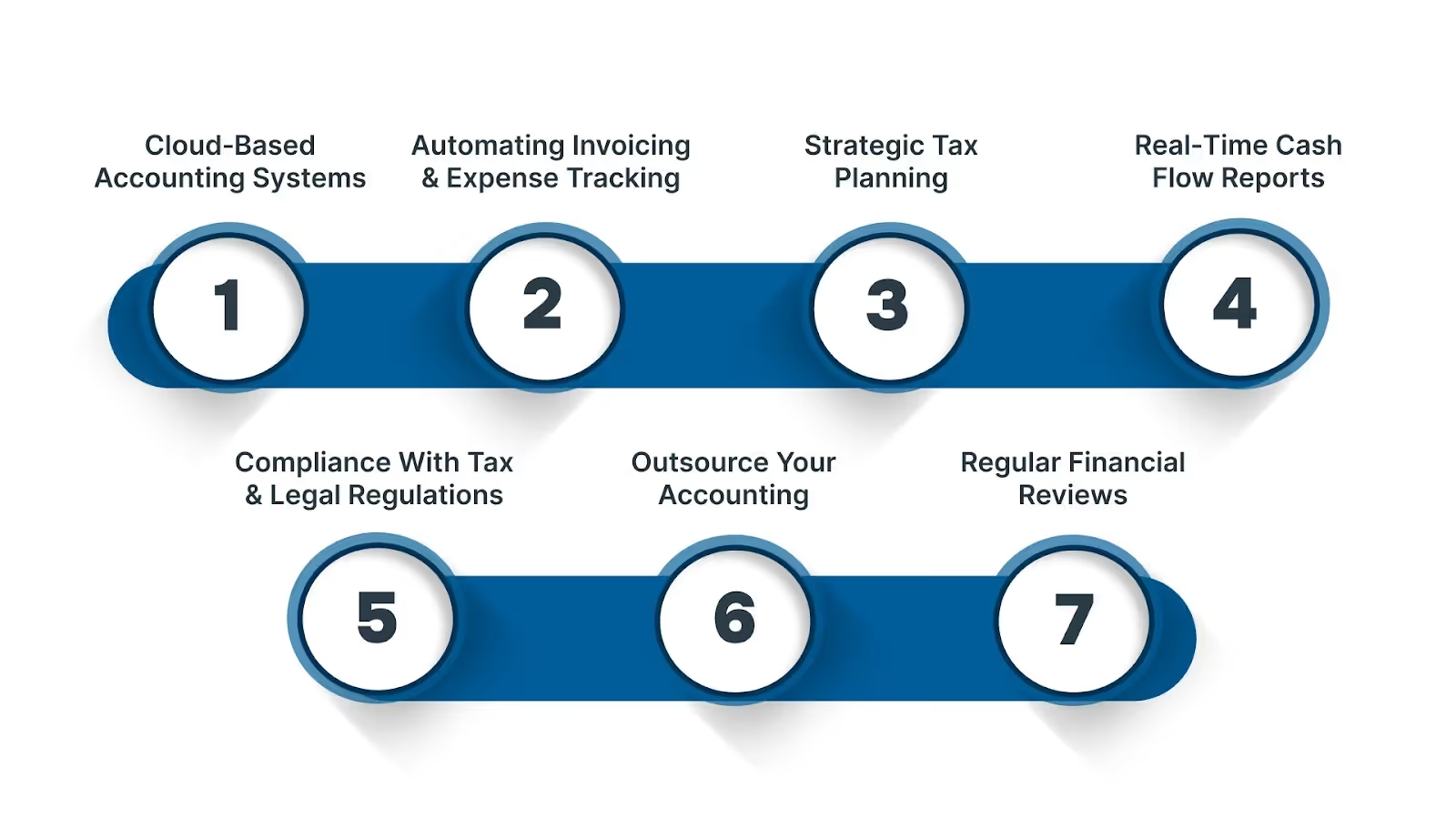
7 Best Accounting Strategies to Optimize Your Consulting Business in 2026
Before we break down each strategy in depth, it's worth anchoring why they matter in a rapidly changing business context.
The global accounting services market is projected to reach $804.4 billion in 2029, growing at a compound annual growth rate (CAGR) of 5.1%, driven by tools that automate, analyze, and reframe how financial tasks are performed. In fact, a majority of accounting professionals (about 67 %) now prefer cloud‑based solutions, recognizing their role in business success.
For consultants who juggle variable income, client billing cycles, tax complexity, and growth decisions, each strategy below is a practical enhancement with measurable impact on accuracy, compliance, and profitability.
1. Cloud‑Based Accounting Systems
Cloud accounting isn't just "digital bookkeeping." It's a framework that gives you real‑time access to your financial data anywhere in the world, something especially valuable for consultants who work remotely or with distributed teams.
Cloud‑based systems likeQuickBooks Online, Xero, and Sage Business Cloud automatically sync transactions with bank feeds, categorize expenses, and provide dashboards that show your financial position, reducing manual data entry.
Why does this matter for consultants?
Accuracy and speed: Real‑time insights help you understand cash flow fluctuations — critical when contract payments come at different times.
Reduced risk of errors: Manual processes introduce mistakes that can lead to costly filing errors or missed deductions.
Scalability: As your consulting business grows, cloud systems adapt without the overhead of traditional software installations.
2. Automating Invoicing & Expense Tracking
Manual billing and expense tracking are among consultants' most time‑consuming financial tasks. Small business owners can spend up to 21 hours a week on manual bookkeeping.
Automating these workflows does more than shave hours off your week; it also improves cash flow and client relationships.
How does automation help?
Faster invoicing: Automatically generate and send professional invoices linked directly to project milestones.
Better expense accuracy: Tools that sync with your bank and credit cards auto‑categorize transactions for reporting and deduction purposes.
Reduced discrepancies: Less manual data entry means fewer mistakes in billing and reconciliation.
3. Strategic Tax Planning
For consultants, tax planning isn't just about compliance but keeping more of what you earn. Unlike product businesses, service consultants typically have no sales tax obligations, but income tax, self‑employment tax, and deductibility rules remain complex.
Effective tax strategies include:
Separating business and personal expenses: Simplifies deduction tracking and protects your financial records.
Maximizing eligible deductions: Home office, software subscriptions, travel, and professional fees can all reduce your taxable income if documented correctly.
Proactive planning provides confidence heading into tax season.
4. Real‑Time Cash Flow Reports
Knowing what's in your bank account isn't the same as understanding cash flow. Monitoring cash flow in real time means tracking payables, receivables, and projected expenses in one place, which is crucial for consultants whose monthly revenues can vary widely.
Tools that provide cash flow dashboards help you:
Forecast shortages before they arise
Accelerate collections by identifying slow‑paying clients
Plan hiring or investment decisions with confidence
That kind of foresight supports strategic choices, such as pricing adjustments or expansion into new service lines.
5. Outsource Your Accounting
Consultants often start as generalists, doing everything themselves. But as your client base expands and projects multiply, taking on accounting tasks detracts from revenue‑generating work.
Outsourcing your accounting can:
Free up valuable time for client strategy and acquisition
Provide access to seasoned professionals familiar with U.S. tax and reporting standards
Reduce overhead compared with in‑house hires
The value isn't just in offloading tasks. It's in gaining a partner who understands your business nuances and anticipates issues before they become problems.
AtVJM Global, we specialize in providing customized accounting outsourcing solutions for consultants and service-based businesses. We help U.S. consultants ease their financial operations, reduce overhead, and maintain compliance with U.S. tax and reporting standards. All this is done while freeing up your time to grow your business.
Compliance has real consequences. Misclassifying income, missing filing deadlines, or mishandling 1099s and 1096s can inviteinternal audits, penalties, and wasted hours correcting avoidable mistakes.
Focus areas for consultants:
Accurate record‑keeping: Essential for audits and annual filings.
Contractor vs. employee distinctions: Missteps here can trigger IRS scrutiny.
State‑specific rules: Especially relevant if you serve clients in multiple states.
A consistent compliance framework reduces risk and ensures that financial insights are reliable, which becomes increasingly valuable as consultant revenues grow and tax situations become more complex.
7. Regular Financial Reviews
Even with the best systems and practices in place, accounting shouldn't be “set and forget.” Regular reviews, like quarterly or monthly, help you catch trends that matter:
Revenue dips or spikes, indicating pricing or project issues
Unusual expense patterns
Shifts in cash flow that may affect tax planning or budgeting
For consultants, these reviews become strategic checkpoints that improve decision‑making and protect profitability over the long term.
Each of these strategies stands on its own. But together, they make your consulting business financially resilient, compliant, and positioned for growth in 2026 and beyond.
If you're ready to implement these strategies and transform your accounting practices,VJM Global's expert team is here to guide you every step of the way with customized services to meet the unique needs of consultants.
Reach out to us today for a personalized consultation and get started on optimizing your accounting processes.
How to Decide Which Accounting Strategies to Prioritize
After walking through the accounting strategies, the next question many consultants ask is: "Which of these should I implement first, and how do I know what matters most for my business right now?”
A decision framework would help you to evaluate your current situation and choose the right strategy mix based on where your consulting business stands today. Before selecting a strategy, consider your current accounting maturity across these core areas.
Use this simple rubric:
Area
Beginner
Intermediate
Advanced
Bookkeeping & Systems
Manual processes
Partial automation
Fully automated with cloud tools
Revenue Tracking
Irregular reporting
Monthly reporting
Real‑time dashboards
Tax Preparedness
Annual scramble
Quarterly estimates
Proactive tax planning
Compliance
Checklist approach
Semi‑automated reminders
Audit‑ready records
Financial Decision Support
Gut feel
Monthly review of reports
Predictive insights + planning
Your answers to these help you prioritize your next move.
Once you have your answers and assessment, let's understand via the framework below what to do first based on your priorities:
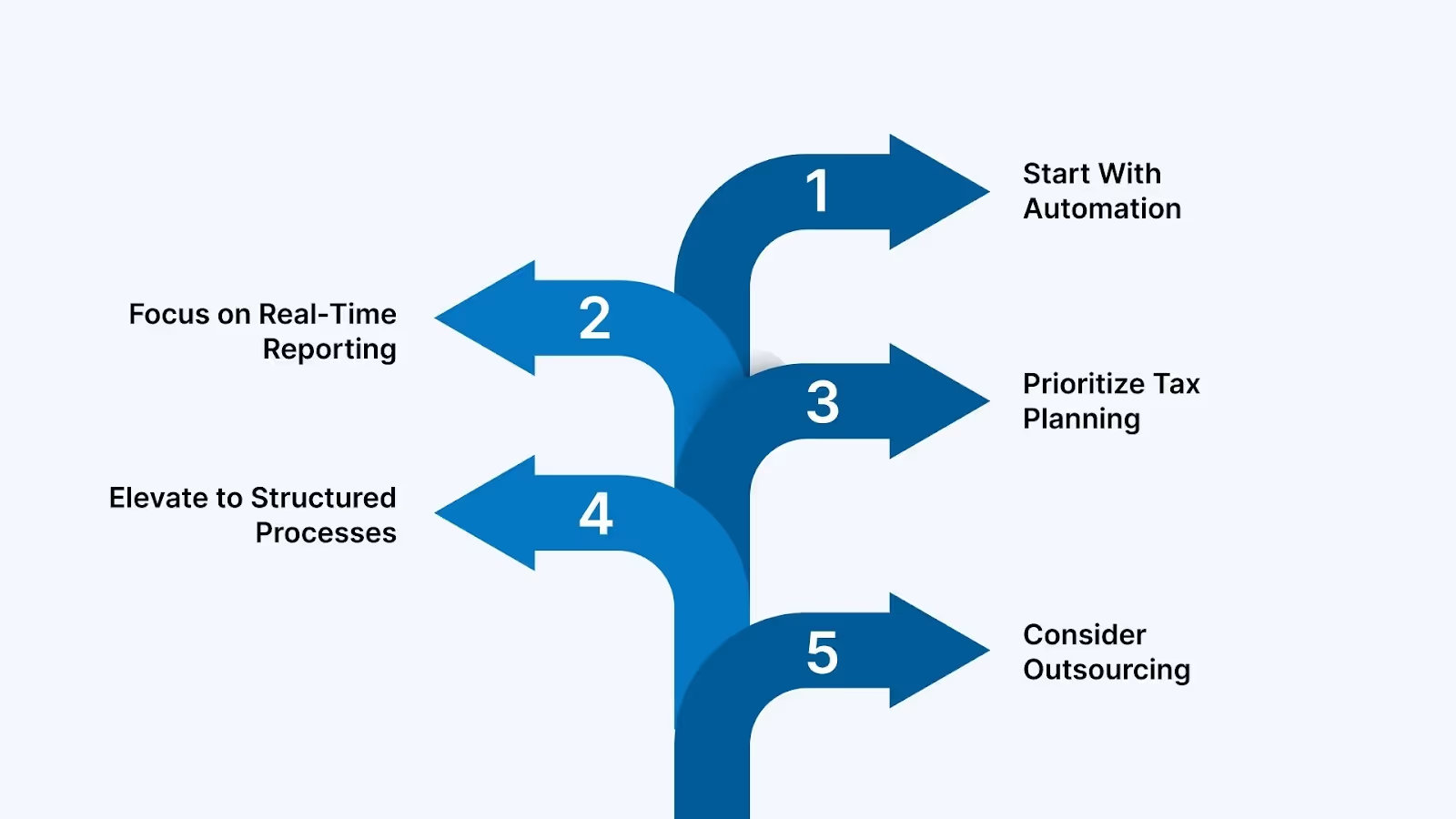
1. Prioritize Automation
Manual systems often lead to costly errors and take up significant time that could be better spent on client work or business development. Transitioning to automated systems is essential for improving efficiency and reducing the risk of human error.
Priority Actions:
Adopt a cloud-based accounting system, such as QuickBooks Online or Xero, to centralize your financial data. These systems provide real-time updates, reducing the need for manual entries and simplifying your financial management.
Automate invoicing and expense tracking through integrated software. Automating these processes minimizes mistakes, streamlines workflows, and ensures timely billing, which is crucial for maintaining healthy cash flow.
2. Focus on Real-Time Financial Insights
Cash flow challenges are often cited as a top reason small firms fail to scale. Real-time financial visibility is key to staying on top of receivables, payables, and overall economic health.
Priority Actions:
Implement real-time financial dashboards through your accounting software. This feature enables you to track income, expenses, and cash flow daily, keeping you aware of your financial position.
Monitor aging receivables by setting up automatic alerts for overdue invoices. Early intervention allows you to manage cash flow proactively rather than reactively.
3. Focus on Proactive Tax Planning
Many consultants face unexpected tax liabilities, often due to poor planning. Given the variable nature of consulting income, taking a proactive approach to tax planning can help you avoid surprises and make tax season much less stressful.
Priority Actions:
Separate business and personal expenses consistently to ensure clean financial records. This separation is crucial for tax filing and ensuring deductions are accurately calculated.
Set up quarterly tax estimates to avoid end-of-year surprises. This way, you can ensure you are on track and adjust as needed, especially for consultants with irregular income.
Consult with a tax professional who understands the nuances of consulting income. Their expertise can help you plan tax deductions and estimate liabilities accurately, keeping your finances in order year-round.
Tax planning and compliance don't have to be confusing or stressful. WithVJM Global's Representation Services, you gain expert support for handling tax filings, dispute representation, and compliance documentation. This lets you focus on your consulting work while ensuring your tax strategy is solid and accurate.
Contact us todaywith our team and discover which planning strategy is right for you.
4. Build Structured Financial Processes
Lack of consistent financial documentation and disorganized record-keeping can increase the risk of audits and errors, leading to costly penalties. Establishing structured, organized processes is key to staying compliant.
Priority Actions:
Standardize your documentation and digital filing to maintain a consistent and accessible record of all financial transactions. Organized records ensure you can easily retrieve information when needed, minimizing the risk of errors.
Use reminders for compliance deadlines so you never miss critical filing dates, including tax, payroll, and other regulatory requirements.
Engage experts to review your financial setup annually. Having a professional audit your processes ensures that your compliance strategy remains sound and adapts to evolving regulations.
5. Consider Outsourcing
As a consultant, your time is limited, and managing accounting internally can take away from core business activities. Outsourcing accounting functions is a strategic move that not only saves time but also enhances financial management.
Priority Actions:
Evaluate a hybrid model of in-house and outsourced accounting based on your business's complexity. This allows you to keep control over essential functions while outsourcing specialized tasks like bookkeeping, tax filing, and payroll management.
Select an outsourcing partner that understands U.S. consulting and compliance standards. A partner with industry knowledge ensures your business is compliant and your accounting is tailored to your specific needs, supporting growth.
There you go! This framework is designed to help consultants act, not just read.
Not sure where to start?VJM Global can help you evaluate your current financial situation and make a strategy that addresses your needs. Whether it's automation, tax planning, or compliance, we guide consultants through the process of implementing the right solutions for long‑term success.
As a consultant, optimizing your accounting practices is about empowering your business for growth, ensuring compliance, and gaining the insights needed to make smarter, more informed decisions. From automating your invoicing and expenses to proactively planning your taxes, these strategies will lay the foundation for an efficient client service in 2026 and beyond.
AtVJM Global, we specialize in helping U.S. consultants simplify their accounting processes with tailored solutions that support both growth and compliance. Here's how we can help:
Expert Accounting & Bookkeeping Outsourcing: Focus on what matters most, your clients. We manage everything from financial reporting to reconciliations, ensuring you have accurate and timely financial data without the headache.
Tax Planning & Compliance: Stay ahead of tax deadlines and avoid costly mistakes. With technical knowledge and experience in practical fields, help the multinational corporations to manage the risks of multiple tax processes and regulations across the globe.
Automated Invoicing and Expense Management: Take the burden of manual tracking off your plate. We implement automated systems that save you time, eliminate errors, and improve cash flow.
Comprehensive Financial Reporting: Gain valuable insights with clear, concise financial reports, including real‑time cash flow analysis, to help you make informed decisions about pricing, hiring, and expansion.
CFO Services for Strategic Financial Planning: Our outsourced CFO services provide high‑level financial strategy, helping you plan for long‑term growth while maintaining financial health.
Partner with VJM Global today to streamline your accounting, improve compliance, and build a sustainable foundation for your consulting business.Contact us now to learn how we can support your financial management needs.
FAQs
1. What makes accounting for consultants different from standard small‑business accounting?
For consultants, accounting must handle time‑based billing, multiple client projects, and irregular revenue cycles, unlike product businesses that focus on inventory and fixed‑cost tracking. This makes project‑based accounting and cash flow visibility essential.
2. How do I accurately track billable hours and link them to financial reporting?
Use project tracking tools integrated with your accounting system (e.g., QuickBooks or Xero), tagging hours to specific clients or engagements so you can match income and costs and see profitability by project in real time.
3. How frequently should consultants review their financial statements?
Consultants should review key reports (cash flow, profit and loss, receivables) monthly or quarterly to catch issues early, adjust pricing or spending, and prepare for tax payments rather than waiting for year‑end summaries.
4. Do consultants need to pay estimated taxes quarterly?
Yes. Because consultants often don't have tax withholding on self‑employment income, paying quarterly estimated taxes helps avoid IRS penalties and spreads the liability over the year rather than dealing with a lump sum at tax time.
5. What's the difference between bookkeeping and accounting for a consulting business?
Bookkeeping records daily transactions (income, expenses, invoices), while accounting interprets that data to produce financial reports, support tax planning and compliance, and inform strategic decision‑making. Both are necessary for reliable business insights and for pacing growth.