How to Start a Business in India from the U.S.: Step-by-Step Guide

Published on:
January 2, 2025

Table of contents

Talk to Us
Thank you! Your submission has been received!
Oops! Something went wrong while submitting the form.

One Firm,
Global Solutions

We support cross-border business with confidence and clarity.
Book a Call

Starting a business in India can feel like a massive leap into the unknown, especially when you're unfamiliar with the legal and regulatory hurdles. The idea of figuring out how to register your startup, comply with local tax rules, and choose the proper business structure can be overwhelming. But here's the good news: you don't have to do it alone. With startup registrations in India surpassing 180,000 in 2025, many entrepreneurs have successfully navigated this journey, and so can you.

Whether you're an entrepreneur building your company within India or a US business looking to expand into one of the world’s fastest-growing markets, the key is laying the right foundation from the start. If you're planning to open a branch, start a private limited company, or set up a liaison office, this guide will walk you through each step clearly. 

You’ll understand the common challenges, learn how to stay compliant, and avoid delays that often slow down growth. Let’s explore the essentials of starting your business in India with practical guidance and the support you need to move forward confidently.

Key Takeaways

  • Understand the Startup Ecosystem: India is the third-largest startup hub globally, with over 159,000 startups as of 2025. This dynamic market offers immense growth opportunities for entrepreneurs.
  • Government Initiatives: The Indian government supports startups with initiatives like the Startup India Scheme, offering benefits such as tax exemptions, funding support, and easier compliance.
  • Choosing the Right Business Structure: Selecting the correct legal structure (Private Limited Company, LLP, OPC) is crucial for liability protection, tax obligations, and business scalability.
  • Navigating the Registration Process: Registering your business involves obtaining a Digital Signature Certificate, Director Identification Number, and completing the registration with the Ministry of Corporate Affairs, followed by tax and compliance registrations.
  • U.S. companies expanding into India must follow FEMA and FDI rules, choose an approved entity structure, and complete additional notarized and apostilled documentation.

Understanding the Startup Ecosystem in India

Understanding the Startup Ecosystem in India

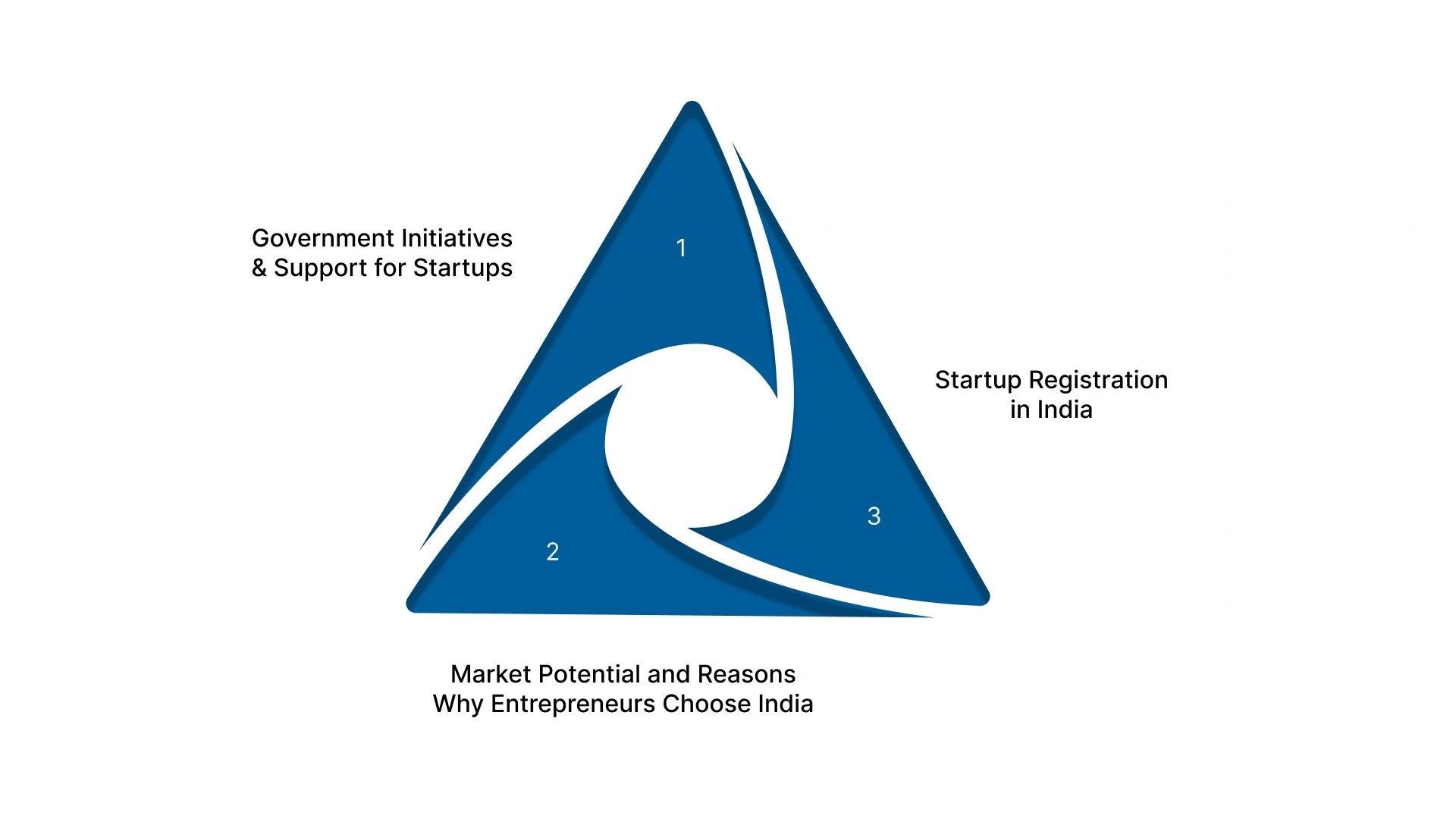
India's startup ecosystem has experienced remarkable growth, positioning the country as the third-largest startup hub globally. As of January 2025, India boasts over 159,000 recognized startups, a significant increase from approximately 500 in 2016. This surge reflects a dynamic environment ripe for innovation and entrepreneurship.

  1. Government Initiatives and Support for Startups

The Indian government has implemented several initiatives to support and nurture startups:

  • Startup India Scheme: Launched in 2016, this initiative offers benefits such as tax exemptions, easier compliance, and funding support through the Fund of Funds for Startups (FFS).
  • Startup India Seed Fund Scheme (SISFS): Provides financial assistance to startups for proof of concept, prototype development, and product trials.
  • Credit Guarantee Scheme for Startups (CGSS): Offers collateral-free loans up to ₹5 crore to startups, enhancing access to funding.

These initiatives aim to create a conducive environment for startups to thrive, offering financial and regulatory support to foster innovation. Foreign-owned Indian companies can also access these benefits if they meet the eligibility criteria.

  1. Market Potential and Reasons Why Entrepreneurs Choose India

India presents numerous advantages for entrepreneurs:

  • Large Consumer Base: With over 1.4 billion people, India offers a vast market for products and services.
  • Growing Middle Class: An expanding middle class increases demand for diverse goods and services.
  • Digital Transformation: Initiatives like Digital India have enhanced internet connectivity, facilitating e-commerce and digital services.
  • Skilled Workforce: India has a large pool of skilled professionals, particularly in technology and engineering fields.
  • Government Support: Policies and schemes like Startup India provide financial incentives and ease of doing business.

These factors contribute to India's appeal as a destination for new businesses, offering opportunities for growth and expansion.

  1. Startup Registration in India

For entrepreneurs looking to establish a presence in India, the process of startup registration is streamlined:

  • Eligibility: The business must be a private limited company, limited liability partnership (LLP), or partnership firm, with an annual turnover not exceeding ₹100 crore and less than 10 years from the date of incorporation.
  • DPIIT Recognition: Registering with the Department for Promotion of Industry and Internal Trade (DPIIT) under the Startup India scheme provides benefits like tax exemptions and easier compliance.
  • Documentation: Required documents include a business plan, incorporation certificate, and proof of innovation.
  • Online Process: The registration process is conducted online through the Startup India portal, simplifying the procedure for entrepreneurs.

By understanding these aspects, entrepreneurs can effectively navigate the process of establishing a startup in India, leveraging the available support and opportunities. For U.S. businesses, India’s talent pool, consumer market, and cost-efficient operations make it an attractive destination for outsourcing, R&D centres, and customer support hubs.

Also read: How to Register a Holding Company in India

Legal Structure and Choosing the Right Business Entity

When expanding into India, selecting the right legal structure is a crucial decision. The structure you choose will impact your business operations, tax obligations, liability, and compliance requirements. Understanding the differences between business entities will help you make an informed choice that aligns with your goals and operational needs.

1. Sole Proprietorship vs. Private Limited Company vs. LLP vs. OPC

Choosing the right entity is essential for your business setup. Below is a comparison of the most common business structures available in India, along with their benefits and challenges:

Business Structure

Benefits

Drawbacks

Sole Proprietorship

  • Inexpensive and straightforward to set up

  • Full control over business

  • Minimal regulatory compliance

  • Unlimited liability

  • Limited funding options

  • Difficult to scale

Limited Liability Partnership (LLP)

  • Limited liability protection for partners

  • Flexible business management

  • No minimum capital requirement

  • More regulatory requirements than sole proprietorship

  • Limited ability to raise capital

Private Limited Company

  • Limited liability protection

  • Easier to raise capital

  • Enhanced business credibility

  • Complex and costly setup

  • Stricter regulatory compliance

  • Requires at least 2 directors and shareholders

One Person Company (OPC)

  • Limited liability protection

  • Full control over business

  • Easier to set up than private limited company

  • Only one shareholder is allowed

  • Limited access to funding

  • Restrictions on business size

2. Which Structure Suits Your Startup Goals?

The structure you choose should align with your business’s goals, size, and growth plans. Here's how each structure fits:

  • Sole Proprietorship: Best for small-scale, low-risk businesses where you want complete control. However, it doesn't provide liability protection, making it unsuitable for larger operations or businesses seeking external funding.
  • LLP: Ideal for businesses seeking flexibility in management and limited liability protection. It works well for professional services and partnerships, but is less suited for raising substantial capital compared to a private limited company.
  • Private Limited Company: The preferred choice for businesses planning to scale, attract investment, or establish a significant presence. It offers limited liability, credibility, and easier access to capital, although it comes with higher regulatory compliance.
  • OPC: Suitable for solo entrepreneurs who wish to limit personal liability while maintaining full control over the business. While it offers a simpler setup than a private limited company, it has restrictions on growth and funding.

3. How to Choose the Best Entity for Your Startup

When considering startup registration in India, keep the following factors in mind:

  • Liability Protection: It’s important to protect personal assets from business risks. Structures like LLP, OPC, and private limited companies provide limited liability protection, unlike sole proprietorships.
  • Growth and Investment: If your goal is to grow your business or raise external investment, a private limited company is the best option, as it offers scalability and investor appeal.
  • Regulatory Requirements: Each structure comes with its own set of compliance obligations. A sole proprietorship is the least complex, while a private limited company or LLP has more detailed legal and financial reporting requirements.

4. Considerations for Foreign Entrepreneurs vs. Domestic Entrepreneurs

If you're a U.S. entrepreneur entering India, you may need to meet additional compliance requirements under FEMA and other foreign investment regulations. In most cases, a private limited company or liaison office is preferred because these structures handle foreign ownership and capital inflow more efficiently.

For domestic entrepreneurs, the registration process is more direct, but the choice of structure should still reflect long-term goals, tax implications, and operational plans. Sole proprietorships, LLPs, and private limited companies remain the most commonly used options.

Selecting the right legal structure is a key decision that affects your business's operations, financial obligations, and potential for growth. Each structure has its advantages, depending on your goals, whether you're looking to scale, protect personal assets, or collaborate with local partners. Consulting with legal and financial experts is always recommended to ensure compliance with local regulations and set your business up for long-term success in India.

Avoid costly legal mistakes, let our chartered accountants guide your India expansion.

Step-by-Step Guide for Startup Registration in India

Step-by-Step Guide for Startup Registration in India

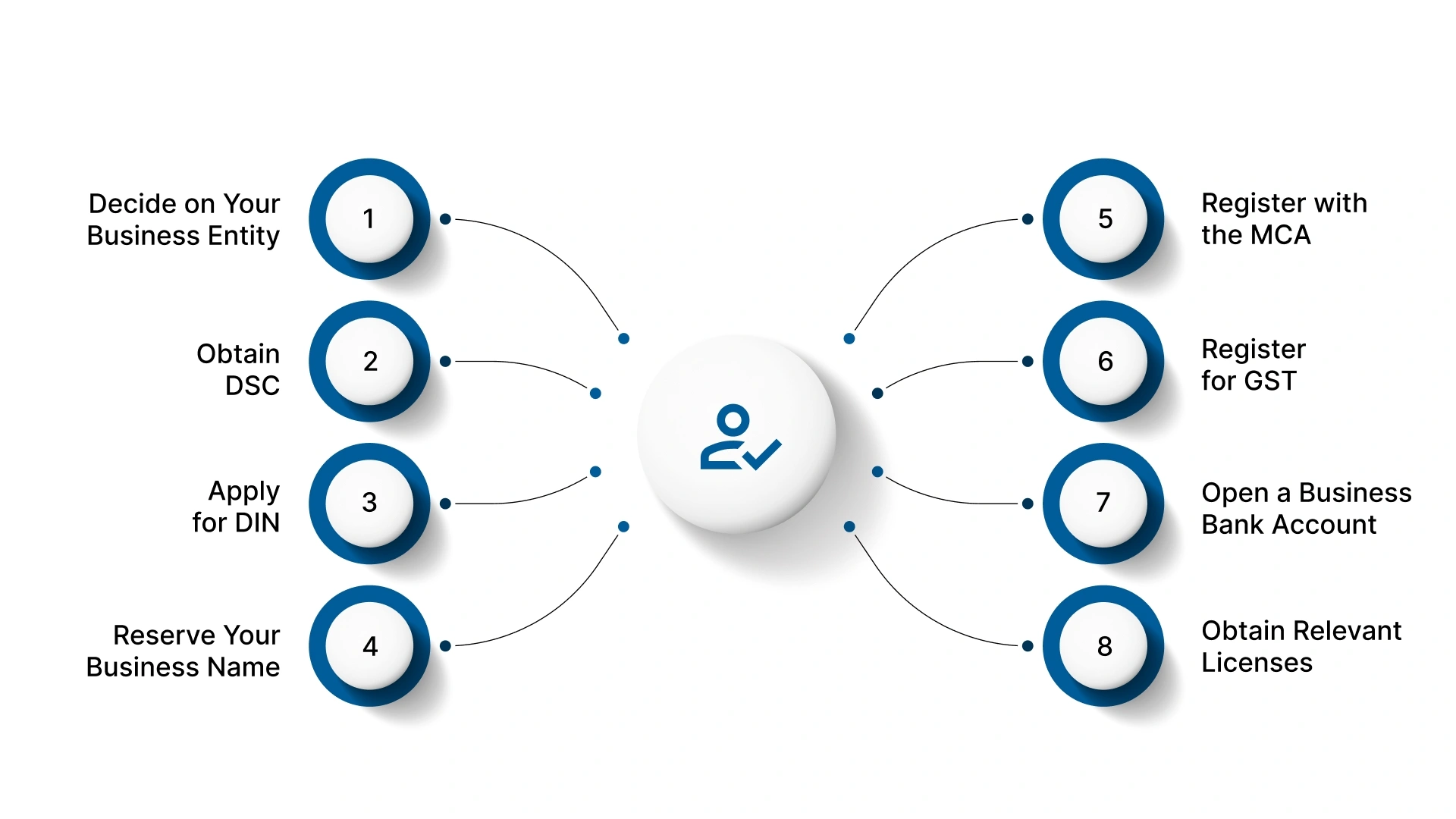
Starting a business in India involves a series of important steps. Ensuring compliance with legal requirements is essential for smooth operations. This guide outlines the process of startup registration in India, from choosing the right business structure to obtaining necessary licenses.

Step 1: Decide on Your Business Entity

The first step in registering your startup is selecting the appropriate legal structure. This decision will impact your liability, taxes, and overall business operations. Common business structures in India include:

  • Private Limited Company
  • Limited Liability Partnership (LLP)
  • Sole Proprietorship

Each entity type has its own advantages and disadvantages, so it's important to assess which one aligns with your business goals.

Step 2: Obtain Digital Signature Certificate (DSC)

For all online business registrations, a Digital Signature Certificate (DSC) is required. This certificate authenticates the documents submitted to the Ministry of Corporate Affairs (MCA) and ensures secure digital transactions. Obtaining a DSC is a key step before proceeding with your registration forms.

Step 3: Apply for Director Identification Number (DIN)

Every director of the company must have a Director Identification Number (DIN). This number is a unique identifier for company directors and is necessary for submitting incorporation forms with the MCA. The DIN ensures that directors are properly regulated and adds a layer of transparency.

Step 4: Reserve Your Business Name

Before proceeding with registration, you must ensure that your chosen business name is available. This name should reflect the nature of your business and be unique. You can reserve the name through the MCA portal to confirm its availability and secure approval.

Step 5: Register with the Ministry of Corporate Affairs (MCA)

Once the business name is reserved, the next step is to register your company with the Ministry of Corporate Affairs (MCA). You'll need to complete forms such as the SPICe+ form, which includes the company's memorandum and articles of association. The registration process also involves paying applicable fees, which vary based on the type of entity.

Step 6: Register for Goods and Services Tax (GST)

If your annual turnover exceeds the GST threshold, registering for Goods and Services Tax (GST) is mandatory. This allows your business to legally collect taxes on sales and claim input tax credits on purchases. Ensure you meet the turnover requirements and register with the GST portal to stay compliant.

Step 7: Open a Business Bank Account

After your company is officially registered, open a business bank account. To do so, you’ll need documents such as the certificate of incorporation, PAN card, and proof of business address. A business account is crucial for maintaining clear financial records and facilitating transactions.

Step 8: Obtain Relevant Licenses and Permits

Depending on your industry, you may need to obtain specific licenses or permits. For instance, if you're operating a food-related business, you'll need an FSSAI license. Similarly, if you're engaged in international trade, an Import Export Code (IEC) is required. Make sure to comply with all industry-specific regulations to avoid any legal issues.

Additional Steps for U.S. Citizens Registering a Company in India

If you’re a U.S. founder incorporating a company in India, you must complete additional compliance requirements related to documentation, banking, and FDI regulations.

  1. Apostille & Notarization of Documents

U.S. documents must be notarized and apostilled before submission, including:

  • Passport
  • Address proof
  • Board resolution

Apostilled documents ensure validity under Indian corporate law.

  1. Appointment of an Indian Resident Director

As per the Companies Act, at least one director must reside in India for a minimum of 182 days a year.

  1. Compliance with Foreign Direct Investment (FDI) Rules

FDI is allowed through:

  • Automatic Route (no government approval)
  • Approval Route (approval required depending on industry)

Check whether your business falls under restricted or approval-based sectors.

  1. Opening an Indian Bank Account as a Foreign National

Banks require additional KYC verification for U.S. citizens, such as apostilled identity documents and international address proof.

  1. Capital Remittance Under FEMA

All capital investment must come through legitimate banking channels with:

  • Foreign Inward Remittance Certificate (FIRC)
  • Bank KYC compliance

This ensures FEMA-compliant funding.

  1. Mandatory RBI Reporting for Foreign Investments

Foreign-owned companies must file reports with the Reserve Bank of India, including:

  • FC-GPR (after issuing shares to foreign investors)
  • Annual Return on Foreign Liabilities & Assets (FLA)

Starting a business in India is a well-defined process, but attention to detail is essential. By following these steps for startup registration in India, you will establish a solid foundation for your business while ensuring compliance with all legal and regulatory requirements.

Need an India subsidiary? We handle FDI approvals, taxation, and local compliance.

Also Read: From Idea to Incorporation: A Deep Dive into Company Setup in India and Different Business Types

Costs and Fees for Startup Registration in India

When starting a business in India, several costs and fees must be considered. These include initial registration costs, ongoing compliance fees, and additional operational expenses that can vary based on the type of business structure.

  1. Initial Registration Costs

The first step in startup registration in India involves filing forms and securing necessary documents like a Digital Signature Certificate (DSC) and Director Identification Number (DIN). The registration fees for different business formats are as follows:

  • Private Limited Company: ₹7,000–₹10,000
  • One-Person Company (OPC): ₹5,000–₹7,000
  • Limited Liability Partnership (LLP): ₹2,000–₹4,000

Additionally, the Ministry of Corporate Affairs (MCA) requires a name reservation fee ranging from ₹1,000 to ₹2,000, along with costs for securing necessary registrations like PAN, TAN, and GST, which total approximately ₹1,000 to ₹2,000. Professional assistance from Chartered Accountants (CAs) or Company Secretaries (CS) may cost between ₹10,000 and ₹20,000, ensuring a smooth filing process.

  1. Ongoing Compliance and Operational Costs

Once your business is registered, there are various ongoing compliance costs. These include:

  • Annual maintenance fees: Companies need to file annual returns and financial statements with the MCA. The cost for maintaining these filings can vary, depending on the complexity of your business structure and operations.
  • Audit costs: Every business must have its books audited by a licensed professional. Audit fees can range from ₹15,000 to ₹25,000 annually, depending on the size and nature of the business.
  • Tax filings: Ensuring timely tax filings for income tax, GST, and other statutory dues requires careful planning and accounting, with associated costs for tax preparation and compliance management.
  1. Additional Costs

Apart from the basic operational and compliance fees, there are other essential costs that businesses must factor in:

  • Legal fees: For drafting contracts, intellectual property protection, or handling disputes.
  • Branding and marketing: Developing a brand identity, including logo design, website development, and online advertising.
  • Technology setup: Costs for establishing IT infrastructure, software tools, and cybersecurity measures.

In total, the cost of startup registration in India can range from ₹20,000 to ₹50,000, depending on the type of business, the services required, and the professional assistance needed. These costs are a critical part of the initial setup, ensuring legal compliance and smooth business operations.

Challenges in Startup Registration in India

Challenges in Startup Registration in India

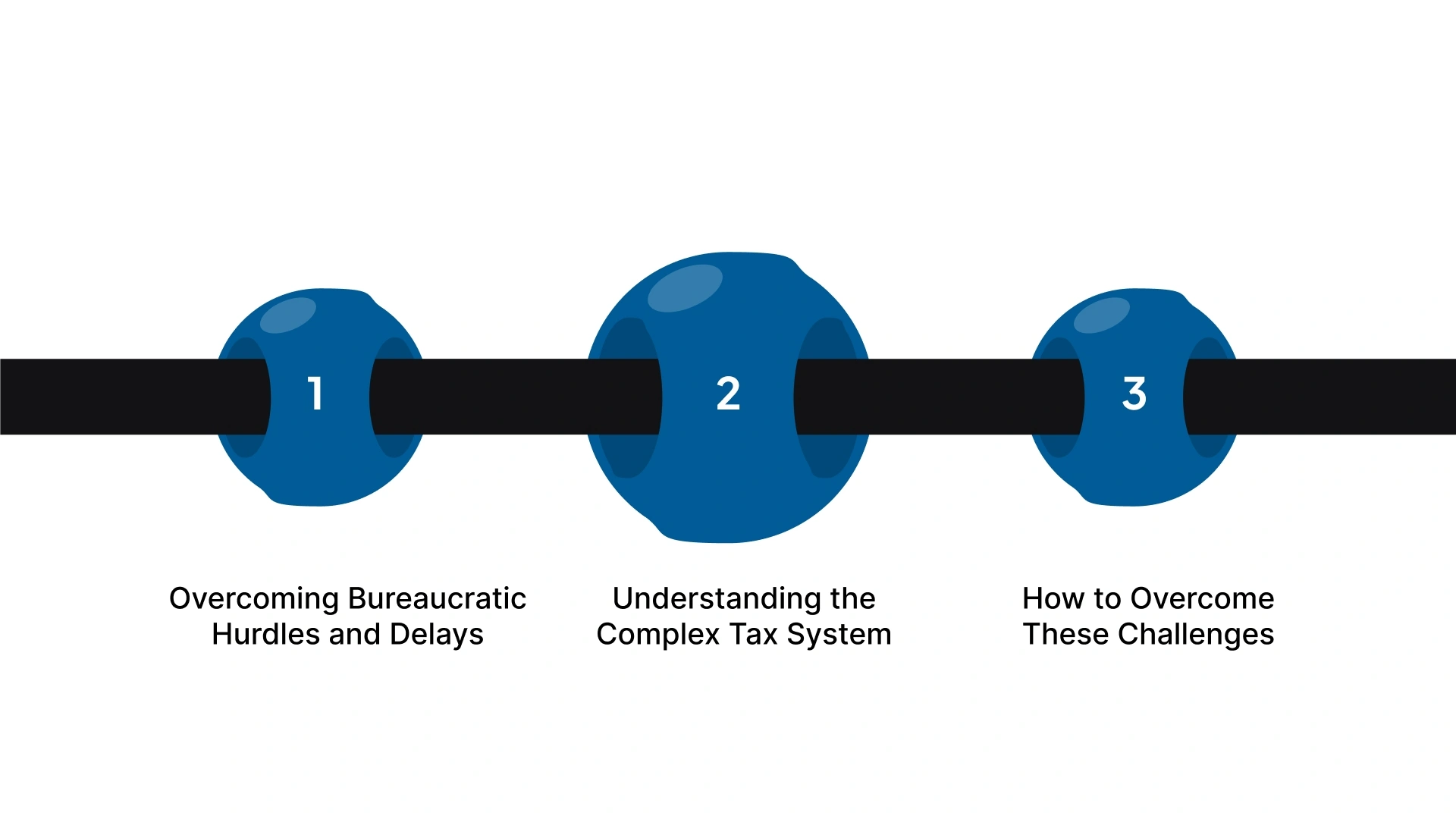
Starting a business in India can be rewarding, but it also presents various challenges, particularly when it comes to startup registration in India. Entrepreneurs often encounter roadblocks that can slow down the registration process and complicate their path to establishing a successful business. Two primary challenges stand out: overcoming bureaucratic hurdles and understanding the complex tax system.

  1. Overcoming Bureaucratic Hurdles and Delays

The bureaucratic processes involved in setting up a business in India can be slow and cumbersome. Key challenges include:

  • Lengthy Paperwork: Entrepreneurs must complete various forms and submit numerous documents to multiple regulatory bodies, which can be time-consuming.
  • Delays in Approvals: Obtaining the necessary approvals from government agencies can take longer than anticipated, affecting the business’s ability to launch on time.
  • Verification Processes: The verification of documents and licenses can face delays due to inefficiencies within the system, further hindering progress.

These bureaucratic delays are one of the main obstacles that entrepreneurs face during startup registration in India.

  1. Understanding the Complex Tax System

India's tax system can be overwhelming, especially for foreign entrepreneurs. The country's complex framework includes multiple tax regulations that must be adhered to:

  • Goods and Services Tax (GST): Entrepreneurs must understand GST laws, which apply to businesses across India.
  • Corporate Tax: Familiarity with corporate tax structures, deductions, and exemptions is crucial.
  • State-Specific Regulations: Each state in India has its own tax laws, which further complicates compliance for businesses operating across state borders.

A lack of understanding or failure to comply with these tax regulations can result in penalties or legal issues, making it critical for entrepreneurs to gain a clear understanding of the tax landscape.

  1. How to Overcome These Challenges

To navigate the hurdles of startup registration in India, entrepreneurs can take several steps to ensure a smooth process:

  • Professional Guidance: Work with consultants or business setup experts who are familiar with the Indian regulatory and tax environment. Their expertise can help mitigate delays and ensure proper compliance.
  • Leverage Technology: Utilize digital platforms and tools that simplify paperwork submission and regulatory compliance, which can help speed up the process.
  • Stay Informed: Regularly update your knowledge of India's tax regulations and business laws to avoid costly mistakes.

By taking these steps, entrepreneurs can successfully overcome bureaucratic delays and the complexities of the tax system, ensuring their startup registration in India goes as smoothly as possible.

Also Read: Register a Software Company in India

Wrapping Up

Starting a business in India offers exciting opportunities, but the process can be challenging without proper guidance and support. Dealing with bureaucratic hurdles, understanding tax complexities, and choosing the right business structure are crucial steps that entrepreneurs must manage carefully. With the right expertise and resources, these challenges become manageable, paving the way for a successful business launch.

For a smooth and efficient startup registration in India, VJM Global offers specialized services to help you navigate the process with ease. From understanding regulatory requirements to selecting the best business entity and ensuring compliance with tax laws, VJM Global’s team of experts provides comprehensive solutions tailored to your needs.

Take the first step towards setting up your business in India. Contact VJM Global for a seamless startup registration experience and let us help you establish a strong foundation for your business success in India.

FAQs 

1. What are the key documents required for startup registration in India?

When registering a startup in India, entrepreneurs must provide essential documents, including a business plan, an incorporation certificate, proof of innovation, and details of the business structure. A Digital Signature Certificate (DSC) and Director Identification Number (DIN) are also necessary for online submissions.

2. How long does it take to complete the startup registration process in India?

The startup registration process in India generally takes between 7 to 15 business days, depending on the business structure and the completeness of submitted documents. Delays can occur due to bureaucratic inefficiencies or complications in document verification.

3. Can foreign entrepreneurs register a startup in India?

Yes, foreign entrepreneurs can register a startup in India. However, they must adhere to additional compliance requirements, such as the Foreign Exchange Management Act (FEMA). They may need to obtain approval from the Foreign Investment Promotion Board (FIPB) for certain business structures.

4. What are the ongoing compliance requirements after registering a startup in India?

After registration, startups are required to file annual returns, conduct audits, and ensure timely tax filings. Compliance with Goods and Services Tax (GST), income tax, and other statutory obligations is crucial to maintain the business's legal standing.

Recent Blogs

Contact Us

We'd love to hear from you! Please fill out the form and we'll get back to you as soon as possible.