The business setup in India is thriving, fueled by the Indian government’s push towards digitization and the increasing need for secure online transactions. For U.S.-based entrepreneurs and businesses, India’s rapid digital shift offers a compelling opportunity to enter the DSC market.
As businesses and individuals alike welcome digital transformation, offering Digital Signature Certificates (DSCs) presents an excellent business opportunity. For U.S.-based entrepreneurs and companies, this environment presents a compelling opportunity to enter the digital signature market through business setup in India's digital signature services.
In this blog, we’ll guide U.S. businesses through the complete process of establishing a digital signature business in India. We’ll cover the significance of Digital Signature Certificates (DSCs), the regulatory requirements, and the steps to obtain the necessary certifications and licenses.
We’ll also outline alternative entry models, such as the commission-based Registration Authority (RA) model, which allows foreign businesses to start operations without undergoing the full Certifying Authority (CA) licensing process.
Setting up a digital signature business in India can open new opportunities for U.S. companies seeking to offer secure authentication solutions in a fast-growing digital economy. Understanding the regulatory requirements and documentation is crucial for a smooth business setup in the India digital signature sector.
A Digital Signature Certificate (DSC) is a secure digital key used to verify the identity of individuals and organizations during online transactions. In India, DSCs are recognized under the Information Technology Act, 2000, and are legally equivalent to handwritten signatures for most official and business purposes. They are required for filing taxes, signing contracts, submitting government forms, and conducting various business activities online.
Now that we've outlined the importance of Digital Signature Certificates and the regulatory framework, let's look at the key benefits of starting a digital signature business in India, where there is substantial market potential.
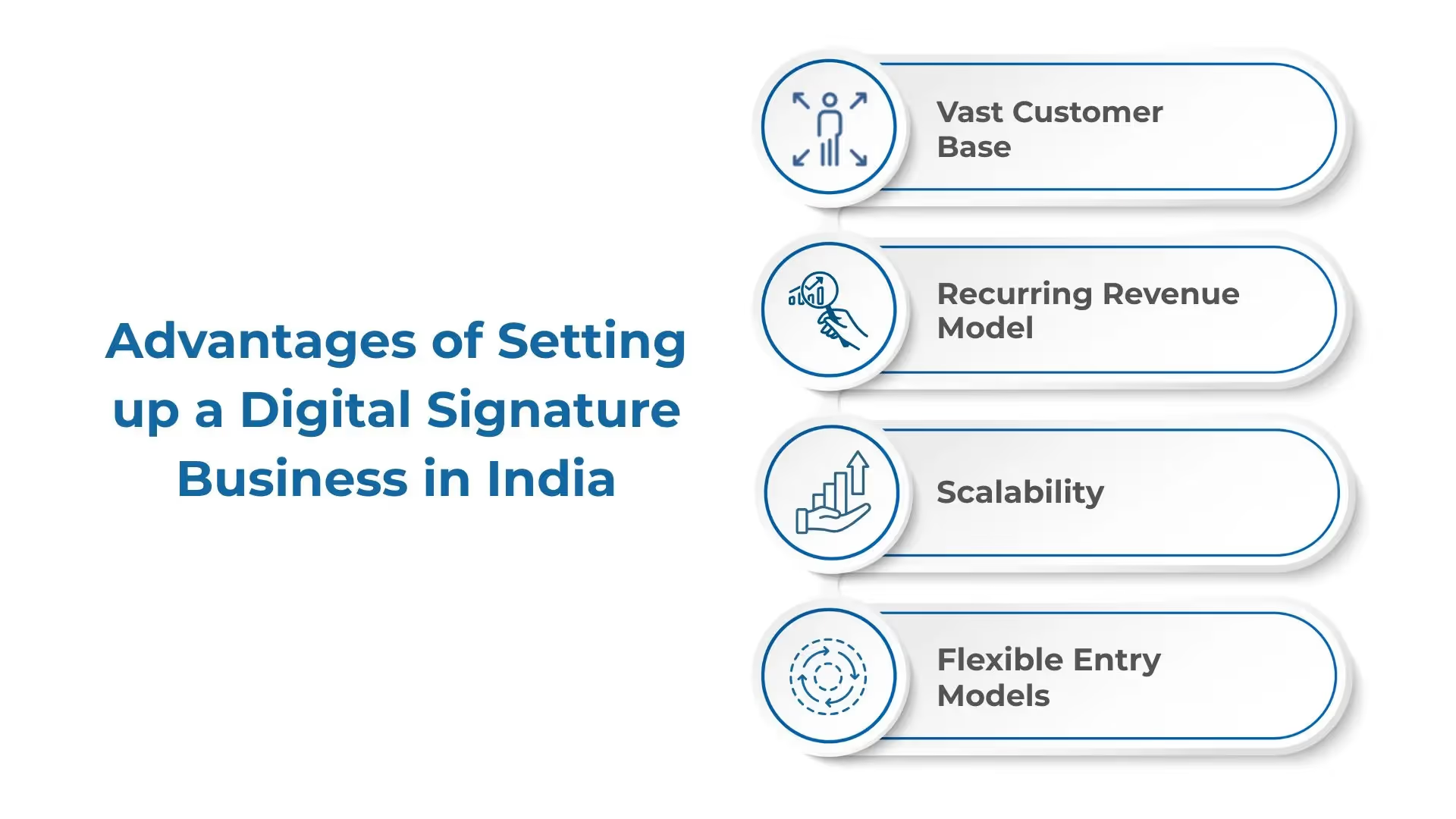
India’s e-commerce market is expanding rapidly, with projections showing it will reach $200 billion by 2026. This growth, combined with the Indian government's push for digital transactions through initiatives like Digital India, creates a significant opportunity for U.S.-based businesses to provide digital signature services by setting up operations or forming local partnerships.
Government Push for Digital Transactions: Initiatives like Digital India are pushing for digital transactions, further increasing the demand for Digital Signature Certificates (DSCs).
India’s market includes individuals, SMEs, large enterprises, and government organizations. DSCs are used for tax filings, e-invoicing, compliance, and digital contracts. U.S. companies entering this space can serve both retail and B2B customers, supporting compliance and onboarding for a wide range of clients.
The recurring revenue model for digital signature businesses is one of the most compelling aspects of this industry. Digital Signature Certificates (DSCs) are valid for a period of 1-2 years, which creates a continual need for renewals.
This ensures that businesses offering DSC services enjoy long-term, recurring income from each customer. As businesses and individuals are required to renew their certificates periodically to remain compliant with regulations and continue utilizing digital platforms, the revenue stream becomes predictable and stable over time.
India’s digital signature market is forecast to grow at a CAGR of over 35% through 2032, with demand rising in e-commerce, government, banking, and healthcare. U.S. businesses can scale operations quickly by partnering with local entities or expanding service offerings as digital adoption increases.
U.S. companies do not need to become licensed Certifying Authorities to participate. By becoming a Registration Authority (RA) Partner under the commission model approved by India’s Controller of Certifying Authorities, U.S. firms can enter the market with lower regulatory hurdles, focusing on sales, onboarding, and support.
随着印度在税务系统、监管备案和公共服务领域的数字化进程不断推进,进入该市场的美国企业可以通过与授权合作伙伴合作或采用基于佣金的经销商模式,在印度扩展业务规模。
在概述了数字签名证书的重要性和监管框架之后,让我们来看看在印度开展数字签名业务的主要优势,该市场目前具有巨大的潜力。
必读:印度个体工商户注册指南
在政府举措和对安全在线交易需求日益增长的推动下,印度的数字签名市场正在迅速扩张。对于美国企业家和公司而言,在印度数字签名领域开展业务,是进入这一蓬勃发展的数字经济的理想切入点。以下是为美国企业量身定制的分步指南,其中包括基于佣金的注册机构(RA)模式下的关键操作。
想了解最适合您在印度开展业务(尤其是数字签名业务)的模式吗? 请联系 VJM Global,探索量身定制的准入方案,并利用我们在监管合规、战略合作伙伴关系和无缝市场准入方面的专业知识。
接下来,我们将探讨您可以提供的不同类型的数字签名服务以及可以瞄准的潜在细分市场。
延伸阅读: 印度公司注册成本详解
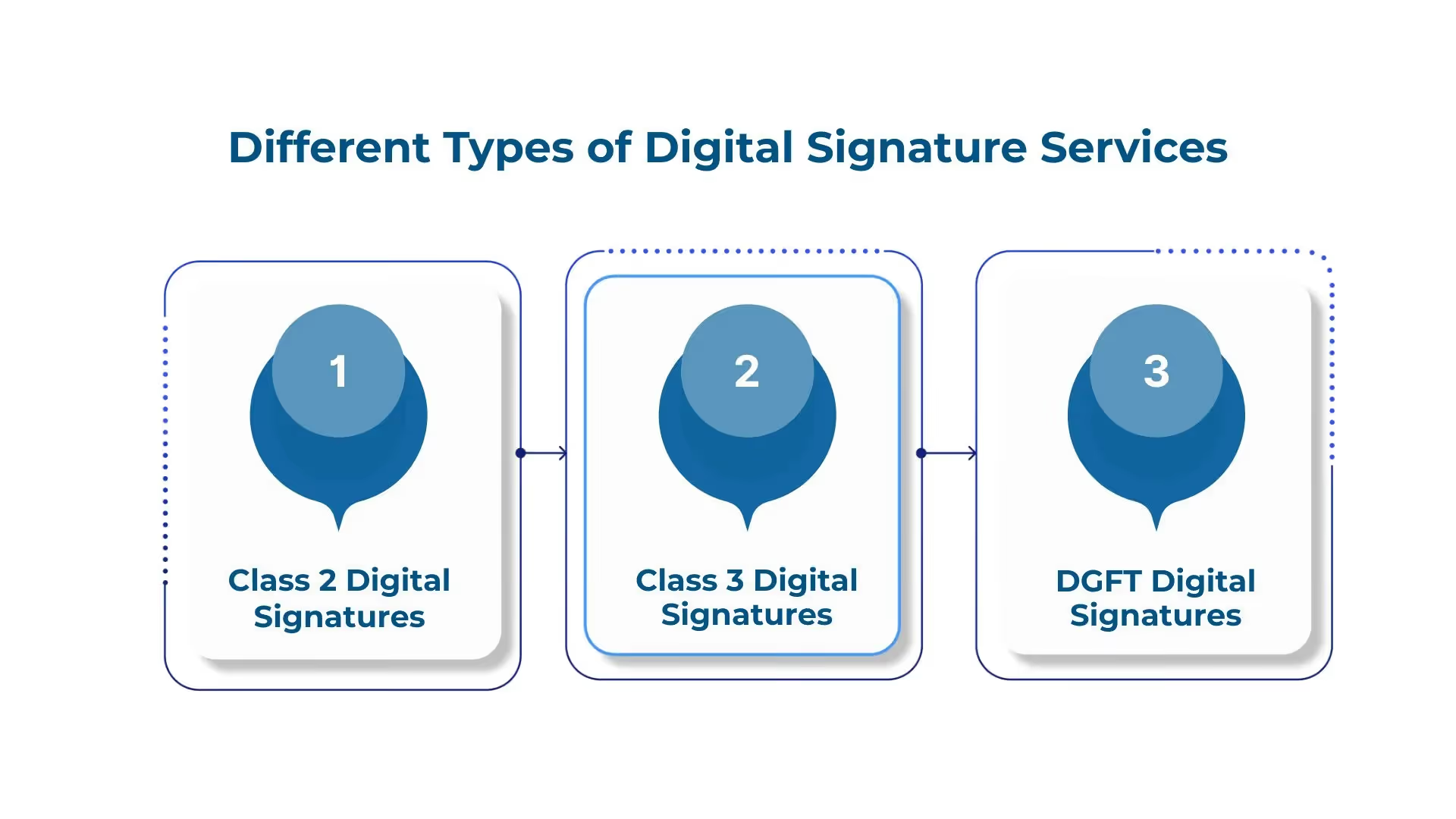
在印度开展数字签名业务时,提供多样化的服务以满足不同客户的需求至关重要。您可以提供的三种主要数字签名类型包括 Class 2、Class 3 和 DGFT 数字签名,每种类型都有不同的用途和客户要求。了解这些签名类型之间的区别,将有助于您调整产品组合,以满足目标市场的需求。
Class 2 数字签名通常用于提交所得税申报表、电子归档文件以及无需极高安全性的商业交易。此类数字签名提供中等程度的安全性,适用于需要进行税务申报、年度报告及类似服务的个人和中小企业。Class 2 签名通常用于满足税务部门对企业和专业人士的合规要求。
主要用途:
Class 3 数字签名被认为是在线交易中安全级别最高的签名,主要用于关键的电子商务和政府相关服务。在进行高安全性交易时(例如签署电子招标文档、向印度证券交易委员会 (SEBI) 提交文件,以及处理涉及敏感信息的企业数字记录)需要使用此类签名。
主要用途:
对外贸易总局 (DGFT) 数字签名专为从事国际贸易和进出口业务的企业设计。DGFT 数字签名对于在印度注册及获取进出口相关许可证至关重要。对于希望使用电子申报系统来获取出口许可证、清关及进行其他全球贸易活动的企业,此类签名是必需的。
主要用途:
现在您已经了解了可以提供的数字签名类型,接下来让我们探讨在印度开展数字签名业务所面临的主要挑战以及如何克服这些挑战。
进一步阅读: 如何在印度开展分销业务:完整指南
在印度开展数字签名业务前景广阔,但也伴随着一系列挑战。无论您是该领域的新手还是已经运营了一段时间,了解常见的障碍都将有助于您采取正确的措施来克服它们。
印度的数字签名行业受《2000年信息技术法案》监管。跟上不断变化的法律法规,包括遵守认证机构控制官(CCA)的指导方针,可能是一项挑战。对于从事提供数字签名服务的企业而言,紧跟法规变化、确保合规并满足客户期望可能需要投入大量资源。
提示:
随着电子商务和数字交易的兴起,数字签名市场竞争日益激烈。许多公司提供类似的服务,导致价格战和新进入者的利润空间被压缩。为了脱颖而出,您必须提供个性化服务、教育内容,并在营销中体现出明显的差异化。
提示:
作为一个相对较新的概念,数字签名需要信任,尤其是在处理敏感数据时。确保客户对您的服务充满信心是实现长期成功的关键。教育潜在客户了解数字签名的重要性及其安全意义,对于赢得他们的信任大有裨益。
提示:
“一刀切”的方法并不适用,尤其是在跨境业务中。 获取一份量身定制的印度市场准入计划,根据您的预算、商业模式和时间表,成功应对这些关键挑战。
总之,在印度开展数字签名业务是一项充满希望的投资,特别是在印度对安全合规的数字交易需求日益增长的情况下。通过采取必要步骤,例如向相关部门注册、构建合适的技术基础设施以及提供各类数字签名证书(DSC),您可以为企业的长期成功奠定基础。
在 VJM Global,我们专注于帮助美国企业和企业家在印度开展业务,确保其完全符合印度法规。无论您是希望开拓新市场还是建立数字签名服务,VJM Global 都随时准备在每一步为您提供协助。
准备好在印度开展您的数字签名业务了吗? 联系 VJM Global 讨论您的需求,立即开启您的征程。