Emerging Trends in Online Accounting Services in India for U.S. Businesses

Published on:
December 31, 2024

Table of contents

Talk to Us
Thank you! Your submission has been received!
Oops! Something went wrong while submitting the form.

One Firm,
Global Solutions

We support cross-border business with confidence and clarity.
Book a Call

If you are a U.S. business owner planning to set up or expand in India, your biggest questions usually revolve around control, compliance, and clarity. You want accurate books in India that sync with your U.S. reporting, without building a large in-house finance function offshore. 

With the India accounting services market forecasted to reach USD 65.10 billion by 2033, Indian accounting firms have evolved beyond simple data entry and compliance. They now deliver full-fledged digital finance systems that sync seamlessly with your U.S. operations.

In this article, we will walk through the latest trends shaping online accounting services in India, explain why U.S. companies are tapping into this expertise.

Key Takeaways

  • AI and automation in accounting streamline tax compliance, reducing manual errors for U.S. businesses expanding to India.
  • Dual compliance ensures accurate reporting under both U.S. GAAP and Indian regulations for seamless financial consolidation.
  • Cloud-based accounting solutions enhance visibility and control, automating reporting across U.S.-India operations in real time.
  • Data encryption and ISO 27001 certifications provide robust protection for sensitive financial data shared between U.S. and Indian entities.
  • Accounting software migration enables a smooth integration of U.S. and Indian accounting systems.

Why Should U.S. Companies Outsource Accounting Services to India

Why Should U.S. Companies Outsource Accounting Services to India

When your US company expands into India, financial compliance is non-negotiable. Outsourcing to Indian professionals lets you focus on scaling your business while experts handle your numbers with modern tools and regulatory knowledge.

Here are some benefits of outsourcing your accounting services to India:

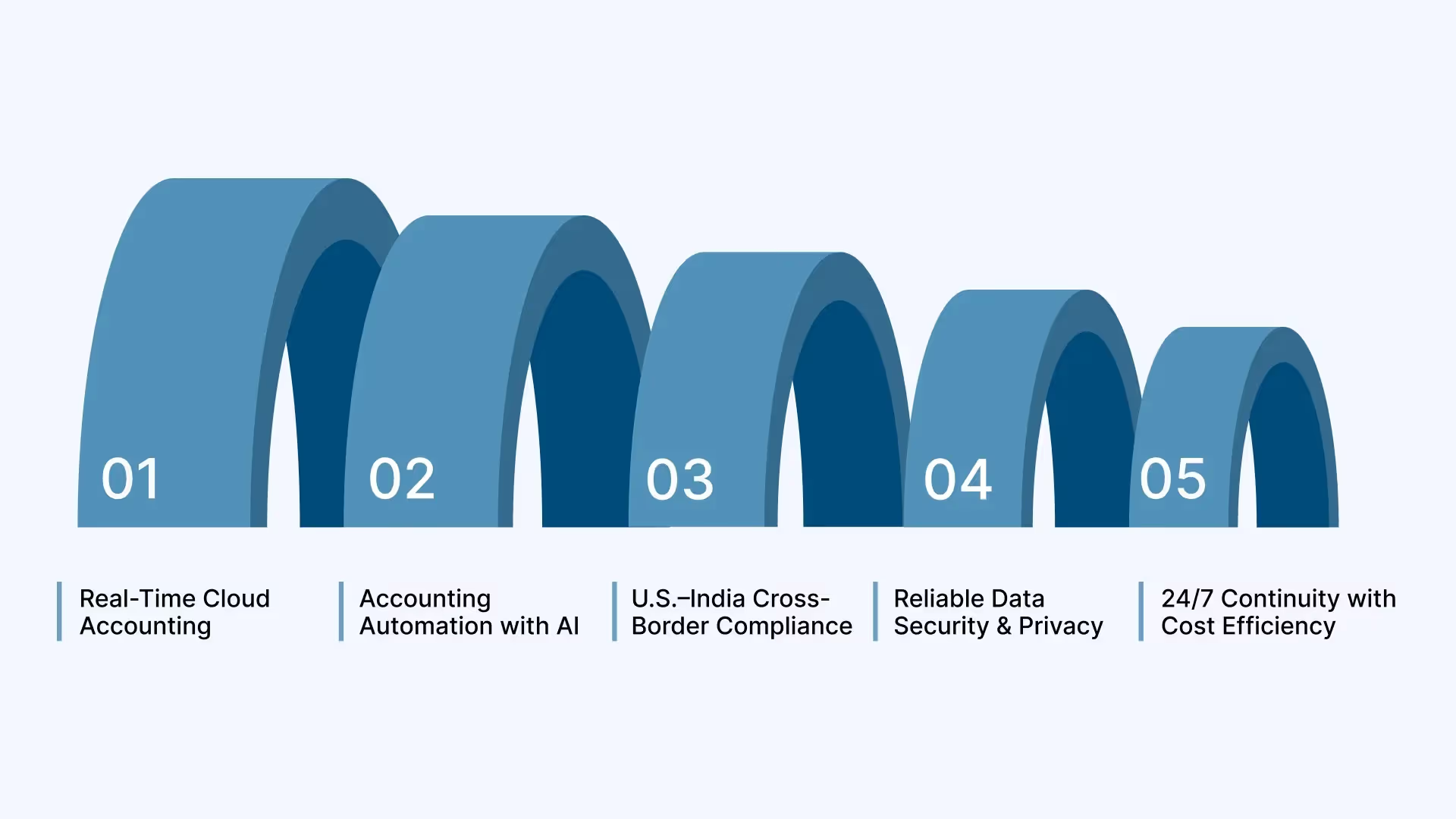
1. Cloud-Based Accounting for Real-Time Control

If your U.S. holding company has an Indian subsidiary, you can log in to review payables, P&L, or trial balances instantly, all hosted securely on the cloud. These tools ensure compliance with India’s Ministry of Corporate Affairs (MCA) and Income Tax Department while giving you the same oversight you have over your U.S. books.

2. Automation and Artificial Intelligence in Accounting

If your US business is running operations in multiple states in India, automation ensures that each transaction complies with the right GSTIN and state-specific taxation rules. It reduces manual errors, accelerates closing cycles, and gives you data you can trust for audits or investor reporting.

3. Cross-Border Compliance Aligned with U.S. and Indian Laws

India’s compliance landscape, governed by CBDT, GSTN, RBI, and MCA, can overwhelm a new entrant. But Indian outsourcing partners now specialize in dual-compliance frameworks, handling both U.S. GAAP and Indian Accounting Standards (Ind AS).

4. Data Security and Privacy Standards You Can Trust

Modern accounting firms in India operate under ISO 27001, SOC 2, and GDPR-equivalent data protocols. With India’s Digital Personal Data Protection Act, 2023, financial data confidentiality is legally enforced.

5. Cost Efficiency and 24/7 Business Continuity

While technology drives quality, India still offers one of the most cost-effective service markets. Outsourcing accounting can reduce your operational expenses, while time zone differences allow continuous operations; your Indian accountants work while your U.S. offices rest.

Also Read: Top Benefits of Outsourcing Accounting Services to India for US Small Businesses

Understanding the key benefits of outsourcing accounting services sets the stage for exploring how Indian online accounting service trends are shaping U.S. businesses.

Online Accounting Service Trends in India That U.S. Entrepreneurs Should Know

Online Accounting Service Trends in India That U.S. Entrepreneurs Should Know

Before making any decisions regarding your India finance stack, US companies looking to expand into India should be aware of the following major trends.

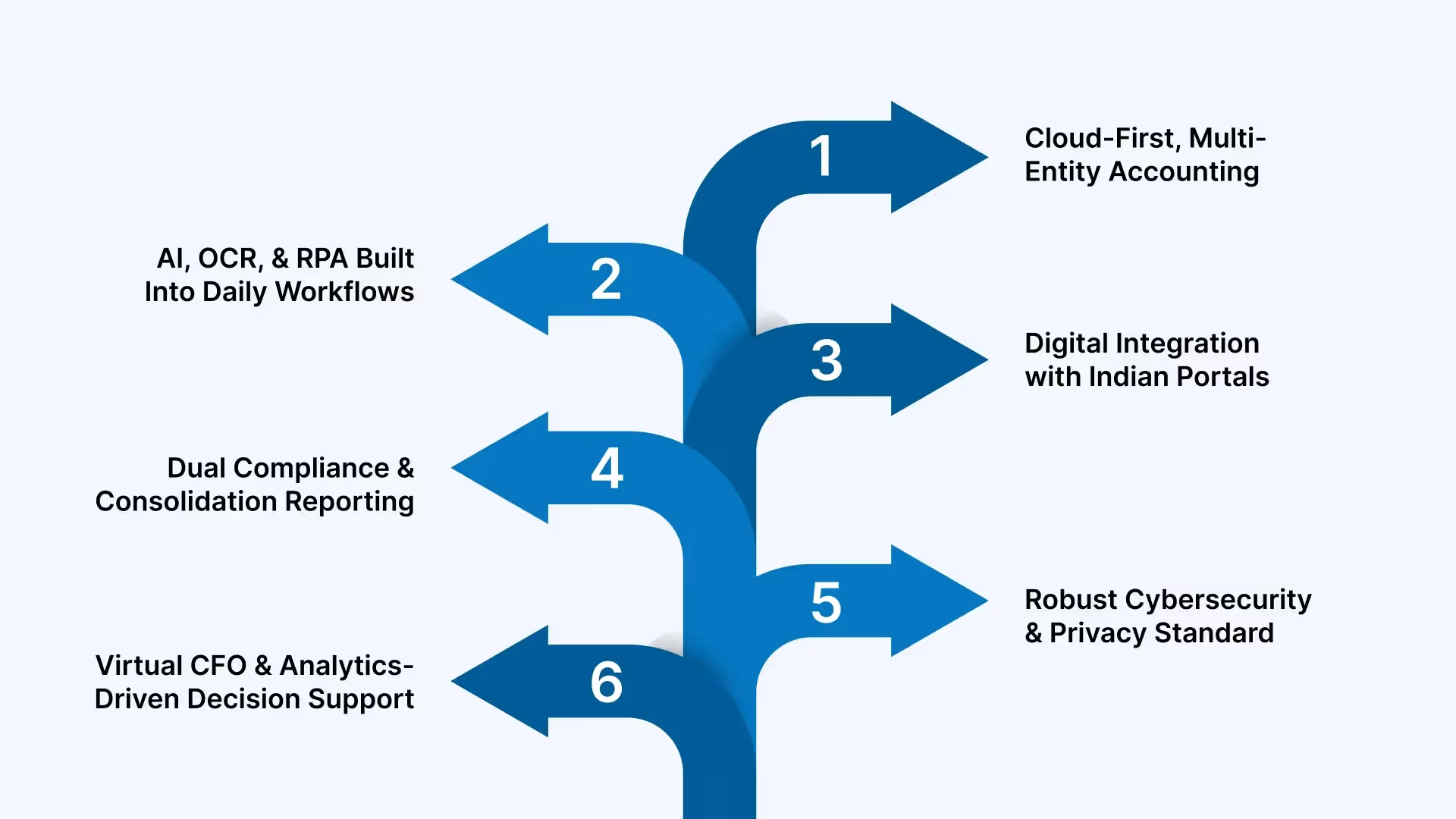
1. Cloud-First, Multi-Entity Accounting

For U.S. companies entering India, control and visibility are key. Tools such as QuickBooks and NetSuite allow you to view Indian books in real time from New York, Austin, or San Francisco.

This aligns with compliance under the Companies Act, 2013 and reporting needs under U.S. GAAP or IFRS, so you are not stuck reconciling two different accounting worlds. Indian accounting firms have moved from desktop software to fully cloud-based systems that support:

  • Multi-entity and multi-currency ledgers (INR and USD side by side)
  • Role-based access for U.S. founders, CFOs, and auditors
  • Instant drill-down from consolidated P&L to underlying vouchers

2. AI, OCR, and RPA Built Into Daily Workflows

For U.S. entrepreneurs with high transaction volumes, this means faster book closures, error-free reconciliations, and predictive insights. AI-driven tools also flag compliance risks before filings are due, saving US businesses from potential penalties under India’s Income Tax Act or GST laws.

Modern Indian firms today do not rely on manual data entry alone. They use:

  • OCR to read invoices and map them to suppliers and tax codes
  • Machine learning to auto-classify expenses and flag unusual entries
  • Robotic Process Automation (RPA) to handle high-volume tasks such as bank reconciliations and payment runs

3. Deep Digital Integration With Indian Compliance Portals

As a U.S. entrepreneur establishing a company in India, you gain dashboards that show filing status, due dates, and notices in one place, with audit-ready evidence for every submission. Indian accountants’ software interfaces with the government portals via APIs or export formats.

They integrate directly with:

  • GSTN (Goods and Services Tax Network) for automated GST return filing and e-invoicing validation
  • CBDT (Central Board of Direct Taxes) for e-filing of corporate income tax, TDS, and transfer pricing forms
  • MCA (Ministry of Corporate Affairs) for annual financial statement uploads and event-based filings

4. Dual-Compliance and Consolidation-Focused Reporting

Indian businesses are increasingly creating charts of accounts and procedures for US companies so that:

  • Indian ledgers comply with Ind AS and local tax laws
  • Trial balances can be mapped easily to U.S. GAAP structures
  • Consolidation into your U.S. holding company is smooth, without repeated reclassification

Be it a Delaware C-Corp or a California-based LLC operating an Indian Private Limited subsidiary, this dual-compliance capability ensures your consolidated statements remain consistent, audit-ready, and investor-friendly.

Also Read: What Is a Fractional Controller and Why US Firms Outsource to India

5. Stronger Cybersecurity, Data Residency, and Privacy Standards

As India’s Digital Personal Data Protection Act (DPDP), 2023 mandates strict data governance, Indian providers now operate with:

  • ISO 27001 or SOC 2 certified information security practices
  • Encryption at rest and in transit for financial and personal data

For U.S. businesses handling sensitive financial or client information in India, this level of data security offers the same peace of mind as working with domestic providers, at a fraction of the cost.

6. Virtual CFO and Analytics-Driven Decision Support

US companies are no longer limited to “bookkeeping only” outsourcing. Many Indian firms now bundle:

  • Virtual CFO reviews of monthly performance, burn, runway, and unit economics
  • Cash flow forecasting and scenario modelling across U.S. and Indian entities
  • Board-ready financial packs, including variance analysis and KPI dashboards

For early-stage founders or mid-sized companies, this ensures professional financial oversight in India without hiring a full-time CFO locally. Your U.S. finance leadership gets the same level of insight and governance, powered by India’s talent and cost efficiency.

As you explore the emerging trends in online accounting services in India for your expansion, VJM Global ensures your U.S. business remains compliant and efficient. Our comprehensive services, including tax filing and accounts payable management, handle the complexities of cross-border accounting, so you can focus on growing your operations in India.

Ensure error-free financial reporting with our seasoned accounting experts.

As trends in online accounting change, it's important to know what accounting services can be outsourced to India to maximize efficiency and compliance.

What Accounting Services Can U.S. Companies Outsource to India

What Accounting Services Can U.S. Companies Outsource to India

As your U.S. business expands into India, your accounting needs become more intricate. The good news: nearly every function can now be handled digitally by specialized Indian partners.

Here’s what you can confidently outsource, all aligned with the latest trends in online accounting services in India.

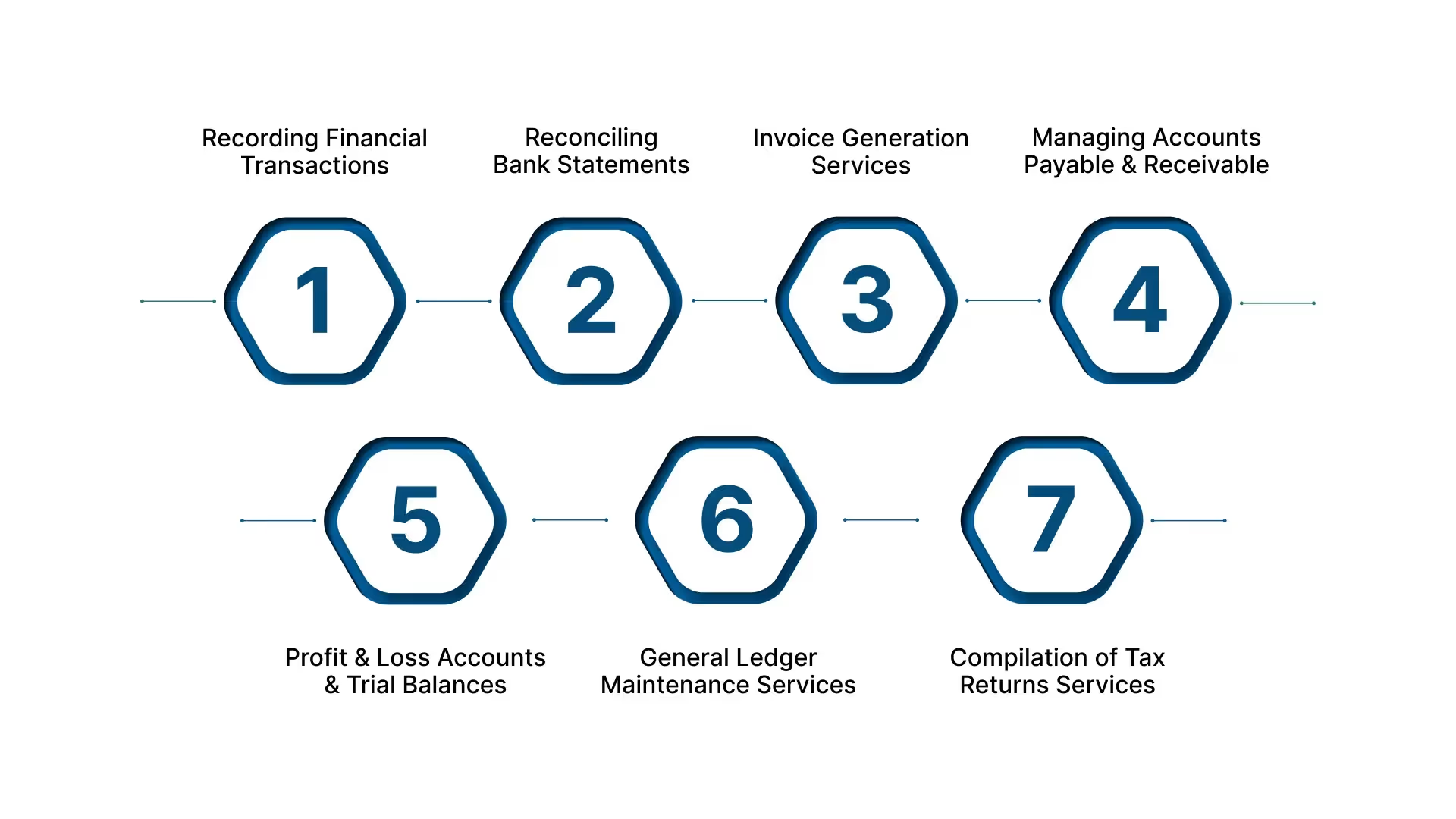
1. Recording Financial Transactions

Using automated accounting tools, Indian accountants categorize transactions, reconcile foreign currency payments, and maintain audit trails that comply with both U.S. GAAP and Indian standards.

2. Reconciling Bank Statements

AI-powered reconciliation tools match daily transactions automatically. This is invaluable for U.S. entrepreneurs managing both Indian and U.S. bank accounts, ensuring your balances align across continents.

3. Invoice Generation Services

Under India’s GST regime, every invoice is validated through the GSTN e-invoicing system. Indian accountants can generate, verify, and archive these invoices digitally. This makes it easier for your U.S. head office to cross-reference billings and ensure compliance with both tax authorities.

4. Managing Accounts Payable and Receivable

You can monitor all payables and receivables in real time through dashboards that connect with gateways like Razorpay or Payoneer. Many firms offering online accounting services in India now use automated reminders and cash flow forecasting tools, ensuring steady liquidity for your Indian operations.

5. Profit and Loss (P&L) Accounts and Trial Balances

Indian accountants compile monthly P&L reports that tie directly to your global accounting system. AI now highlights patterns such as cost overruns or delayed receivables, allowing you to make timely operational adjustments.

6. General Ledger Maintenance Services

Cloud-based ledgers allow U.S. founders to view consolidated entries from both domestic and Indian branches in real time. This ensures that audits, compliance filings, and investor reports remain synchronized.

7. Compilation of Tax Returns Services

India’s digital tax structure allows returns to be filed seamlessly via online portals. Outsourcing firms handle corporate tax filings, Form 3CEB for transfer pricing, and Form 15CB/15CA for foreign remittances, ensuring all statutory requirements are met.

Also Read: Understanding GAAP vs. Non-GAAP Gross Margin: Why Companies Outsource from the US to India

As you take your business from the U.S. to India, VJM Global is your trusted partner for seamless accounting and bookkeeping management. Our end-to-end services, including GST compliance, financial structuring, and tax filing, ensure your financial operations are smooth, accurate, and compliant. We handle everything from accounts payable to annual audits, allowing you to concentrate on growth and expansion in the Indian market.

From bookkeeping to audit prep, we handle it all. Discover how outsourcing can work for you

With a clear understanding of outsourced services, let's explore the various accounting software used in India to enhance your business operations.

What Are the Various Accounting Software Used in India for U.S. Companies?

The Indian accounting system has changed into a hybrid environment where both global and indigenous software platforms operate under strict compliance standards. The following list reflects the latest tools adopted in online accounting services in India and why they matter for U.S. entrepreneurs.

1. Tally Prime

Still one of the most widely adopted platforms, Tally Prime has transitioned into the cloud era with remote access and real-time synchronization. It supports GST, TDS, and integrates with foreign currency accounting modules, making it ideal for U.S. entities handling their Indian subsidiary’s data remotely.

2. QuickBooks India

QuickBooks offers dual-GAAP reporting and multi-currency transactions. U.S. entrepreneurs expanding into India use it to consolidate global financials. Many online accounting services in India use QuickBooks to offer simultaneous reporting in INR and USD, simplifying intercompany consolidations.

3. Intuit’s ProSeries

While traditionally U.S.-centric, Intuit’s ProSeries is now being adopted by Indian accounting firms handling U.S. tax returns and expatriate compliance. Many firms offering online accounting services in India now use ProSeries to prepare and reconcile data under both IRS and Indian Income-tax standards.

4. Intuit’s Lacerte

Similar to ProSeries but designed for larger firms and complex returns, Intuit’s Lacerte is another trend-setting inclusion in India’s outsourcing market. Accounting firms in India use Lacerte for U.S. clients with multi-entity structures and cross-border transactions, ensuring accuracy in areas like depreciation schedules, foreign tax credits, and partnership filings.

5. MYOB (Mind Your Own Business)

Firms providing virtual accounting services use MYOB for multi-currency accounting, payroll processing, and global inventory tracking. It’s especially favored by U.S. businesses in the retail and e-commerce sectors outsourcing to India, where MYOB’s robust reporting simplifies coordination between domestic and international accounts.

Also Read: Key Steps for Conducting Organizational Assessments: Why US Firms Outsource to India

Once you're familiar with the software, it's essential to know which industries are benefiting from outsourced accounting services in India to tailor your strategy.

US Industries Benefitting from Outsourcing Accounting Services to India

US Industries Benefitting from Outsourcing Accounting Services to India

Every sector in the US expanding into India can benefit from outsourcing, but some industries gain more due to regulatory complexity and high transaction volumes. The latest trends in online accounting services in India are transforming how these industries handle finance operations.

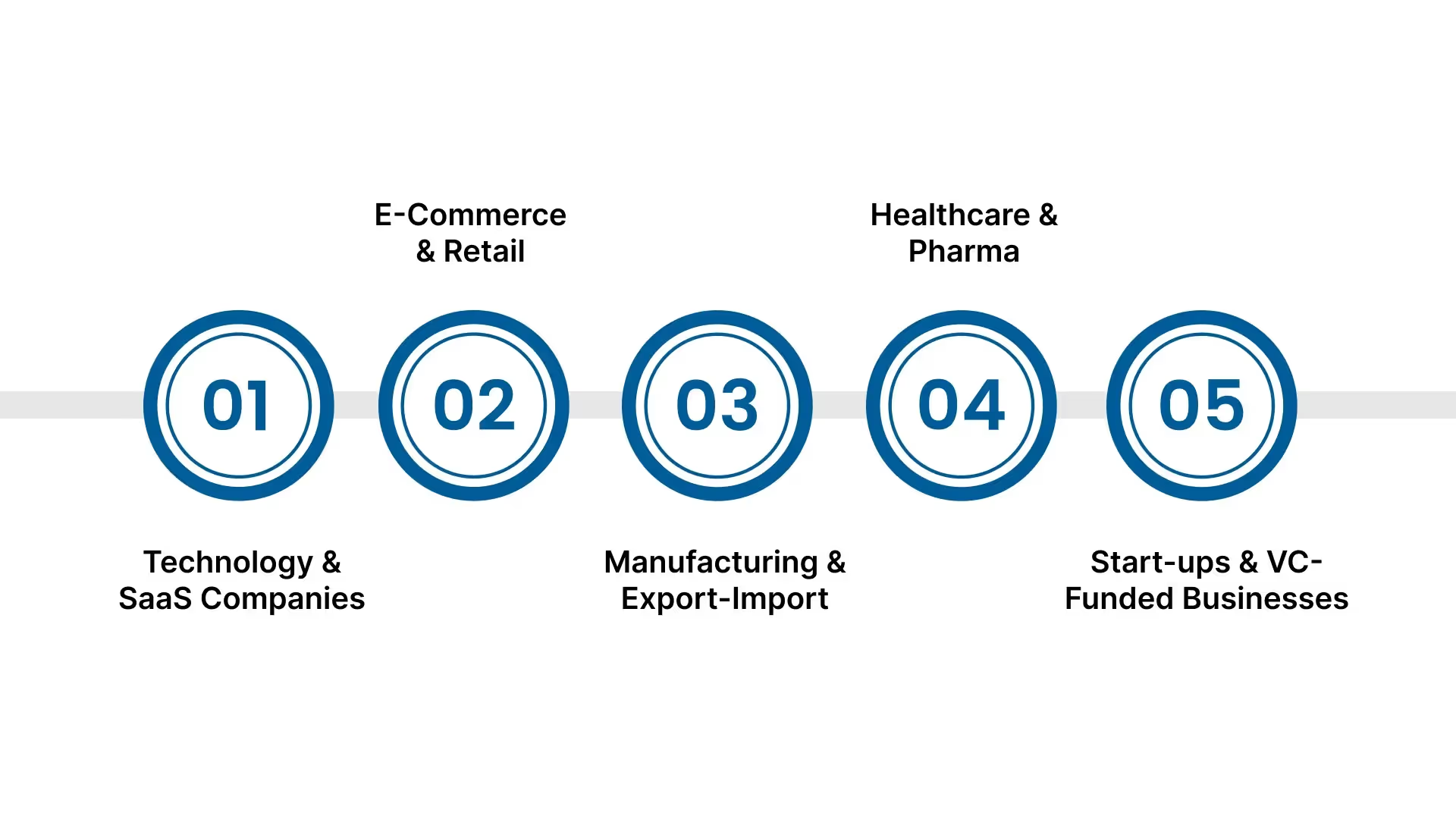
1. Technology and SaaS Companies

For U.S. tech companies planning to operate offshore development centers in India, handling intercompany invoicing, transfer pricing, GST export of services under LUT, transfer pricing, and ESOP accounting can be challenging. Indian firms use automated systems to manage these with accuracy, ensuring compliance with Rule 96A under GST for export services without payment of tax.

2. E-Commerce and Retail

U.S. e-commerce companies selling through Indian platforms can outsource TCS (Tax Collected at Source) filings, vendor settlements, and payment reconciliations. Using tools like MYOB or NetSuite, accountants ensure your online sales and GST filings align perfectly.

3. Manufacturing and Export-Import

For manufacturers expanding into India, accountants assist with Customs EDI systems, DGFT export documentation, and HSN-based GST returns. Outsourced accountants in India help ensure duties, rebates, and incentives are correctly reported, while also managing complex HSN-based GST filings.

4. Healthcare and Pharma

U.S. healthcare and pharma businesses outsourcing accounting to India benefit from HIPAA-compliant accounting systems, especially for patient billing and insurance reconciliation. Firms also handle complex reporting for R&D tax benefits and cross-border royalty payments.

5. Start-ups and VC-Funded Businesses

Many U.S. startups setting up Indian entities under Foreign Direct Investment (FDI) rules rely on Indian online accountants for FEMA compliance, Form FC-GPR filings, and valuation certificates. These firms act as both compliance partners and virtual CFOs.

Also Read: How to Calculate Operating Working Capital

Now that you understand the industry landscape, let’s explore how VJM Global’s expert accounting services can streamline your U.S. to India expansion.

Use VJM Global's Expert Accounting Services to Streamline Your US to India Expansion

If you’re a U.S. business owner planning to start, expand, or establish your presence in India, managing your financials efficiently across two countries can feel overwhelming. By tapping into VJM Global’s expert accounting services, you’re ensuring compliance with Indian financial laws and also keeping your U.S. operations aligned and streamlined. 

Here’s how VJM Global can make your transition from the U.S. to India smooth and hassle-free:

  • Comprehensive Accounting and Bookkeeping Solutions: Let us handle your U.S.-India accounting needs, ensuring your books are meticulously managed, updated quickly, and aligned with your financial goals, no matter where you are operating.
  • Accounts Payable: We manage accounts payable across both U.S. and Indian entities, ensuring bills are paid on time while implementing customized payment terms based on your U.S. business policies.
  • Accounts Receivable: From invoice processing to reconciling payments in both U.S. and Indian currencies, our services help keep your accounts receivable on track, improving cash flow across borders.
  • Financial Reports: We deliver accurate financial statements and reconciliation reports that are tailored to both U.S. and Indian standards, giving you a clear view of your business performance in both markets.
  • Tax Filing: Our expert CPAs ensure your tax filings are compliant with both U.S. and Indian laws, handling everything from IRS filings to GST returns, saving you from the complexities of cross-border tax reporting.
  • Data Entry: We manage your tedious data entry tasks, ensuring that your accounting records are accurate, up-to-date, and ready for reporting under both U.S. and Indian regulations.
  • Accounting Software Migration: We ensure a seamless transition to the latest accounting software, making it easy to integrate your U.S. and Indian financial systems, keeping your operations smooth across both countries.
  • Year-End Accounting: We ensure your financial documents are fully compliant with Indian regulations while getting them ready for tax season in the U.S., helping you stay on top of both countries’ requirements.

If you’re starting your US business in India, expanding operations, or seeking to streamline existing processes, our tailored accounting services ensure compliance, accuracy, and growth.

Conclusion

India’s accounting sector has advanced from traditional bookkeeping to a fully digitized, insight-driven financial system. With advancements in cloud computing, AI automation, and compliance technology, online accounting services in India offer far more than back-office support; they deliver strategic value.

For U.S. companies, entrepreneurs, and investors expanding into India, this means real-time visibility, compliance confidence, and a strong partner framework at a fraction of domestic costs. The combination of skilled professionals, advanced tools, and regulatory alignment makes India an ideal destination for financial outsourcing in 2025 and beyond.

Partnering with experts like VJM Global ensures your U.S. business gains a compliant, data-driven accounting foundation in India, helping you focus on growth, profitability, and strategic expansion instead of paperwork.

Partner with VJM Global for tailored accounting and compliance solutions that align with both U.S. and Indian regulations.

FAQs

1. How does AI-driven automation in Indian accounting services enhance U.S. businesses’ tax compliance?

AI-driven automation ensures accurate tax classifications, real-time reconciliation, and automated GST filings, reducing manual errors and aligning with U.S. tax reporting standards.

2. What is the significance of dual compliance in accounting for U.S. companies expanding to India?

Dual compliance ensures that financial reports meet both U.S. GAAP and Indian Accounting Standards (Ind AS), facilitating smooth cross-border consolidation and avoiding regulatory conflicts.

3. How does cloud-based accounting in India improve U.S. businesses' cross-border operations?

Cloud-based systems provide real-time data access, automate financial reporting, and integrate with U.S. platforms, ensuring seamless operations and compliance across both countries.

4. What is the role of data encryption in securing U.S. companies’ financial information outsourced to India?

Data encryption under ISO 27001 ensures that sensitive financial data is protected, maintaining compliance with GDPR and India’s Personal Data Protection Act.

5. How does accounting software migration benefit U.S. businesses moving to India?

Migration to Indian accounting software ensures seamless integration with local compliance systems (GST, TDS) while maintaining alignment with U.S. financial systems for real-time reporting.

Recent Blogs

Contact Us

We'd love to hear from you! Please fill out the form and we'll get back to you as soon as possible.