Expanding your Australian business into India can open the door to incredible opportunities. With bilateral trade between the two countries hitting US$24.105 billion in 2024-25, the potential for growth is undeniable.
Thanks to the India-Australia Economic Cooperation and Trade Agreement (ECTA), over 85% of Australian exports to India are now tariff-free, and this is set to reach 90% by 2028.
However, tackling the Indian market can feel overwhelming, especially when it comes to understanding local regulations, tax requirements, and setting up operations.
This guide will walk you through everything from the legal steps to the key strategies for a successful market entry. If you're an Australian business looking to expand to India, this blog will provide the clarity and actionable insights you need to make it happen.
Key Takeaways
India’s Growth Potential: India offers vast market opportunities with a population of over 1.4 billion and growing consumer demand, making it an ideal destination for Australian businesses.
Government Support: India’s government actively promotes foreign investment, offering tax benefits and simplified regulations through initiatives such as Make in India and the Ease of Doing Business reforms.
Business Structures: Australian companies can choose from various business structures in India, including Private Limited Companies, LLPs, and Branch Offices, depending on their expansion goals and operational needs.
Required Documentation: Key documents include a Director Identification Number (DIN), a Digital Signature Certificate (DSC), Articles of Association (AoA), and a local registered office address in India.
Compliance and Registration Process: The company registration process involves multiple steps, like name approval, obtaining PAN and TAN numbers, GST registration, and complying with local FDI regulations.
Advantages of Setting Up an Australian Business in India
India presents a wealth of opportunities for Australian businesses, making it an ideal market for expansion. Here’s why:
Market Access: India’s growing population of over 1.4 billion and rising purchasing power offer vast market potential. For Australian companies in sectors like tech, retail, and services, this provides a valuable consumer base to tap into.
Cost Efficiency: With affordable labor, low office rental costs, and lower infrastructure costs than in Western countries, your operational expenses can be significantly reduced.
Strategic Location: Located in South Asia, India provides easy access to neighboring emerging markets, including Southeast Asia, the Middle East, and Africa, expanding your business's global reach.
Government Support: India’s government actively supports foreign businesses with subsidies and simplified regulations, making it easier for Australian companies to establish and grow their operations.
Skilled Workforce: India’s workforce is large, youthful, and highly skilled, especially in sectors like IT, engineering, and manufacturing. With a median age of 28, your business can access a dynamic and affordable talent pool.
Favorable Tax System: India’s comprehensive tax system makes business operations smoother and ensures clarity on tax compliance.
Business-Friendly Laws: India has introduced several reforms to simplify the business environment, such as the Goods and Services Tax (GST) and updated corporate laws.
The country also offers several tax treaties to reduce double taxation and lower withholding tax rates, making cross-border operations cost-effective.
With its business-friendly laws and strong government support, expanding to India is a strategic move that can drive long-term success for Australian businesses.
Now that you understand the advantages, let's explore the key considerations to ensure a smooth setup process in India.
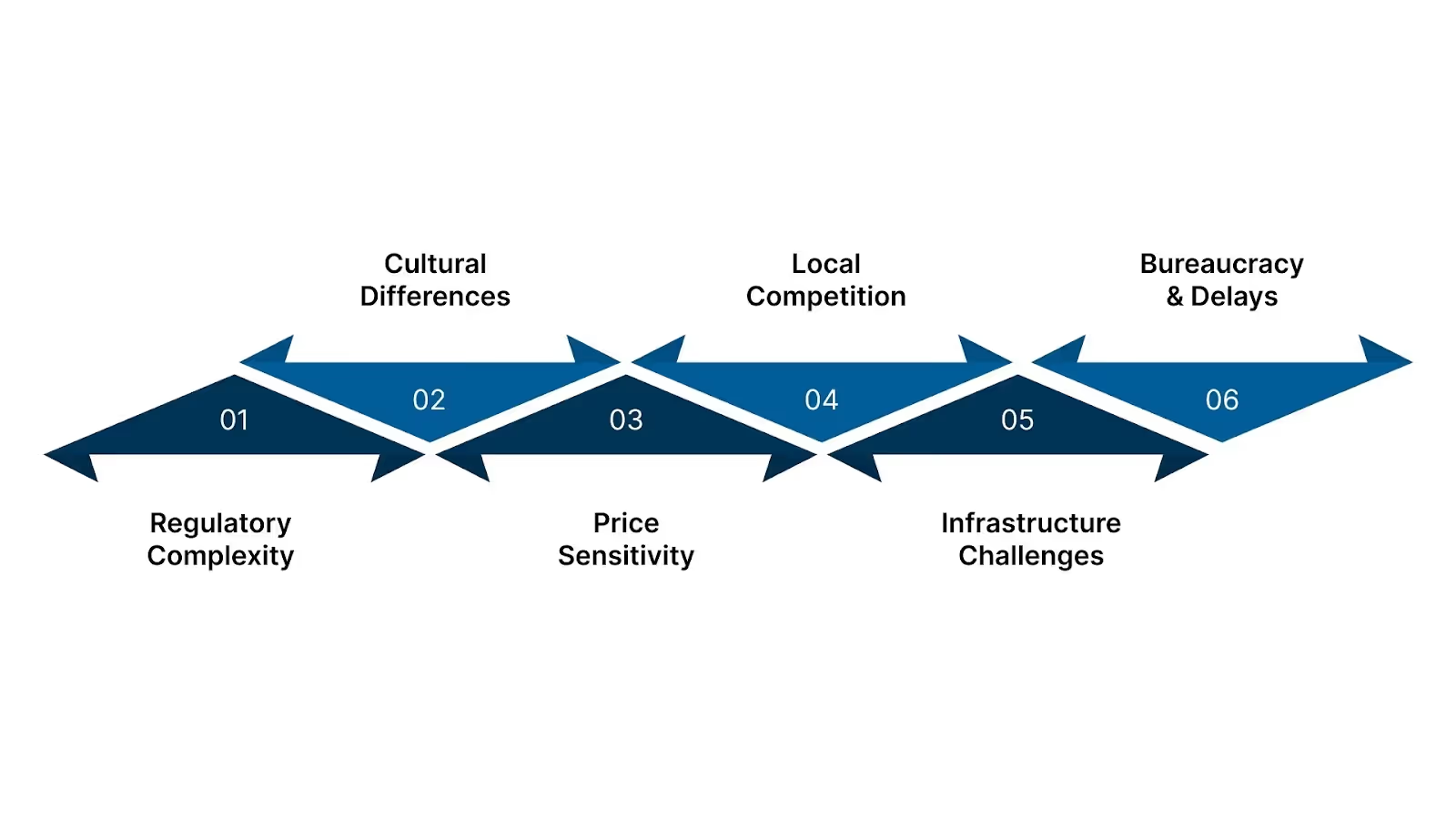
Key Considerations for Australian Business Setup Services in India
Alt text: Key Considerations for Australian Business Setup Services in India
Setting up an Australian business in India involves managing key legal and operational differences. Here’s what you need to know:
Intellectual Property Protection: Safeguarding your intellectual property is critical. Ensure that Indian laws adequately protect and register your copyrights, patents, and trademarks to avoid infringement.
Risk Management: Identifying and mitigating potential risks, including market competition and economic shifts, will help protect your business in the long run.
Building Partnerships: Establishing strong partnerships through joint ventures or strategic alliances can provide valuable insights, networks, and market access, boosting your business growth.
Building Relationships and Trust: Building local connections is often more important than initial transactions. Australian companies may need to adjust their approach by investing time in relationship-building, which is a long-term yet effective process in India.
These considerations are critical in ensuring a successful and compliant business setup in India, making the entry process smoother and more efficient.
With the right considerations in mind, the next step is to gather the necessary documents to register your business officially in India.
What Are the Documents Required to Start a Company in India from Australia?
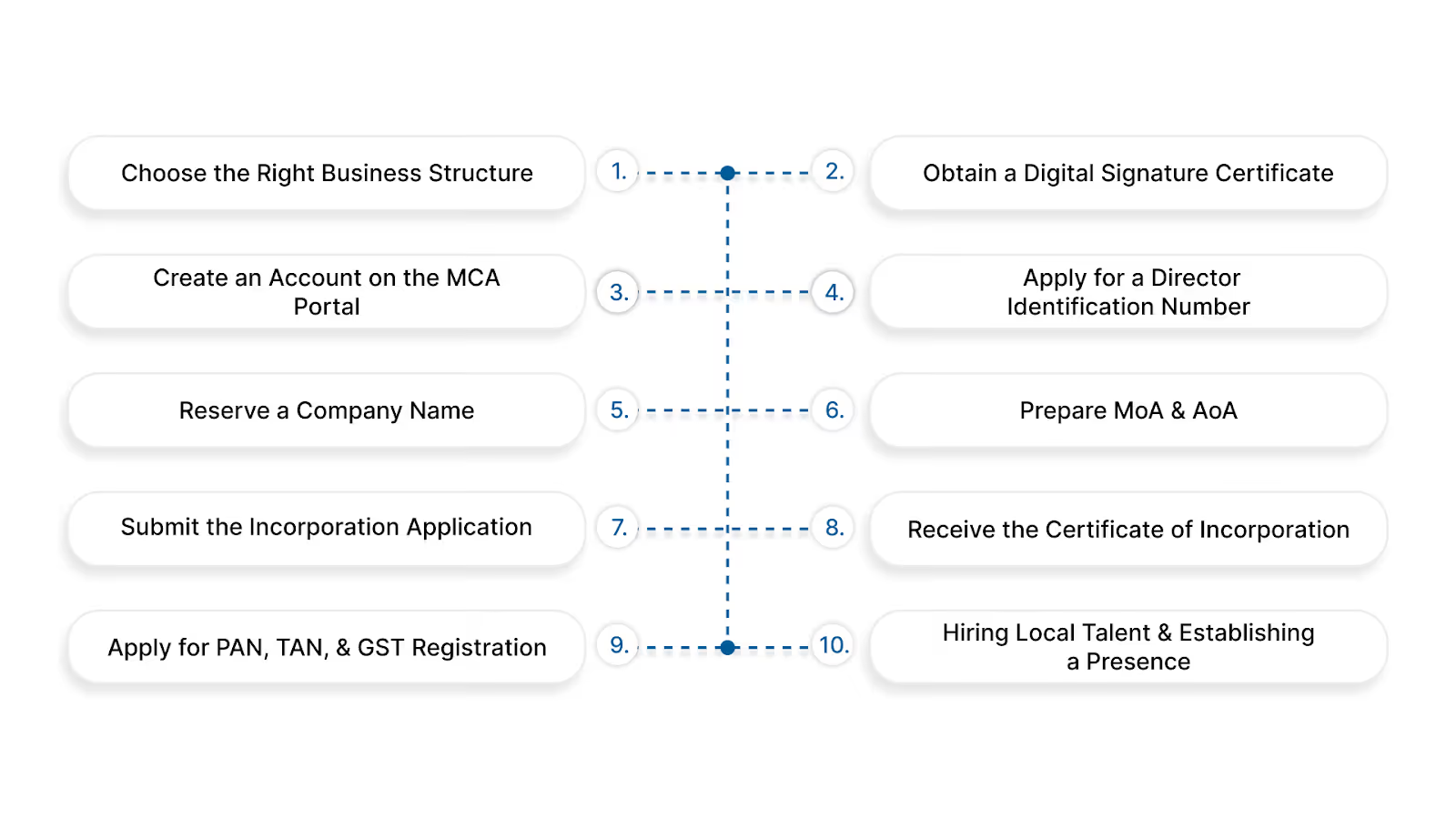
Registering a company in India as an Australian business requires careful attention to documentation and legal compliance. Here's a breakdown of what you'll need:
Indian Registered Address: You must provide a physical address in India for official communications. If you don't have an office, a virtual address is acceptable, as long as it meets legal standards.
Director Identification Number (DIN)
Digital Signature Certificate (DSC)
Identification Proof
Articles of Association (AoA) and Memorandum of Association (MoA
PAN, TAN & GST Registration: After incorporation, apply for:
PAN (Permanent Account Number)
TAN (Tax Deduction and Collection Account Number)
GST Registration if your company’s activities require it based on turnover.
Compliance with FDI Regulations: Your business must adhere to India’s Foreign Direct Investment (FDI) policy. Some sectors allow automatic FDI, while others require prior approval from the Reserve Bank of India (RBI).