Legal Compliance Checklist for Global Capability Center Setup in India

Published on:
December 6, 2025

Table of contents

Talk to Us
Thank you! Your submission has been received!
Oops! Something went wrong while submitting the form.

One Firm,
Global Solutions

We support cross-border business with confidence and clarity.
Book a Call

India has grown as a global leader in hosting Global Capability Centers (GCCs), with over 1,700 GCCs operating across the country as of FY 2024. These centers employ over 1.9 million professionals, contributing significantly to India's service export sector. 

These centers are crucial for multinational companies looking to optimize operations, access a skilled workforce, and drive cost efficiency. However, setting up a GCC involves tackling a complex legal and regulatory environment. From selecting the right legal structure to complying with Indian laws and tax regulations, each decision impacts your ability to operate smoothly in this emerging market.

This blog will walk you through the key legal and regulatory considerations involved in setting up a legal entity for a GCC in India, helping U.S.-based businesses expand seamlessly into the Indian market. With the right guidance, you can ensure compliance and avoid unnecessary pitfalls during the process.

Key Takeaways

  • Setting up a legal entity for a GCC in India is a detailed process, requiring careful adherence to regulatory standards.
  • The first step is to choose the appropriate legal structure (Private Limited Company, Branch Office, or Liaison Office).
  • Key compliance elements include registering with Indian authorities, ensuring tax registrations, and adhering to labor laws.
  • Partnering with experienced professionals can simplify the setup process and reduce the risk of non-compliance.

What is a GCC?

A Global Capability Center (GCC) is a dedicated facility set up by a multinational company in a foreign country to centralize core business operations, such as technology, finance, customer service, HR, and more. As businesses increasingly look to expand from the U.S. to India, GCCs have become critical for managing costs, accessing talent, and driving innovation across regions.

India, with its vast talent pool, competitive operational costs, and advanced technological infrastructure, is among the top destinations for setting up GCCs. The country offers a combination of skilled professionals, government incentives, and a growing business ecosystem for companies looking to expand their operations.

Suggested read: Offshoring Audit Work from the US to India: Key Challenges and Fixes

Next, let’s get into the key legal and regulatory considerations that will guide you through the compliance maze.

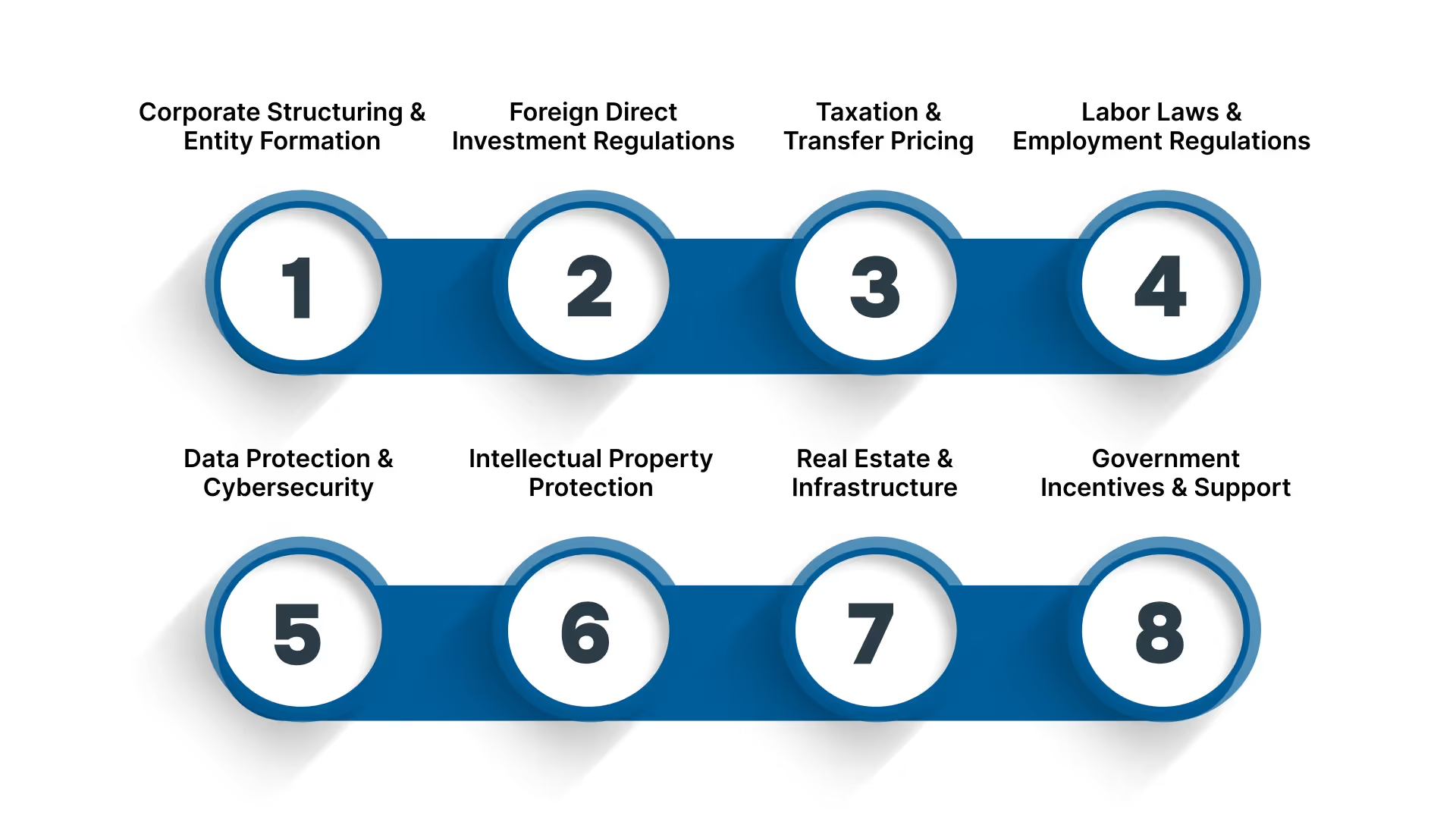
Key Legal and Regulatory Considerations for Setting Up a GCC in India

Key Legal and Regulatory Considerations for Setting Up a GCC in India

Establishing a Global Capability Center (GCC) in India offers significant advantages, but it requires managing a complex legal and regulatory environment. Understanding these key considerations is crucial for ensuring compliance and operational success.

1. Corporate Structuring and Entity Formation

The first step in setting up a GCC is selecting the appropriate legal structure. Options include:

  • Private Limited Company (PLC): Provides limited liability, meaning that the parent company’s liability is separate from that of the Indian subsidiary. It is suitable for companies planning to engage in significant business operations such as research and development or service delivery in India. This is similar to forming a Corporation (Inc.) in the U.S., where liability is limited to the company itself, and it allows for fundraising through equity or debt.
  • Limited Liability Partnership (LLP): Similar to a Limited Liability Company (LLC) in the U.S., an LLP provides the benefits of limited liability but with greater flexibility than a private limited company. While it allows for easier management of profits and losses, an LLP is more suitable for joint ventures and partnerships rather than large-scale operations.
  • Branch Office: Permits a foreign company to establish a presence in India for limited activities, such as marketing, research, or testing the market. However, it is restricted from generating direct revenue or performing commercial activities.
  • Liaison Office: Similar to a Representative Office in the U.S., this serves as a communication link between the parent company and the Indian market. Although it cannot engage in revenue-generating activities, it is often utilized for market research, brand promotion, or as a coordination office.
  • Wholly Owned Subsidiary: Ideal for businesses looking for complete control mechanism in India, this structure offers flexibility in management but requires strict compliance with Indian regulations, including registration under the Companies Act, 2013.

Each structure has distinct compliance obligations under the Companies Act, 2013. The same is meant for the Foreign Exchange Management Act (FEMA), 1999. This is similar to regulations like FATCA (Foreign Account Tax Compliance Act) for tax reporting and CFIUS (Committee on Foreign Investment) for reviewing foreign investments in the U.S.

2. Foreign Direct Investment (FDI) Regulations

India's FDI policy permits 100% foreign investment in many sectors under the automatic route. However, certain sectors require earlier approval from the government. It's essential to review the FDI policy to ensure compliance with sectoral caps and entry routes.

3. Taxation and Transfer Pricing

Similar to U.S. regulations, where companies are subject to federal corporate tax rates and state-level taxes, Indian GCCs must understand and manage their tax obligations effectively. 

  • Corporate Taxation: GCCs are subject to corporate tax rates, which vary based on the entity's structure and activities.
  • Transfer Pricing: Transactions between the parent company and the GCC must be conducted at arm's length to comply with transfer pricing regulations. This mirrors U.S. transfer pricing rules, where companies must ensure that transactions between affiliates are priced fairly, as enforced by the IRS.
  • Goods and Services Tax (GST): Registration is mandatory for a GCC if it engages in taxable activities, such as the supply of goods or services that fall under the GST framework.

Understanding these tax implications is vital for efficient operations and compliance.

4. Labor Laws and Employment Regulations

Compliance with Indian labor laws is mandatory. Key aspects include:

  • Employment Contracts: Similar to the Fair Labor Standards Act (FLSA) in the U.S., which mandates the inclusion of wage rates and working hours, employee contracts in India must align with Indian labor laws and clearly define terms and conditions. 
  • Employee Benefits: Adherence to Provident Fund (PF), Employees' State Insurance (ESI), and gratuity provisions. This is similar to benefits like Social Security, Medicare, and unemployment insurance in the U.S., which are statutory benefits under federal law. 
  • Workplace Policies: Implementation of policies related to working hours, leave entitlements, and termination procedures. This is similar to policies under the Family and Medical Leave Act (FMLA), Occupational Safety and Health Administration (OSHA) regulations, and the National Labor Relations Act (NLRA) that govern employee rights in the U.S.

The introduction of new labor codes consolidates various labor laws, impacting compliance requirements.

5. Data Protection and Cybersecurity

With the establishment of the Digital Personal Data Protection Act, 2023, GCCs must ensure:

  • Data Privacy:  Protection of personal data in line with India’s new regulations, similar to the CCPA for California residents in the U.S. and the GDPR for companies with EU connections.
    Note: CCPA applies only in California, while the DPDP Act applies nationwide in India.
  • Cross-Border Data Transfers: Compliance with rules governing the transfer of data outside India, similar to U.S. frameworks like the EU-U.S. Data Privacy Framework and Standard Contractual Clauses (SCCs), which govern cross-border data flows between the EU and the U.S.
  • Cybersecurity Measures: Implementation of security protocols to safeguard data, much like HIPAA (Health Insurance Portability and Accountability Act) in the U.S., which mandates secure handling of sensitive information, particularly in the healthcare sector.

6. Intellectual Property (IP) Protection

Securing intellectual property is crucial for GCCs. This involves:

  • IP Registration: Filing for patents, trademarks, and copyrights as applicable. The process parallels the U.S., where patents and trademarks are registered with the United States Patent and Trademark Office (USPTO), and copyrights with the U.S. Copyright Office.
  • IP Agreements: Drafting clear agreements regarding IP ownership and usage. The U.S. follows a similar approach where IP agreements must comply with the Lanham Act for trademarks and Title 35 of the U.S. Code for patents, ensuring proper ownership and enforceability.
  • Compliance with IP Laws: This involves adhering to the Patents Act, 1970, Trademarks Act, 1999, and other relevant legislation. 

7. Real Estate and Infrastructure

Selecting the right location for the GCC is vital. Considerations include:

  • Infrastructure: Availability of necessary facilities and services.
  • Real Estate Laws: Compliance with zoning laws and property regulations.
  • Special Economic Zones (SEZs): Potential benefits such as tax exemptions and relaxed regulations. Much like in the U.S., where businesses can use Foreign-Trade Zones (FTZs) for duty deferral and customs efficiencies, along with state-level incentive areas such as Opportunity Zones that offer targeted tax benefits.

8. Government Incentives and Support

The Indian government offers different incentives to attract foreign investment, including:

  • Tax Holidays: For certain activities in designated sectors.
  • Financial Assistance: For infrastructure development and technology adoption.
  • Policy Support: Initiatives to ease the regulatory process and promote investment.
  • Also Read: Why India is Ideal for International Business Expansion

Managing these legal and regulatory considerations requires careful planning and expert guidance. To help you understand the process efficiently, here's a timeline outlining key actions for setting up your GCC in India, ensuring smooth operations from registration to compliance and scaling.

Area

Key Actions

Target Timeline

Entity & Registration

ROC, PAN, GST registration, choose structure (PLC, LLP, WOS, etc.)

0–30 days

Employment & Payroll

Draft employment contracts, set up Provident Fund (PF), Employees' State Insurance (ESI), and payroll processing

15–60 days

Tax & Transfer Pricing

GST registration, Tax Deducted at Source (TDS) registration, establish Transfer Pricing (TP) policy

30–90 days

Data & Security

Align with Digital Personal Data Protection (DPDP) Act, implement data protection measures, set up cybersecurity protocols

30–120 days

Commercial Contracts

Draft lease agreements, vendor contracts, customer agreements

15–90 days

Industry Certifications

Obtain RBI/SEBI registrations (if applicable), secure necessary industry-specific certifications (e.g., healthcare, export controls)

Ongoing

Explore the full potential of your Global Capability Center in India with VJM Global. We handle everything from entity structuring and tax optimization to compliance with GST, FEMA, and expatriate tax planning, helping your business to scale quickly. Get started today

Also read: What Is a Fractional Controller and Why US Firms Outsource to India

Now that we’ve addressed the regulatory environment, the next critical step is actually setting up the center. Let’s walk through the steps for setting up a GCC in India, from planning to execution, ensuring your operations stay compliant and successful.

Steps for Setting Up a GCC

Steps for Setting Up a GCC

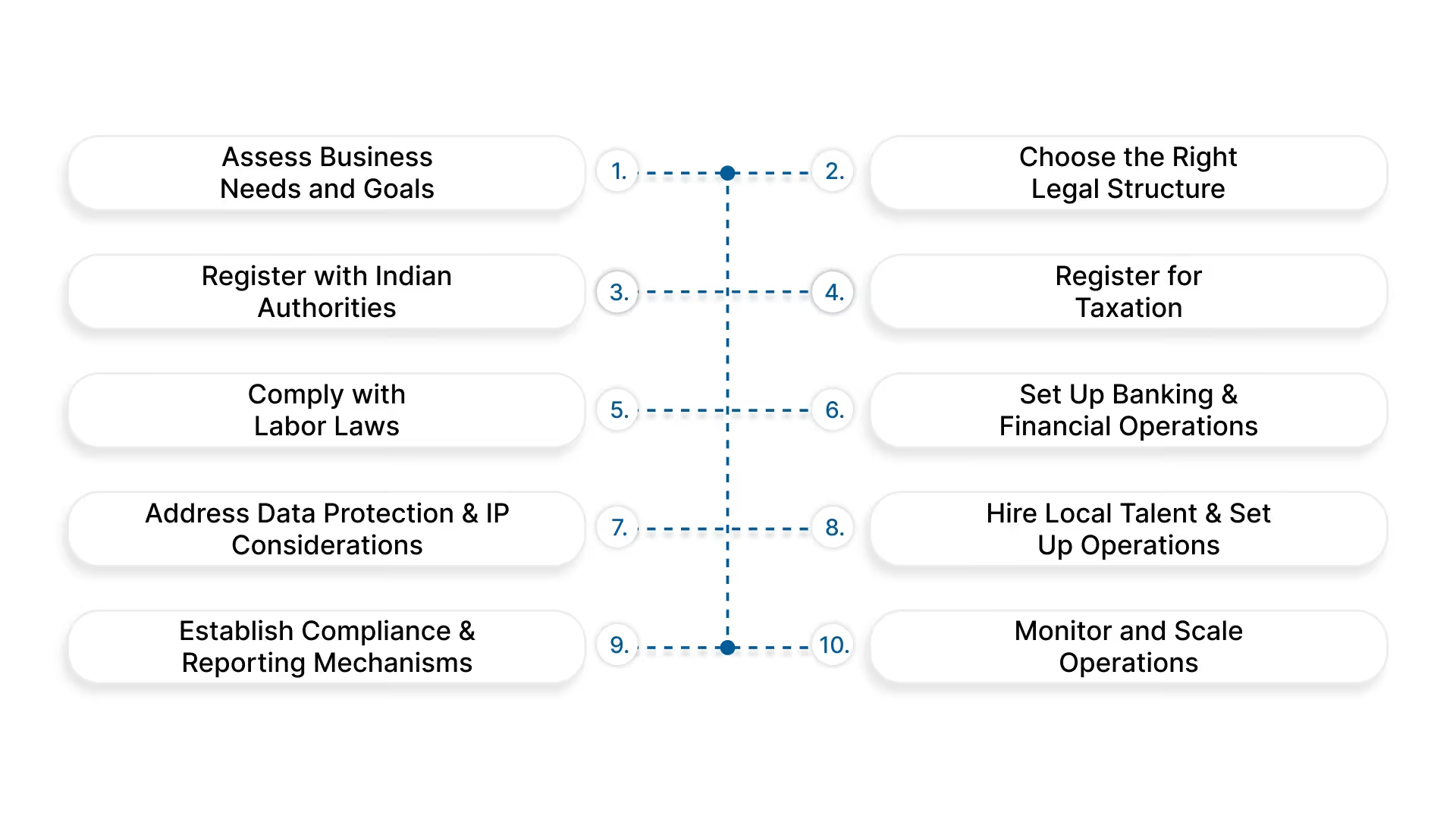
Setting up a Global Capability Center (GCC) in India requires a structured approach, ensuring compliance with legal regulations. The following steps outline the process to set up a GCC, from initial planning to smooth operations.

1. Assess Business Needs and Goals

The first step in establishing a GCC is assessing your business’s needs. Understand what functions will be managed from the center, such as technology, finance, HR, or customer service. Align these goals with your business strategy and determine how the GCC can support global operations, reduce costs, and provide value through skilled local talent.

2. Choose the Right Legal Structure

As discussed, the legal structure is a critical choice. Based on your business model and goals, choose one of the options mentioned in the previous section.

3. Register with Indian Authorities

Once you have chosen the legal entity, you need to complete the registration process with the Indian authorities. 

Just as in the U.S., where you register a business at the state level (typically with the Secretary of State) and then apply for a federal Employer Identification Number (EIN) from the IRS, in India, you register your business with the Ministry of Corporate Affairs (MCA). 

Directors must obtain a Director Identification Number (DIN) and a Digital Signature Certificate (DSC) to complete e-filings under the MCA portal. Once the application is processed and approved, the company receives a Certificate of Incorporation, which legally establishes the entity.

Note: For non-operational entities, such as branch offices or Liaison Offices, registration with the Reserve Bank of India (RBI) is mandatory.

4. Register for Taxation

Register your GCC for applicable taxes:

  • Goods and Services Tax (GST): If your GCC is engaged in the supply of goods or services, you must register for GST.
  • Tax Deducted at Source (TDS): This is essential for withholding taxes on employee salaries and vendor payments.
  • Permanent Account Number (PAN): A PAN is required for tax-related transactions and filings. These registrations ensure compliance with India’s tax laws and streamline your business operations.

5. Comply with Labor Laws

Adhere to India’s labor laws, including:

  • Employee Provident Fund (EPF): Contributions to employee retirement funds are mandatory.
  • Employees’ State Insurance (ESI): A health insurance scheme for employees in certain salary brackets.
  • Gratuity and Other Benefits: Ensure your employment contracts comply with Indian statutory requirements for benefits, including gratuity, maternity leave, and working hours.

Understanding these regulations is crucial for effectively managing employee welfare and preventing legal disputes.

6. Set Up Banking and Financial Operations

Establishing a corporate bank account in India is essential for smooth financial operations, from handling payroll to managing vendor payments. You will need to present the company’s Certificate of Incorporation, PAN, and MOA to open an account. Additionally, ensure compliance with Foreign Exchange Management Act (FEMA) regulations when transferring funds between your parent company and the GCC.

7. Hire Local Talent and Set Up Operations

One of the primary advantages of setting up a GCC in India is access to a large pool of skilled talent. Focus on hiring employees who meet your operational requirements while ensuring they comply with Indian labor laws. Establish operational processes that align with global standards, designed to meet the specific needs of your business.

8. Establish Compliance and Reporting Mechanisms

Set up mechanisms to ensure compliance with ongoing legal requirements, including:

  • Tax filings and GST returns: Ensure timely filings to avoid penalties.
  • Audit and internal controls: Implement checks and balances to maintain accuracy in financial reporting and operational transparency.
  • Regular HR audits: Regularly assess employee contracts, benefits, and compliance with labor laws.

10. Monitor and Scale Operations

After successfully setting up your GCC, continuously monitor performance and compliance to ensure everything runs smoothly. Frequent assessments will help identify areas for improvement, allowing you to scale operations when needed and adjust processes to meet growing business demands.

Set up your GCC in India with confidence, backed by VJM Global’s expert support. We’ll handle everything from expatriate tax planning and payroll structuring with DTAA benefits to managing your legal compliance with RoC filings and annual requirements. Plus, our transfer pricing strategies ensure you stay on the right side of Indian regulations, so you can focus on scaling your business smoothly.  Get started today.

Conclusion

Setting up a Global Capability Center (GCC) in India requires stringent planning and adherence to legal regulations. From choosing the correct legal structure to managing tax and labor law compliance, each step is important to ensuring smooth operations and long-term success.

Set up and grow your GCC in India with Expert Support

VJM Global helps you establish and operate your Global Capability Centre (GCC) in India with end-to-end support across legal, tax, and operational areas. Our services cover all critical areas of the process:

  • Entity Structuring & Incorporation: We help you choose the right legal structure (e.g., Wholly Owned Subsidiary, LLP) and ensure seamless incorporation under Indian laws.
  • Tax-Efficient Operating Models: We design tax-efficient structures, including profit attribution, GST planning, and MAT strategies, to optimize your GCC’s financial framework.
  • Transfer Pricing Strategy: Our team ensures compliance with transfer pricing regulations, including arm’s length benchmarking, master files, and local file documentation.
  • GST Services: We manage GST registration, planning, refund advisory, and periodic filing to keep your service delivery operations in compliance.
  • FEMA & RBI Compliance: We offer expert guidance on capital inflows, share allotment, and repatriation to ensure compliance with Indian foreign exchange laws.
  • Expatriate Tax Planning: Our expatriate tax solutions, including DTAA benefits and payroll structuring, ensure tax efficiency for your global workforce.
  • Legal & Regulatory Support: We handle ROC filings, annual compliance, and other legal requirements to ensure your operations run smoothly.
  • Accounting & Payroll: We provide ongoing accounting, bookkeeping, and payroll processing to ensure continuity and compliance in your day-to-day operations.

Build your GCC in India with confidence. Contact VJM Global today to learn how we can help you establish your GCC and ensure your expansion into India is successful and compliant.

FAQs

Q1. What is the most common legal structure used for setting up a GCC in India?

The most common structure for setting up a GCC in India is a Private Limited Company, which provides limited liability protection and offers flexibility in operations.

Q2. Can a foreign company operate a branch office in India as a GCC?

Yes. A foreign business can set up a branch office in India. However, it is usually limited to specific activities, such as marketing, research, and product development, rather than direct sales.

Q3. How does FEMA affect the setup of a GCC in India?

FEMA governs foreign investments into India. If your GCC involves foreign direct investment, compliance with FEMA is required, including filing with the Reserve Bank of India (RBI) for approval.

Q4. What are the labor law requirements for a GCC in India?

India requires businesses to comply with the Employee Provident Fund (EPF), Employees’ State Insurance (ESI), and other social security schemes, depending on the employee wage bracket.

Recent Blogs

Contact Us

We'd love to hear from you! Please fill out the form and we'll get back to you as soon as possible.