Running a restaurant comes with its own set of challenges, especially when it comes to keeping the books in order. From managing cash flow to handling tax compliance, errors in tax filing, and keeping track of inventory, restaurant bookkeeping is a critical yet often overlooked aspect of business management. Without a solid financial foundation, even the most successful restaurants can face unexpected hurdles that impact their growth and sustainability.
For those looking to expand their restaurant business from the US to India, understanding the nuances of bookkeeping in a new market is essential. In this blog, we’ll cover the fundamentals of restaurant bookkeeping and share solutions to streamline processes, improve accuracy, and maintain long-term financial health.
Restaurant bookkeeping is the process of recording and organizing all the financial transactions that happen in a restaurant. This includes tracking income from sales, expenses like food and labor costs, and other payments such as utilities or supplies.
Bookkeeping also involves keeping track of taxes, complying with local tax rules, and preparing financial reports like profit and loss statements. Essentially, it’s the way restaurants keep their financial records in order, making it easier to see how the business is doing and spot areas that need attention.
Restaurant bookkeeping differs from general bookkeeping in several key ways, tailored to the unique demands of the foodservice industry:
These distinctive aspects of restaurant operations require specialized bookkeeping methods to maintain financial accuracy and support business success. The core bookkeeping process breaks down into five essential steps that work together to create a complete financial picture.
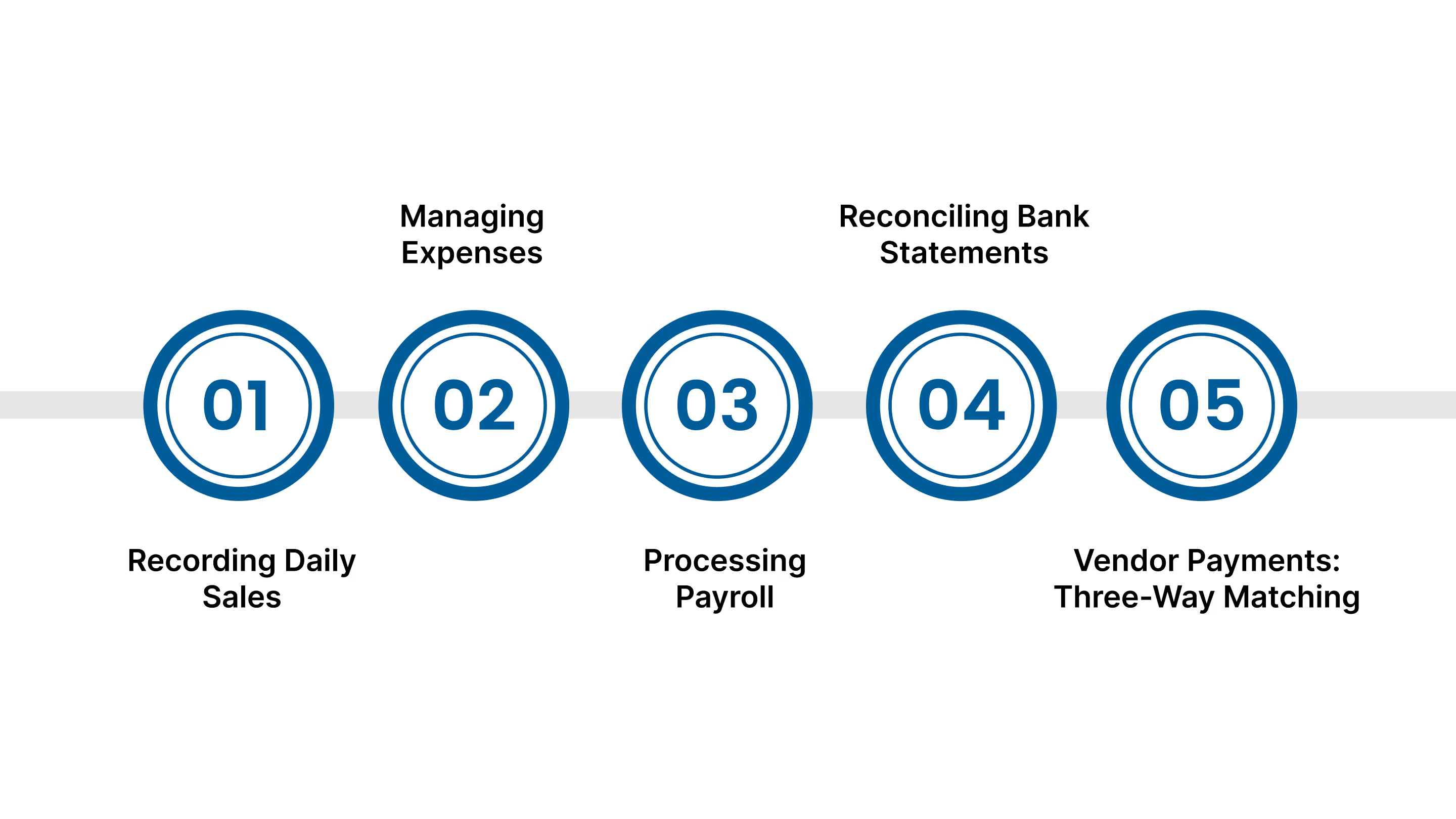
Restaurant accounting and bookkeeping encompass several core processes for maintaining accurate financial records and smooth operations. Here's an in-depth look at these key processes:
Accurate tracking of daily sales is the foundation of restaurant bookkeeping. This process involves capturing all income from various revenue streams like dine-in, takeout, delivery, and catering. Using a Point of Sale (POS) system simplifies this process, allowing for real-time sales data and seamless reporting.
Expense management involves tracking every cost a restaurant incurs, from food and labor to overhead expenses. By keeping these costs in check, restaurants can maintain profitability and avoid overspending. Accurate expense categorization also helps in financial forecasting and budgeting.
Payroll processing in restaurants is complex due to varying shifts, overtime, and tip distribution. Timely and accurate payments, as well as withholding the correct taxes, are crucial. Automated payroll systems can help streamline this process while complying with labor laws.
核对账户有助于确保餐厅的财务记录与银行及信用卡对账单保持一致。此流程对于发现错误或欺诈活动至关重要,也是保持财务记录清晰准确的必要手段。
供应商付款涉及比对采购订单 (PO)、收货报告和发票,以确保餐厅仅为实际订购并收到的商品和服务付款。这种“三单匹配”流程可防止供应商付款中出现错误和差异。
延伸阅读:应付账款工作流程分步指南
记录交易和管理付款单据是餐厅簿记工作的核心。财务报告将原始数据转化为战略情报,揭示出原本隐藏的模式与机遇。
对于计划在印度开展业务的美国餐厅经营者而言,了解关键财务报告对于管理和合规至关重要。以下是对财务报表的深入解析:
损益表 (P&L) 是了解餐厅财务表现最重要的报告之一。它汇总了特定时期内的收入、成本和费用,有助于餐厅所有者评估盈利能力。
通过分析销售额、成本和利润之间的关系,该报告能为改进工作提供洞察,并可用于定价策略、菜单优化和预算编制。
关键组成部分:
示例: 如果您的餐厅总收入为 100,000 美元,销货成本为 40,000 美元,运营费用为 30,000 美元:
60,000 美元 - 30,000 美元 = 30,000 美元
A Balance Sheet offers a snapshot of the restaurant's financial position at a specific point in time. It highlights the restaurant's assets, liabilities, and equity, allowing restaurant owners to assess financial health.
This report is essential for determining whether the restaurant has the necessary resources to meet its short- and long-term obligations and whether it’s in a position to expand or invest in new initiatives.
关键组成部分:
Example:
If your restaurant has $200,000 in assets, $120,000 in liabilities, the equity would be: Equity = $200,000 - $120,000 = $80,000
A Cash Flow Statement tracks the movement of cash in and out of the restaurant. It provides detailed information about how cash is being used in the restaurant’s operations, including revenue generation and financing activities. It’s crucial for understanding liquidity and meeting the financial obligations without running into cash shortages.
关键组成部分:
Example:
If a restaurant generates $50,000 in cash from operations, spends $10,000 on equipment, and repays a loan of $5,000:
Net Cash Flow = Cash from Operating Activities + Cash from Investing Activities + Cash from Financing Activities
$50,000 - $10,000 - $5,000 = $35,000
The Food & Beverage Sales Report provides insights into the performance of specific menu items, where a restaurant can track sales by category or individual item. This helps identify which items are most profitable, which ones are underperforming, and if changes to the menu or pricing are needed.
关键组成部分:
Example: If the total sales of a menu item are $15,000, and the number of units sold is 500:
$15,000 ÷ 500 = $30 per item
库存报告对于管理餐厅的食品、饮料和供应成本至关重要。经营餐厅涉及许多可控费用,而食品成本是其中最重要的一项。“实际与理论差异报告”可以识别实际使用的配料与根据餐厅食谱计算出的应使用量之间的差异。
关键组成部分:
示例:如果餐厅的商品销售成本(COGS)高于预期,该报告有助于查明是哪些配料导致了超支。通过识别这些差异,餐厅经营者可以采取具体措施来控制配料的使用。
这些财务报告为理解经营业绩提供了分析框架,但其有效性取决于底层数据的质量。良好的簿记实践可确保报告中的每一个数字都真实反映业务状况。
另请阅读:餐厅适用的商品及服务税(GST)税率
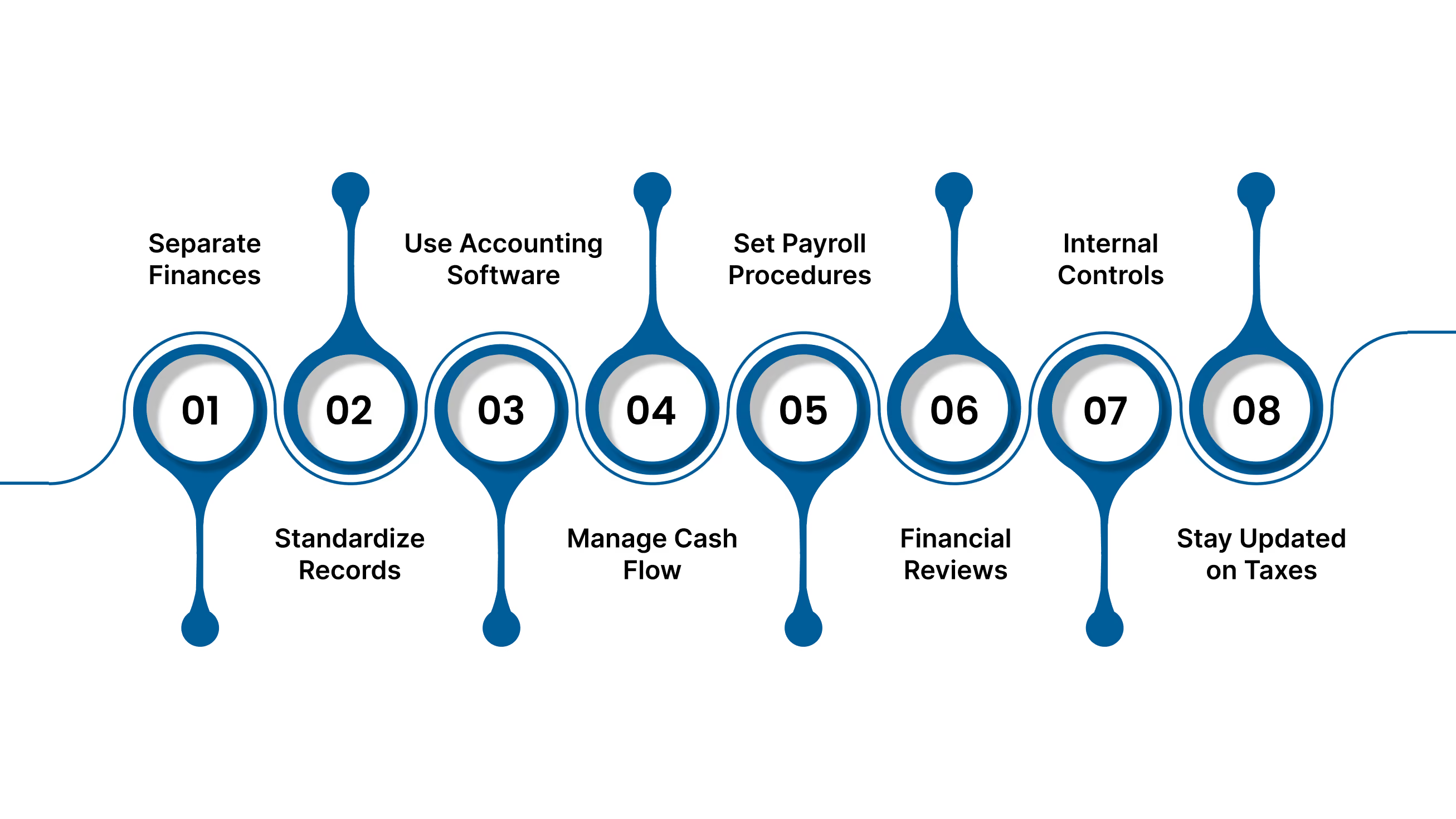
实施簿记实践对于餐厅的财务健康和业务增长至关重要。这些最佳实践有助于经营者跟踪关键绩效指标(KPI)并管理各项支出。
遵循最佳实践可以打下坚实的基础,但所使用的执行工具往往决定了你是陷入繁琐的手工劳动,还是实现精简高效的运营。
使用合适的软件实现餐厅簿记自动化,可以最大限度地减少手动数据录入,提高准确性,并在财务数据转化为报告前提供清晰的洞察。这使餐厅经营者能够专注于最重要的事情——经营和发展业务。以下是选择合适软件时的一些关键考量因素:
虽然软件可以辅助基础簿记工作,但它无法取代像 VJM Global 这样的外包公司所提供的全面服务和战略洞察。他们的专业知识、成本效益、可扩展性、财务控制能力,以及让餐厅经营者专注于核心业务的能力,使其成为管理餐厅财务的宝贵合作伙伴。
VJM Global 为酒店和餐厅等酒店业企业提供支持,提供从风险管理、鉴证到业务设立指导的全方位服务,特别是在从美国向印度扩张方面,助力企业在竞争激烈的酒店市场中取得成功。
我们的团队提供超越标准软件功能的专业会计服务。我们深入了解餐饮行业的特定挑战,例如库存管理、小费处理以及税务法规。
与基础软件解决方案不同,我们提供全方位的金融服务,包括:
我们使用的会计系统可与您的餐厅运营集成,提供实时财务数据。这种集成有助于及时决策,协助餐厅所有者和经理进行预算编制、定价和成本管理。
在本餐厅记账指南中,我们涵盖了从跟踪每日销售额和管理支出,到核对银行对账单和支付供应商款项的各项流程。这些任务对于维护准确的财务记录和确保运营顺畅至关重要。我们还讨论了使用合适的会计软件来自动化任务并帮助您妥善管理财务的重要性。
然而,虽然软件解决方案可以支持基础的记账任务,但与 VJM Global 这样经验丰富的公司合作,能提供更广泛、更具战略性的方案。
VJM Global 专注于印度企业设立、外籍人士税务、会计外包、国际税务、审计和交易咨询,同时确保符合当地及国际法规。立即咨询我们的顾问,让您的业务走上长期成功的道路。
30/30/30/10 法则是管理餐厅支出的指导方针:30% 用于食品成本,30% 用于人工成本,30% 用于运营费用,10% 为利润。该法则有助于确保财务健康和运营的可持续性。
“5英尺法则”是指餐厅所有员工(尤其是服务员)在距离顾客5英尺范围内提供服务,以创造更个性化、更贴心的用餐体验,从而提高顾客满意度。
由于销售额波动、库存管理以及税务合规等因素,餐厅记账可能会很复杂。然而,只要建立适当的系统并使用专业工具,这些工作是可以轻松应对的。
虽然可以在一周内理解基本的记账概念,但要精通则需要时间。您需要掌握收入跟踪、费用分类和财务报告编制等基本原则,才能获得更深入的知识。
记账的三大主要活动是:记录交易、将财务数据分类(如支出和收入),以及将数据汇总为损益表等财务报告。