如何从美国开展印度进出口业务

发布日期:
September 13, 2025

目录

联系我们
感谢您!我们已收到您的提交信息!
糟糕!提交表单时出错了。

立足本土,
服务全球

我们以专业和清晰的视角,为您提供跨境业务支持。
预约咨询

To start an import export business in India, knowing how to setup import export business in India properly helps you get IEC, a current account, GST registration, and DGFT compliance. 

As India’s exports crossed USD 825 billion in FY 2024–25, digital transformation is reshaping global trade. Tools like eBRC tracking, automated customs clearance, and cloud-based logistics platforms are helping businesses reduce delays and errors.

This guide explains every step on how to setup import export business in India, from legal documentation to selecting the right export business service. 

You’ll also learn how to integrate DGFT portal services, manage shipping invoices digitally, and secure customs compliance using real-time government filing systems.

Key Takeaways

  • An import-export business facilitates international trade by allowing companies to sell domestic goods abroad or source foreign products for local markets, supporting global access, revenue diversification, and foreign exchange growth.

  • Setting up in India begins with registering your business entity and ensuring it's legally structured for international transactions.

  • You must obtain an Importer Exporter Code (IEC) from the DGFT, which acts as your trade license for cross-border operations.

  • A current account with international transfer capability is required to handle overseas payments and currency exchange.

  • Smooth operations depend on customs compliance, GST registration, logistics coordination, and understanding trade regulations for each target market..

What Is an Import-Export Business & Why It Matters

An import-export business involves buying and selling goods or services across international borders. Importers bring in foreign products, while exporters sell domestic goods overseas. 

It enables access to unavailable goods and allows local businesses to expand globally. Whether it's exporting textiles from India to Europe or importing electronics from China, the model supports businesses of all sizes.

Understanding the difference between import and export operations is key to setting up a successful international trade business. The table below outlines how each model functions and what both have in common:

Aspect

Import Business

Export Business

Core Function

Brings goods/services into the country

Sends goods/services to foreign markets

Examples

Raw materials, tech components, finished goods

Textiles, software services, manufactured products

Key Requirements

Customs clearance, duties, local safety/quality compliance

Destination regulations, trade documents, export packaging

Benefits

Access to goods not produced locally

Wider market reach, foreign exchange earnings, FTAs

Challenges

Import duties, currency risks, regulatory hurdles

Export documentation, logistics complexity, foreign standards

Next, let’s look at why the import-export business matters on a larger scale.

Why Is Import-Export Business Important?

Why Is Import-Export Business Important?

International trade remains a key driver of economic strength and business expansion. For countries like India, engaging in import-export activities not only strengthens the economy but also opens doors for businesses of all sizes.

Here’s how the import-export business plays a crucial role across multiple levels:

  • Drives Economic Growth: Increases national income through foreign currency, generates jobs in manufacturing, logistics, and trade, and contributes to GDP and tax revenues.
  • Expands Global Market Access: Helps businesses scale beyond domestic demand, build international brand visibility, and reduce dependency on local market cycles.
  • Improves Product Availability and Quality: Gives access to goods not produced locally, offers more consumer choices and affordability, and encourages quality through global competition.
  • Strengthens Trade Relations: Applies FTAs for lower tariffs, builds diplomatic and economic cooperation, and opens entry to high-value international markets.
  • Supports MSMEs and Startups: Government schemes and digital platforms ease market entry, export incentives improve margins, and global access enables small players to compete.
  • Increases National Competitiveness: Promotes infrastructure, regulatory, and technology upgrades, drives innovation and compliance, and makes industries more export-ready.

Unsure how to handle India’s import-export regulations? VJM Global helps US companies like yours start and grow their business in India with ease. Get in touch today to simplify your global trade journey!

Now that we’ve seen why the import-export business plays a vital role in global trade, let’s walk through the step-by-step process of setting one up in India.
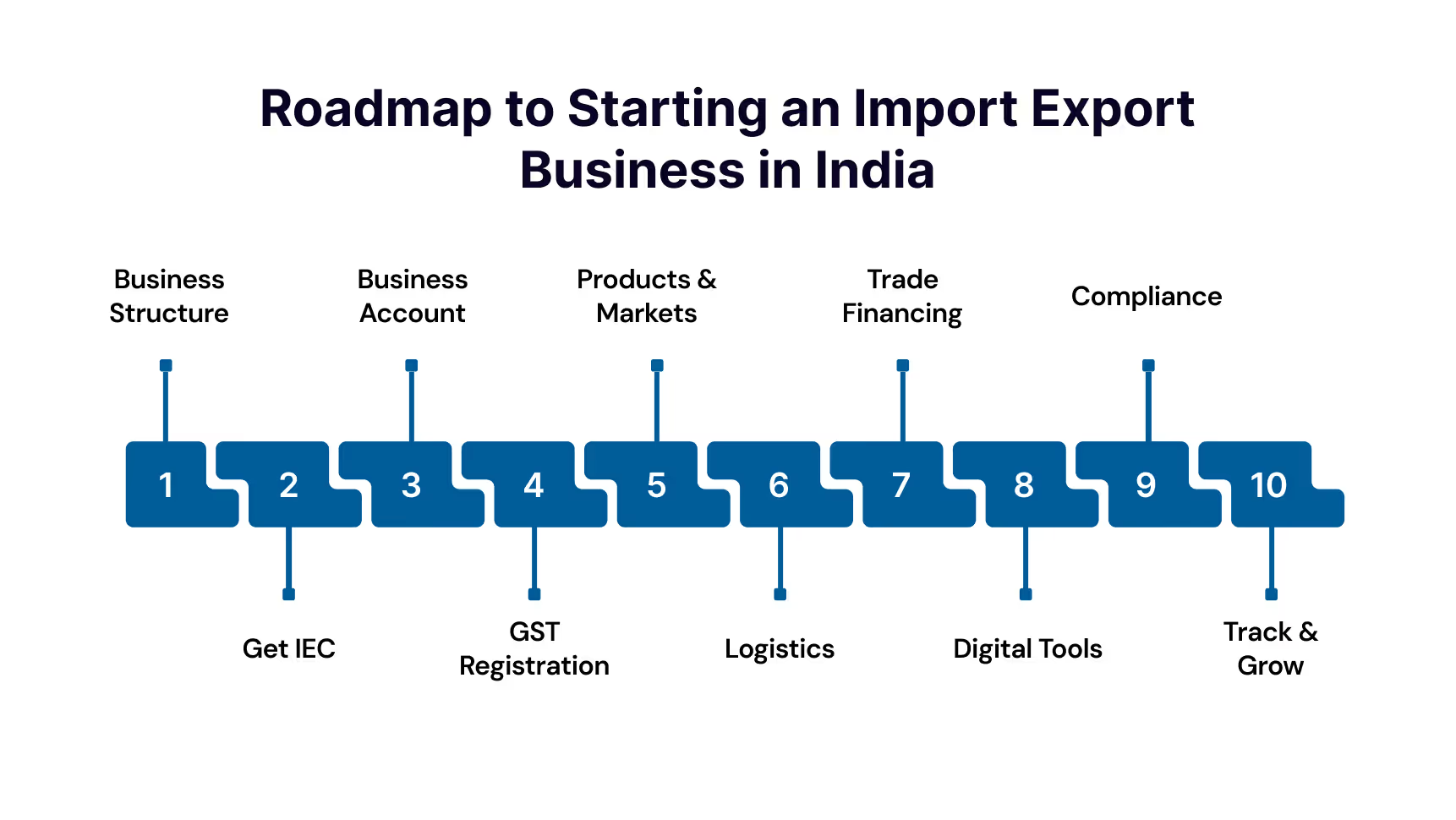
How to Setup Import Export Business in India: Step-by-Step Setup Guide

How to Setup Import Export Business in India: Step-by-Step Setup Guide

An import-export business buys goods from one country and sells them in another, enabling global trade. India’s manufacturing strength, cost efficiency, and digital growth make it a strategic trade partner. With supportive policies and strong global ties, it offers solid opportunities for sourcing and selling.

Step 1: Choose and Register Your Business Structure

Why it matters:
Your legal structure determines tax obligations, liability, and eligibility for government schemes.

操作方法:

所需文件:

  • PAN 卡、Aadhaar 卡、地址证明
  • 护照尺寸照片
  • 数字签名证书 (DSC)、DIN(董事用)
  • 组织章程大纲 (MOA)/合伙协议

延伸阅读: 在印度选择合适的商业结构:创业者综合指南

第二步:获取进出口代码 (IEC)

重要性:
任何跨境贸易或国际支付均强制要求提供 IEC。

操作方法:

  • 在 DGFT 门户网站注册并在线填写 IEC 申请表。
  • 填写 IEC 表格并上传商业文件
  • 支付 500 卢比的一次性费用

所需文件:

  • 实体 PAN 卡
  • 往来账户作废支票
  • 地址证明
  • 公司注册证书

延伸阅读: 关于进出口代码 | IEC CODE 的一切

第三步:注册商品及服务税 (GST)

重要性:
GST 是税务合规及申请出口相关退税的必要条件。

操作方法:

  • 通过 GST 门户网站申请
  • 选择正确的业务类别(出口商/供应商)

所需文件:

  • PAN 卡、营业地址证明
  • 业主/董事的身份/地址证明
  • 作废支票
  • 数字签名

第四步:开设商业往来账户

重要性:
这能将个人财务与商业财务分开,且是进行国际交易所必需的。

操作方法:

  • 选择对贸易友好的银行(支持外汇、贸易融资)
  • 提交 KYC、注册证明和地址文件

提示: 寻找提供信用证 (LC)、买方信贷、打包放款和外汇套期保值工具的银行。

第五步:确定您的产品和目标市场

重要性:
精准的产品市场匹配度是确保盈利能力和符合目的地法规的关键。

操作方法:

  • 利用印度贸易门户网站 (India Trade Portal)、ITC 贸易地图 (ITC Trade Map) 或印度商业情报与统计总局 (DGCI&S) 研究市场需求、关税和质量标准
  • 评估盈利能力、合规要求和保质期

所需文件(如受监管):

  • BIS、FSSAI 或其他认证
  • 测试报告、质量标志
  • 特定国家的合规文件

延伸阅读:代发货业务:所得税影响

第六步:建立物流和供应链

重要性:
顺畅的物流是按时交付并维持买家信任的核心。

操作方法:

  • 与可靠的货运代理和报关行 (CHA) 合作
  • 选择航空、海运或多式联运
  • 与买家确定国际贸易术语 (FOB, CIF 等)

所需文件:

  • 提单 / 空运单
  • 商业发票
  • 装箱单
  • 原产地证书
  • 预付款证明 / 信用证

包装提示: 遵循特定国家的标签和包装指南,以避免货物被拒收。

Set up your Indian entity faster with VJM Global’s end-to-end business registration services.

第七步:确保法律和海关合规

重要性:
违规可能导致罚款、延误,甚至业务暂停。

操作指南:

  • 提交正确的出口报关单或进口报关单
  • 申报 HS 编码、发票金额及其他海关信息
  • 缴纳适用的税费,如 IGST(综合商品及服务税)、BCD(基本关税)
  • 通过 GST 门户网站申请出口 GST 退税

对接部门:

  • DGFT – 政策与进出口代码 (IEC)
  • CBIC – 海关与税务
  • 监管机构 – FSSAI、CDSCO、BIS(视产品而定)

第八步:确保贸易融资并管理外汇

重要性:
漫长的出口周期会给营运资金带来压力。外汇波动也会影响利润空间。

操作方法:

  • 申请:
    • 打包放款、装船前融资、装船后融资
    • 买方信贷、信用证或发票保理
  • 利用远期合约对冲货币风险

所需文件:

  • 进出口代码(IEC)和商品及服务税(GST)证书
  • 出口订单/发票
  • 营业额证明
  • KYC(了解您的客户)文件

提示:信用证有助于提升您的信用评分及银行贷款资格。

第 9 步:利用贸易科技提升运营效率

重要性:
人工流程会增加错误率并限制业务扩展能力。

实施建议:

Function

Tools

ERP & Accounting

Tally, Zoho Books, Busy ERP

GST Filing & Tax

GST Portal, ERP integrations

Buyer CRM

Zoho CRM, HubSpot

Customs E-filing

ICEGATE Portal

Inventory Tracking

Busy, Marg ERP

E-commerce Channels

Shopify, Amazon Global

Data & Analytics

Power BI, Google Analytics

Cybersecurity

SSL, Razorpay, secure firewalls

第 10 步:遵守全球标准与贸易协定

重要性:
因合规问题导致产品在外国港口被拒收,可能会造成巨大损失。

操作方法:

  • 使用世贸组织(WTO)关税数据库和印度对外贸易总局(DGFT)公告
  • 查询自由贸易协定(FTA),如《印阿全面经济伙伴关系协定》(CEPA)或《印度-东盟自由贸易协定》
  • 获取必要认证:
    • 原产地证书、AEO(经认证的经营者)证书、安全认证

合作机构:
与印度出口组织联合会(FIEO)、印度农产品出口发展局(APEDA)、印度工程出口促进委员会(EEPC)等出口促进机构合作,获取文件支持及市场准入。

第 11 步:监控关键绩效指标(KPI)并进行战略性扩张

重要性:
可持续增长需要持续的绩效跟踪与灵活应变。

关键绩效指标(KPI):

  • 货物周转时间
  • 订单履行率
  • 重复购买率
  • 单笔货运利润率
  • 客户满意度评分

增长策略:

Growth Area

Strategy

Resources

Market Expansion

Use EPCs and ITC Map for trend analysis

EPC, ITC Trade Map, FIEO

Product Diversification

Align with capacity & compliance

DGFT, MEIS

Financial Growth

Apply for RoDTEP, EPCG schemes

DGFT, Exim Bank

第 12 步:主动规避商业风险

重要性:
全球贸易易受监管、供应链及财务风险的影响。

风险管理建议:

  • 购买海运、货运及贸易信用保险
  • 密切关注 DGFT、中央间接税与关税委员会(CBIC)及商务部门户网站的最新动态
  • 为供应商、物流和买方建立备份方案
  • 进行第三方产品检验
  • 针对交易和数据实施网络安全协议

Even with all the right steps in place, your import-export business is still influenced by several external forces. Understanding these variables is crucial for building resilience and staying competitive in global markets.

Avoid costly legal mistakes, let our chartered accountants guide your India expansion.

Also Read: Benefits of Registering a Business in India

To effectively measure and scale your export business, partnering with experts like VJM Global can provide the essential support you need for smooth operations in India.

How VJM Global Supports Your Import Export Business Setup in India?

Starting an import-export business in India requires expert guidance to manage legal, financial, and operational complexities. VJM Global offers specialized services that directly support these needs for U.S. companies expanding into India.

Key ways VJM Global helps include:

  • Company Registration: Simplifies setting up your business with full compliance to Indian laws like FEMA, RBI, GST, and MCA.

  • Accounting Outsourcing: Handles bookkeeping, financial reporting, tax prep, and reconciliations, reducing your operational costs and eliminating the need for in-house teams.

  • Audit Support for CPA Firms: Provides offshore audit assistance aligned with U.S. accounting standards, helping firms manage peak workloads cost-effectively and securely.

By partnering with VJM Global, you get reliable offshore support that optimizes your import-export business setup, make sure regulatory compliance, and optimizes financial management, allowing you to focus on growth and expansion in the Indian market.

If you’re a U.S. company expanding to India, VJM Global helps you optimize setup, make sure compliance, and cut costs! Get in touch today to simplify your India entry!

常见问题

1. What licenses are required to start an import-export business in India?

A: You need to obtain an Importer Exporter Code (IEC) from the DGFT, which is mandatory for cross-border trade. Depending on the product, additional licenses like FSSAI, APEDA, or BIS may also be required.

2. How do I choose the right product for export or import?

A: Analyze international demand trends, competition, and profitability using tools like ITC Trade Map or India Trade Portal. Consider ease of sourcing, perishability, and compliance requirements when finalizing the product.

3. What are the main compliance requirements for exporters in India?

A: Exporters must comply with GST regulations, file shipping bills, maintain e-invoicing where applicable, and adhere to destination country requirements. Timely documentation and audit readiness are key to avoiding penalties and delays.

4. How can I find international buyers for my products?

A: Use B2B platforms like IndiaMART, Alibaba, and Export Genius, or participate in global trade fairs and EPC-led buyer-seller meets. Building credibility through certifications and consistent product quality is crucial for long-term buyer relationships.

5. What are some KPIs to track export business performance?

A: Key metrics include shipment cycle time, order fulfillment rate, profit margin per product, and repeat order rate. Monitoring these KPIs make sures you identify bottlenecks and make informed scaling decisions.


VJM Global
探索 VJM Global 的专家见解、实用建议与最新动态
了解作者详情

最新博客

