HVAC companies deal with constant field activity, service calls, installation jobs, equipment purchases, and busy seasonal cycles. When the financial side lags behind this pace, even organized teams start losing visibility. That is why structured HVAC accounting becomes critical, especially for US firms shifting work from the US to India to manage costs and improve coverage.
Many HVAC owners feel the strain when supplier bills, technician hours, and daily ticket data pile up faster than the books can update. Without accurate tracking, margins blur, and cash flow becomes unpredictable. Reliable HVAC accounting support gives the clarity needed for steady growth.
In this guide, you will learn how HVAC financial tasks work, where the common gaps appear, and how offshore accounting from the US to India fits into your operational workflow.
HVAC accounting focuses on tracking service calls, installs, maintenance plans, and technician output through job-level financial data. It connects field activity with books so owners see the true cost of each task, from refrigerant usage to equipment depreciation. This gives HVAC businesses a workable financial structure tied directly to how crews operate each day.
Core Components of HVAC Accounting
These components connect every HVAC job, asset, contract, and field input to the exact financial impact they create inside the books.
详细的工单成本分配: 将人工分钟数、每辆车的间接费用、诊断费和配件销售额分配到每个工单中。
维护协议收入确认时间: 记录预付合同,拆分已实现与递延收入,并将未来的服务成本与计划期相匹配。
安装和更换工作流程: 将设备发票、许可证费用、清运成本、吊车费用和保修条款链接到每个安装记录中。
技术人员货车库存控制: 跟踪货车级别的库存使用、退货、损耗和现场领用的制冷剂,并进行成本归因。
资本资产调度: 根据美国国税局(IRS)的折旧规则,捕捉已安装暖通空调机组、工具和大型设备的折旧。
返工和保修成本跟踪: 分配与返工和保修维修相关的人工和零件成本,以进行准确的利润率分析。
Why HVAC Accounting Matters
Accurate HVAC accounting reveals where each job, season, and technician contributes or drains profit across the operation.
准确的利润率识别: 显示安装、调试、紧急呼叫和更换工作的盈利能力,而不会混淆不相关的成本。
清晰的季节性现金波动视图: 展示冬季供暖呼叫、夏季制冷高峰和淡季维护如何影响现金可用性。
技术人员级别的利润贡献: 将平均工单金额、返工频率和附加销售率与每位技术人员的财务影响联系起来。
更严格的现场支出控制: 提高对燃油使用、加班激增、大批量零件消耗和设备租赁的可见性。
税务和保修项目的正确处理: 确保准确处理设备销售税、资本化机组以及与保修相关的人工和材料。
After defining how HVAC financial data moves through each job, firms must choose the accounting method that supports those patterns accurately.
HVAC firms choose a method based on how they record installation revenue, handle prepaid maintenance agreements, bill multi-day jobs, and track equipment-related costs. The method must match how the business issues invoices, collects deposits, recognizes unearned income, and attributes labor and material costs to each job.
Criteria
Accrual Method
Cash Method
Best For
Firms with installs, multi-stage billing, annual maintenance plans, and equipment-heavy workflows
Companies focused on same-day service calls with immediate customer payment
Revenue Recognition
Records income when install stages are completed, work orders are closed, or maintenance plan visits are delivered
Records income only when payments clear, regardless of when installs or service visits occur
Install-Specific Application
Handles deposits, progress invoices, change orders, equipment deliveries, and retained amounts across long installs
Suit small replacement jobs where payment is collected at completion
Maintenance Plan Handling
Splits prepaid contract income into earned and unearned amounts and tracks service obligations
Cannot record deferred revenue, leading to inaccurate reporting for annual contracts
Equipment and Parts Treatment
Matches equipment invoices, refrigerant logs, van stock withdrawals, and capitalized units to each job
Records part purchases only when paid, causing timing mismatches between usage and reporting
Warranty and Callback Tracking
Captures labor and materials tied to warranty jobs for accurate margin reporting
Records warranty activity only when cash moves, making warranty-related costs harder to isolate
Labor and Overtime Allocation
Assigns technician hours, overtime premiums, and travel time to specific job tickets
Records payroll when paid without job-level linkage
Seasonal Impact Visibility
Shows revenue tied to peak heating/cooling cycles even without immediate payment
Income is recorded only when cash arrives, masking seasonal workload patterns
Simple to maintain, but sacrifices job-level accuracy
Once the accounting method is selected, the next priority is building the offshore structure that can process HVAC job data consistently from the US to India.
5 Steps to Setting Up HVAC Accounting From the US to India
HVAC accounting depends on precise handling of technician labor, installation stages, van stock movement, equipment logs, and annual maintenance obligations.
When US HVAC companies shift accounting work from the US to India, offshore teams must work from job-level records tied directly to field activity so installs, service calls, and maintenance plans reflect accurate financial movement.
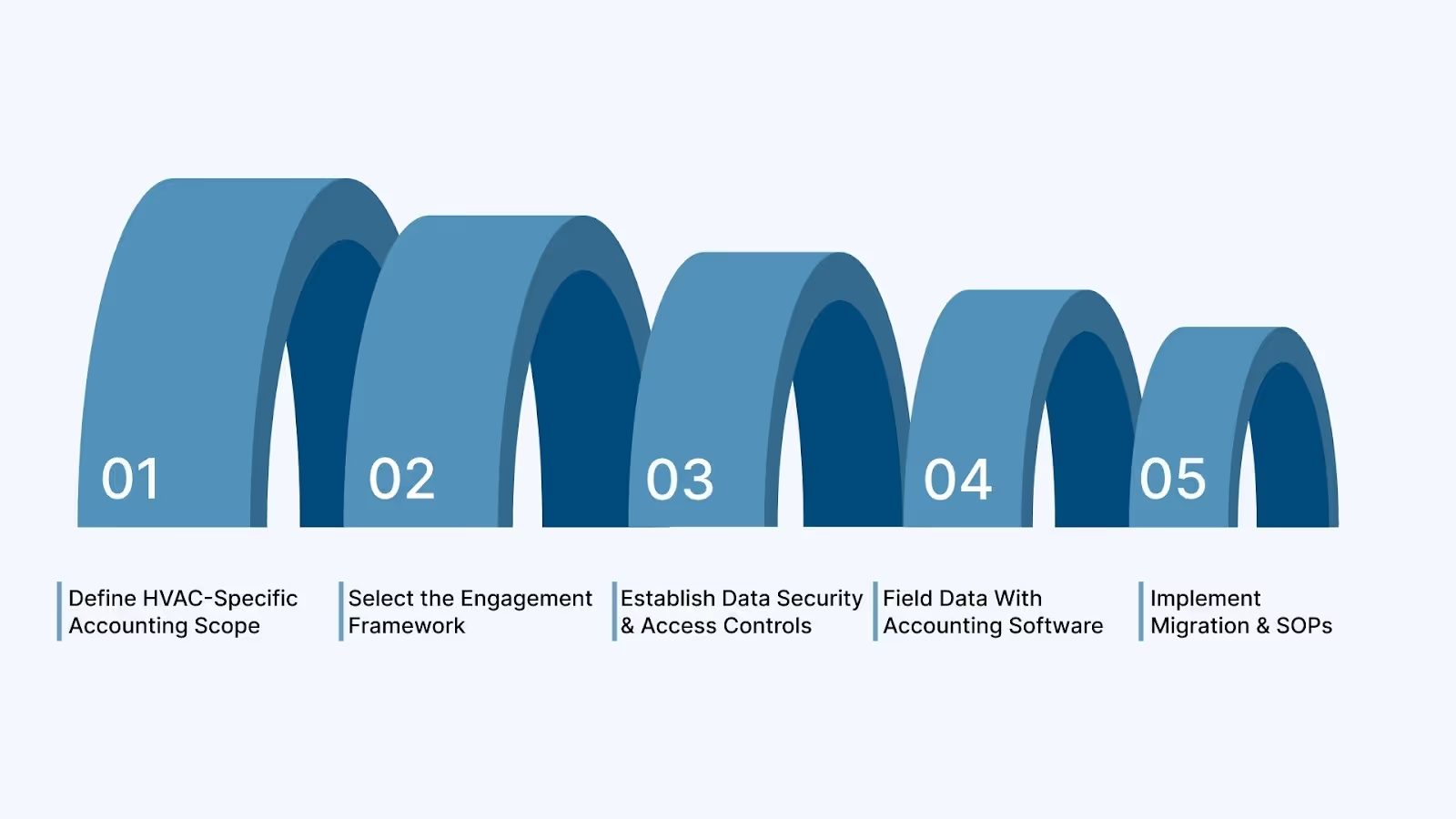
Step 1: Define HVAC-Specific Accounting Scope
HVAC workflows involve detailed financial handling of service visits, installation milestones, maintenance agreements, and commercial contract work. These must be documented before shifting tasks offshore to keep job entries accurate.
Tips
Job Costing Structure: Job ID, ticket number, technician ID, labor minutes, labor rate, overtime flag, parts SKU, unit cost, markup, and map to Install Revenue or Service Revenue accounts.
Van Inventory Controls: Van stock SKU, opening balance, parts issued per ticket, returns, cost of goods sold entry, and reconciliation against replenishment POs.
WIP Milestone Tracking: Use cost-to-cost percent-complete: record milestone dates (equipment arrival, rough-in, commissioning), invoice retention, change orders, and update WIP and Unearned Revenue accounts.
Step 2: Select the Engagement Framework
The engagement model determines how offshore teams handle recurring HVAC accounting tasks such as multi-stage installation billing, parts-heavy AP processing, van-level job costing, and maintenance plan income allocation. The framework must account for the volume of installs, contract complexity, and the number of technicians generating daily job data.
Tips
Dedicated Offshore Team Setup: Assign AP, AR, job costing, reconciliation, maintenance plan revenue updates, install WIP entries, supplier invoice coding, and equipment capitalization to a fixed offshore group. VJM Global supports this structure across defined task groups.
Defined Task Timelines: Set timelines for: entering supplier invoices within the same day, coding equipment POs before job completion, posting install job costing within 24 hours of close-out, updating WIP schedules after milestone approval, recording warranty labor against designated accounts, and locking prior periods before month-end review.
Step 3: Establish Data Security and Access Controls
Offshore HVAC accounting requires controlled access pathways so job data, supplier invoices, equipment records, and customer information move safely from the US to India. Each user must see only the financial modules tied to their assigned HVAC tasks.
Tips
Role-Based Permissions: Set module-level access in QuickBooks, FreshBooks, or SAP for AP coding, AR posting, job costing, bank feeds, inventory adjustments, and WIP entries. Block access to payroll tax settings, chart-of-account edits, and administrator panels.
Controlled Access Points: Require offshore accountants to work inside monitored remote desktop sessions with restricted clipboard access, disabled local storage, IP-based login controls, and session logs that record posting activity, approval timestamps, and file access.
NDA Coverage: Use NDAs covering technician rosters, customer addresses, equipment purchase records, contract pricing, and commercial installation documentation. Agreements must apply to both jurisdictions and include confidentiality language for job tickets, warranty files, and supplier account details.
Step 4: Integrate Field Data With Accounting Software
HVAC accounting accuracy depends on how job-level data moves from the US to India. Labor entries, equipment charges, material pulls, install milestones, and maintenance plan activity must transfer into QuickBooks, FreshBooks, or SAP without altering job structure or income classification.
Tips
Income Mapping Review: Map install income, service income, diagnostic fees, accessory sales, maintenance plan revenue, crane charges, and permit fees to the correct general ledger accounts in QuickBooks, FreshBooks, or SAP.
Posting Cadence: Use a fixed schedule for posting daily service invoices, commercial install progress invoices, equipment POs, van replenishment POs, tune-up entries, and job cost adjustments so reconciliations match actual field activity.
Error Log Monitoring: Assign the offshore accountant to review mismatched job IDs, duplicate entries, missing SKU codes, incorrect cost assignments, and unposted install tickets during each cycle. VJM Global handles this review as part of routine processing so ledger entries match field records.
Step 5: Implement Migration and SOPs
Transitioning HVAC accounting from the US to India requires clear SOPs that reflect how the business handles installation close-out, warranty labor, equipment capitalization, maintenance plan recognition, and month-end routines. These SOPs give the offshore team the exact rules your technicians and office staff already follow.
将暖通空调业务从美国扩展到印度或将会计业务转移到离岸,需要精确度、合规性和一致的财务流程。 VJM Global 通过管理核心会计职能,同时保持与美国标准和印度法规的一致性,为暖通空调公司提供支持。以下是我们如何帮助暖通空调公司在两个地区顺畅运营:
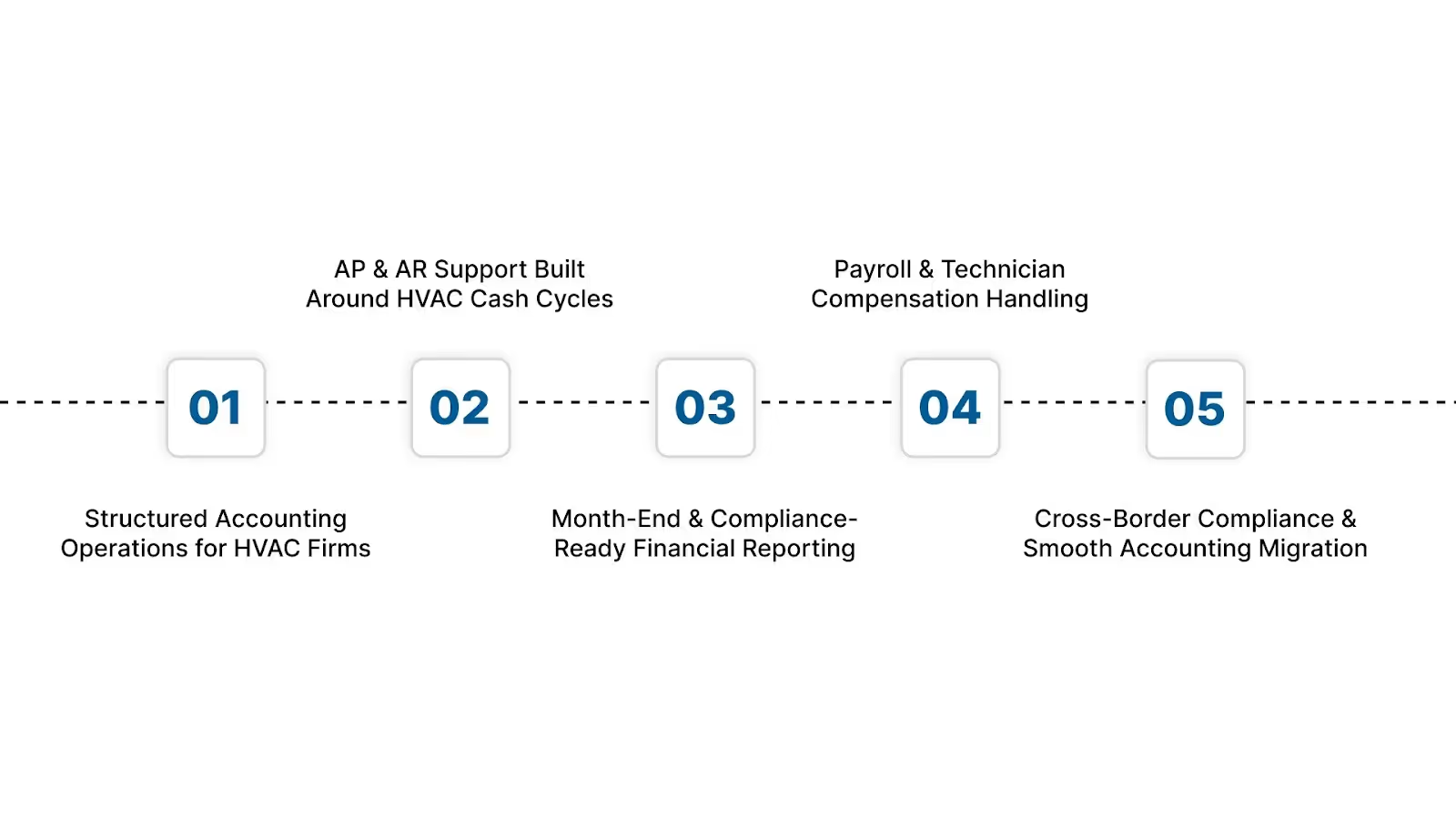
暖通空调公司的结构化会计运营
暖通空调公司需要准确处理供应商发票、设备采购、技术人员薪酬和服务收入。VJM Global 管理 QuickBooks、FreshBooks 和 SAP 中的会计流程,确保每一笔财务条目都符合您的会计科目表和暖通空调计费结构。
围绕暖通空调现金周期构建的应付账款(AP)和应收账款(AR)支持
We handle vendor payments, invoice posting, customer receipts, and aging reports for HVAC firms. Our team keeps track of equipment suppliers, service revenue, and customer balances so your financial records remain consistent across busy service and install seasons.
Month-End and Compliance-Ready Financial Reporting
HVAC businesses rely on clear profit and cash visibility. VJM Global prepares monthly financial statements, reconciliations, and management reports that reflect service income, equipment expenses, and overhead trends based on your US operating model.
Payroll and Technician Compensation Handling
HVAC payroll involves multiple roles, installers, service technicians, helpers, office teams, and seasonal staff. VJM Global prepares payroll inputs based on the hours and pay structures you provide, and we post payroll entries accurately within your books.
Cross-Border Compliance and Smooth Accounting Migration
Whether you are expanding operations or shifting accounting from the US to India, VJM Global helps with software migration, data organization, and compliance-ready documentation. We maintain Indian regulatory adherence while keeping your books aligned with US HVAC accounting expectations.
With VJM Global as your accounting partner, your HVAC business can confidently shift financial operations from the US to India, knowing that compliance, accuracy, and process management are consistently maintained.
From bookkeeping to audit prep, we handle it all. Discover how outsourcing can work for you.
结语
Accurate HVAC accounting supports steady operations by keeping service work, installations, supplier invoices, and payroll organized. When your US HVAC business maintains clear financial records, it strengthens cash flow, improves visibility, and creates a strong base for long-term growth.
VJM Global assists US HVAC companies shifting accounting functions from the US to India by managing bookkeeping, AP and AR cycles, reconciliations, payroll inputs, and financial reporting. Our team helps maintain compliance and consistency across all financial tasks so your internal teams can stay focused on field operations and customer service.
If your HVAC company is preparing to move accounting from the US to India, connect with VJM Global for structured, accurate support that keeps your financial processes running without disruption.
常见问题
1. Do HVAC accounting systems track revenue differently for installs and service calls?
Yes. HVAC accounting separates install income, service revenue, diagnostic fees, and maintenance plan amounts because each category follows different recognition rules for accurate reporting.
2. Can HVAC business accounting solutions handle prepaid maintenance plans?
Most HVAC business accounting solutions can record prepaid plan amounts as unearned revenue and release them when tune-ups or contracted visits are completed.
3. How does accounting for HVAC home service professional teams manage technician payroll inputs?
Accounting for HVAC home service professional teams uses technician-provided labor intervals, overtime flags, and job IDs to post payroll entries tied to specific service tasks.
4. Do HVAC accounting solutions help track equipment purchases separately from parts?
Yes. Many HVAC accounting solutions create different accounts for equipment, accessories, and consumable parts so job costing and capital asset schedules remain accurate.
5. How is accounting for HVAC maintenance different from standard bookkeeping?


.avif)