Church accounting isn’t just about balancing books, but also maintaining trust, ensuring transparency, and stewarding the resources entrusted to you. For many U.S. churches, managing finances can feel like walking a tightrope between compliance, donor expectations, and mission-driven goals.
The pressure to keep every transaction accurate and above board, all while serving a growing congregation, can quickly become overwhelming.
With 86% of churches expected to adopt digital accounting or management software by the end of 2025, it's clear that technology is a necessity. However, even with the right tools, how can churches ensure they're meeting regulations while also optimizing their financial processes for growth and sustainability?
This blog will explore best practices for church accounting, including donation tracking, budgeting, and IRS compliance. If you're looking to simplify your church's finances while staying true to your mission, you’re in the right place.
Church accounting involves organizing, recording, and planning a church's finances. Like other nonprofits, churches are required to reinvest all funds into the organization’s mission and operations. However, the primary difference lies in the purpose of the funds. Unlike for-profit businesses that aim to maximize profits, churches are legally prohibited from turning a profit. The core of church accounting is accountability. Since most churches rely heavily on their congregations' generosity, it’s vital to demonstrate that contributions are handled responsibly.
Also Read: Understanding Monthly Bookkeeping Costs and Services
Now that we know what church accounting is, let’s compare it to business accounting to highlight the unique aspects that churches need to manage.
The main difference between church accounting and business accounting lies in the focus on accountability for churches, whereas businesses focus on profit generation. Here’s a detailed breakdown:
Whether you're managing a small community church or a large congregation, adopting the right financial practices will keep you compliant and build long-term sustainability for your mission. With a clear understanding of church accounting, let’s explore the top benefits it brings, from better resource management to increased trust within your congregation.
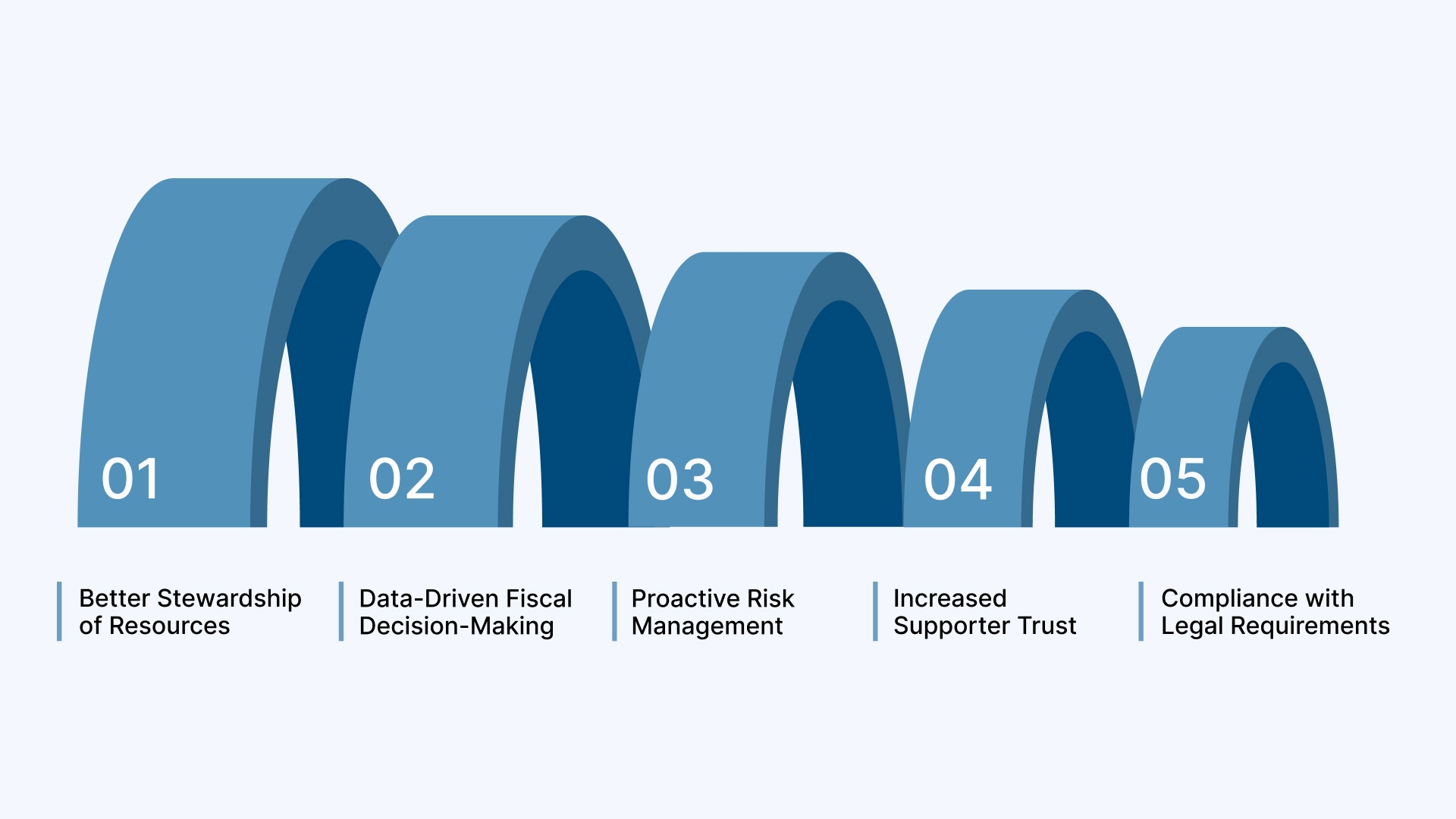
Implementing responsible accounting practices in your church can yield several key advantages, including improved financial stability and increased trust among your congregation. Here's how:
By effectively tracking and allocating funds, you ensure that your church’s resources are put to their best use. Proper accounting enables the efficient allocation of funds for outreach programs, community initiatives, and essential church operations.
When your church keeps accurate financial records year after year, you can make informed decisions. Historical data helps set realistic budgets, plan for future growth, and provide clarity in evaluating your church’s financial health.
Solid accounting practices help identify and mitigate financial risks such as fraud or mismanagement, which could harm the church's reputation. By maintaining transparent records, you safeguard the trust your congregation places in your leadership.
Transparency in church finances can directly impact giving. According to one report, 57% of churches that saw increased giving did so by being transparent about their financial practices. Trust built on financial clarity encourages more donations and support.
Responsible church accounting also ensures that your organization complies with legal requirements for religious and nonprofit organizations. This includes adhering to IRS regulations governing tax-exempt status under Section 501(c)(3) of the Internal Revenue Code.
By keeping a close eye on financial activities, a church's leadership can stay ahead of potential economic issues, allowing for better planning and resource allocation.
For churches seeking expert support, VJM Global offers comprehensive accounting and bookkeeping outsourcing services. Their team of skilled professionals is experienced in nonprofit accounting and understands the unique challenges churches face, including IRS compliance and fund tracking.
Also Read: Key Steps for Conducting Organizational Assessments: Why US Firms Outsource to India
To manage church finances effectively, you’ll need to know the key documents that track income, expenses, and assets. Here’s a breakdown of the most important ones.
To manage your church’s finances effectively, it's crucial to understand the key accounting documents that help track income, expenses, and assets. Here’s a breakdown of the most important ones:
The chart of accounts is the backbone of your church’s financial record-keeping. It organizes your church’s income and expenses into categories, making it easier to track and report. The main categories typically include:
While many churches use a standard chart of accounts based on the Unified Chart of Accounts (UCOA), others opt for customized templates personalized to their specific needs.
Your church’s operating budget is a financial roadmap for the year. It outlines expected income and expenses for all church activities. To create an adequate budget, consider the following:
An operating budget is a dynamic document, so check in with it monthly to stay on track with spending and fundraising.
These documents provide a snapshot of your church’s financial health. The key financial statements every church needs are:
These financial statements help with internal management and are vital for transparency when reporting to congregation members, donors, and regulatory bodies.
While most churches are tax-exempt, they still have specific tax filing responsibilities. Here are some key forms your church must keep in mind:
Staying on top of these filings helps your church avoid unnecessary penalties or compliance issues.
By keeping track of these key church accounting documents, you’ll ensure that your church’s finances remain in good standing and help with planning for future growth. Now that you know the key documents, let’s move on to the best practices that ensure your church’s accounting system remains efficient and compliant.
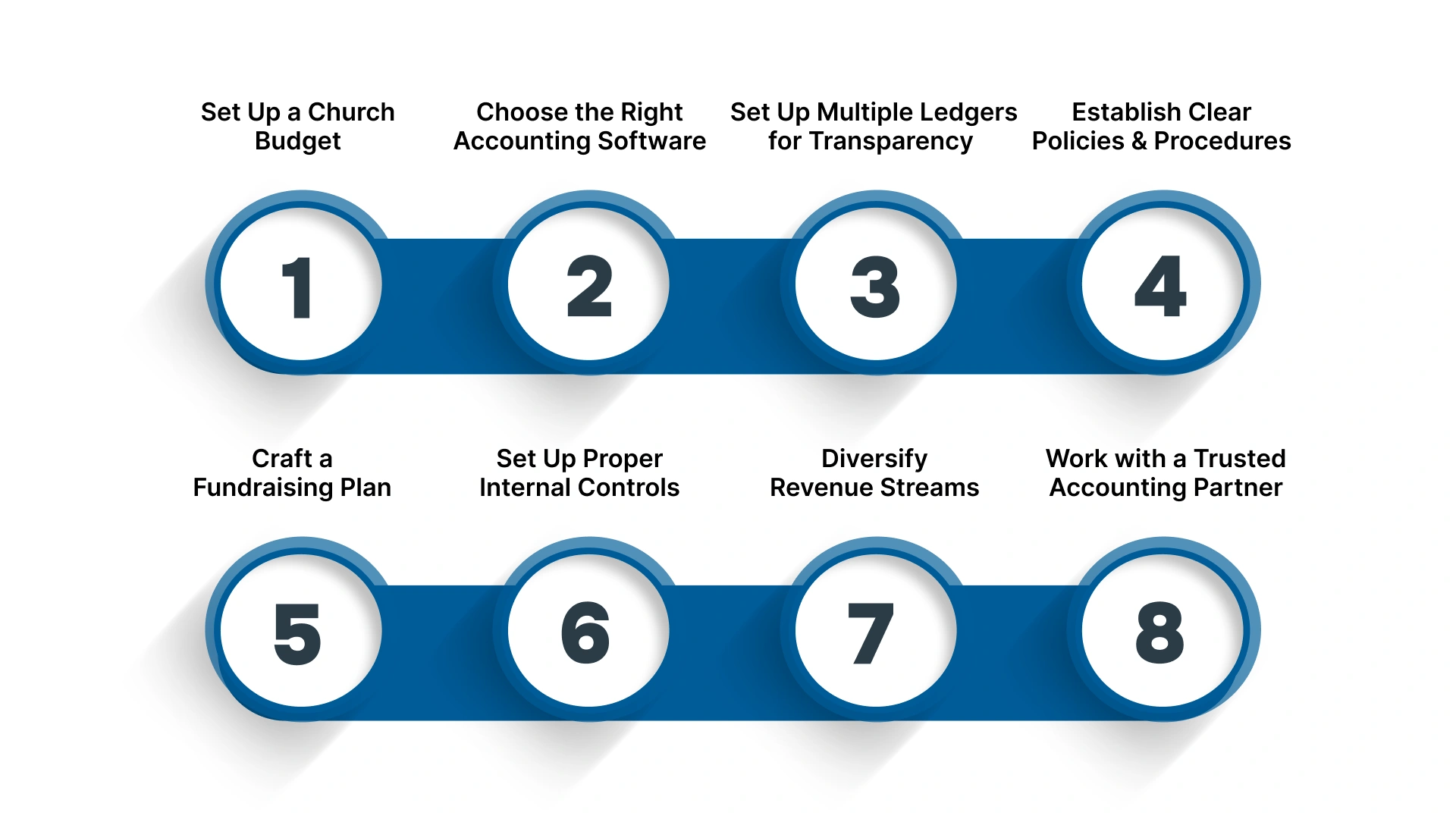
A strong financial system helps you maintain accountability, comply with legal requirements, and use your resources wisely. Here are some best practices to guide you:
A well-structured budget serves as the financial roadmap for your church. Here's how to get it right:
Investing in reliable church accounting software streamlines processes, reduces errors, and enhances financial oversight. Look for software with these features:
At VJM Global, we use tools like QuickBooks to provide streamlined accounting and financial oversight for churches. Our cross-border expertise ensures your church’s finances are managed efficiently, with secure and customizable solutions tailored to your needs. Talk to an expert today.
Churches should use multiple ledgers to clearly organize and report financial information. This ensures transparency, keeps restricted and unrestricted funds separate, complies with donor requirements, and enhances trust among the congregation. It also helps track ministry-specific expenses, making it easier to report on each fund's activity.
Your church should have clear, written policies for managing finances. Implement procedures such as dual-signature requirements for checks, approval requirements for large expenditures, and regular audits to prevent errors and fraud.
A well-organized fundraising plan ensures the church can meet its financial needs while fulfilling its mission. Here’s how to approach it:
Implement a system where different people handle different financial tasks to ensure accountability. Some tips include:
Relying on a single source of income can make your church financially vulnerable. To build stability, diversify your revenue streams:
Having multiple revenue sources ensures your church remains financially stable and able to carry out its mission.
Managing a church’s finances in the U.S. demands precision, transparency, and nonprofit compliance. At VJM Global, we support churches with bookkeeping, audit support, and financial‑reporting services tailored to U.S. nonprofit rules.
Let us help your church streamline its accounting processes, ensure full regulatory compliance, and free up your leadership to focus on its mission. Contact us today.
By following these best practices, your church will manage its financial resources effectively and build trust, transparency, and accountability within the congregation. With all these practices in mind, VJM Global is here to provide expert support, ensuring your church’s financial management stays on track and compliant.
At VJM Global, we understand the unique financial needs of churches. We provide tailored services to ensure compliance, transparency, and efficient financial management:
Let VJM Global handle your church’s financial needs so you can focus on your mission.
Managing church finances with accuracy and compliance is crucial for maintaining trust and transparency. Avoiding common mistakes and staying on top of legal and financial obligations helps churches operate smoothly, whether they’re actively growing or temporarily pausing activities.
At VJM Global, we specialize in helping churches and nonprofit organizations manage their finances with precision and compliance. From tracking donations and managing restricted funds to ensuring timely tax filings, our experienced team provides comprehensive support to keep your church on track.
Reach out today to see how we can simplify your church’s financial management and set the foundation for future growth.
The best way to track donations is to keep a detailed record of all contributions, whether received in cash, by check, or via online payment platforms. Using accounting software can streamline this process and ensure accuracy in reporting.
Yes, churches must file annual tax returns, even if they have no income or business activity. The IRS requires churches to file Form 990 or 990-EZ, depending on their income, to maintain tax-exempt status.
Yes, churches can be audited by the IRS or local tax authorities. Regular audits ensure financial transparency, protect against fraud, and maintain public trust. Churches should conduct periodic internal audits and maintain accurate financial records.
VJM Global offers a full range of accounting services, including tax filings, donation tracking, compliance management, and financial reporting. We help churches stay compliant with both local and international regulations, ensuring transparency and operational efficiency.