.avif)
For many U.S. businesses, bookkeeping is one of those critical yet often misunderstood functions. It’s more than just recording numbers. Monthly bookkeeping ensures your accounts are accurate, your reports are reliable, and your business decisions are based on real data.
The challenge for many owners and accounting firms is understanding what monthly bookkeeping includes and how much it really costs. Prices can vary depending on business size, transaction volume, and whether you manage bookkeeping in-house, through cloud tools, or with an outsourced partner.
This guide explains what’s included in monthly bookkeeping, how pricing works, and how to choose a service model that fits your business.
Monthly bookkeeping involves recording, reviewing, and reconciling all business transactions on a monthly basis. It’s the foundation of accurate accounting, tax readiness, and better decision-making.
Also read: Preparing a GAAP Cash Flow Statement? Outsource from the US to India
Now that you know why monthly bookkeeping is essential, let’s look at what’s typically included in these services and how providers structure their offerings.
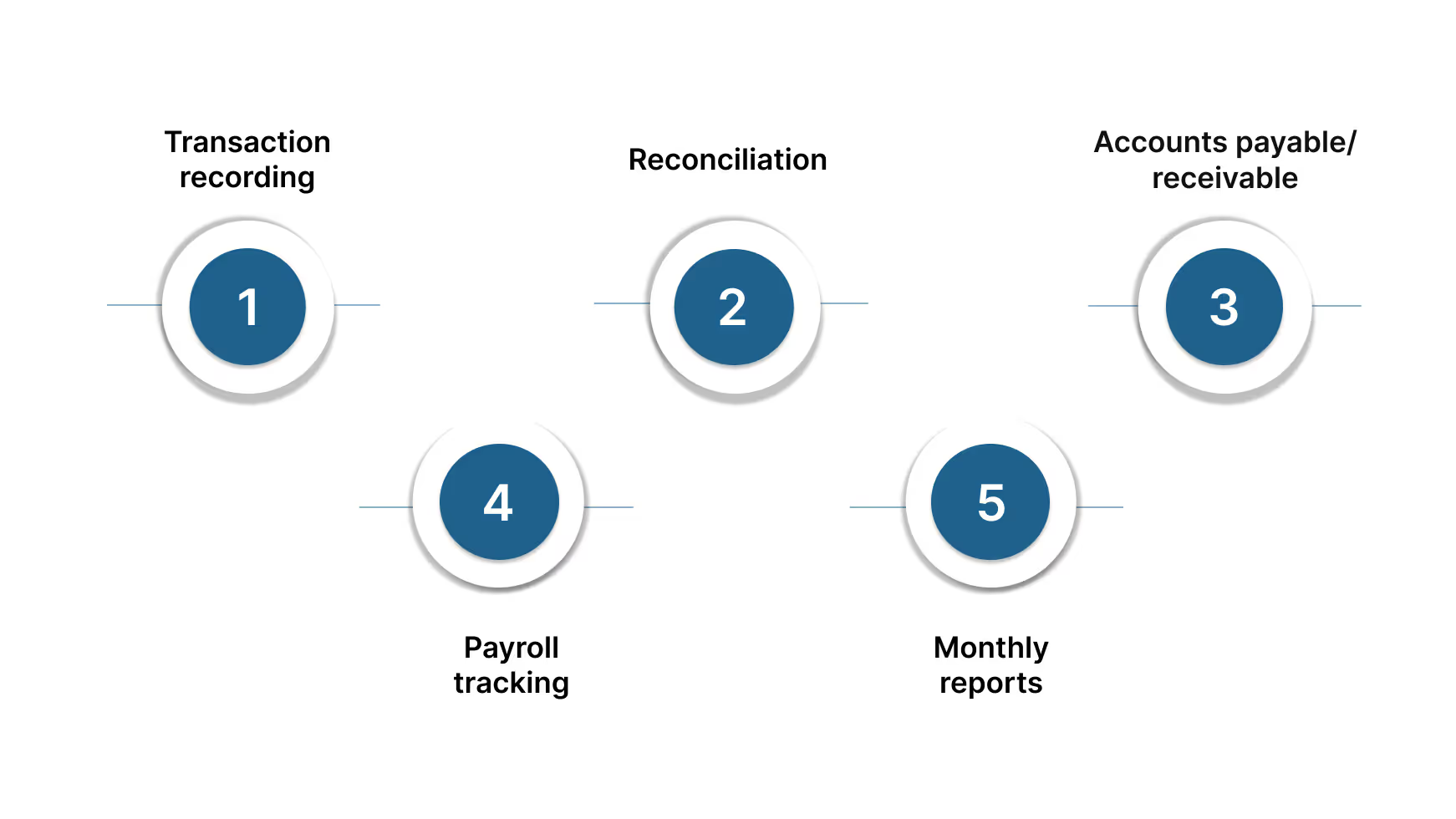
Monthly bookkeeping packages can vary widely depending on the provider, but most include the following key deliverables:
Tip: Businesses using QuickBooks or Xero often start with a basic plan and scale to a full-service solution as their transaction volume and reporting needs grow.
Once you know what’s included, the next logical step is understanding how much these services cost and what factors influence pricing.
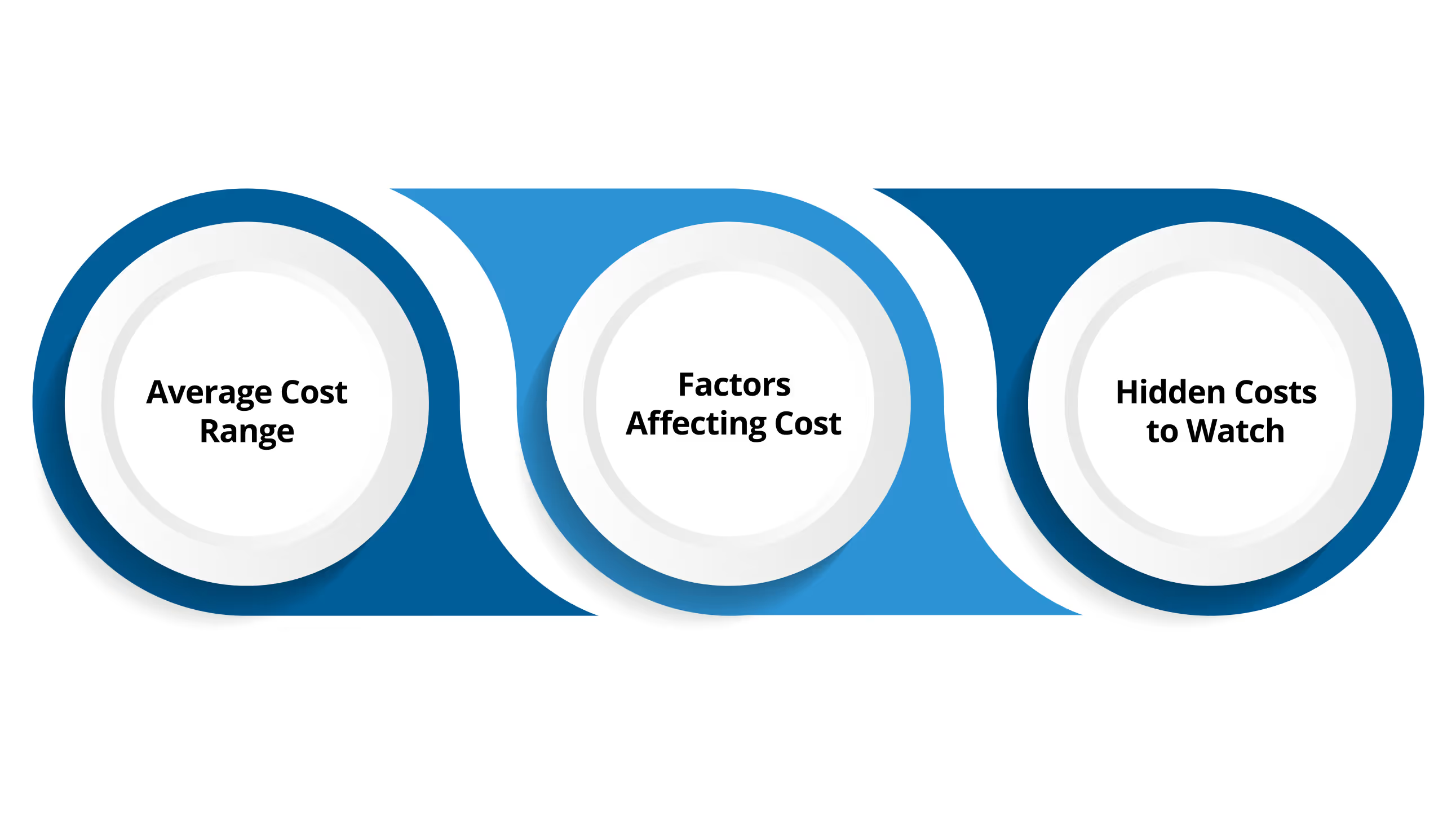
The goal isn’t just to find the cheapest provider, it’s to find a reliable partner who delivers accuracy, consistency, and transparency. Below, we break down the average monthly cost ranges, key factors that influence pricing, and hidden fees to watch out for, so you can budget confidently and choose the right service level for your business.
For small and mid-sized U.S. businesses, monthly bookkeeping typically costs:
Pro Tip: Opt for providers that offer flat-rate packages instead of hourly billing for more predictable costs.
After understanding what drives bookkeeping costs, it’s time to evaluate which management model best fits your operations: in-house, cloud-based, or outsourced.
Choosing the right bookkeeping model can significantly impact your business’s efficiency, cost structure, and financial accuracy. Understanding these differences helps you align your bookkeeping strategy with your company’s growth stage, budget, and internal resources.
Below, we break down the key advantages and disadvantages of each model to help you determine which solution best supports your operational needs and long-term financial objectives.
Also read: In-House vs Outsourced Accounting: Pros and Cons Analysis
Also read: Top Benefits of Outsourcing Bookkeeping and Payroll
Many U.S. CPA firms now combine cloud tools with outsourced teams in India to control costs and accelerate month-end closing cycles.
Whether you choose to manage bookkeeping internally or outsource it, the final step is selecting a trustworthy partner who can deliver accuracy and peace of mind.
Selecting the right monthly bookkeeping partner is more than just finding someone to manage your numbers; it’s about building a relationship with a trusted financial ally. A great bookkeeping partner doesn’t just record transactions; they help you stay compliant, make informed business decisions, and maintain financial clarity month after month.
Use the checklist below to evaluate potential providers, ensure they meet industry standards, and ask the right questions before making your decision.
Bookkeeping errors rarely happen overnight, they build up quietly through overlooked details or weak processes. Staying alert to these three areas can prevent data inconsistencies, compliance risks, and costly year-end corrections.
When transactions aren’t categorized uniformly or reconciliations are pushed to the end of the quarter, small discrepancies can snowball into major variances. Standardize income and expense categories and complete reconciliations within the first week of every cycle. Real-time accuracy is always cheaper than retrospective cleanup.
Tools like QuickBooks and Xero automate much of the process, but automation can also mask underlying errors. Duplicate imports, misread receipts, or unlinked bank feeds can distort data silently. Automation is efficient, but it’s the human review that keeps the numbers honest.
Missing receipts, untracked adjustments, or undocumented write-offs can raise red flags during audits or tax filings. Every transaction should have supporting proof, and every journal entry should have a clear audit trail. Strong documentation isn’t just compliance, it’s financial self-defense.
Even the most advanced bookkeeping systems are only as reliable as the discipline behind them. Consistent reviews and clear documentation turn monthly bookkeeping from a routine task into a strategic advantage.
VJM Global provides specialized monthly bookkeeping services tailored for U.S. companies managing local or cross-border operations with India. Their team of qualified accountants and CPAs ensures accurate, compliant, and timely financial reporting every month.
VJM Global helps U.S. firms maintain clean, compliant books so you can focus on growth while they handle the numbers.
Monthly bookkeeping keeps your finances organized, compliant, and ready for informed decisions. Whether you manage it internally, use cloud tools, or rely on offshore support, consistent bookkeeping provides financial clarity and protects your business.
If you’re looking to streamline your bookkeeping without overspending, VJM Global offers cost-effective monthly bookkeeping services that combine CPA-level accuracy, cloud-based tools, and cross-border efficiency.
Discover how VJM Global's customized bookkeeping and payroll services can help your business succeed. Visit VJM Global today to learn more about the benefits of outsourcing bookkeeping and payroll.
Most small businesses pay between $250 and $800 per month, depending on transaction volume, payroll, and reporting needs.
Recording transactions, reconciling accounts, managing payables/receivables, processing payroll, and preparing financial statements.
Bookkeeping records day-to-day transactions. Accounting analyzes that data to prepare taxes, budgets, and financial strategies.
Automation helps but doesn’t replace human review. Tools like QuickBooks and Xero automate entries, but accountants still ensure accuracy and compliance.
Top U.S. options include QuickBooks Online, Xero, and Zoho Books, depending on your team size and integration needs.