
Expanding your U.S.-based business to India brings exciting growth prospects, but it also introduces significant financial complexities. Cross-border receivables management is particularly challenging; delayed collections and extended DSO add risk when you’re dealing with multiple currencies and regulatory systems.
In fact, U.S. companies that receive cross-border payments experience an average Days of Sales Outstanding (DSO) of 33 days, about 55% longer than for domestic invoices. For U.S. firms entering India, mismatched ledgers, invoice disputes, and compliance hurdles can quickly turn revenue into locked-up capital.
This guide explains everything US business owners and entrepreneurs need to know about receivables management while expanding or starting operations in India, covering objectives, processes, tools, challenges, and practical tips for staying compliant.
For US business owners expanding their operations into India, receivables management is the process of tracking and collecting money owed to your company. It involves setting up an effective system for invoicing, collecting payments, and following up on overdue accounts.
When expanding into India, receivables management helps ensure that your business has sufficient cash flow to cover its expenses while maintaining strong customer relationships. It’s crucial to track not only customer payments but also the potential for bad debts, and to take preventive actions to avoid financial pitfalls.
As your receivables operations expand across borders, having a reliable accounting partner can make all the difference. VJM Global streamlines receivables for U.S. companies expanding to India. Our experts align workflows with Indian tax, FEMA, and U.S. GAAP standards, ensuring precision in invoicing, credit control, and remittance documentation across both jurisdictions.
Also Read: Top Benefits of Outsourcing Accounting Services to India for US Small Businesses
Now that you understand what receivables management means, the next step is to explore its core objectives and how they shape your company’s financial stability in India.
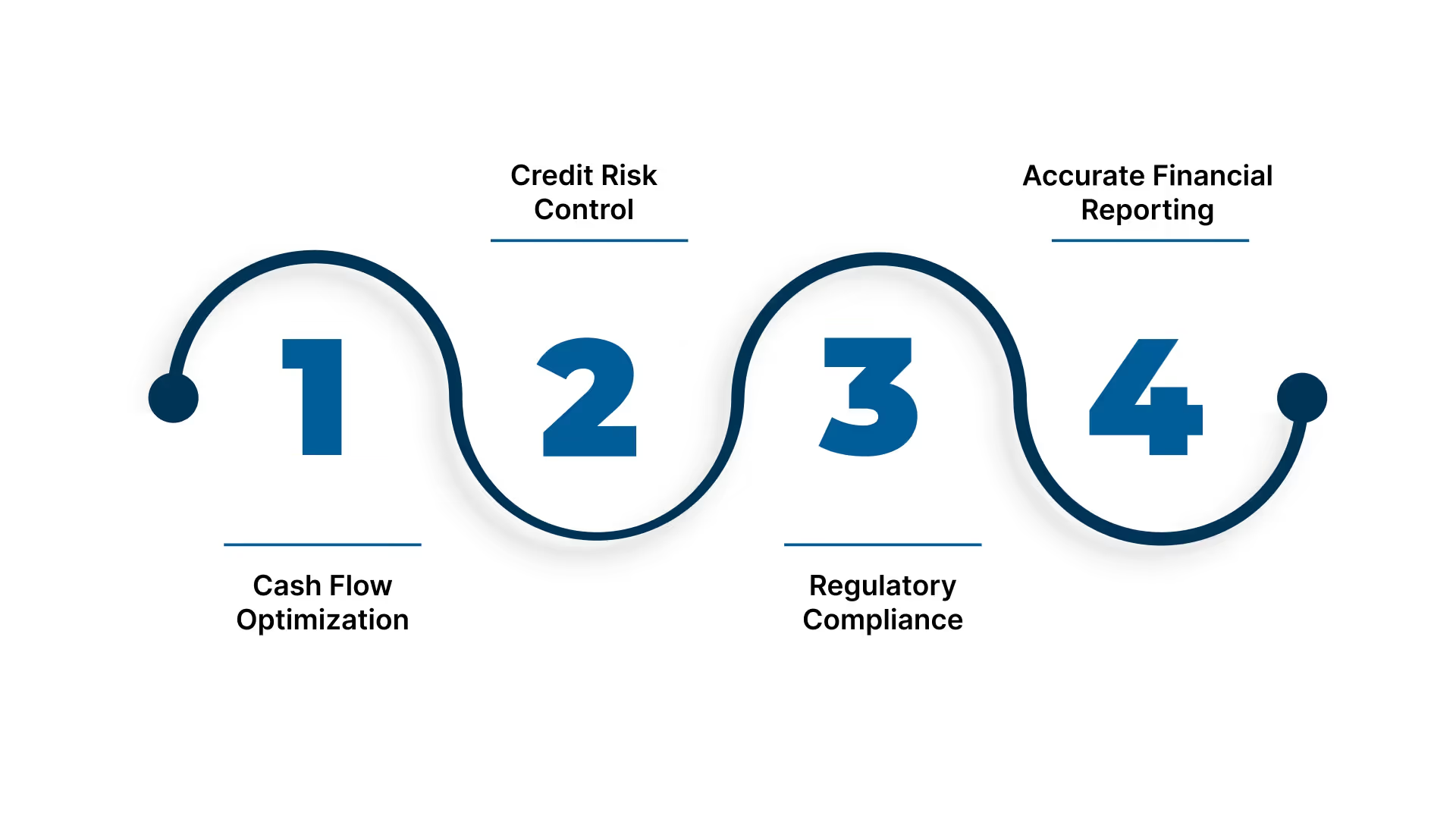
For a U.S. company entering India, receivable management is not just about collecting dues; it’s about creating a structured, compliant, and resilient process that ensures steady liquidity across both jurisdictions. The objectives below focus on safeguarding working capital, mitigating risk, and strengthening transparency for cross-border operations.
Maintaining liquidity between the US headquarters and the Indian entity is crucial. AR systems must synchronize real-time data on invoice aging, payment forecasts, and foreign currency settlements. This ensures that delayed rupee collections don’t disrupt your U.S. treasury projections or vendor payments in India.
Before extending payment terms to Indian distributors or clients, conduct credit assessments using trade references, GST filing histories, and credit bureau data. Establish multi-tier approval workflows to apply stricter controls to high-risk accounts. This preempts overdue receivables and prevents strain on cross-border profitability.
Every invoice generated in India must comply with GST invoicing rules, RBI’s foreign remittance procedures, and FEMA reporting norms. Any deviation can freeze remittances or trigger scrutiny. Structuring receivable systems to auto-capture required data fields ensures regulatory precision and audit readiness.
AR balances feed directly into consolidated U.S. financial statements, thereby influencing KPIs such as DSO and working capital ratios. Accurate tracking ensures intercompany eliminations and FX adjustments are reflected correctly. This maintains the credibility of group-level reporting during audits and due diligence.
Also Read: What Is a Fractional Controller and Why US Firms Outsource to India
Now, let us look at why receivables management is critical for U.S. companies expanding to India.
When U.S. businesses establish operations in India, disciplined receivable management becomes a financial safeguard. Without it, cash flow bottlenecks, regulatory lapses, and credit defaults can threaten profitability and investor confidence. Here are some key benefits of accounts receivable management:
With the assistance of experts, US companies expanding into India can effectively handle GST compliance, reconciliations, and automated reporting by outsourcing accounts receivable. Our structured process keeps your AR lifecycle, from invoice generation to payment collection, fully compliant and optimized.
Also Read: Key Steps for Conducting Organizational Assessments: Why US Firms Outsource to India
Once the advantages are clear, understanding the structured process behind effective receivables management becomes vital to sustain these benefits.
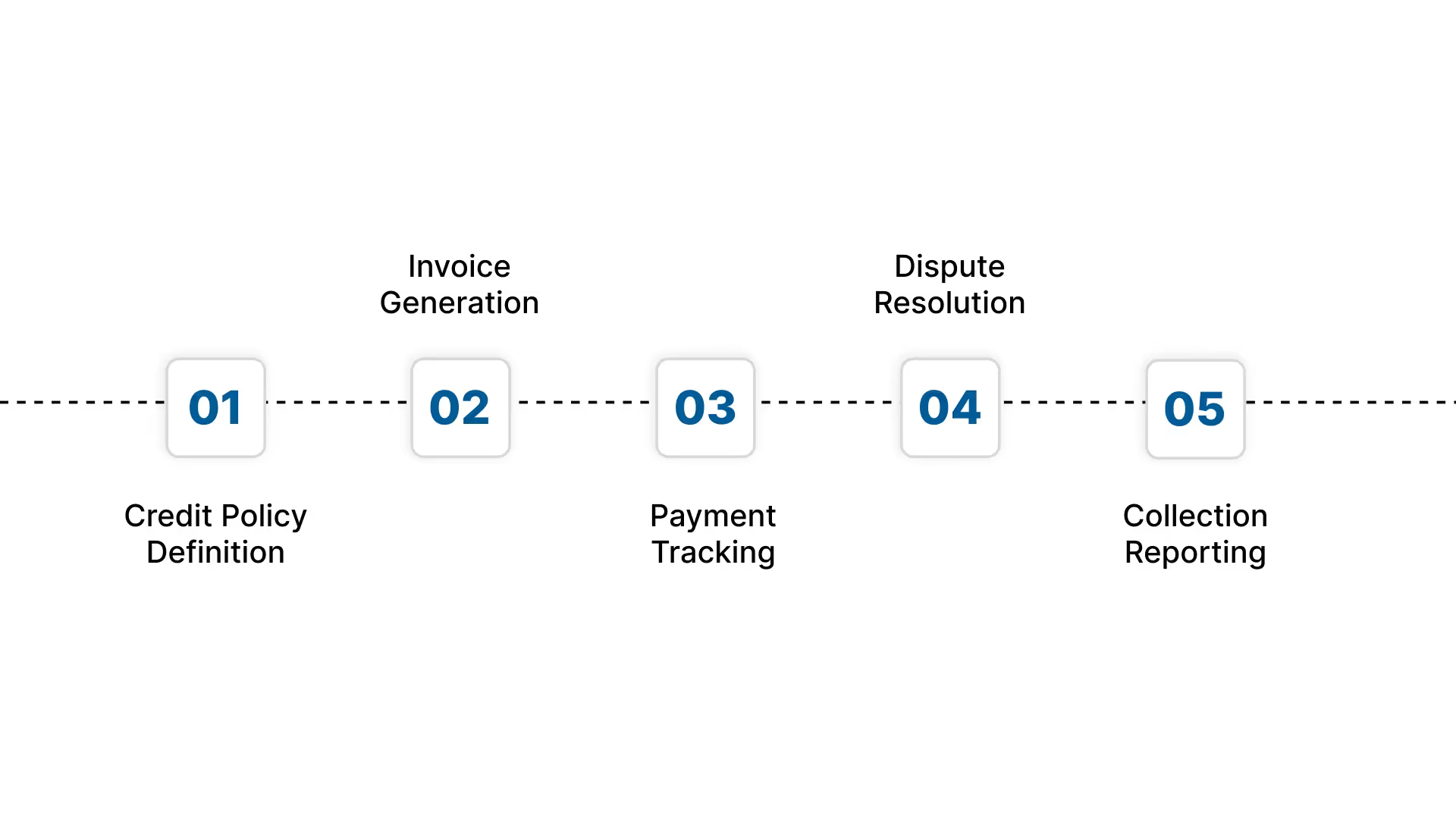
For U.S. businesses expanding into India, the AR process requires precision, automation, and compliance alignment. Here’s a structured breakdown of the essential steps.
Establish tailored credit policies for Indian clients that balance risk tolerance with market competitiveness. Integrate automated approval thresholds based on payment history and industry risk. This ensures disciplined credit extension while maintaining market responsiveness.
Ensure invoices meet Indian GST e-invoicing standards, capturing HSN/SAC codes, invoice reference numbers, and place-of-supply data. For U.S. books, link invoices to revenue recognition schedules and foreign currency valuation entries.
Track incoming payments across multiple Indian banking channels using cloud dashboards. Integrate AR software to automatically flag overdue invoices and trigger reminders in alignment with Indian holidays and billing cycles.
Address discrepancies quickly through automated reconciliation tools. Assign responsibility by region or account manager and set service-level timelines for closure. Document every resolution for transparency during audits.
Generate AR aging summaries, DSO reports, and cash application statements every cycle. Analyze trends in Indian receivables separately for visibility on credit risks and currency fluctuations.
Also Read: How to Calculate Operating Working Capital
Following these steps ensures consistency, but the right tools make execution even more seamless across U.S. and Indian operations.
Modern technology is reshaping how U.S. businesses handle receivables in India by centralizing data, automating compliance, and providing instant visibility across both geographies. The following tools can help you strengthen accuracy, efficiency, and control over your AR operations.
Also Read: Understanding GAAP vs. Non-GAAP Gross Margin: Why Companies Outsource from the US to India
With VJM Global and their US–India receivables outsourcing, you gain precision tracking, variance reconciliations, and real-time visibility into cash flow. Our specialists ensure compliance with IRS and Indian regulatory standards, so every transaction remains transparent and timely.
Next, we’ll discuss common challenges of AR processes and their practical solutions.
Even the most disciplined U.S. firms encounter receivable roadblocks when expanding into India. Understanding and addressing the following challenges early helps sustain predictable cash flow and compliance stability.
Indian businesses often operate on longer payment timelines due to layered internal approvals.
Solution: Implement milestone-based billing and early payment discounts to accelerate inflows. Clear documentation and pre-agreed schedules minimize follow-up fatigue.
The volatility of the USD-INR exchange rate may eventually cause the value of receivables to decrease.
Solution: Revalue open invoices weekly, automate FX rate updates, and consider natural hedging via offsetting payables. Maintain consistent valuation policies across both ledgers.
Dealing with GST, TDS, and FEMA requirements while recording AR entries can become overwhelming.
Solution: Automate GST-compliant invoicing and maintain dual-ledger visibility with periodic reconciliations reviewed by both U.S. and Indian accountants.
Manual reconciliations between bank receipts and ledger postings often lead to misapplied payments.
Solution: Use automated matching tools and unique invoice reference IDs to eliminate duplication errors. Daily reconciliation discipline keeps ledgers clean.
Disagreements can be resolved more slowly when time zones and business etiquette are different.
Solution: Set up dedicated AR liaisons or shared communication dashboards to ensure seamless collaboration and faster issue closures.
Also Read: Preparing a GAAP Cash Flow Statement? Outsource from the US to India
The next section outlines proven best practices that help U.S. businesses prevent issues before they arise in India.
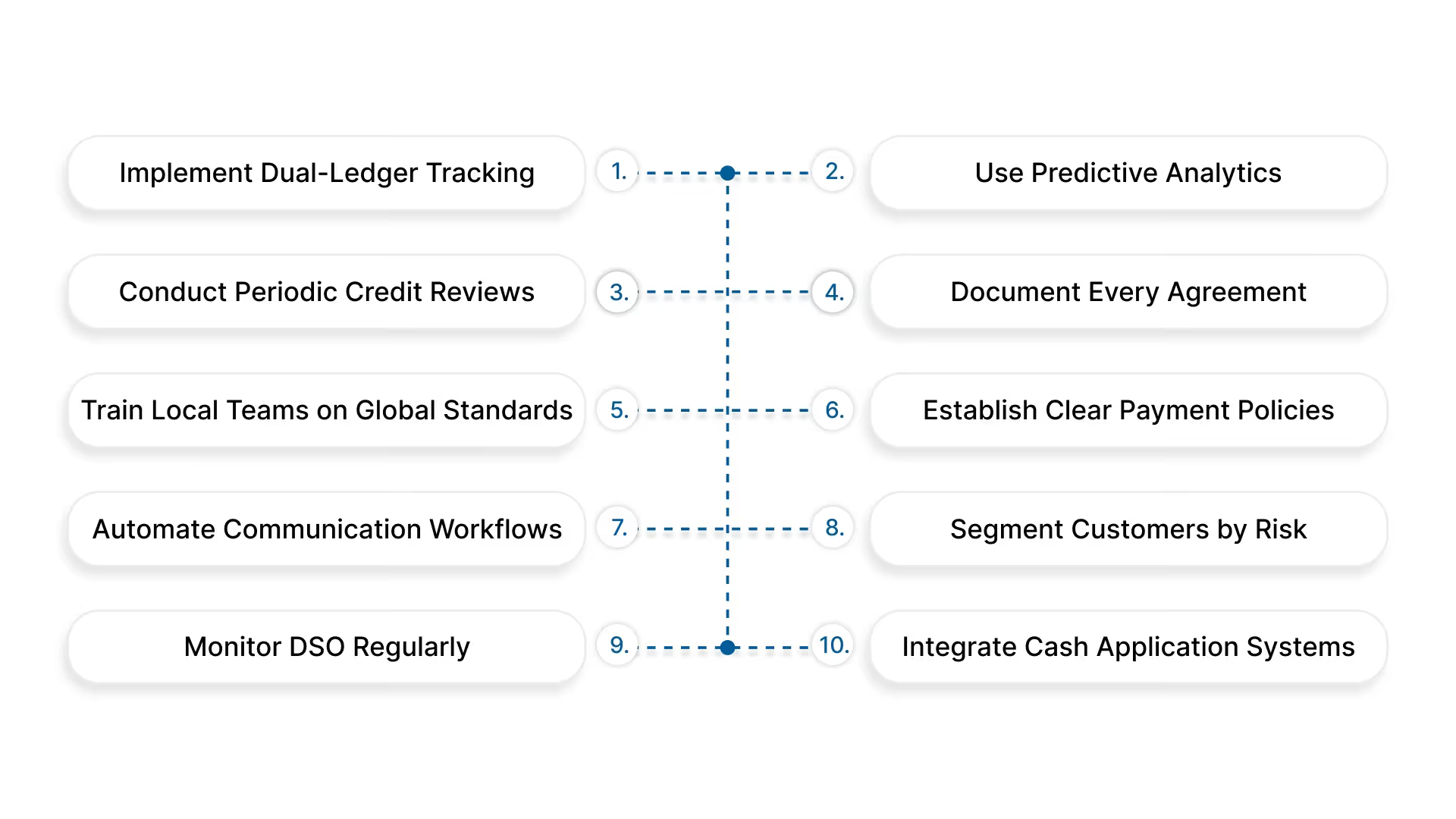
Building a mature receivables ecosystem for your India operations means focusing on preventive strategies rather than reacting to overdue invoices. The following best practices outline how U.S. businesses can enhance cash flow predictability and reduce payment delays.
Maintain synchronized accounting books under both U.S. GAAP and Indian GAAP to ensure consistency in your accounts receivable records. This alignment minimizes discrepancies during audits and facilitates seamless financial reporting across both jurisdictions.
Adopt AR management tools that use predictive analytics to identify potential payment delays based on customer payment behavior. These insights enable your U.S. finance team to proactively adjust cash flow forecasts and manage liquidity efficiently in India.
Assess the financial stability of your Indian clients quarterly to identify credit risks early. Revising credit limits and payment terms based on updated assessments helps reduce bad debt exposure and maintain a healthy receivables cycle.
Keep digital copies of purchase orders, invoices, and signed delivery proofs for every transaction in India. Such documentation ensures transparency and accelerates dispute resolution under Indian commercial laws.
Ensure your Indian accounting teams are trained to follow U.S. financial compliance standards. This alignment creates uniformity in AR data handling, ensuring your cross-border financial statements remain accurate and audit-ready.
Define net terms, discount structures, and penalties upfront in every sales contract. This eliminates ambiguity for Indian clients and strengthens your legal standing during disputes.
Automated reminders through platforms like QuickBooks or Zoho keep invoices top of mind without manual intervention. Consistent cadence prevents overdue accounts from slipping unnoticed.
Use data analytics to classify Indian buyers based on payment patterns and credit exposure. Tailor follow-up intensity for each group to preserve goodwill while improving efficiency.
Track Days Sales Outstanding at the entity level for both the U.S. and India. This helps you pinpoint regional bottlenecks and implement corrective measures before cash flow tightens.
Link your bank feeds directly with your AR modules to automate matching and reconciliation. This saves countless hours and ensures real-time visibility into open invoices.
Also Read: A Practical Guide to ASC 606 Revenue Recognition in 5 Steps
In order to avoid communication lapses or unpaid invoices, VJM Global manages GST submissions, foreign exchange adjustments, and payment follow-ups for cross-border AR workflows from the US to India.
Next, we’ll see how automation and digital systems revolutionize receivables management between the U.S. and India.
.avif)
Technology acts as the bridge between U.S. headquarters and Indian subsidiaries, driving accuracy, speed, and transparency in every transaction. The following points highlight how strategic automation ensures your receivables management remains compliant, audit-ready, and data-driven.
Also Read: Understanding ASC 810 for Financial Consolidation
With the power of technology defined, the next step is choosing a partner who can help you implement and manage these systems effectively, like VJM Global.
Managing accounts receivable while expanding your U.S. business to India requires precision, compliance, and continuous visibility across both entities. This is where VJM Global becomes your long-term accounting ally, ensuring your receivable cycles stay accurate, compliant, and profitable.
Our Accounting and Bookkeeping Services cover every aspect of your financial ecosystem, from daily bookkeeping to audit-ready reporting. Our U.S.-trained accountants and Indian Chartered Accountants work together to maintain consistency with U.S. GAAP, Indian GST, and FEMA regulations.
Why U.S. companies choose VJM Global for receivables and accounting outsourcing:
VJM Global offers end-to-end Accounts Receivable Management for U.S. businesses expanding to India, covering invoice processing, reconciliations, and long-standing item analysis to accelerate collections and strengthen cash flow. Our cross-border accounting experts manage financial reporting and tax compliance under both U.S. GAAP and Indian regulations, ensuring accuracy, transparency, and consistent cash performance across markets.
For U.S. businesses expanding to India, strong receivables management is essential to maintain cash flow stability, minimize bad debt, and ensure regulatory compliance under both U.S. and Indian standards. With the right process, tools, and expert guidance, you can convert outstanding invoices into steady cash streams and focus on scaling your India operations.
With VJM Global’s Accounting services, you can streamline invoice processing, automate reconciliations, and ensure complete compliance with Indian GST and U.S. GAAP. Our experts manage everything, from debtor reports to foreign remittance documentation, so your revenue cycle stays predictable and transparent.
Partner with VJM Global to transform your receivables into reliable revenue and drive faster, compliant growth in India.
U.S. companies often struggle with extended payment cycles and local compliance complexities such as GST, TDS, and FEMA documentation. Implementing automated receivable tracking and partnering with experts like VJM Global helps ensure faster collections and error-free compliance.
Automation simplifies invoicing, reconciliation, and aging reports, ensuring real-time visibility across both countries. Tools like QuickBooks Global or Zoho Books eliminate manual errors and enhance accuracy in cross-border collections.
Effective receivables management helps U.S. businesses maintain cash flow, reduce bad debts, and meet dual compliance standards under U.S. GAAP and Indian regulations. It also strengthens vendor and client relationships through transparent, timely billing practices.
VJM Global offers comprehensive receivables services, including invoice processing, reconciliations, aging analysis, and long-standing item resolution. Their accountants ensure your receivable process stays compliant, automated, and audit-ready year-round.