Introduction
Over 250,000 new companies launched in the UAE in 2025 alone. Behind that number lies a critical fork in the road: should you establish a mainland or free zone company?
For foreign entrepreneurs, this choice fundamentally shapes your business trajectory.
The wrong jurisdiction can mean:
- Restricted access to UAE domestic markets
- Higher compliance and licensing costs
- Limited ownership control or expansion flexibility
- Missed tax optimization opportunities
The right choice unlocks operational freedom, cost efficiency, and market access aligned with your growth plans.
This article breaks down what distinguishes these two structures, their respective advantages, cost implications, and when each makes sense for different business models.
Key Takeaways
- Mainland companies: Register with DED, trade freely across UAE, access local market directly
- Free zones: 100% foreign ownership, tax incentives, limited mainland access without agents
- Both structures now allow full foreign ownership but differ in licensing costs, visa quotas, and compliance requirements
- Choose mainland for local UAE customers; choose free zone for international business or import/export focus
Mainland vs Free Zone: Quick Comparison
Understanding the structural differences between mainland and free zone companies helps you choose the right setup for your UAE business strategy. The following comparison highlights nine critical decision factors:
| Aspect | Mainland | Free Zone |
|---|---|---|
| Ownership Structure | 100% foreign ownership (since 2021 reforms) | 100% foreign ownership (always permitted) |
| Business Scope & Market Access | Unrestricted UAE market access | International trade focus; local agent required for mainland* |
| Office Space Requirements | Physical office mandatory (min. 200 sq ft) | Flexible (virtual offices to flexi-desks) |
| Visa Allocation | Tied to office size (starts at 3 visas) | Tied to license package (1–6 visas) |
| Licensing Authority | DED of respective emirate | Respective Free Zone Authority |
| Tax Implications | 9% corporate tax above AED 375K; VAT applies | 9% corporate tax above AED 375K (QFZP exemptions possible); customs duty exempt |
| Setup Costs | AED 25,000–50,000+ | AED 15,000–65,000 (varies by zone) |
| Timeline | 4–8 weeks | 1–2 weeks |
| Government Contracts | Eligible for government tenders | Generally not eligible |
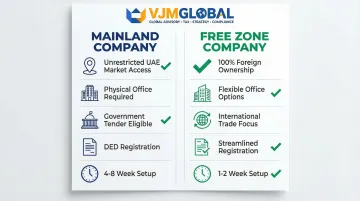
*Dubai 2025 reforms now allow free zone companies to obtain branch licenses for mainland market access, reducing the historical trade-off between ownership flexibility and market reach.
What is a UAE Mainland Company?
A mainland company is an onshore entity registered with the Department of Economic Development (DED) of the respective emirate, operating under UAE federal and local laws. These companies function within the broader UAE economy, subject to Commercial Companies Law and supervised by the DED.
The regulatory framework requires compliance with local labor laws, commercial regulations, and emirate-specific requirements. Mainland companies must adhere to UAE federal standards while meeting the specific administrative requirements of the emirate where they register.
Core Benefits of Mainland Companies
Mainland companies offer distinct advantages for businesses targeting the UAE market:
Geographic and operational flexibility:
- Conduct business anywhere in the UAE without restrictions
- Establish multiple branches across emirates
- Access the entire local market without intermediaries or agents
Direct market access:
- Trade freely in local markets and reach UAE consumers directly
- Participate in government tenders and public sector contracts
- Build a strong local presence (critical for retail, hospitality, construction, and B2B service providers)
Enhanced credibility:
- Higher credibility with local banks and government entities
- Easier account opening and better financing options
- Stronger client confidence due to onshore status and physical presence
According to Dubai's Department of Economy and Tourism, mainland companies typically enjoy advantages when dealing with UAE-based institutions and clients.
Types of Mainland Business Structures
Limited Liability Company (LLC):
- Most common structure for commercial and industrial activities
- 100% foreign ownership now available for 1,000+ activities
- Liability limited to the company's capital
Sole Proprietorship:
- Single individual ownership structure
- Foreign investors in professional activities require a Local Service Agent (LSA)
- LSA facilitates government procedures without holding equity
Branch of Foreign Company:
- International parent companies operate directly in the UAE
- 100% foreign ownership maintained
- Requires Ministry of Economy registration
Civil Company:
- Professional partnerships (doctors, lawyers, engineers, consultants)
- Operates under professional licensing frameworks
Setup Requirements and Process
Key requirements include:
- Passport copies of shareholders and managers
- Business plan outlining activities and projections
- Proof of address for shareholders
- NOC from sponsor (if applicable)
- Office lease agreement with Ejari registration
- Initial approvals from relevant authorities
Typical setup process:
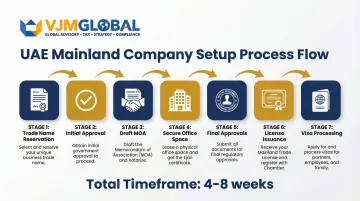
- Trade name reservation - Submit proposed company name for approval
- Initial approval - Obtain preliminary license approval from DED
- Draft Memorandum of Association - Prepare and notarize founding documents
- Secure office space - Lease premises and register Ejari
- Final approvals - Submit all documents for final license issuance
- License issuance - Receive trade license from DED
- Visa processing - Apply for establishment card and employee visas
What is a UAE Free Zone Company?
Free zones are designated economic zones established by the UAE government to attract foreign investment, each with its own regulatory authority and specific industry focus. The UAE operates 46+ free zones, ranging from general trading zones to highly specialized industry clusters.
The strategic purpose behind free zones is economic diversification beyond oil, promotion of specific industries (technology, media, healthcare, logistics), and creation of business-friendly environments for international companies. Dubai's free zones alone account for approximately 60% of the city's total goods exports.
Core Benefits of Free Zone Companies
Free zones have always guaranteed 100% foreign ownership—no local sponsors or partners required. Investors maintain complete operational control and can repatriate all capital and profits.
This benefit historically distinguished free zones from mainland options.
Tax benefits remain compelling despite recent changes. Federal Decree-Law No. 47 of 2022 introduced 9% corporate tax, but Qualifying Free Zone Persons (QFZP) can achieve 0% tax on qualifying income.
Additional advantages include:
- Import/export duty exemptions within free zones
- VAT-free transfers between designated zones
- No personal income tax requirements
The setup process delivers exceptional speed through streamlined registration. Single-window systems reduce bureaucracy, with processing times often just 1-2 weeks. Pre-approved business activities eliminate lengthy approvals, while flexible office solutions (virtual, flexi-desk, or physical) lower entry barriers.
Industry-specific ecosystems create valuable networking opportunities. Specialized free zones offer tailored infrastructure and business communities.
For example, Dubai Internet City serves technology companies, Dubai Healthcare City supports medical services, and JAFZA provides logistics infrastructure.
Types of Free Zone Companies
Three main entity types exist:
- Free Zone Establishment (FZE): Single-shareholder entity for individual entrepreneurs or foreign companies establishing UAE presence
- Free Zone Company (FZCO): Multiple shareholders (minimum 2) for partnerships or joint ventures
- Branch of Foreign Company: Extension of parent company maintaining direct connection to international headquarters
Popular Free Zones and Their Specializations
Dubai Multi Commodities Centre (DMCC) specializes in trading and commodities, particularly gold, diamonds, and energy. Ranked the world's #1 free zone, DMCC hosts 24,000+ companies and offers comprehensive business packages starting from AED 34,000 annually.
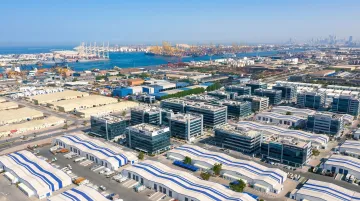
Jebel Ali Free Zone (JAFZA) focuses on logistics, manufacturing, and trade. Located adjacent to Jebel Ali Port, it's ideal for large-scale logistics operations and industrial activities requiring port access.
Dubai Internet City (DIC) serves as the technology and IT hub, home to tech giants like Microsoft and Google alongside innovative startups in the digital ecosystem.
Dubai Healthcare City (DHCC) is dedicated to healthcare, medical services, and wellness, providing specialized infrastructure for hospitals, clinics, and medical education facilities.
Choose your free zone based on business activity alignment, infrastructure needs, target market proximity, and industry ecosystem value.
Setup Requirements and Process
Key requirements include:
- Passport copies of shareholders and managers
- Business plan with activities and projections
- Proof of address for all shareholders
- Free zone-specific application forms
- Office space selection (virtual, flexi-desk, or physical)
Typical setup process:
- Free zone selection: Choose zone aligned with your business activity
- Company name reservation: Submit and approve company name
- License application: Submit application with required documents
- Office lease: Select and secure office space package
- Approvals: Receive approvals from Free Zone Authority (typically 1-2 weeks)
- License issuance: Obtain trade license and registration certificate
- Visa processing: Apply for establishment card and employee visas
Mainland vs Free Zone: Which is Better for Your Business?
There is no universal "better" option—the right choice depends on your specific business model, target market, budget, and growth strategy.
Each structure offers distinct advantages for different business contexts.
When to Choose Mainland
Choose mainland registration when:
- Your primary customers are UAE consumers or businesses requiring direct local market access
- You need to bid on government contracts or supply to government entities
- Your business model involves retail stores, restaurants, or consumer-facing operations
- You require extensive local market presence across multiple emirates
- You're establishing B2B operations serving UAE-based companies
- You need maximum credibility with local banks and UAE corporate clients
Mainland makes strategic sense when your revenue primarily comes from the UAE domestic market and when you need operational flexibility across all seven emirates.
When to Choose Free Zone
Free zones work best for businesses that:
- You primarily serve international markets or conduct import/export trading
- You want to minimize setup costs and accelerate timeline to market
- You need 100% ownership with simplified compliance and streamlined processes
- Your business fits a specialized free zone ecosystem (tech, media, logistics)
- You're establishing a regional headquarters for global operations
- You qualify for 0% corporate tax as a Qualifying Free Zone Person
- You don't need direct mainland market access immediately
Free zones excel for internationally-focused businesses, startups with limited budgets, and companies benefiting from industry-specific infrastructure and networks.
Hybrid Approach Considerations
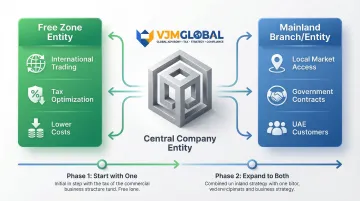
You don't have to choose just one structure permanently. Many successful businesses start with one option and expand to the other later.
A common strategy involves starting with a free zone company for international operations and cost efficiency, then adding mainland presence once local market demand justifies the additional investment.
Dubai Executive Council Resolution No. 11 of 2025 now allows specific Dubai free zone companies to conduct mainland business via branch licenses or temporary permits, significantly reducing barriers to this hybrid approach.
Some businesses operate both mainland and free zone entities at the same time to get the most from each structure—free zone for international trading and tax benefits, mainland for local market access and government contracts.
Making Your Decision: Key Factors to Consider
Target Market Analysis should drive your decision. Assess whether your primary customers are in the UAE local market (favors mainland) or international markets (favors free zone). Consider your 3-5 year growth plans and geographic expansion strategy—will you eventually need both local and international capabilities?
Budget and Cost Considerations vary significantly between business types:
Mainland first-year costs (AED 25,000-50,000+):
- License fees: AED 10,000-15,000
- Office rental: AED 15,000-50,000+
- Visa costs: AED 3,500-5,000 per person
Free zone first-year costs (AED 15,000-65,000):
- Northern Emirates zones (RAKEZ, IFZA): AED 12,000-15,000
- Premium zones: Up to AED 65,000
- Flexi-desk packages offer lower entry points
Free zones typically have lower setup costs, but mainland may deliver better long-term ROI if you're targeting significant local market revenue.
Beyond budget, evaluate these Operational Requirements:
- Visa needs: Number of employees and dependents requiring sponsorship
- Physical space: Office requirements (flexi-desk vs. dedicated space)
- Banking access: Mainland entities often have easier account opening with certain banks due to different risk assessments
Conclusion
The core distinction is clear: mainland companies offer unrestricted UAE market access and operational flexibility throughout the country, while free zone companies provide streamlined setup, cost advantages, and are ideal for international business operations.
Your choice between mainland and free zone depends on three key factors:
- Target market: Will you serve UAE customers or international clients?
- Business model: Do you need physical presence or remote operations?
- Growth strategy: What's your 3-5 year expansion plan?
Both structures suit different business needs. Start with the jurisdiction matching your immediate requirements—hybrid approaches or expansion to the other structure remains possible as you grow.
For businesses navigating UAE setup alongside broader international expansion strategies, professional guidance can clarify which structure aligns with your specific operational and compliance requirements.
Frequently Asked Questions
What is the difference between mainland and free zone in the UAE?
Mainland companies register with the Department of Economic Development and operate throughout the UAE with direct market access. Free zone companies operate in designated zones with 100% foreign ownership but need agents or branch licenses for mainland business.
How much does it cost to become a mainland company in Dubai?
Initial setup costs range from AED 25,000 to AED 50,000+, covering license fees (AED 10,000-15,000), mandatory office rental with Ejari (AED 15,000-50,000+), and visa costs (AED 3,500-5,000 per person). Setup typically takes 4-8 weeks.
What are the benefits of a free zone in the UAE?
Key benefits include 100% foreign ownership, 1-2 week setup process, potential 0% corporate tax for qualifying income, import/export duty exemptions, and industry-specific ecosystems with specialized infrastructure.
Can I work in the UAE mainland with a free zone visa?
Free zone visa holders can live anywhere in the UAE and open personal bank accounts. However, the company faces mainland business restrictions without proper licensing, though Dubai's 2025 reforms now permit branch licenses for mainland operations.
What does free zone mean in the UAE?
Free zones are special economic areas with government regulations offering 100% foreign ownership, potential 0% corporate tax on qualifying income, customs duty exemptions, and streamlined setup to attract international investment.
What is Dubai mainland?
Dubai mainland refers to the onshore jurisdiction governed by Dubai's Department of Economy and Tourism (DET), where companies are registered under UAE federal and local laws. Mainland companies can operate throughout Dubai and the broader UAE market with unrestricted access to local consumers and businesses.