This confusion is common. In Iowa, "exempt" almost never means "no obligations." It usually means you've been routed to a different, often narrower, compliance path — one that frequently still includes a bond.
Foreign LLCs, third-party administrators, professional fundraisers, and out-of-state contractors all hit versions of this same wall. Some exemptions carry bonding requirements. Others don't but still require registration or disclosure.
This guide breaks down what people mean by an "Iowa exempt company registration bond," who actually needs one, how the process works, and what happens if you skip it.
Key Takeaways
- Iowa's exemption bonding rules vary by category, not a single named bond.
- Bonded categories include out-of-state contractors, nonresident TPAs, and certain foreign entities outside safe harbors.
- Iowa TPA bonds equal 10% of average daily client balances ($50,000 minimum, $1,000,000 maximum).
- Skipping a required bond can bar your company from Iowa courts and trigger civil penalties.
What Is an Iowa Exempt Company Registration Bond?
Here's the honest answer: Iowa law doesn't define a single product called an "Iowa Exempt Company Registration Bond." That phrase is shorthand people use for a cluster of separate bonding and registration rules that apply to businesses operating under exemption categories.
Each rule has its own legal basis, its own agency, and its own bond formula — if it requires a bond at all.
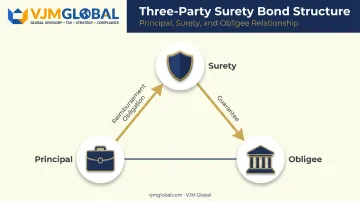
The Three-Party Bond Structure
When a bond is required, it works the same way regardless of which Iowa program triggers it:
- Principal: the exempt business posting the bond
- Surety: the insurance company backing the bond financially
- Obligee: the state agency (Iowa Insurance Division, Secretary of State, or similar) protected by it
A surety bond isn't insurance for the business. It's a guarantee to the obligee (and often the public) that if the business fails to meet its obligations, funds are available to cover the loss. The surety pays out, then seeks reimbursement from the principal.
Where "Exemption" Actually Comes From
Iowa Code Chapter 502 (the Uniform Securities Act, sometimes called the Blue Sky Law) is a good example of how exemption works as a legal status, not a free pass.
Section 502.202 lists 24 specific exempt transaction categories, covering things like isolated nonissuer transactions, limited offerings capped at 35 purchasers in 12 months, and transactions with institutional investors.
Notably, relying on a 502.202 exemption does not create a bonding requirement on its own. It simply removes the transaction from Iowa's standard securities registration process. This is a distinction worth understanding: exemption from registration is not the same thing as exemption from bonding, and the two get conflated constantly.
Separately, Iowa Administrative Code rule 191-58.3 governs third-party administrators and does attach a real bond requirement, illustrating that some exemption pathways carry bonds and others don't.
This bond framework is also distinct from the Certificate of Authority or Foreign Registration Statement required under Iowa Code Chapter 489 for foreign LLCs. That's a business qualification filing, not a surety instrument. Confusing the two is one of the most common mistakes foreign-owned entities make when entering Iowa.
Who Needs This Bond in Iowa?
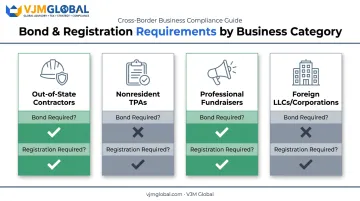
Bonding obligations attach to specific business categories, not to "exempt companies" as a broad class. Here's how the major categories break down.
Out-of-State Contractors
Contractors whose principal place of business sits outside Iowa generally must post a $25,000 surety bond as part of contractor registration. The bond uses a form provided by the state agency and must come from a surety authorized to do business in Iowa.
The bond stays continuous until the surety cancels it with at least 30 days' written notice. It conditions release on payment of Iowa taxes, unemployment contributions, penalties, and related fees.
Nonresident Third-Party Administrators (TPAs)
A TPA whose home state isn't Iowa must get a nonresident certificate before operating here. Iowa's TPA rules require an active surety bond issued by an Iowa-licensed insurer, payable to the Iowa Insurance Division, submitted with both the initial application and renewals.
Professional Fundraisers
Most nonprofits soliciting their own donations aren't required to register for general charitable solicitation in Iowa. But paid professional commercial fundraisers must register with the Attorney General under Chapter 13C. Based on current AG forms and statutory text, this registration doesn't carry a surety bond requirement. Instead, it's a $10 permit fee with a 12-month term, paired with financial disclosure duties.
Foreign LLCs and Corporations
Foreign entities "doing business" in Iowa outside a statutory safe harbor must register with the Secretary of State. Chapter 489 lists activities that do not count as doing business, including:
- Internal affairs, meetings, and dispute resolution proceedings
- Maintaining bank accounts
- Isolated transactions not part of a repeated pattern
- Collecting debts or enforcing security interests
- Interstate commerce activity
If your activity falls outside these safe harbors, registration is required — but again, this is a filing, not a bond.
Quick Self-Assessment
Ask yourself:
- Am I a contractor based outside Iowa performing work in-state?
- Am I administering insurance claims or benefits for Iowa residents as a nonresident TPA?
- Am I soliciting Iowa donations for compensation on behalf of a charity?
- Does my business maintain a physical office, sales staff, or repeated transactions in Iowa?
If you answered yes to #1 or #2, a bond is very likely required. Yes to #3 or #4 usually means registration, not bonding.
How to Obtain an Iowa Bond Tied to an Exemption Category
Once you've identified which category applies, the process follows a fairly consistent path.
Confirm your exemption category and agency. Contractor bonds go through the state's licensing division, TPA bonds through the Iowa Insurance Division, and foreign entity filings through the Secretary of State. Getting this wrong wastes weeks.
Gather your documentation. This typically includes a certificate of existence or good standing from your home state, recent business financials, and ownership or biographical details required by the specific Iowa rule you're following.
Get a bond quote from an Iowa-authorized surety. Premiums are a small percentage of the bond's face value, priced against your creditworthiness and financial history. Shop at least two or three sureties. Pricing varies more than people expect.
Complete the bond form correctly. Use the agency's prescribed format, name the correct obligee (for example, the Iowa Insurance Division for TPA bonds), and confirm effective dates line up with your registration timeline.
File the bond with your registration application. Foreign for-profit LLCs and corporations pay a $100 Foreign Registration Statement fee to the Iowa Secretary of State; foreign nonprofit corporations pay $25 for a Certificate of Authority. Neither of these fees is the bond premium itself. They're separate filing costs.
For businesses juggling this alongside broader international operations, such as an NRI-owned company expanding into both Iowa and India, coordinating timelines matters. Firms like VJM Global work with foreign investors and multinational businesses on the cross-border side of these moves, aligning FEMA compliance, tax filings, and entity documentation so a U.S. state filing deadline doesn't collide with an Indian regulatory one.
They're not a substitute for a U.S.-licensed surety agent or attorney. What they can do is keep your broader documentation timeline from falling apart when you're managing compliance across multiple countries at once.
Bond Amounts, Costs & Renewal Requirements
Bond amounts aren't standardized across Iowa's various programs — each formula reflects the risk it's meant to cover.
TPA bonds follow a specific formula: 10% of the preceding calendar year's average daily client account balance, with a $50,000 floor and a $1,000,000 ceiling. A TPA managing smaller accounts pays closer to the minimum; one handling larger balances scales up accordingly.
Contractor bonds are flat: $25,000, regardless of contract size, and remain continuous until formally canceled.
What Premiums Typically Cost
Premium pricing depends heavily on the surety market and your financial profile. Contract-surety data from NASBP shows premiums commonly ranging from 0.5% to 3% of the bonded amount. Newer or smaller contractors often land at the higher end of that range due to limited track record. Iowa-specific license bonds tend to follow similar risk-based pricing logic, though exact rates vary by surety company.
Renewal cadence also differs by program:
- TPA registration renews every three years, with an active bond required at each renewal and an annual report due by July 1.
- Contractor bonds stay continuous unless the surety exercises its 30-day cancellation right.
- Fundraiser permits expire after 12 months.
- Nonprofit biennial reports follow a two-year cycle, starting the first odd-numbered year after incorporation or authorization.
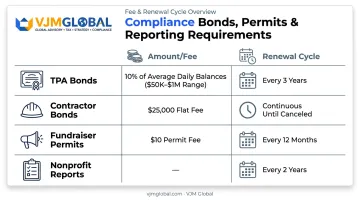
Mixing these cycles up is a common compliance slip. A bond staying active doesn't mean your underlying registration is current, and vice versa.
Risks of Non-Compliance & Common Misconceptions
The biggest myth in this space: assuming "exempt" means a company has zero obligations in Iowa. It doesn't.
Take charitable solicitation. Most nonprofits skip general registration, but they remain fully subject to Iowa's consumer fraud statutes.
Under Chapter 714.16, violations can trigger civil penalties up to $40,000 per violation, plus an additional $5,000 per day for violating an injunction. Exemption from one filing requirement never means exemption from underlying consumer protection law.
For foreign entities operating without required registration, the consequences are concrete:
- Loss of standing to sue: an unregistered foreign LLC or corporation can't bring a lawsuit in Iowa courts until it registers.
- Contracts remain valid: nonregistration doesn't void your agreements or existing debts, so you're still on the hook for obligations incurred while unregistered.
- You can still be sued: the standing bar only blocks you from filing suit, not from being sued or defending yourself.
- Nonprofit-specific penalties: foreign nonprofit corporations face a distinct civil penalty of up to $1,000 total, collectible by the Attorney General, on top of the standing bar.
The practical takeaway: registering late costs you legal standing and sometimes penalties, but it rarely erases your underlying financial obligations. Those follow the business regardless.
Frequently Asked Questions
What is the out-of-state contractor bond in Iowa?
It's a $25,000 surety bond required of contractors based outside Iowa performing work in the state. It guarantees payment of Iowa taxes and related obligations if the contractor fails to meet them.
How do I get a surety bond in Iowa?
Identify the bond type and amount your business category requires, then request quotes from Iowa-authorized surety providers. Submit the completed bond alongside your registration application to the relevant state agency.
How does a bond work in Iowa?
A bond functions as a three-party guarantee between the business (principal), the bond issuer (surety), and the state agency (obligee). If the business fails to meet its obligations, the surety compensates affected parties up to the bond's face value.
Does being "exempt" mean my company has no compliance obligations in Iowa?
No. Exemption usually applies to one specific registration or licensing process. Other obligations, such as bonding, tax filings, or consumer protection laws, often still apply.
What happens if my company operates in Iowa without the required bond or registration?
You risk civil penalties, loss of standing to sue in Iowa courts, and possible restrictions from the Attorney General's office. Existing contracts and debts remain enforceable regardless.
How much does an Iowa exempt company bond typically cost?
Premiums run a small percentage of the total bond amount, varying by industry formula, financial strength, and creditworthiness. Getting quotes from two or three licensed sureties is the best way to find competitive pricing.