%20(1)%20(2).webp)
If you're a manager, you’ve likely faced the frustration of trying to keep track of revenue streams, control expenses, and stay ahead of tax regulations. Running a hospitality business means juggling countless responsibilities, but few are as critical as managing your finances.
From fluctuating room rates to unpredictable food and beverage sales, the financial domain can feel like a constant challenge.
This blog will explore those challenges with practical accounting insights tailored specifically for the hospitality industry. We’ll guide you through key areas, including revenue management, expense control, and tax compliance, as well as how to fine-tune your financial processes for better decision-making.
Hotel accounting is a specialized branch of accounting focused on the unique financial aspects of the hospitality industry. It involves recording and organizing financial transactions to provide insights into a business’s financial health.
Hotel accounting adapts standard accounting principles to account for the distinct needs of hotels, guesthouses, and other accommodation businesses.
Internally, hotel managers use financial reports to monitor performance and make strategic decisions. Externally, investors, lenders, and stakeholders rely on these reports to assess the hotel's profitability and stability.
Now that we understand what hotel accounting is, let’s explore the benefits it brings to the hospitality sector.
Hospitality accounting isn’t like traditional business accounting. It must manage unpredictable demand and high operating costs while focusing on customer satisfaction. Here’s how it stands out:
In the dynamic world of hospitality, effective accounting practices are crucial for maintaining profitability while meeting customer expectations, ensuring long-term success in a competitive market.
With a solid grasp of the benefits, let’s take a closer look at what’s involved in hotel accounting.
.webp)
Hotel accounting is a specialized field that focuses on managing the financials of hotels, resorts, and other lodging businesses. Here are some of the key components:
Hotels generate income from various sources, including room bookings, food sales, and additional services. Effective hotel accounting ensures all these streams are tracked and categorized correctly. On the expense side, tracking labor costs, utilities, and maintenance is equally crucial for maintaining profitability.
Dynamic pricing allows hotels to adjust room rates based on demand, seasonality, or market shifts. Hotel accounting must adapt to these fluctuations, accurately recording the changes to revenue in real time. This requires tailored tools and systems designed for the hospitality industry.
Hotels never close, and neither do their financial transactions. Accounting systems must efficiently manage a wide range of transactions, from guest payments to real-time billing. Security and accuracy are essential to prevent fraud and ensure smooth financial operations.
Hotel payroll is a critical part of accounting. Hotels must comply with labor laws, manage wages, benefits, and taxes, and stay on top of payroll filings like W-2s and 1099s. Expert accountants ensure that the process runs smoothly, meeting federal and state requirements.
Hotels rely on multiple vendors for supplies and services. Accounting includes managing vendor relationships, overseeing accounts payable, and ensuring compliance with contracts.
Effective financial management in hospitality is about balancing revenue and controlling costs. Key elements include sales revenue management, cost control, cash flow analysis, and profitability assessment. Managing these areas enables hotels to maintain financial health while optimizing resources.
Payroll, taxes, and compliance are at the core of hospitality financial accounting. Accurate wage distribution, tax withholding, and adherence to labor laws are essential. Regular reporting and record-keeping ensure compliance, help avoid penalties, and keep the business on track financially.
Mastering these elements helps hotel owners and managers handle the complexities of financial management, ensuring profitability and legal compliance across all operations.
Also Read: Outsource Tax Preparation from the US to India: A CPA’s 2025 Guide
Now that you know the key areas involved, it’s important to understand the core concepts that shape hospitality accounting.
Hospitality accounting follows standard financial structures with hotel-specific elements, providing essential insights into your hotel’s financial position, performance, and decision-making.
Understanding these concepts helps hotel owners and managers tackle the complexities of financial management, improve decision-making, and enhance overall profitability in the competitive hospitality industry.
Also Read: Offshore Accounting in India: 2025 Guide for US CPA Firms
Next, let’s explore some essential hotel accounting metrics that will help you track and improve financial performance.
Vigilantly monitoring key operating metrics is crucial for hotels, as room rentals are limited and the inventory is perishable. Here are some of the most commonly used hotel metrics, along with their formulas, to effectively track financial performance:
These metrics are essential for monitoring and improving financial performance in the hospitality industry.
Also Read: Preparing a GAAP Cash Flow Statement? Outsource from the US to India
Having covered the key metrics, it’s time to talk about how you can get started with hotel accounting and implement these practices.

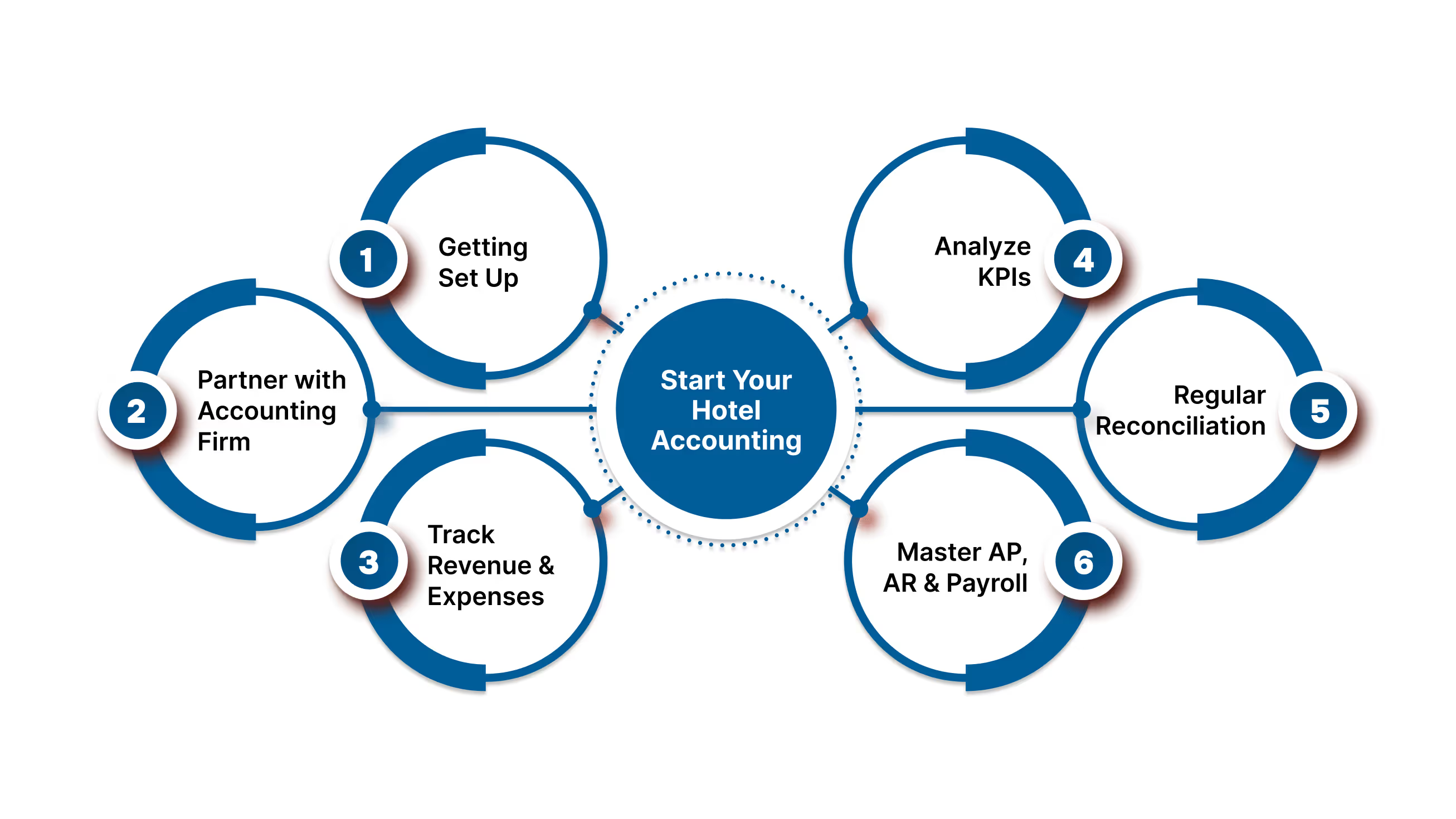
Starting your hotel accounting doesn’t have to be intimidating. Let’s break it down step-by-step:
The first step is to choose the right hotel accounting software tailored to your property’s needs. It should be capable of handling the high volume of transactions typical in the hospitality industry. Make sure to integrate it with your Point of Sale (POS) system for seamless data flow and accurate financial reporting.
Consider partnering with trusted accounting and business solutions like VJM Global, specializing in the hospitality industry. Our team of virtual accountants will manage your finances, reduce overhead costs, and provide peace of mind, allowing you to deliver exceptional guest experiences.
Book a demo to gain expert guidance on financial compliance, revenue management, and strategic planning.
Use your accounting software to track income from room bookings, dining, and other services, alongside expenses like payroll, utilities, and supplies. Regularly reviewing these figures will help you spot trends and make informed decisions that drive profitability.
In addition to tracking revenue and expenses, regularly monitor key performance indicators (KPIs) like Average Daily Rate (ADR), Revenue per Available Room (RevPAR), and Gross Operating Profit per Available Room (GOPPAR).
These metrics provide valuable insights into your hotel’s performance, highlighting areas for growth or improvement.
Reconcile your accounts frequently to ensure everything aligns. This means comparing bank statements, invoices, and financial documents to correct any discrepancies. Regular reconciliation keeps your financial records accurate and helps prevent costly mistakes.
Set clear procedures for managing Accounts Payable (AP) and Accounts Receivable (AR). Use your software to keep track of payments to vendors and ensure prompt collections from guests. Also, streamline your payroll process to guarantee timely and accurate payments to your employees.
Following these steps lays a strong foundation for efficient hotel accounting, helping to ensure financial stability while enhancing your guests’ experience.
Now that you’re ready to start, here’s why partnering with VJM Global can streamline your hotel accounting journey and ensure everything runs smoothly.
Tackling hotel accounting complexities is challenging, but VJM Global is here to simplify the process. Here's how we can support your business:
Let VJM Global handle your financial complexities, allowing you to focus on delivering exceptional guest experiences.
Starting and managing a hotel accounting system may seem daunting, but with the right tools, processes, and expertise, it becomes a powerful asset for your business. Focusing on key areas like revenue tracking, expense management, and compliance ensures your financials are always in check.
Utilizing specialized hotel accounting software and partnering with professionals, like VJM Global, can help streamline operations and improve financial efficiency.
Ready to streamline your hotel accounting?
Free up your team's time by outsourcing accounting to VJM Global, allowing you to focus on growth. Get started today.
Start by selecting reliable hotel accounting software, partnering with a hotel accountant, and establishing a routine for tracking revenue, expenses, and regular reconciliations.
Monitoring KPIs like ADR, RevPAR, and GOPPAR helps you evaluate your hotel's financial performance, identify trends, and make data-driven decisions to improve profitability.
Outsourcing to an accountant allows you to reduce overhead costs, ensure accurate financial management, and focus on improving guest experiences without compromising on financial oversight.
Key processes include tracking revenue and expenses, managing accounts payable (AP) and accounts receivable (AR), payroll, and ensuring regular reconciliation of your financial records.
Partner with an experienced accountant familiar with hospitality laws, track industry-specific tax regulations, and use software that integrates financial data to ensure ongoing compliance.