For U.S. business owners planning to register a company in India, company registration means establishing a legally recognized entity under the Indian Companies Act, 2013. This process enables your business to operate within Indian regulatory frameworks, protecting your personal assets and granting access to a range of opportunities, from tax incentives to easier market entry. For U.S. entrepreneurs planning to register a company in India, VJM Global offers expert services in company incorporation, tax compliance, and regulatory advisory to ensure your business aligns with Indian laws and capitalizes on market opportunities.
Also Read: How Foreign Investors Can Set Up a Company in India: Legal and Tax Guide
Next, let’s explore the key benefits of incorporating a US-based company in India.
Registering your company in India has several strategic advantages for U.S. entrepreneurs. Below are the key benefits that will help U.S. businesses establish a foothold in India:
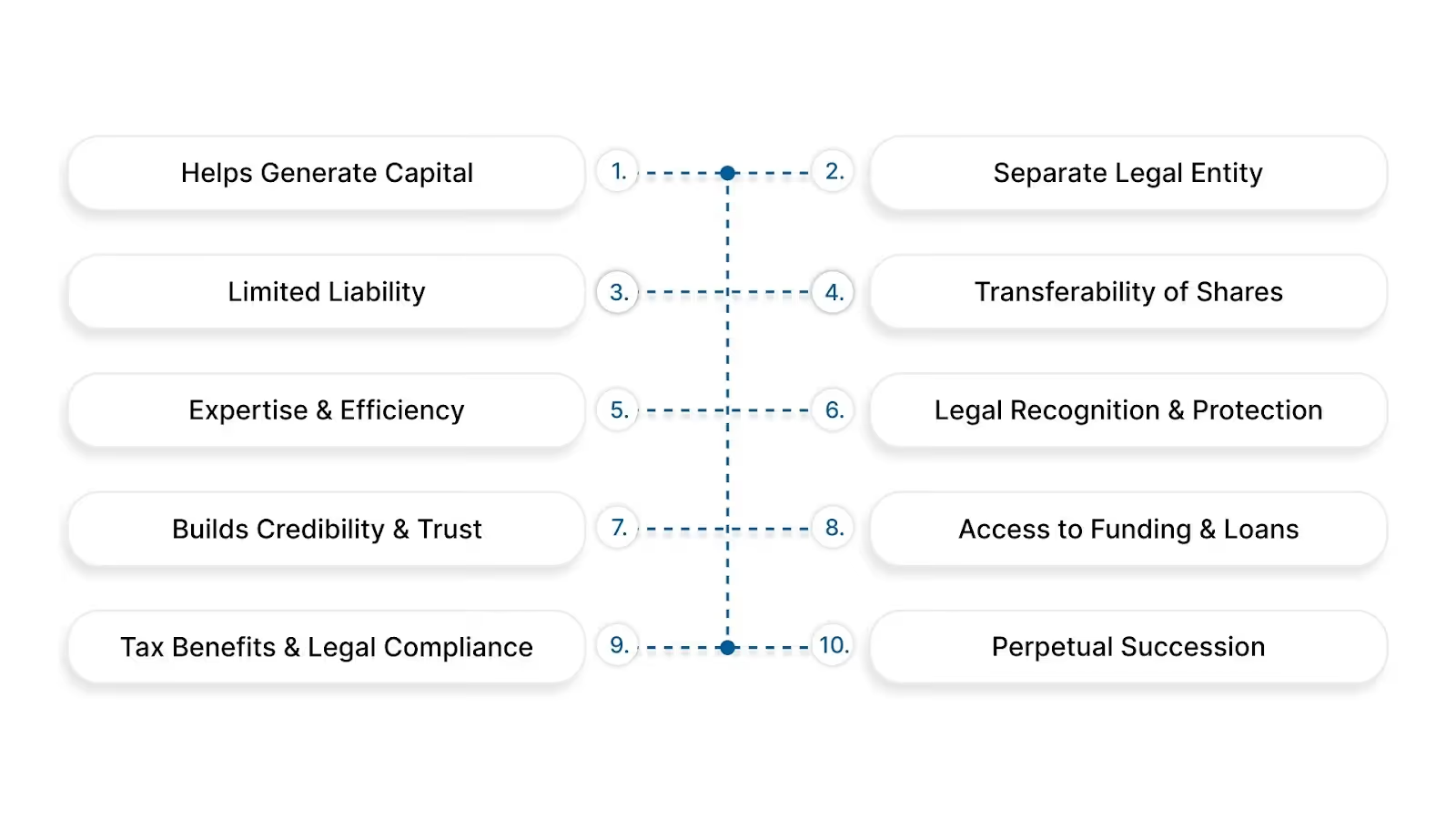
By registering your U.S. company in India, you create a separate legal entity, which limits personal liability. This is crucial for U.S. entrepreneurs, as it ensures personal assets are protected against business debts and liabilities, reducing risk in a foreign market.
A registered company enjoys perpetual succession, meaning it continues to exist even if shareholders or directors change. For U.S. companies expanding into India, this continuity provides stability and long-term security, ensuring business operations are not interrupted.
As a U.S. entrepreneur, registering a company in India provides flexibility for transferring ownership or shares, whether you decide to raise capital or bring in new investors. This makes it easier for you to scale and enter partnerships or joint ventures in the future.
For U.S. businesses entering the Indian market, a registered company boosts credibility among potential clients, partners, and investors. This is essential in a competitive market like India, where a professional, legally recognized entity helps establish trust.
Registration gives your U.S. company the ability to apply for loans, open business bank accounts, and access other financial services in India. This is essential for smooth financial operations, from managing expenses to securing investment.
Registering your business in India unlocks opportunities for scaling and tapping into India’s rapidly expanding market. As a U.S. entrepreneur, this provides access to billions of consumers, robust supply chains, and a growing digital economy.
A registered company can sue and be sued in its own name, which is crucial for U.S. businesses looking to protect their interests and enforce contracts in India, especially in the case of disputes or legal matters.
India offers various tax incentives for startups, including exemptions under Section 80-IAC for eligible businesses. U.S. entrepreneurs can take advantage of tax exemptions and startup benefits like angel tax exemptions under the Startup India Program.
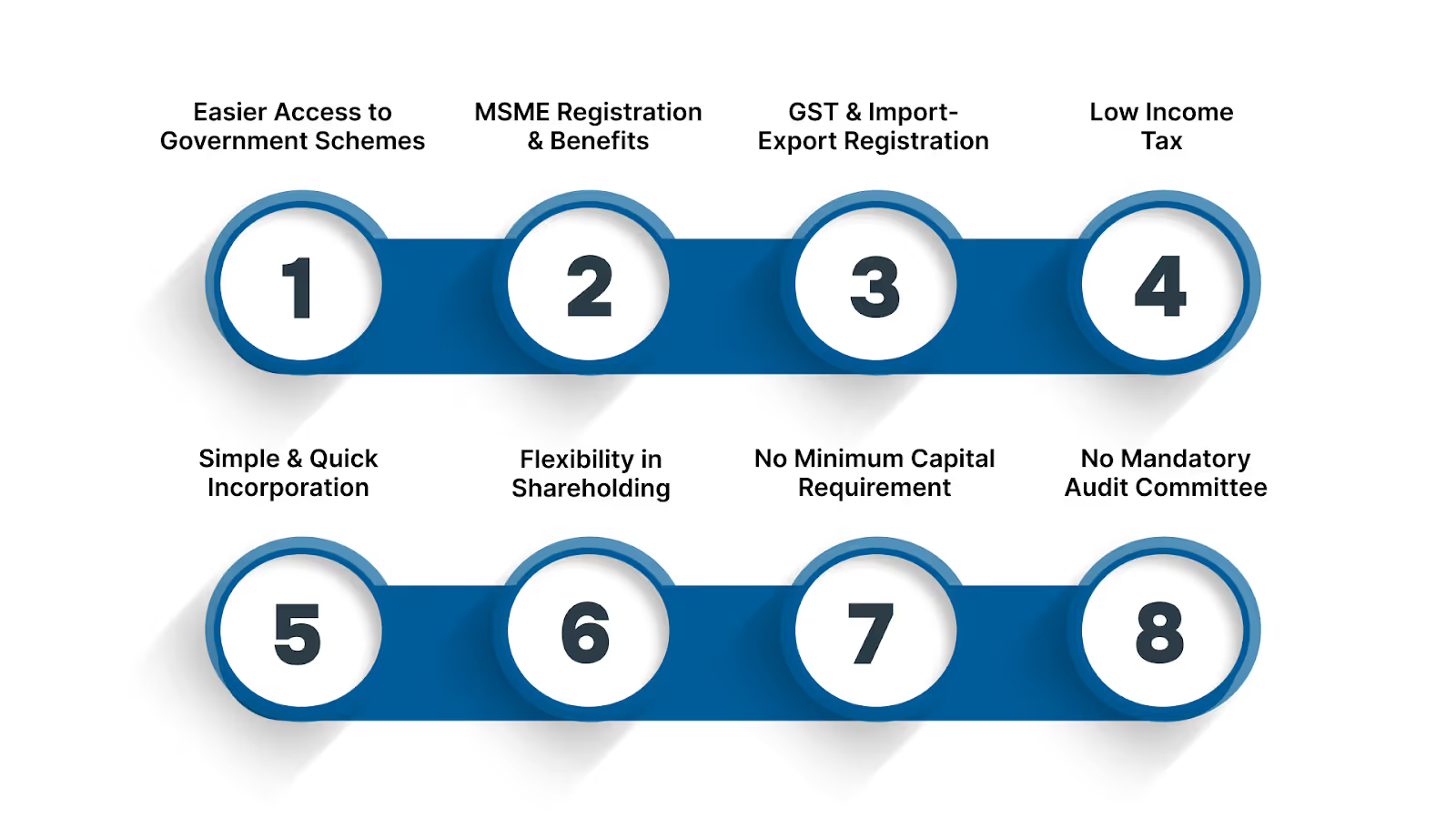
India has increasingly business-friendly laws designed to support entrepreneurs. By registering your company, U.S. businesses can benefit from streamlined regulations, easier access to government schemes, and simplified compliance processes under the Companies Act and Startup India initiatives.
India offers a highly skilled workforce, especially in fields like technology, engineering, and manufacturing. U.S. businesses can tap into this talent pool to improve operational efficiency, innovate, and expand their business.
India’s lower operational costs compared to U.S. standards allow U.S. businesses to operate more cost-effectively. With affordable labor, office space, and supplies, setting up a business becomes more economical, enabling you to invest more into growth.
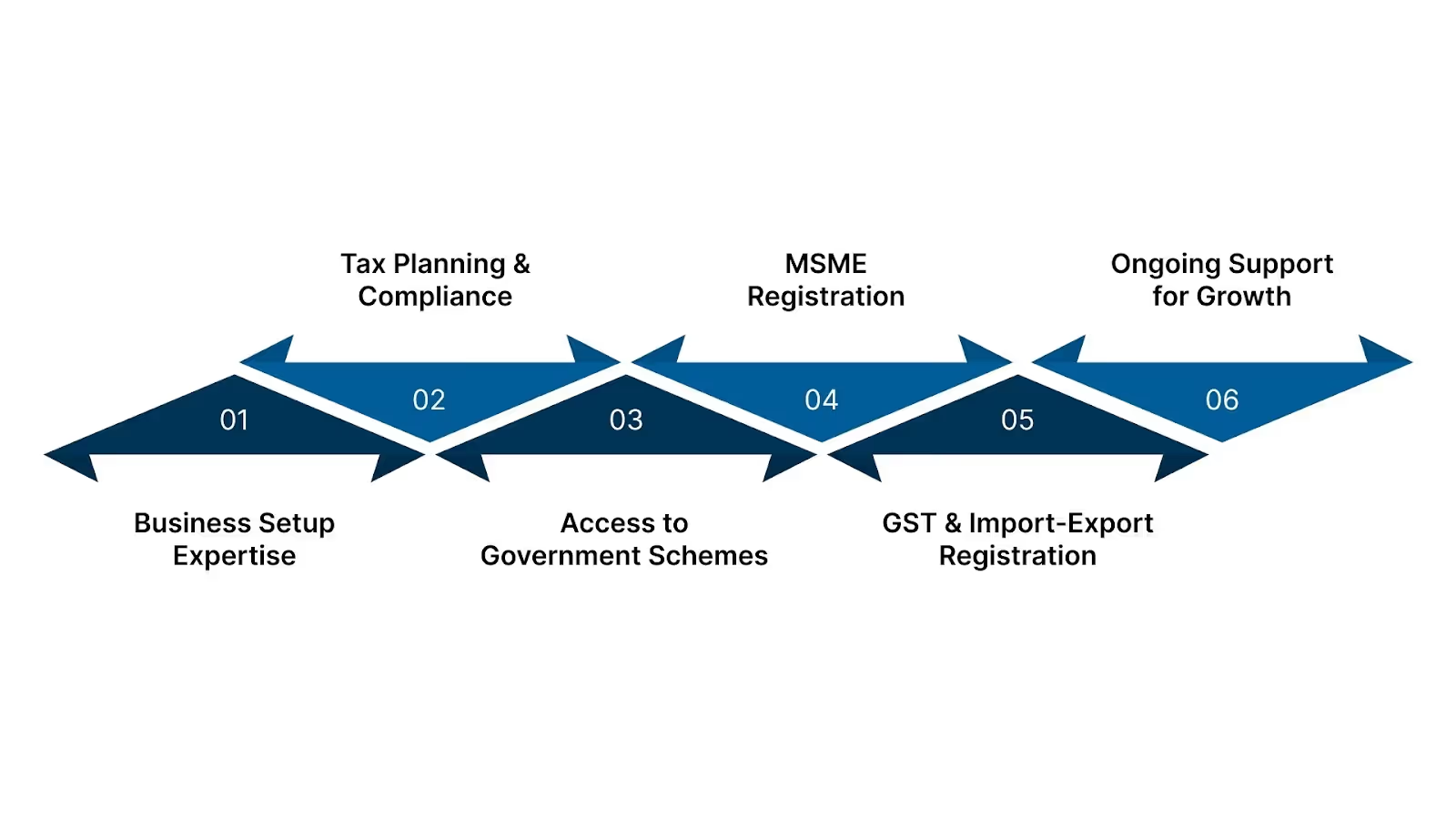
Registering a company in India’s market can be complex, but VJM Global simplifies the process for U.S. business owners with services like subsidiary formation, GST compliance, and financial structuring, helping you build a strong operational foundation.
Also Read: From Idea to Incorporation: A Deep Dive into Company Setup in India and Different Business Types
Now that we understand the advantages, let’s look at the special structures available in India and how to choose the right one for your US business needs.

When starting a business in India, U.S. entrepreneurs need to choose the right business structure. Each option has its advantages based on your company’s goals and market strategies.
An OPC allows a single entrepreneur to have a company with limited liability. This structure is ideal for solo founders with small-scale ventures and minimal investment.
Best for: Solo US entrepreneurs with limited-scale operations and control in India.
An LLP provides limited liability for all partners. It offers flexibility in management while ensuring protection for individual assets. This is suitable for businesses with a few partners.
Best for: Small US businesses or professional services looking for minimal liability but flexible operations in India.
The Private Limited Company is the most common structure for U.S. businesses expanding into India. It offers limited liability, easy capital raising, and the ability to bring in investors.
Best for: Growth-focused businesses seeking to raise capital and attract investors.
For social enterprises or NGOs, a Section 8 company provides tax exemptions and is ideal for companies that operate with a social welfare objective.
Best for: Social impact ventures and non-profits.
A public limited company is ideal if your U.S. business intends to raise capital through public offerings or scale to a large size. This structure gives access to stock markets.
Best for: Large businesses or companies looking to raise capital through public offerings.
Also Read: How to Set Up a Distribution Business in India: A Full Guide
Next, we’ll explore deeper into the details of how to register your US business in India.
Registering a company in India is a multi-step process that ensures legal compliance and helps U.S. entrepreneurs establish a foundation for success.
Step 1: Get a Digital Signature Certificate (DSC)
A DSC is essential for signing electronic documents during the registration process. It’s required for U.S. entrepreneurs to file their company incorporation documents.
Step 2: Apply for Director Identification Number (DIN)
U.S. directors must apply for a DIN with the Ministry of Corporate Affairs (MCA) to legally oversee operations and manage the company’s compliance in India.
Step 3: Reserve Your Business Name
The name of your company must be unique and approved by the MCA. Ensure the name reflects your business operations in India and complies with Indian naming conventions.
Step 4: Submit Incorporation Forms
File the SPICe+ form with the MCA, along with the Memorandum of Association (MOA), Articles of Association (AOA), and apply for PAN and TAN for tax compliance.
Step 5: Receive Certificate of Incorporation (COI)
Once the forms are filed and approved, the MCA will issue a Certificate of Incorporation (COI), confirming your business registration and eligibility to begin operations in India.
With VJM Global's assistance with business setup, FEMA compliance, and transfer pricing, U.S. entrepreneurs can unlock substantial growth opportunities by registering a company in India. This allows your US business to scale effectively while lowering operational and taxation risks in India.