Church accounting isn’t just about balancing books, but also maintaining trust, ensuring transparency, and stewarding the resources entrusted to you. For many U.S. churches, managing finances can feel like walking a tightrope between compliance, donor expectations, and mission-driven goals.
The pressure to keep every transaction accurate and above board, all while serving a growing congregation, can quickly become overwhelming.
With 86% of churches expected to adopt digital accounting or management software by the end of 2025, it's clear that technology is a necessity. However, even with the right tools, how can churches ensure they're meeting regulations while also optimizing their financial processes for growth and sustainability?
This blog will explore best practices for church accounting, including donation tracking, budgeting, and IRS compliance. If you're looking to simplify your church's finances while staying true to your mission, you’re in the right place.
Church accounting involves organizing, recording, and planning a church's finances. Like other nonprofits, churches are required to reinvest all funds into the organization’s mission and operations. However, the primary difference lies in the purpose of the funds. Unlike for-profit businesses that aim to maximize profits, churches are legally prohibited from turning a profit. The core of church accounting is accountability. Since most churches rely heavily on their congregations' generosity, it’s vital to demonstrate that contributions are handled responsibly.
另请阅读:了解月度记账成本与服务
Now that we know what church accounting is, let’s compare it to business accounting to highlight the unique aspects that churches need to manage.
The main difference between church accounting and business accounting lies in the focus on accountability for churches, whereas businesses focus on profit generation. Here’s a detailed breakdown:
Whether you're managing a small community church or a large congregation, adopting the right financial practices will keep you compliant and build long-term sustainability for your mission. With a clear understanding of church accounting, let’s explore the top benefits it brings, from better resource management to increased trust within your congregation.
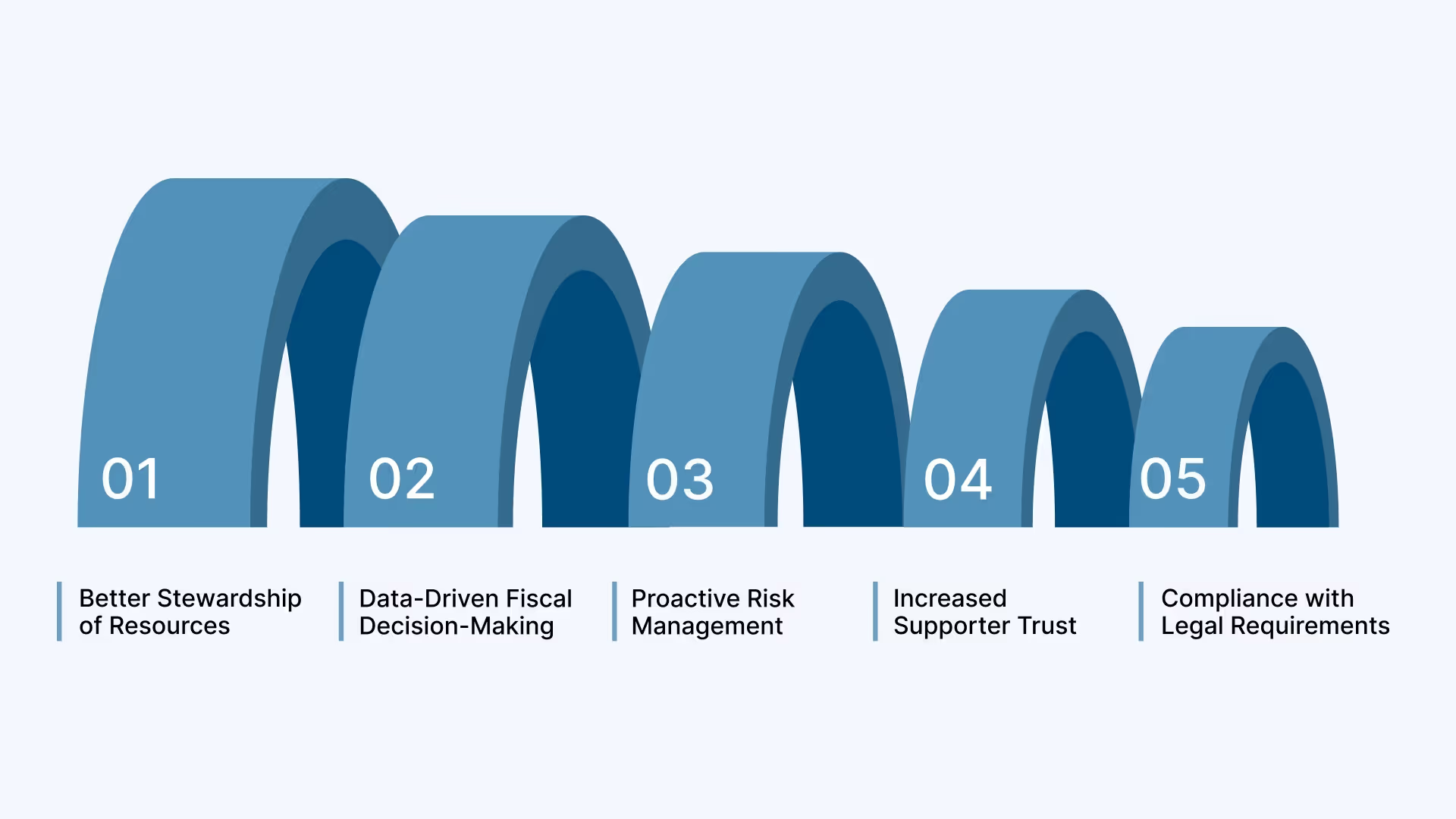
Implementing responsible accounting practices in your church can yield several key advantages, including improved financial stability and increased trust among your congregation. Here's how:
By effectively tracking and allocating funds, you ensure that your church’s resources are put to their best use. Proper accounting enables the efficient allocation of funds for outreach programs, community initiatives, and essential church operations.
When your church keeps accurate financial records year after year, you can make informed decisions. Historical data helps set realistic budgets, plan for future growth, and provide clarity in evaluating your church’s financial health.
Solid accounting practices help identify and mitigate financial risks such as fraud or mismanagement, which could harm the church's reputation. By maintaining transparent records, you safeguard the trust your congregation places in your leadership.
教会财务的透明度可以直接影响捐赠。据一份报告显示,57%的教会通过公开其财务实践实现了捐赠增长。建立在财务清晰基础上的信任,能够鼓励更多的捐赠与支持。
负责任的教会会计工作还能确保您的组织符合宗教和非营利组织的法律要求。这包括遵守美国国税局(IRS)关于《国内税收法》第 501(c)(3) 条项下免税资格的规定。
通过密切关注财务活动,教会领导层可以预见潜在的经济问题,从而实现更好的规划和资源分配。
对于寻求专业支持的教会,VJM Global 提供全面的会计和簿记外包服务。他们的专业团队在非营利组织会计方面经验丰富,深谙教会所面临的独特挑战,包括 IRS 合规性和资金追踪。
延伸阅读:进行组织评估的关键步骤:为什么美国公司选择外包至印度
为了有效管理教会财务,您需要了解用于追踪收入、支出和资产的关键文件。以下是其中最重要的几项。
为了有效管理教会财务,了解用于追踪收入、支出和资产的关键会计文件至关重要。以下是其中最重要的几项:
会计科目表是教会财务记录的基石。它将教会的收入和支出整理为不同类别,以便于追踪和报告。主要类别通常包括:
虽然许多教会使用基于统一会计科目表(UCOA)的标准科目表,但也有一些教会选择根据自身特定需求定制模板。
教会的运营预算是全年的财务路线图。它概述了所有教会活动的预期收入和支出。要制定合理的预算,请考虑以下几点:
运营预算是一份动态文件,因此请每月进行核对,以确保支出和筹款工作步入正轨。
这些文件提供了教会财务状况的概览。每个教会都需要以下关键财务报表:
这些财务报表不仅有助于内部管理,对于向会众、捐赠者和监管机构报告时的透明度也至关重要。
While most churches are tax-exempt, they still have specific tax filing responsibilities. Here are some key forms your church must keep in mind:
Staying on top of these filings helps your church avoid unnecessary penalties or compliance issues.
By keeping track of these key church accounting documents, you’ll ensure that your church’s finances remain in good standing and help with planning for future growth. Now that you know the key documents, let’s move on to the best practices that ensure your church’s accounting system remains efficient and compliant.
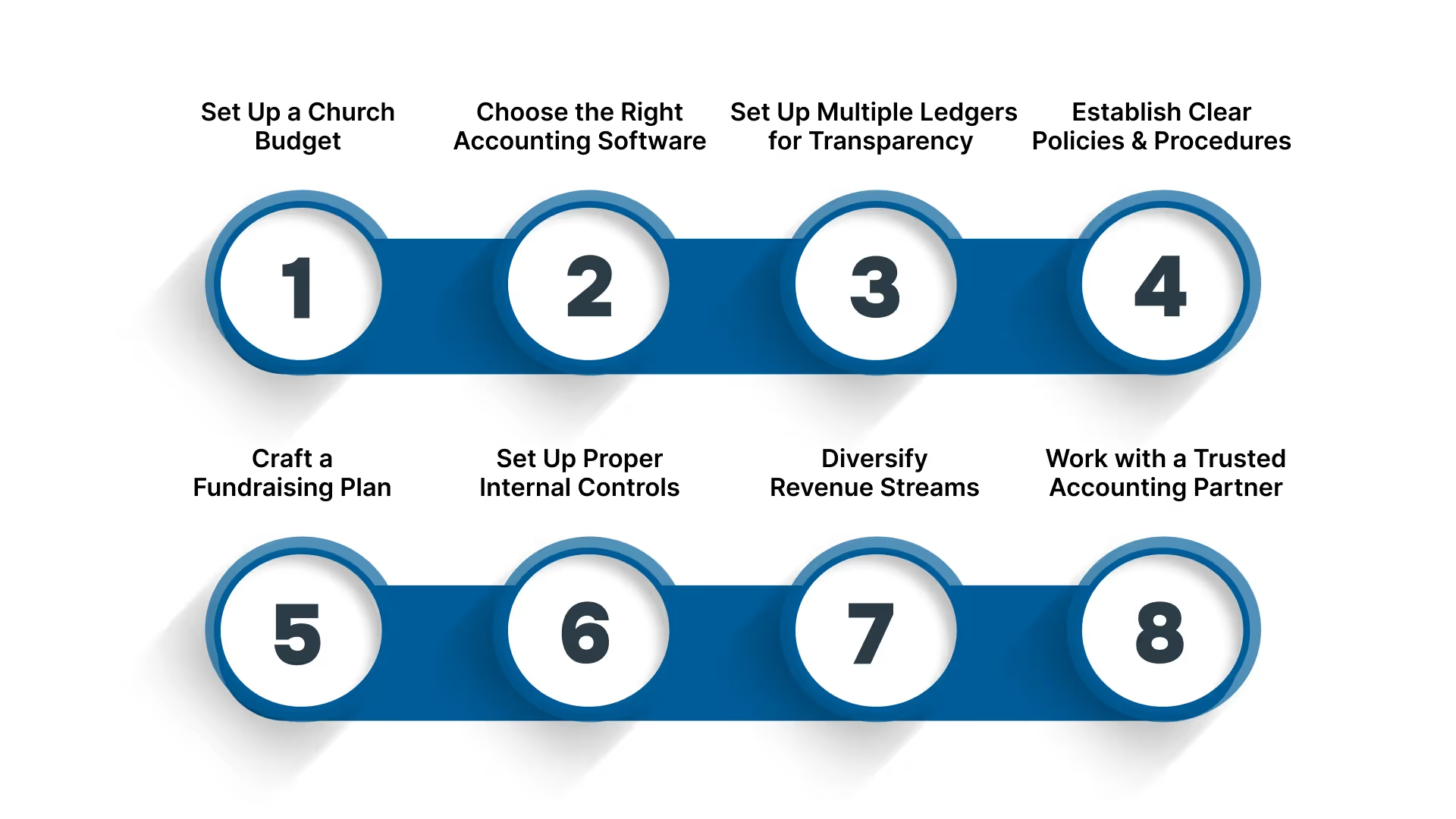
A strong financial system helps you maintain accountability, comply with legal requirements, and use your resources wisely. Here are some best practices to guide you:
A well-structured budget serves as the financial roadmap for your church. Here's how to get it right:
Investing in reliable church accounting software streamlines processes, reduces errors, and enhances financial oversight. Look for software with these features:
At VJM Global, we use tools like QuickBooks to provide streamlined accounting and financial oversight for churches. Our cross-border expertise ensures your church’s finances are managed efficiently, with secure and customizable solutions tailored to your needs. Talk to an expert today.
Churches should use multiple ledgers to clearly organize and report financial information. This ensures transparency, keeps restricted and unrestricted funds separate, complies with donor requirements, and enhances trust among the congregation. It also helps track ministry-specific expenses, making it easier to report on each fund's activity.
Your church should have clear, written policies for managing finances. Implement procedures such as dual-signature requirements for checks, approval requirements for large expenditures, and regular audits to prevent errors and fraud.
A well-organized fundraising plan ensures the church can meet its financial needs while fulfilling its mission. Here’s how to approach it:
建立一套由不同人员负责不同财务任务的系统,以确保问责制。以下是一些建议:
仅依赖单一收入来源会使教会面临财务风险。为建立财务稳定性,应实现收入来源多元化:
拥有多种收入来源可确保教会保持财务稳定,并能持续履行其使命。
在美国管理教会财务需要极高的精确度、透明度以及对非营利组织合规性的遵循。在 VJM Global,我们为教会提供符合美国非营利组织法规的簿记、审计支持及财务报告服务。
让我们协助您的教会简化会计流程,确保完全符合监管要求,让您的领导团队能够专注于教会使命。 立即联系我们。
遵循这些最佳实践,您的教会将能有效管理财务资源,并在会众中建立信任、透明度和问责制。秉持这些原则,VJM Global 随时为您提供专业支持,确保教会的财务管理始终步入正轨并符合合规要求。
在 VJM Global,我们深知教会独特的财务需求。我们提供量身定制的服务,以确保合规性、透明度和高效的财务管理:
让 VJM Global 处理您教会的财务需求,让您能专注于教会使命。
以准确和合规的方式管理教会财务,对于维护信任和透明度至关重要。避免常见错误并时刻掌握法律和财务义务,有助于教会平稳运行,无论是在积极发展阶段还是在活动暂停期间。
在 VJM Global,我们专注于帮助教会和非营利组织以精确和合规的方式管理财务。从跟踪捐款和管理受限基金,到确保及时进行税务申报,我们经验丰富的团队提供全面的支持,确保您的教会稳步前行。
立即联系我们,了解我们如何简化您教会的财务管理,并为未来的发展奠定基础。
The best way to track donations is to keep a detailed record of all contributions, whether received in cash, by check, or via online payment platforms. Using accounting software can streamline this process and ensure accuracy in reporting.
Yes, churches must file annual tax returns, even if they have no income or business activity. The IRS requires churches to file Form 990 or 990-EZ, depending on their income, to maintain tax-exempt status.
Yes, churches can be audited by the IRS or local tax authorities. Regular audits ensure financial transparency, protect against fraud, and maintain public trust. Churches should conduct periodic internal audits and maintain accurate financial records.
VJM Global offers a full range of accounting services, including tax filings, donation tracking, compliance management, and financial reporting. We help churches stay compliant with both local and international regulations, ensuring transparency and operational efficiency.