5 Key Impacts of Family Business Accounting for Owners

Published on:
December 12, 2025

Table of contents

Talk to Us
Thank you! Your submission has been received!
Oops! Something went wrong while submitting the form.

One Firm,
Global Solutions

We support cross-border business with confidence and clarity.
Book a Call

When you manage a family-owned firm, the financial picture is shaped by decisions that rarely follow standard corporate patterns. Capital moves between households, reimbursements happen without formal logs, and long-term customer relationships influence cash timing in ways that traditional systems do not capture. These factors make family business accounting a technical discipline, not an administrative task, because the quality of the records affects profit clarity, tax exposure, and the stability of owner balances.

Owners who rely on the books for planning need accounting that reflects actual behavior inside the firm rather than assumptions built for conventional companies. This is where accurate family business accounting becomes a strategic anchor for daily operations and long-term continuity.

In this guide, you will see five key impacts that directly shape how owners interpret financial data and manage control across generations.

Key Takeaways

  • Family business accounting requires tagging personal spending, capital shifts, and withdrawals to individual owners to prevent profit distortion and maintain accurate household-level balances.
  • Irregular cash behavior driven by familiar buyers and informal credit cycles can only be forecasted through segment-wise inflow tracking and analysis of relationship-based repayment patterns.
  • Related-party loans and cross-entity transfers need documented schedules tied to real cash movement instead of verbal agreements to avoid reconciliation gaps during audits.
  • Approval routes in family firms must reflect real influence patterns, not job titles, making mapped workflows and stored evidence critical for audit clarity and internal control.
  • Strong historic record reconstruction, often needed in multigeneration firms, resolves missing entries, undocumented adjustments, and legacy gaps that would otherwise affect successors and lender reviews.

What Family Business Accounting Covers

What Family Business Accounting Covers

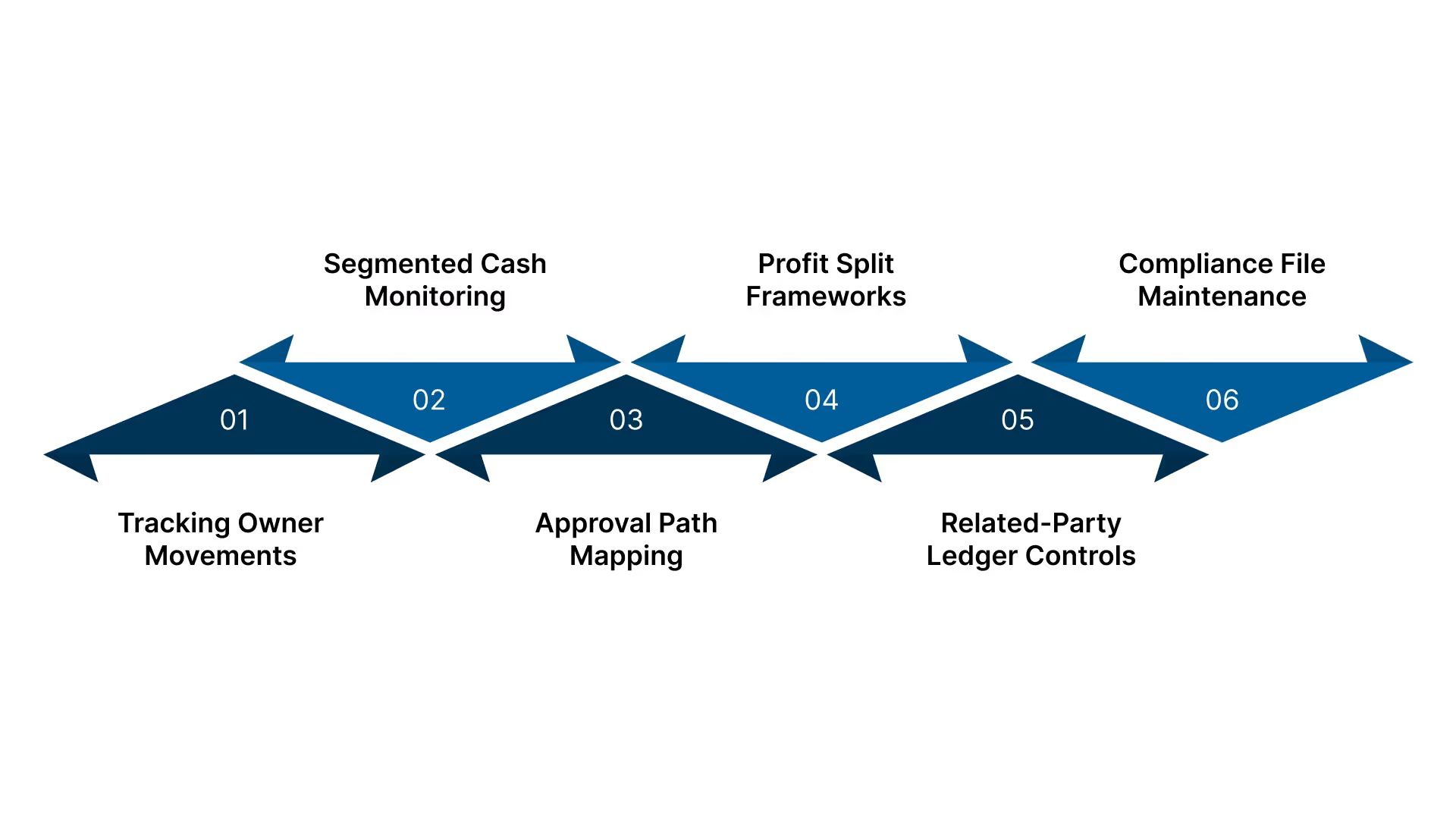
Family business accounting must account for intertwined ownership interests, informal authority structures, and irregular financial habits that develop when relatives manage both cash and control. The work centers on documenting money flows that mix personal priorities with business requirements, while keeping records strong enough for lenders, auditors, and future successors.

  • Tracking Owner Movements: Records capital draws, profit withdrawals, and personal payments routed through business accounts, with clear tagging for each family member’s ledger position.
  • Segmented Cash Monitoring: Maintains daily cash snapshots across product lines, locations, and related family entities to detect stress points tied to seasonal sales or informal credit extended to known parties.
  • Approval Path Mapping: Builds payment and vendor-setup rules that reflect actual influence patterns in the family, noting who authorizes which items and where conflicts of interest may arise.
  • Profit Split Frameworks: Creates documented allocation methods for dividends, reserve pools, reinvestment plans, and successor payouts, supported by schedules aligned with tax positions.
  • Related-Party Ledger Controls: Captures loans, advances, asset transfers, and cross-entity payments among family-owned units with audit-ready schedules for each counterparty.
  • Compliance File Maintenance: Prepares statutory books, payroll data trails, and evidentiary support for tax filings when leadership duties rotate among relatives during the year.

Once these accounting responsibilities are in place, the gaps created by informal cash habits and overlapping family roles become easier to identify, which leads directly to the pressures most family-run firms face.

For a connected reference on handling payables with outside support, refer to Understanding the Advantages of Outsourcing Accounts Payable

Common Accounting Pressures in Family-Run Firms

Family-run firms often operate with habits carried over from personal money management, which creates pressure points that do not appear in standard corporate accounting. These patterns affect how cash moves, how approvals occur, and how past records can be verified during audits or lender reviews.

Pressure

What It Means in Practice

Untracked Owner Payments

Personal spending is coded as business expenses, leading to misstated profit and incorrect tax positions.

Cash Flow Distortions

Collections depend on long-standing informal credit with familiar buyers, causing unpredictable inflows.

Conflicted Approval Routes

Vendor creation and payments run through relatives with overlapping authority, leaving audit trails unclear.

Unplanned Withdrawals

Owners take periodic cash draws without scheduling, disrupting cash projections and pay cycles.

Inconsistent Payroll Records

Family members shift roles without updated payroll entries, creating mismatched wage reports.

Undefined Related-Party Loans

Money moves between family entities without agreements, complicating statutory reviews and reconciliations.

Missing Legacy Records

Older transactions lack documentation, forcing reconstruction of historic balances for lenders or auditors.

These pressure points reveal where financial blind spots form inside family-run firms, which makes the measurable impacts of strong family business accounting even more visible in day-to-day control.

If you need a connected resource covering record-keeping duties under various Acts, visit Books of Accounts under different Acts| Company Law| Income Tax Act| GST law

Outsource your bookkeeping and save time without compromising accuracy. Let us handle the books.

Key Impacts of Strong Family Business Accounting

Key Impacts of Strong Family Business Accounting

When family relationships influence spending, withdrawals, approvals, and related-party activity, strong accounting creates a stable data structure that supports lender reviews, tax assessments, and internal governance. Its impact is most visible when informal routines start producing financial blind spots.

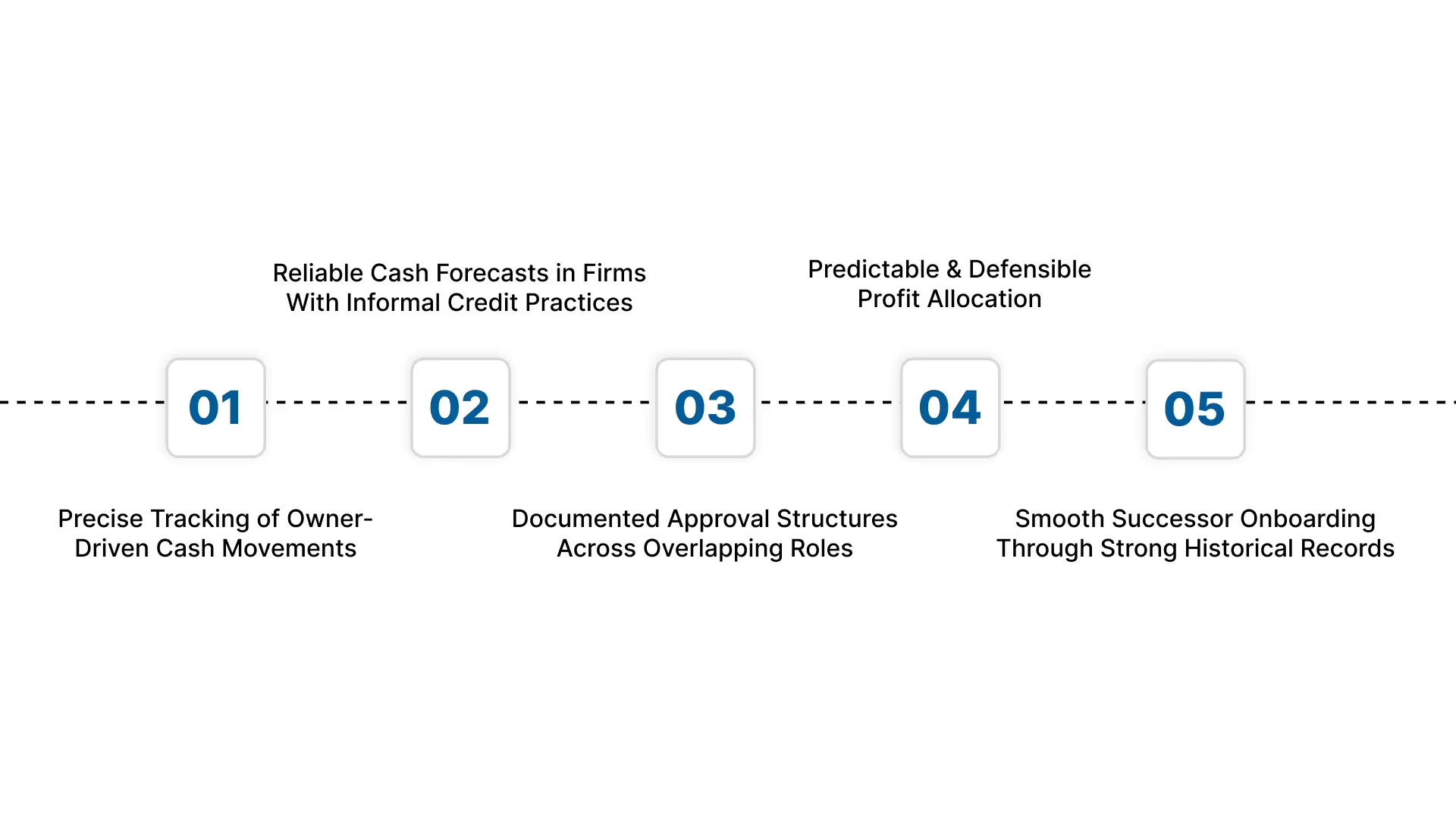
Impact 1: Precise Tracking of Owner-Driven Cash Movements

Strong family business accounting creates documented trails for transactions driven by relatives whose personal and business finances often overlap.

  • Capital Position Clarity: Maintains running schedules showing each owner’s paid-in capital, reductions, and adjustments tied to tax positions.
  • Tagged Personal Transactions: Flags personal purchases routed through business accounts, listing who initiated them and which ledger they affect.
  • Withdrawal Chronology: Maintains timed logs of cash draws so short-term liquidity shifts can be forecast without guesswork.

Impact 2: Reliable Cash Forecasts in Firms With Informal Credit Practices

Many family-run firms extend informal credit to long-term buyers. Strong records convert these habits into measurable patterns.

  • Customer Credit Profiles: Tracks credit extensions given to familiar buyers and logs repayment trends across months and seasons.
  • Segment-Wise Cash Inflows: Breaks down incoming cash by product line, branch, and related-party transactions to reveal stress points.
  • Variance Tracking: Identifies cash gaps caused by delayed settlements from relatives or related entities.

Impact 3: Documented Approval Structures Across Overlapping Roles

Family members often carry informal authority. Accounting introduces documented controls that remove ambiguity, something VJM Global frequently sets up for US clients.

  • Approval Role Mapping: Lists every individual with payment, vendor, or reimbursement approval rights and stores their signatures or e-approvals.
  • Parallel Authority Checks: Detects instances where two relatives authorize the same item, creating conflicting audit trails.
  • Vendor Setup Evidence: Stores support documents for each vendor added by family members, preventing unverified additions.

Impact 4: Predictable and Defensible Profit Allocation

Strong records reduce disputes around earnings distribution, especially when multiple households depend on the same business.

  • Profit Split Documentation: Maintains written methods for distributions, showing formulas, eligibility, and timing.
  • Reserve Designation Logs: Lists funds held for tax payments, liquidity buffers, and known family obligations.
  • Reinvestment Rationale: Records why profits were moved into specific projects or assets, creating transparency for successors.

Impact 5: Smooth Successor Onboarding Through Strong Historical Records

Successors often inherit incomplete or verbally passed information. Strong accounting preserves institutional knowledge that would otherwise be lost.

  • Historic Ledger Reconstruction: Rebuilds missing entries affecting asset values, old payables, or past related-party adjustments.
  • Policy Continuity Records: Stores written rules covering spending authority, payout cycles, and dispute processes across generations.
  • Entity Relationship Maps: Maintains diagrams showing cash flows between all family-controlled entities, which VJM Global often organizes during transitions.

Once these impacts surface in the books, the difference between a routine service provider and a partner capable of handling owner-linked patterns becomes clear, which leads to what to look for when selecting one.

Strengthen your family-run firm with a partner that brings clean books, steady controls, and cross-border support through VJM Global from the US to India.

How to Pick the Right Accounting Partner

Family business accounting requires a partner who can interpret owner-driven activity, repair incomplete histories, and manage related-party flows with clarity. VJM Global supports these needs for many US family-run firms.

  • Experience With Owner-Linked Transactions and Multi-Household Capital Records: The partner must classify personal spending inside business books, maintain separate capital schedules for each household, and record withdrawals in a way that preserves accurate liquidity signals across branches.
  • Strength in Reconstructing Historic Gaps and Cleaning Legacy Records: A strong partner can rebuild missing entries from bank traces, correct undocumented cross-entity activity, restore damaged ledgers, and prepare clean files for lenders or auditors without recurring adjustments.
  • Capability to Document Approval Paths Based on Real Influence: Family firms rely on informal decision habits. The partner must convert verbal approval routines into traceable workflows, capture evidence for each action, and detect overlapping authority that distorts payment control.
  • Mastery of Related-Party Tracking and Cross-Entity Financial Links: The partner must maintain loan registers for all family-controlled units, track cross-entity balances, document settlements, and tie every figure to an identifiable cash movement rather than verbal arrangements.
  • Depth in Cash Pattern Diagnostics and Seasonality Interpretation: Cash behavior often depends on familiar buyers and informal credit. The partner must segment inflows, identify recurring timing patterns, and build projections tied to actual repayment cycles. VJM Global manages this regularly.

These selection criteria set the benchmark, and VJM Global meets them through daily work with family-run firms that require precise handling of owner-linked activity and related-party records.

For a deeper look at managing receivables in smaller firms, see the Small Business Accounts Receivable Guide for Success

From bookkeeping to audit prep, we handle it all. Discover how outsourcing can work for you.

Why VJM Global Supports Family-Run Firms Effectively

Why VJM Global Supports Family-Run Firms Effectively

Family-run companies often deal with owner-linked spending, incomplete historical records, irregular cash cycles, and related-party activity across entities. VJM Global handles these patterns daily, applying structured accounting processes that match the realities of multigeneration control and informal financial habits.

Specialization in Owner-Linked Cash Activity

VJM Global classifies personal transactions inside business books, maintains detailed capital positions for each household, and records withdrawals in a format lenders and auditors can evaluate without clarification.

Capability to Rebuild Fragmented Financial Histories

Many family firms carry partial ledgers. VJM Global reconstructs missing entries from bank traces, archived vouchers, and undocumented adjustments, restoring files so successors and auditors receive complete schedules.

Documented Approval Structures for Overlapping Family Roles

Family influence often outweighs job titles. VJM Global converts verbal approval habits into traceable workflows, storing evidence for vendor setups, reimbursements, and transfers across all involved parties.

Precision With Related-Party Tracking Across Family-Controlled Units

VJM Global maintains loan registers, cross-entity balances, and settlement trails for each unit under family control, tying every figure to identifiable cash movement instead of informal agreements.

Clear Interpretation of Cash Patterns and Relationship-Driven Credit Cycles

Cash behavior in family firms depends on family buyers and seasonal outlets. VJM Global segments inflows, identifies recurring repayment timing, and prepares forecasts tied to real collection habits.

With these capabilities, VJM Global gives family-run firms accounting support that reflects real operational behavior and strengthens financial clarity across every branch of the business.

Wrapping Up

Strong control over owner-linked spending, multi-household capital movements, and related-party activity gives family-run companies a financial base they can depend on. With accurate family business accounting, owners gain visibility into cash behavior, profit distribution patterns, and the true position of each branch of the family. This level of clarity becomes even more important when lenders, auditors, or successors rely on the books to evaluate risk and continuity.

VJM Global supports US family-run firms that need structured family business accounting capable of handling irregular cash cycles, fragmented historical records, and overlapping authority across relatives. Our team prepares audit-ready files, documents approval paths, and organizes related-party schedules so owners have clean, dependable data for both daily operations and long-term planning.

If your firm needs accounting support that reflects how family-driven decisions shape the books, VJM Global is ready to help you strengthen financial control and create reliable records for future growth.

FAQs

1. How does family business accounting handle personal payments routed through business accounts?

Family business accounting tags each personal expense to the correct owner’s ledger, adjusts capital accounts when needed, and documents the entry so tax exposure is not distorted.

2. Can family business accounting separate capital positions for different branches of the same family?

Yes. It maintains individual capital schedules for each household, recording contributions, withdrawals, reallocations, and settlement entries that clarify ownership without merging balances.

3. How are undocumented related-party loans treated in family business accounting?

They are reconstructed using bank traces, communication records, and timing patterns. Once verified, they are logged with clear schedules showing opening balance, adjustments, and settlement status.

4. What happens when multiple relatives approve payments without a formal workflow?

Family business accounting converts these informal habits into documented approval trails, capturing evidence for each action so auditors and lenders can trace every transaction.

5. How does family business accounting manage income that flows through family-run outlets or long-standing personal relationships?

It segments inflows by outlet or customer group, identifies repayment timing patterns tied to relationship-driven credit, and builds forecasts that reflect these recurring behaviors.

Recent Blogs

Contact Us

We'd love to hear from you! Please fill out the form and we'll get back to you as soon as possible.