A Step-by-Step Guide to Farm Bookkeeping for US Entrepreneurs Expanding into India

Published on:
December 6, 2025

Table of contents

Talk to Us
Thank you! Your submission has been received!
Oops! Something went wrong while submitting the form.

One Firm,
Global Solutions

We support cross-border business with confidence and clarity.
Book a Call

Expanding your U.S.-based agricultural farm into India is no small feat. While the potential for growth in India’s vast agricultural market is enormous, one of the most important elements you must get right is farm bookkeeping. 

As a U.S. entrepreneur managing farm operations in India, you're not just managing seasonal harvests, livestock cycles, and production schedules; you're also dealing with complex financial reporting, tax compliance, and international transactions.

This blog serves as a guide for U.S. agricultural businesses that are expanding to India, providing specific insights into bookkeeping for farmers and addressing the complexities unique to the Indian agricultural market.

Key Takeaways

  • Accurate GST filing is crucial for U.S. agricultural businesses expanding to India, requiring careful tracking of input and output tax.
  • Seasonal income should be forecasted and managed with accounting tools to maintain a stable cash flow throughout the year.
  • Accrual accounting is recommended for accurate revenue and expense matching, while cash basis accounting is simpler but may not meet GST requirements.
  • Cloud-based accounting software helps U.S. agricultural businesses handle and maintain accurate financial records while complying with Indian tax laws.
  • Payroll management for Indian employees requires automated systems that comply with Indian labor laws like PF and ESI, ensuring timely payments.

What is Farm Bookkeeping?

Farm bookkeeping involves maintaining accurate financial records for every activity related to farm operations, from crop production to livestock management. In India, agricultural bookkeeping includes managing income and expenses tied to crop yields, livestock sales, equipment investments, and even government subsidies.

For U.S. agricultural businesses entering India, farm bookkeeping must address both U.S. and Indian tax regulations, including GST (Goods and Services Tax), compliance with Indian Financial Reporting Standards (IFRS), local tax filings, and the long-term nature of agricultural investments.

Expanding your U.S. farm to India requires understanding both U.S. GAAP and Indian tax regulations. VJM Global offers comprehensive bookkeeping services such as GST compliance, outsourcing accounting, and financial reporting tailored for agricultural businesses. Our experts ensure your farm’s books are organized and tax-compliant from day one, so you can focus on growth.

IMAGE CTA 1

Now that we've explored farm bookkeeping, let’s look into why farm bookkeeping matters for U.S. entrepreneurs looking to expand to India.

Why Farm Bookkeeping Matters for U.S. Entrepreneurs Expanding to India

7 Key Steps for Successful Farm Bookkeeping for U.S. agricultural businesses in India

For U.S. entrepreneurs expanding to India, effective farm bookkeeping is key to dealing with local regulations and ensuring financial success in the new market.

1. Maintains Financial Transparency and Control

Farm bookkeeping helps U.S. entrepreneurs who are expanding into India’s agricultural market understand their farm’s financial health. Tracking income from crop sales, livestock, and other farm-based services provides clarity on where money is being spent and earned. 

2. Helps with Tax Filing and Compliance

For U.S. entrepreneurs unfamiliar with the Indian local regulations, farm bookkeeping helps track GST-paid expenses and GST-collected revenues. This guarantees tax compliance and reduces the risk of penalties from Indian tax authorities like the Income Tax Department and CBIC (Central Board of Indirect Taxes and Customs).

3. Informs Strategic Business Decisions

Accurate financial records help U.S. farm operators in India assess which crops or livestock breeds are the most profitable. Bookkeeping helps identify cost-effective strategies, from optimizing land use to improving crop yield per hectare.

4. Aids in Long-Term Investment Planning

Farm operations in India often require large investments in land, equipment, and infrastructure. Bookkeeping allows U.S. entrepreneurs to track these investments over time for proper depreciation and tax treatment according to Indian tax laws.

5. Prepares for Audits and Financial Transparency

With thorough bookkeeping, U.S. businesses in India will be prepared for audits and ensure financial transparency when presenting their accounts to stakeholders.

Also Read: Key Differences Between Bookkeeping and Accounting Explained

To better understand its importance, let’s break down the key components of agricultural bookkeeping for U.S. agricultural businesses operating in India.

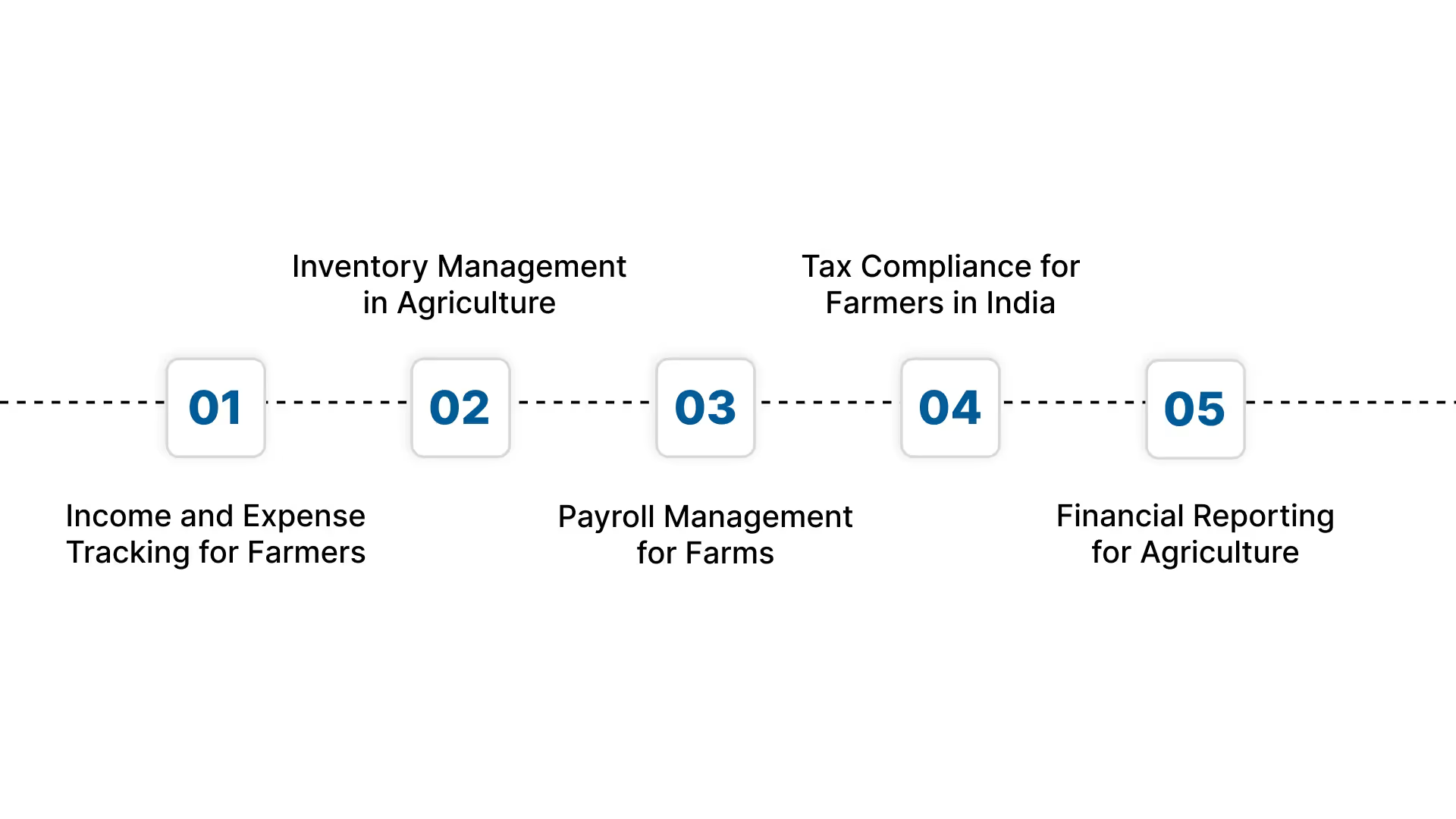
5 Key Components of Agricultural Bookkeeping for U.S. Agricultural Businesses in India

Effective agricultural bookkeeping requires attention to several components that help maintain financial accuracy and GST compliance. For U.S. agricultural businesses expanding into India, these components are vital for day-to-day operation.

1. Income and Expense Tracking for Farmers

Tracking income from crop sales, livestock, and government subsidies and expenses related to seeds, fertilizers, fuel, and labor costs must be recorded accurately for tax purposes. Managing this information helps U.S. businesses in India maintain compliance and avoid overpaying taxes.

2. Inventory Management in Agriculture

In India, agriculture is often seasonal, and managing inventory such as seeds, fertilizers, pesticides, and equipment is essential. For U.S. entrepreneurs, using accounting software to track inventory helps prevent waste and ensures that inventory valuation is consistent with Indian tax rules.

3. Payroll Management for Farms

Managing employee wages and benefits is important for maintaining compliance with Indian labor laws like the Provident Fund (PF) and Employee State Insurance (ESI). Bookkeeping systems must capture wage data for U.S. agencies to verify accurate tax withholdings and employee payments in India.

4. Tax Compliance for Farmers in India

For U.S. agricultural businesses in India, GST filing is an ongoing obligation. Tracking GST paid on purchases (input tax) and charged on sales (output tax) is a key part of bookkeeping. Proper tax reporting keeps compliance with Indian tax authorities, reducing the risk of penalties.

5. Financial Reporting for Agriculture

Producing financial reports such as P&L statements and balance sheets is essential for tracking the overall performance of the business. These reports help U.S. entrepreneurs in India monitor profitability, calculate taxes, and forecast financial needs for future expansion.

Also Read: Understanding Financial Solvency: Key Concepts and Meaning

With these key components in mind, let’s explore the accounting methods U.S. agricultural businesses must adopt when expanding to India.

Accounting Methods for U.S. Agricultural Businesses in India

When expanding into India, U.S. agricultural businesses should choose the appropriate accounting method that aligns with Indian tax requirements.

1. Cash Basis Accounting

Cash basis accounting records transactions when cash is received or paid. This method helps U.S. farm businesses in India track immediate cash flow and manage financial fluctuations typical of agricultural businesses, especially those with seasonal revenue.

2. Accrual Basis Accounting

Under accrual basis accounting, income and expenses are recorded when they are earned or incurred, regardless of when cash is exchanged. This method provides a clearer picture of a U.S. agricultural business’s financial health, helping owners make informed decisions for growth in India.

GST compliance can be a challenge for U.S. farms in India, but VJM Global makes it easy. We offer GST advisory, GST audits, and GST outsourcing services, helping you deal with India’s complex tax system. Our accounting team assures all records are accurately maintained, ensuring GST filing and tax deductions are handled smoothly, avoiding penalties.

Avoid costly legal mistakes, let our chartered accountants guide your India expansion.

Also Read: Understanding and Avoiding Commingling of Funds

Having learned about accounting methods, let's look at the 7 key steps for agricultural success through effective bookkeeping for U.S. businesses in India.

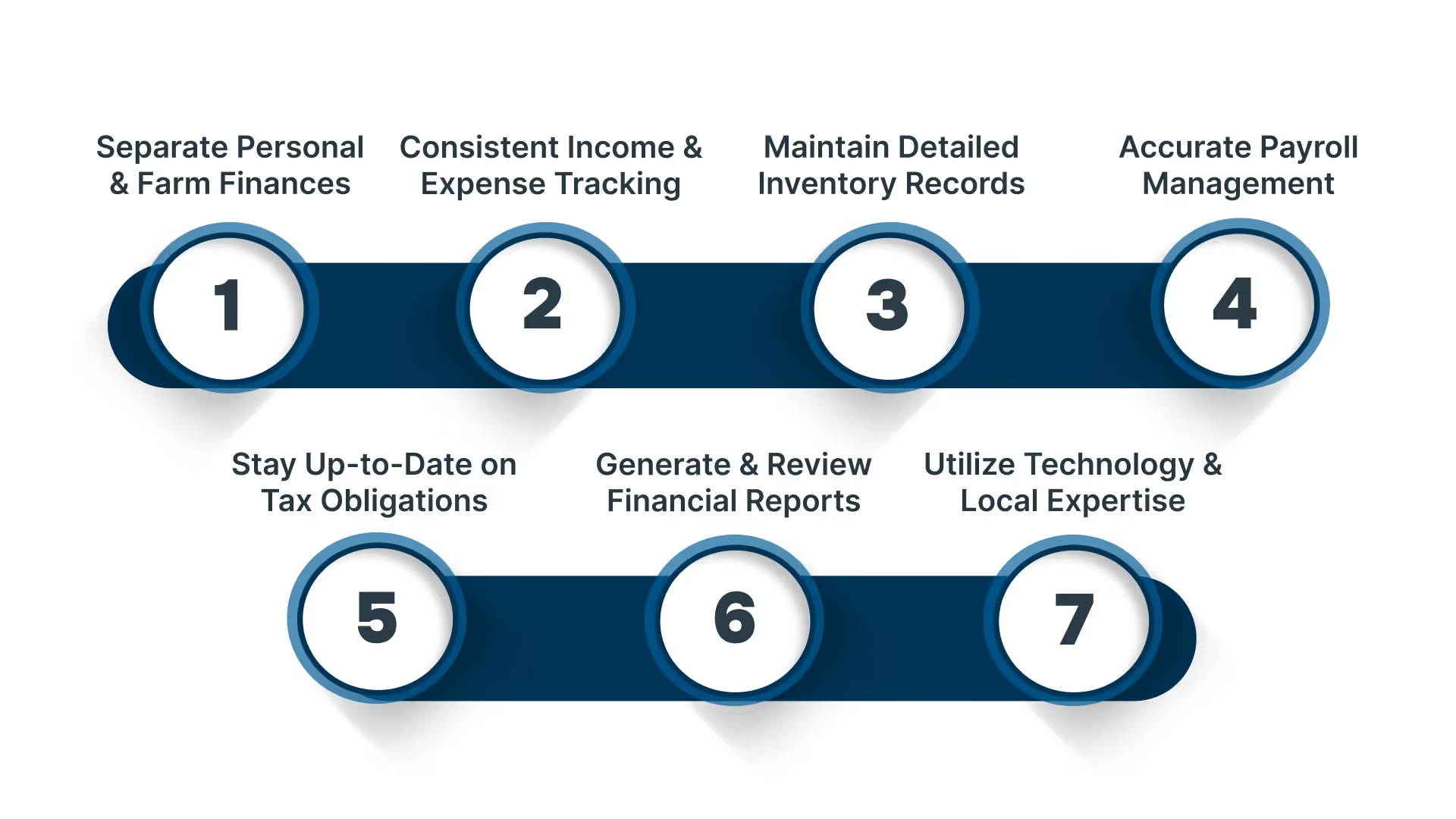
7 Key Steps for Successful Farm Bookkeeping for U.S. agricultural businesses in India

Managing your finances efficiently is crucial for the growth of U.S. agricultural businesses expanding to India. Here’s how to get it right:

7 Key Steps for Successful Farm Bookkeeping for U.S. agricultural businesses in India

Step 1: Separate Personal and Farm Finances

When growing your U.S.-based farm businesses into India, it’s essential to maintain a clear distinction between personal and farm finances. This ensures compliance with Indian tax laws like GST and makes it easier to track profits and losses, and prevents complications when filing taxes.

Step 2: Consistent Income and Expense Tracking

In India, where agricultural income can fluctuate due to seasonality and commodity price changes, tracking income from crop sales, livestock, and agri-services is essential. It helps U.S. businesses in India align income with the Indian GST system, helping track profits while staying compliant with tax regulations set by the Indian Income Tax Department and GST authorities.

Step 3: Maintain Detailed Inventory Records

India’s agricultural sector, with its diverse crops and livestock requirements, demands meticulous inventory management. For U.S. farmers entering India, detailed records of seeds, fertilizers, and machinery help manage costs, control waste, and comply with Indian GST filing. 

Step 4: Accurate Payroll Management

In India, U.S. agricultural businesses need to comply with local labor laws such as the Provident Fund (PF), Employee State Insurance (ESI), and Income Tax (IT) regulations. Managing employee payroll efficiently while adhering to these laws offers timely salary disbursements, tax deductions, and labor compliance, which are essential for U.S. farm businesses seeking smooth operations in India.

Step 5: Stay Up-to-Date on Tax Obligations

For U.S. agricultural entrepreneurs. It’s important to stay updated on GST filings, quarterly returns, and tax deductions available for farm-related expenses. By staying on top of these obligations, U.S. businesses can avoid penalties and maximize tax benefits while aligning their financial operations with Indian tax laws.

Step 6: Generate and Review Financial Reports

Regular financial reports, such as P&L statements and balance sheets, help U.S. agricultural businesses in India monitor their financial health. By reviewing these reports regularly, U.S. farm operators can assess growth opportunities, optimize investments, and adjust their strategy for success in the Indian market.

Step 7: Utilize Technology and Local Expertise

To simplify bookkeeping for agricultural businesses in India, consider using cloud accounting software that supports multi-currency transactions and GST compliance. Additionally, consulting with local experts ensures you're always on top of India’s changing agricultural regulations while adapting your operations to Indian market demands.

Also Read: Accounts Payable Turnover Ratio: Formula, Calculation, and Meaning

Next, let’s examine the common bookkeeping challenges U.S. agricultural businesses face when entering the Indian market.

4 Common Bookkeeping Challenges for U.S. Agricultural Businesses in India

Managing the bookkeeping requirements for U.S. agricultural businesses in India can be tricky. These challenges include:

1. Seasonality of Income

Agriculture in India is seasonal, with fluctuating income throughout the year. Proper bookkeeping helps U.S. business owners plan for lean months and maintain liquidity.

2. Depreciation of Assets

India’s regulations on asset depreciation can be complex. Bookkeeping systems need to track the depreciation of farm assets like tractors, machinery, and buildings accurately, ensuring that tax deductions are maximized.

3. Inventory Valuation

Valuing inventory during changing commodity prices can be difficult. Using accurate bookkeeping practices helps U.S. farmers in India avoid overstocking or stockouts and manage GST compliance.

Also Read: Notes Payable vs Accounts Payable: Key Differences Explained

4. Tax Planning and Compliance

India’s GST system and income tax laws can be difficult for U.S. entrepreneurs to handle. Proper bookkeeping ensures compliance with both Indian and U.S. tax systems, helping businesses avoid costly errors.

With multi-currency transactions and varying farm costs, bookkeeping for agricultural businesses can get overwhelming. VJM Global provides accounting outsourcing services, including payroll management, general ledger maintenance, and tax preparation for U.S. agricultural businesses expanding to India. Our cloud-based accounting solutions guarantee that your books are always up-to-date and GST-compliant.

Ensure error-free financial reporting with our seasoned accounting experts

In light of these challenges, we can now review the best practices that can help U.S. agricultural businesses maintain efficient bookkeeping in India.

5 Bookkeeping Best Practices for U.S. Agricultural Companies Entering India

5 Bookkeeping Best Practices for U.S. Agricultural Companies Entering India

When expanding your U.S.-based agricultural farm into India, adopting these bookkeeping best practices offers financial transparency, GST compliance, and smoother operations. Here's how you can do it:

1. Categorize Your Farm Expenses Efficiently

Properly categorizing your expenses for your US-based farm business is essential for compliance with Indian GST and income tax regulations. It also helps in maximizing deductions for farm-related costs.

How to Implement:

  • Set up categories in your accounting software to track expenses such as seeds, fertilizers, transportation, and labor costs.
  • Use GST-specific categories to segregate input taxes on purchases and output taxes on sales.
  • Ensure that all major categories align with Indian tax regulations for smoother filing.

2. Keep Accurate Inventory Records

Accurate inventory records are critical for U.S. farm businesses in India to optimize GST compliance and avoid discrepancies during audits. Track inventory levels and cost of goods sold (COGS) efficiently.

How to Implement:

  • Use inventory management software integrated with accounting tools to monitor stock levels, costs, and sales.
  • Track inventory adjustments and GST credits for purchased goods.
  • Ensure Indian tax codes are used correctly for inventory-related GST filings.

3. Automate Payroll Management for Indian Operations

Payroll automation offers accurate compliance with Indian labor laws, such as Provident Fund (PF) and Employee State Insurance (ESI), reducing the risk of mistakes for your U.S. farm in India.

How to Implement:

  • Use payroll software integrated with accounting systems to calculate salaries, tax withholdings, and deductions.
  • Set up automatic ESI and PF deductions according to Indian law.
  • Guarantee accurate statutory payments and timely reporting to Indian tax authorities.

4. Monitor Seasonal Cash Flow

Managing seasonal income variations is essential for U.S. agricultural businesses in India, where income from crops and livestock can fluctuate significantly. Proper cash flow management ensures financial stability.

How to Implement:

  • Use cash flow forecasting tools within your accounting software to project income based on harvest cycles.
  • Track seasonal expenses such as fertilizer purchases and labor costs.
  • Regularly review forecasts to identify any potential cash shortfalls and adjust accordingly.

5. Generate and Review Financial Reports Regularly

Regular financial reporting helps U.S. agricultural businesses in India keep track of profitability, GST obligations, and operational performance. Review reports like P&L and balance sheets for a comprehensive financial view.

How to Implement:

  • Set up automated monthly financial reports within your accounting software.
  • Focus on P&L statements, balance sheets, and cash flow reports to evaluate profitability.
  • Ensure that reports comply with Indian accounting standards and GST filing requirements.

Also Read: Accounts Payable Outsourcing Costs and Savings

Finally, let’s wrap up with how VJM Global can support U.S. agricultural businesses in maintaining compliance and implementing effective bookkeeping practices in India.

How Can VJM Global Help U.S. Agricultural Businesses Operate in India While Maintaining Compliance?

Expanding your U.S. agricultural business into India is a major undertaking that requires careful attention to legal, tax, and accounting compliance. At VJM Global, we provide comprehensive services that ensure your farm business adheres to Indian regulatory standards while optimizing operational efficiency. Here’s how we can help:

1. Easy Business Setup and Expansion in India

As a U.S. agricultural business entering India, you need the right structure to operate efficiently. VJM Global assists with setting up subsidiaries, branch offices, and liaison offices, ensuring compliance with Indian laws from day one. We also guide you in choosing the best business entry strategy to effectively capture the growing agricultural market in India.

2. GST Compliance and Advisory for U.S. Farms in India

Working through India’s GST system is essential for U.S. agricultural businesses in India. VJM Global offers GST audits, compliance services, and GST impact analysis so that your farm’s tax obligations are met. We help you stay compliant and avoid penalties by offering GST advisory, outsourcing services, and representation to Indian tax authorities.

3. Structuring and Tax Planning for Your Agricultural Business

Understanding Indian corporate tax laws is crucial for U.S. agricultural businesses in India. VJM Global provides corporate tax management, transfer pricing advice, and taxation for expatriates. Our direct taxation services ensure that your business meets the Indian Income Tax Act requirements while optimizing your tax strategies for maximum efficiency.

4. Risk and Assurance Advisory for Smooth Business Operations

Expanding into a new market brings various risks. VJM Global provides risk and assurance advisory services, including due diligence audits and statutory audits. Our team makes sure that your U.S. farm business is compliant with Indian regulations, mitigating risks associated with cross-border transactions and ensuring a secure financial environment for your operations in India.

5. Simplified Accounting Outsourcing Services for U.S. Farms in India

Outsourcing your accounting functions can save time and improve accuracy. VJM Global offers accounting outsourcing services that cater specifically to U.S. agricultural businesses in India. We help you manage your financial records, track multi-currency transactions, and maintain compliance with Indian accounting standards and GST laws, letting you focus on growth while we manage the numbers.

With VJM Global as your partner, you can confidently expand your U.S. agricultural business to India, knowing that all aspects of accounting and regulatory compliance are handled with precision. 

Conclusion

Staying on top of income and expense tracking, inventory management, and tax compliance, your U.S.-based farm can attain financial stability and set your business up for long-term success in India’s diverse and competitive agricultural market.

VJM Global offers expert services to guide US agricultural entrepreneurs through the complexities of farm bookkeeping, ensuring compliance with GST regulations, tax audits, and financial reporting in India. We provide tailored solutions to help you manage financial records, taxes, and business operations seamlessly.

Contact VJM Global today to optimize your farm’s financial management for successful expansion in India.

FAQs

1. How can U.S. agricultural businesses ensure accurate GST filing in India?

U.S. farms should track both input tax (paid on purchases) and output tax (charged to customers), using accounting software to streamline GST filings for compliance.

2. How does seasonal income affect bookkeeping for U.S. farm businesses in India?

Seasonal income variations can be managed with forecasting tools that predict cash flow, enabling U.S. farms to adjust their budgets for off-season periods.

3. What accounting methods should U.S. agricultural businesses in India use for tax efficiency?

Accrual accounting ensures proper revenue recognition and expense matching, while cash basis accounting is simpler but may not fully align with GST requirements in India.

4. How do U.S. farm businesses handle multi-currency transactions in India?

Using cloud-based accounting software like QuickBooks or Xero, U.S. farms can automate multi-currency conversions, ensuring accurate financial records and GST compliance in India.

5. How can U.S. farm entities manage payroll for Indian employees?

Implement automated payroll systems that ensure Indian tax compliance, including Provident Fund (PF) and Employee State Insurance (ESI) deductions, while streamlining wage distribution.

Recent Blogs

Contact Us

We'd love to hear from you! Please fill out the form and we'll get back to you as soon as possible.