A Complete Guide to FEMA Regulations for Foreign Investors in India

Published on:
December 11, 2025

Table of contents

Talk to Us
Thank you! Your submission has been received!
Oops! Something went wrong while submitting the form.

One Firm,
Global Solutions

We support cross-border business with confidence and clarity.
Book a Call

India’s foreign investment climate is booming. In the fiscal year 2024-25, FDI inflows jumped to USD 81.04 billion, a 14% increase, fueled by sectoral reforms that now allow 100% foreign ownership in many industries. But for U.S. businesses eager to tap into this growing market, the path isn’t always straightforward. 

The Foreign Exchange Management Act (FEMA) governs foreign investment, and tackling its complexities can be challenging, especially regarding approvals, compliance, and understanding the finer points of India’s financial regulations.

This guide will explore FEMA regulations and unpack the key requirements for foreign investors. You’ll learn how to ensure compliance, secure the necessary approvals, and simplify the process of your investment journey. Let’s get started. 

Key Takeaways

  • FEMA Governs Foreign Exchange: FEMA regulates all foreign exchange transactions, including FDI, exports and imports, and remittances, ensuring transparency and legal compliance.
  • Crucial for U.S. Investors: U.S. businesses must comply with FEMA requirements to avoid delays and penalties and ensure a smooth market entry into India.
  • Investment Limits & Sector Caps: FEMA sets limits on foreign ownership in specific sectors. Understanding these caps is essential to avoid compliance issues.
  • Timely Reporting Required: Businesses must file forms such as FC-GPR and FLA within their deadlines and submit key documents, such as FIRC, to maintain compliance.

What is FEMA Compliance?

What is FEMA Compliance?

The Foreign Exchange Management Act (FEMA), enacted in 1999, serves as India’s primary legislation for regulating external trade, payments, and foreign exchange transactions. 

FEMA is designed to manage the increasing flow of foreign investments and external trade, aligning with India’s push for globalization. It governs all foreign exchange transactions, including inward and outward remittances, foreign investments, and the import/export of goods and services. 

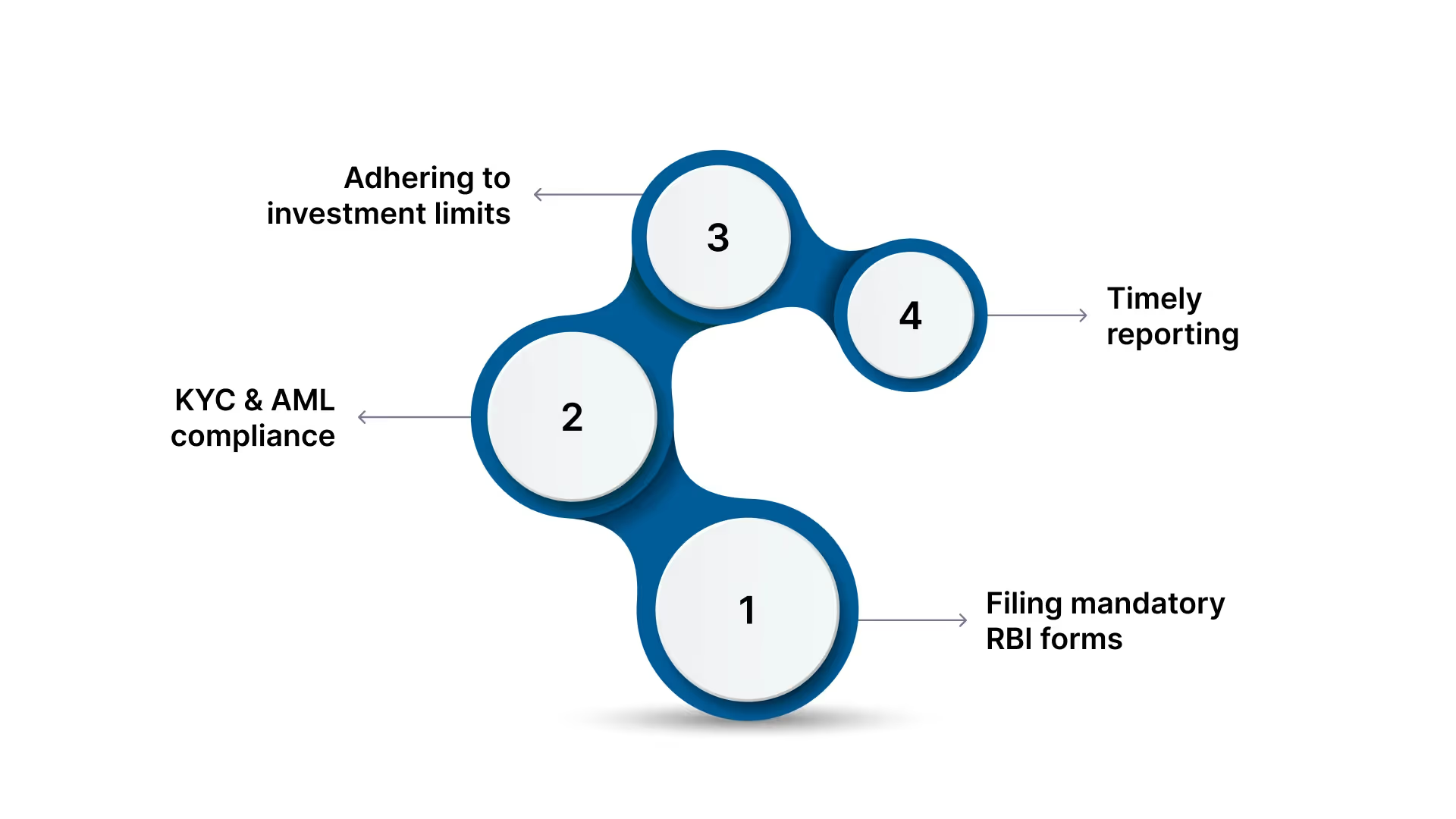
FEMA compliance means meeting all legal and regulatory requirements under the Foreign Exchange Management Act (FEMA) and the Reserve Bank of India (RBI) guidelines for cross-border transactions. It covers several key areas, including:

  • Filing mandatory RBI forms: Forms like FC, FC-GPR, FC-TRS, APR, and FLA must be submitted to ensure transparency in foreign investments and financial transactions.
  • KYC and AML compliance: Authorized Dealer (AD) banks require businesses to comply with Know Your Customer (KYC) and Anti-Money Laundering (AML) guidelines for foreign exchange transactions.
  • Adhering to investment limits: FEMA regulates Foreign Direct Investment (FDI), Overseas Direct Investment (ODI), External Commercial Borrowing (ECB), and import/export payments, with specific limits and conditions.
  • Timely reporting: Disclosures must be made via the FIRMS portal or through AD banks within the prescribed timelines.

For U.S. businesses investing in India, understanding the Foreign Exchange Management Act (FEMA) is akin to how U.S. firms must tackle the Committee on Foreign Investment in the United States (CFIUS) regime under the Foreign Investment Risk Review Modernization Act (FIRRMA). 

While CFIUS/FIRRMA governs inbound foreign investment in the U.S. from a national‑security lens,  FEMA focuses on foreign‑exchange management and capital flows into India. 

Also Read: Why India is Ideal for International Business Expansion

Now that we’ve covered the basics of FEMA compliance, let’s look at why it’s so important for investors.

Why Investors Care About FEMA Compliance

When planning to enter the Indian market, the Foreign Exchange Management Act (FEMA) is often the first legal touchpoint many foreign investors overlook. Here’s why FEMA matters:

  • Governance of Foreign Exchange Transactions: FEMA regulates how foreign exchange enters and exits India by categorizing all international transactions into two broad buckets:
  • Capital Account Transactions: Includes foreign direct investment (FDI), foreign loans, and acquisitions, all of which are closely regulated.
  • Current Account Transactions: Covers trade in goods and services, with fewer restrictions than capital account transactions.
  • FEMA Compliance is Non-Negotiable: Even though India has liberalized its foreign investment policies, FEMA compliance remains crucial. This law includes:
  • Sectoral Caps: Restrictions on the percentage of foreign ownership in certain sectors.
  • Pricing Guidelines: Ensures proper valuation and pricing for equity and investment instruments.
  • Timelines: Fixed deadlines for completing compliance-related tasks like reporting and filing documents.
  • Legal Consequences: Minor lapses can result in severe penalties, including fines or legal actions that may affect the company’s ability to operate.
  • Safeguarding International Transactions and India’s Credibility: FEMA ensures that all foreign exchange transactions are lawful, traceable, and aligned with India's financial and economic goals.
  • Impact on Investor Confidence: Before investing, foreign investors, venture capitalists, and global partners conduct rigorous regulatory due diligence. Any FEMA non-compliance could stall the funding process, impact deal closure, or delay the timeline.
  • Lowering Investment Risk: For U.S. startups, MSMEs, and foreign subsidiaries, adhering to FEMA compliance, especially documentation, KYC, and AML (anti-money laundering) requirements, signals reliability. This makes the business more attractive to investors, as they see it as lower risk and ready for investment.

In a market as dynamic and competitive as India, failing to prioritize FEMA compliance can be detrimental to a business’s growth. 

Understanding why investors should prioritize FEMA compliance leads us to the question of who exactly needs to follow these regulations.

Who Must Adhere to FEMA Regulations?

Who Must Adhere to FEMA Regulations?

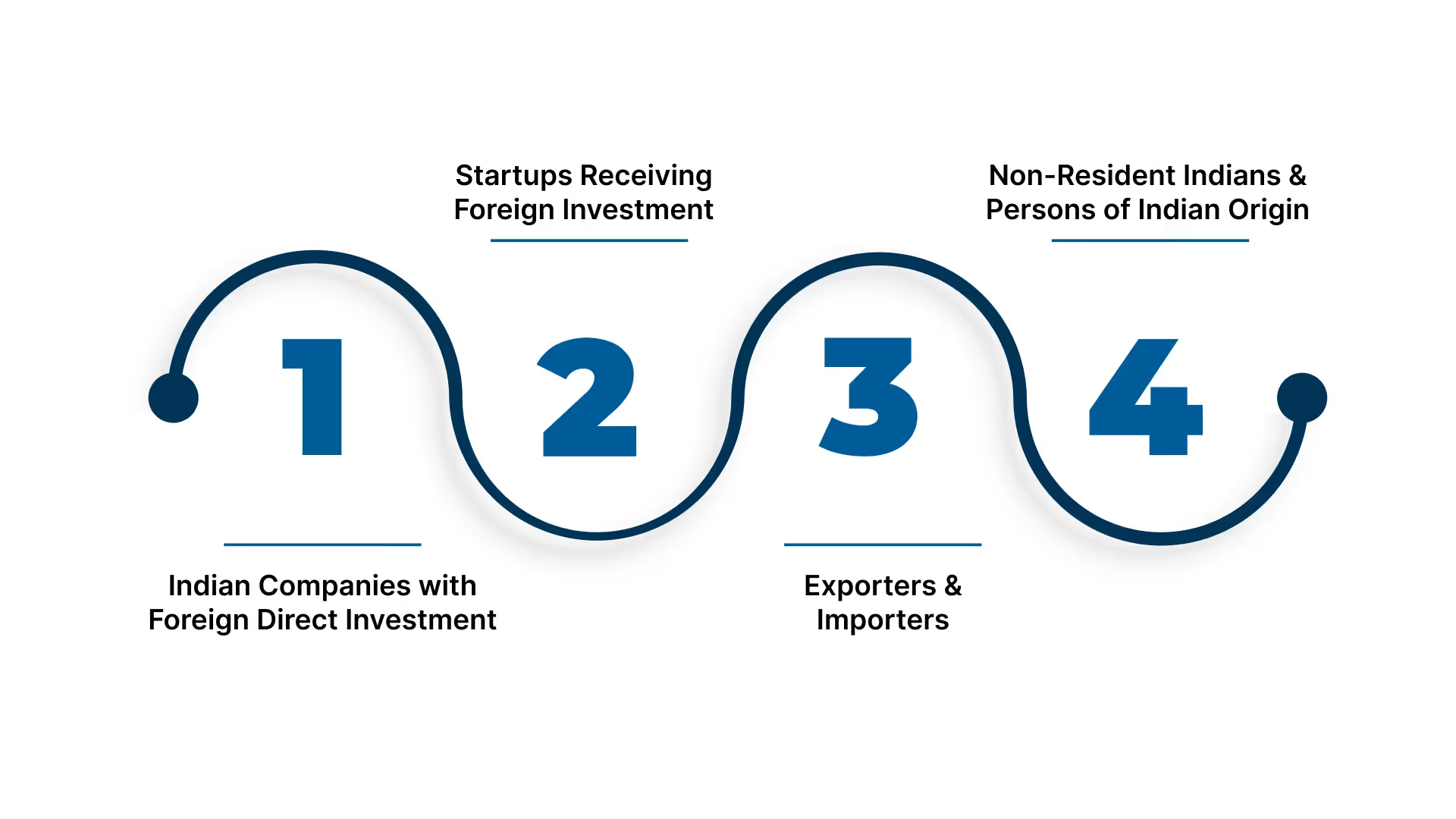
FEMA compliance is essential for anyone involved in foreign exchange transactions in India. 

1. Indian Companies with Foreign Direct Investment (FDI) or Foreign Subsidiaries

Any company in India that receives FDI or operates foreign subsidiaries must comply with FEMA. Key compliance actions include:

  • Filing Form FC-GPR for capital inflows. While not the same as the U.S. CFIUS review, you can think of it as India’s way of tracking and regulating foreign capital inflows under FEMA.
  • Similar in spirit to U.S. BE-13 disclosures, Indian companies must report share allotments and capital inflows to maintain transparency and regulatory compliance.
  • Ensuring compliance during share transfers using Form FC-TRS
  • Much like U.S. companies file Form 5471 to report on foreign subsidiaries, Indian companies must file the FLA annually to report their foreign liabilities and assets, ensuring compliance with regulatory requirements.

Maintaining up-to-date documentation is critical to avoid penalties or delays in investment.

2. Startups Receiving Foreign Investment

Startups, whether registered or DPIIT-recognized, that receive foreign funding must comply with:

  • Valuation norms for investments
  • Timely reporting to RBI
  • FEMA and RBI guidelines on early-stage funding
  • Ensuring transparency of funds for future funding eligibility

FEMA compliance is crucial, even for angel or venture capital-backed startups.

3. Exporters and Importers

For businesses involved in importing or exporting goods and services, FEMA compliance ensures smooth cross-border trade. These businesses must:

  • Obtain an Import Export Code (IEC)
  • Report export proceeds within nine months from the shipment date
  • Settle import payments within six months
  • File necessary shipping documents and SOFTEX forms for services

Timely filings and compliance with RBI guidelines are crucial to avoid penalties.

4. Non-Resident Indians (NRIs) and Persons of Indian Origin (PIOs)

NRIs and PIOs investing in India or sending funds back home must follow FEMA rules. This includes:

  • Using designated NRE/NRO accounts for transactions
  • Filing declarations for investments in real estate or equity
  • Adhering to investment caps in restricted sectors

FEMA compliance ensures that inward remittances are legitimate and traceable, providing clarity and security in cross-border financial transactions.

At VJM Global, we provide expert FEMA advisory and compliance services, including foreign investment planning, statutory filings, and assistance with RBI approvals. Whether you're an exporter, startup, or NRI, our expert team ensures your operations comply with FEMA regulations, so you can focus on growing your business in India. Get in touch today

Also Read: Documents Needed For Company Registration In India From The US

With that in mind, it’s crucial to know the different routes for foreign investment under FEMA. Let’s break those down.

Key Investment Routes Under FEMA

When a foreign investor decides to invest in an Indian company, simply wiring the funds isn’t enough. A key factor here is choosing the correct investment route for the transaction, as every inward remittance of capital needs to follow one of FEMA’s designated routes. 

1. Automatic Route

India allows foreign investment in a broad range of sectors without prior government approval, through the automatic route. This route provides a smoother process for investors, but it still requires adherence to sectoral caps, pricing rules, and disclosure requirements for downstream investments.

Common sectors that qualify for the automatic route include:

  • Greenfield manufacturing
  • Marketplace model e-commerce
  • Tech services, including SaaS
  • Pharma R&D and biotech (with certain conditions)

2. Government Route

For some sectors, particularly those with national security concerns or strategic importance, the government route is required. This means the investment must receive approval from the relevant ministry, typically through the Foreign Investment Facilitation Portal (FIFP). 

Sectors that often require government approval include:

  • Telecom and broadcasting
  • Defence production
  • Print journalism and media
  • Certain areas of brownfield pharma

Understanding the right route for your investment is crucial to ensuring compliance with FEMA regulations and avoiding delays or penalties.

Having covered the investment routes, it’s time to get familiar with the fundamental guidelines under FEMA to ensure you stay on track.

What Are the Basic Guidelines Under FEMA?

What Are the Basic Guidelines Under FEMA?

Understanding these basic guidelines is essential for any U.S. business planning to enter or expand within the Indian market. 

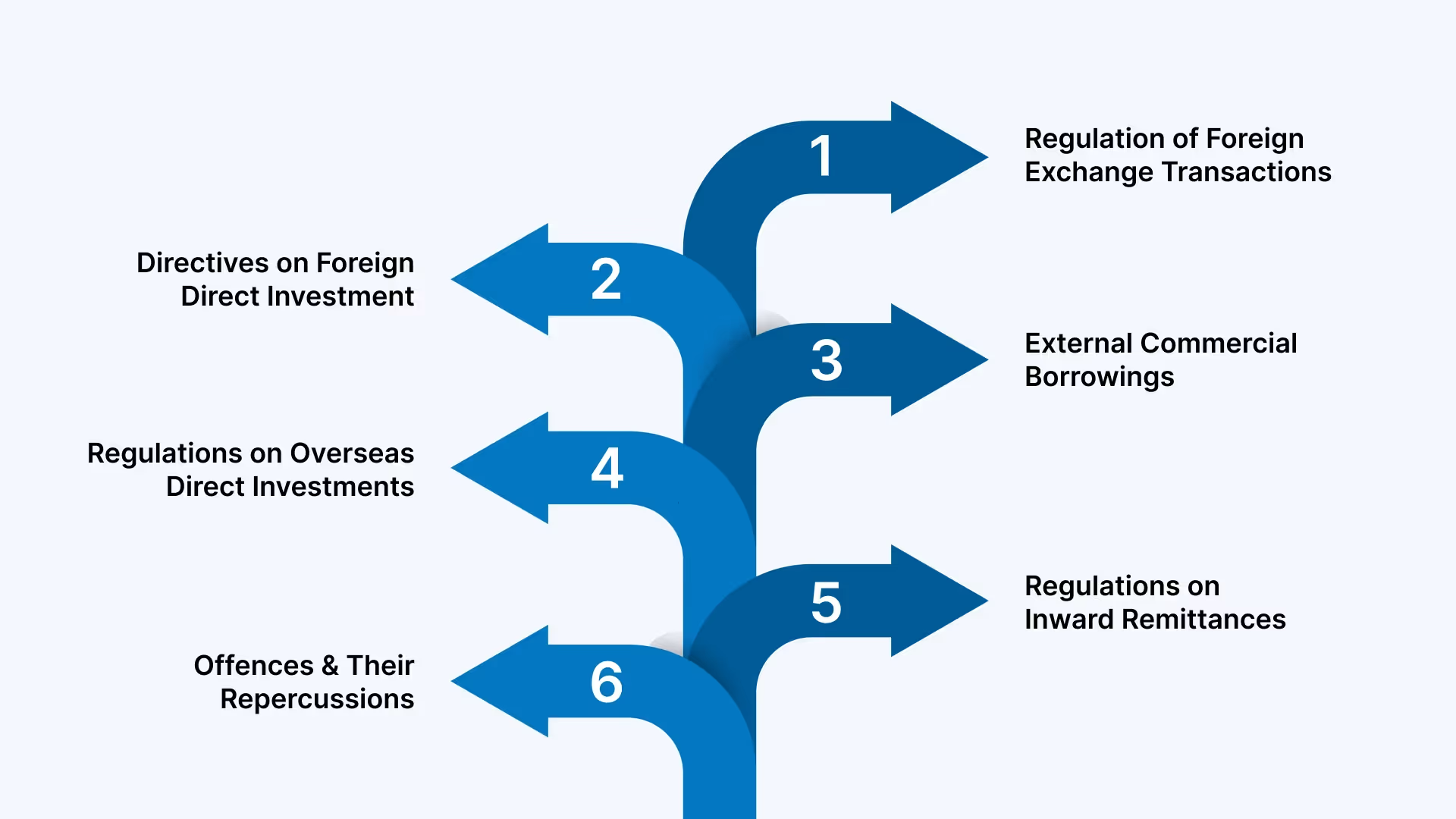
1. Regulation of Foreign Exchange Transactions

All foreign exchange transactions in India must be processed through authorized dealers (ADs), licensed by the Reserve Bank of India (RBI). Significant transactions, such as investments or fund transfers, must be reported to the RBI to ensure transparency and compliance.

2. Directives on Foreign Direct Investment (FDI)

FEMA sets sector-specific limits on foreign investments. For instance, the aviation sector has a 49% cap on FDI, while telecom allows up to 100%. Repatriation of profits and dividends is allowed, but investors must follow specific procedures to stay compliant with regulations.

3. External Commercial Borrowings (ECBs)

External Commercial Borrowings (ECBs) allow Indian companies to raise funds from foreign lenders. These loans come with specific eligibility criteria and reporting requirements. Lenders could be international banks, financial institutions, or foreign equity holders who hold at least a 25% stake in the borrowing company.

  • Maturity requirements:
    • ECBs up to US$50 million must have a minimum average maturity of three years.
    • ECBs above US$50 million require a five-year minimum maturity.
    • Companies can raise ECBs up to US$3 million per financial year under the automatic route. Amounts exceeding this threshold require prior approval.
  • End-use restrictions: ECB funds can only be used for capital expenditure, refinancing existing loans, or importing capital goods. Investments in real estate, equity instruments, or capital market activities are prohibited.
  • Reporting requirements: All ECB transactions must be routed through RBI-approved AD banks. Borrowers must submit Form ECB when the loan is secured and Form ECB-2 monthly to report actual fund usage.

4. Regulations on Overseas Direct Investments (ODI)

The 2022 FEMA amendments govern Overseas Direct Investment (ODI) by Indian companies. Indian entities are permitted to invest in foreign joint ventures (JVs) or wholly owned subsidiaries using equity, debt, or guarantees. However, investments in real estate or banking are not allowed without specific approval.

  • Filing obligations:
    • Submit Form FC within 30 days of making the investment.
    • Annual submission of the Annual Performance Report (APR) by December 31.
    • For acquisitions, a qualified professional must certify the valuation of the overseas entity.

5. Regulations on Inward Remittances

Inward remittances, such as payments for exports or services, such as consultancy, must be processed through RBI-certified AD banks. The receiving company must declare the source and intended use of the funds, along with supporting documents such as contracts and invoices. 

Additionally, the sender’s KYC information must be verified, and all transactions must comply with anti-money laundering (AML) standards. If shares are allotted in exchange for remittances, this must be reported to the RBI within 30 days using Form FC-GPR.

6. Offences and Their Repercussions

Failure to comply with FEMA regulations can lead to significant fines and penalties. Offenders may face penalties up to three times the transaction amount or INR 200,000, whichever is higher. 

For continuing violations, daily fines may be imposed. Severe non-compliance could also result in restrictions on raising foreign capital or reversal of transactions.

Understanding these basic guidelines helps foreign investors safeguard their investments, avoid penalties, and make the most of India’s dynamic market. 

Once you’ve grasped the basics, let’s go over a checklist to ensure FEMA compliance for private companies and foreign subsidiaries.

FEMA Compliance Checklist for Private Limited Companies & Foreign Subsidiaries

Ensuring FEMA compliance is crucial for any private limited company or foreign subsidiary operating in India. Here’s a detailed breakdown: 

  • Verify FDI Eligibility & Sectoral Caps: First, confirm whether your business qualifies for the automatic or approval route and review sector-specific FDI limits to avoid violations.
  • File FC-GPR Within 30 Days: After issuing shares to foreign investors, submit Form FC-GPR on the RBI FIRMS portal within 30 days for proper reporting.
  • Maintain Shareholding & Valuation Records: Keep accurate, detailed records of all FDI transactions, including shareholding patterns and valuations, to meet FEMA documentation requirements.
  • Follow Pricing Guidelines: Ensure your pricing for issuing or transferring shares complies with RBI’s prescribed norms for foreign investors.
  • Complete KYC and AML Checks: Verify each foreign investor’s identity and conduct Anti-Money Laundering (AML) checks through your Authorized Dealer (AD) bank to stay compliant with FEMA regulations.
  • File FLA Return Annually: Companies with FDI or ODI must file the Foreign Liabilities and Assets (FLA) return with the RBI by July 15 each year, ensuring transparency.
  • Submit Annual Performance Report (APR):  Foreign investment companies must file the Annual Performance Report (APR) for Overseas Direct Investment (ODI) with the RBI to comply with regulations.
  • Monitor Fund Utilization & Repatriation: Track how foreign funds are used and ensure proper repatriation or reinvestment in accordance with RBI guidelines to prevent non-compliance.

By following this checklist, private limited companies and foreign subsidiaries can ensure smooth operations and stay in line with FEMA and RBI regulations. 

At VJM Global, we offer expert advisory services to guide you through the complexities of FDI eligibility, shareholding records, annual filings, and more. From submitting your FC-GPR and FLA Return to monitoring foreign fund utilization, our team ensures your company stays compliant with all RBI and FEMA guidelines. Get expert advice today.

Now, let’s shift gears to look at FEMA compliance for businesses involved in international trade, focusing on exports and imports.

FEMA Compliance for Export and Import Transactions

Businesses involved in international trade must adhere to FEMA and RBI regulations to ensure their foreign exchange transactions are legal and timely. Below is an overview of the compliance requirements for both exports and imports under FEMA.

FEMA Compliance for Export of Goods

Exporters must follow FEMA guidelines to ensure the timely receipt of payments in foreign currency. Key steps include:

  • Obtain an IEC (Import Export Code): The IEC is mandatory for all cross-border shipments and serves as a unique identification for exporters.
  • File Shipping Bills and GR Forms: Shipping Bills and GR Forms must be submitted to customs and the RBI for tracking foreign exchange inflows. 
  • Realize Export Proceeds within 9 Months: Payments for goods must be received within 9 months from the shipment date, although extensions can be requested.
  • Submit Proof to AD Bank: Exporters must provide remittance documents and the Foreign Inward Remittance Certificate (FIRC) to their Authorized Dealer (AD) bank.

FEMA Compliance for Export of Services

For services such as IT, SaaS, consultancy, and remote services, FEMA compliance includes:

  • File SOFTEX Forms: Exporters of software and related services through STPI or SEZ zones must file the necessary SOFTEX forms.
  • Ensure Timely Invoicing & Realization: Timely invoicing is critical, along with strict monitoring of remittance timelines to ensure compliance.
  • Keep Contracts & Emails as Proof: Maintaining service agreements and email correspondence is essential for auditing and compliance purposes.

FEMA Compliance for Import Payments

For businesses making payments to foreign suppliers, the following steps must be followed:

  • Submit Form A2 via AD Bank: Form A2 must be submitted to declare the purpose of the remittance and obtain AD bank approval before proceeding.
  • Maintain Supporting Documents: Companies should keep a record of invoices, Bill of Entry (BoE), and purchase orders to support the remittance process.
  • Use Authorized Banking Channels: All import payments must be processed through banks recognized by the RBI.

By following these FEMA guidelines for exports and imports, businesses can mitigate risks, avoid penalties, and maintain smooth cross-border transactions with confidence.

Next, let’s learn how partnering with VJM Global ensures you have expert guidance every step of the way to handle these regulations and stay compliant.

Why Partner with VJM Global for Your FEMA Compliance Needs?

Expanding your business internationally involves managing the complexities of foreign exchange laws. VJM Global specializes in guiding businesses through the nuances of FEMA regulations. Here’s how we can support you:

  • Cross-Border Collaboration Advisory: Whether you're entering or expanding in India or seeking international partnerships, our FEMA advisory services ensure compliance on both ends of the transaction.
  • Strategic Foreign Investment Planning: Our expert consultants provide strategic direction for foreign investments, structuring them in line with FEMA rules to help your business thrive in new markets.
  • Ensure Statutory FEMA Compliance: We help your business stay fully compliant with FEMA, ensuring all filings and transactions comply with the law, minimizing penalties and reducing risk.
  • Optimize International Transactions Taxation: By utilizing the Double Taxation Avoidance Agreement (DTAA), we help you handle international tax laws, reducing unnecessary taxes and ensuring efficient cross-border financial flows.
  • RBI Approvals & Filings: From e-filing to foreign exchange tax filings, we assist in securing the necessary approvals from the Reserve Bank of India, ensuring smooth operations in compliance with FEMA.
  • Expert Guidance on External Commercial Borrowing: If you need to raise funds through External Commercial Borrowing (ECB), we provide clear advice on meeting FEMA’s requirements, ensuring seamless access to international capital.

At VJM Global, we craft strategies that ensure your business operates smoothly across borders, minimizes risks, and stays compliant with all FEMA regulations. 

Conclusion

FEMA regulations are often seen as a maze for foreign investors, particularly when it comes to tackling India’s dynamic market. However, these regulations are not obstacles, but rather frameworks that, if understood and applied correctly, can protect your investments and reveal new opportunities. 

From sectoral caps to RBI approvals, every step is crucial in ensuring that foreign investments remain smooth, secure, and profitable. For U.S. businesses, the stakes are high, and any misstep could lead to financial penalties or delays, potentially stalling your growth ambitions in India. 

That’s where VJM Global comes in. With our in-depth knowledge of both FEMA and international taxation, we simplify these complexities, offering actionable solutions that ensure compliance and help strategically position your business for success in India’s competitive landscape. Contact us today to ensure your business thrives while staying fully compliant.

FAQs

1. What is FEMA compliance in India?

FEMA compliance in India means adhering to the rules, reporting obligations, and documentation requirements set out by the Foreign Exchange Management Act, 1999. This applies to any transaction involving foreign exchange, including foreign direct investment (FDI), overseas direct investment (ODI), imports/exports, and remittances.

2. Who regulates FEMA compliance?

The Reserve Bank of India (RBI) is the primary body responsible for regulating FEMA compliance, with support from the Ministry of Finance. Authorized Dealer (AD) Banks also play a vital role in verifying and processing transactions under FEMA.

3. Is FEMA compliance applicable to all companies in India?

No. FEMA compliance is only applicable to businesses or entities involved in foreign exchange transactions, such as receiving foreign investments, making payments for imports, exporting goods/services, or sending/receiving remittances.

4. What documents are required for FEMA compliance?

Typical documents for FEMA compliance include:

  • KYC (Know Your Customer) documents for foreign investors or remitters
  • Foreign Inward Remittance Certificate (FIRC)
  • Invoices or service contracts
  • Board resolutions and share allotment documents
  • RBI reporting forms like Form FC, FC-GPR, FC-TRS, APR, and FLA

5. Can NRIs invest in India under FEMA?

Yes, Non-Resident Indians (NRIs) are permitted to invest in India under FEMA guidelines. They can invest in various forms, including equity, debt, and real estate, subject to specific regulatory requirements and sectoral caps.

Recent Blogs

Contact Us

We'd love to hear from you! Please fill out the form and we'll get back to you as soon as possible.