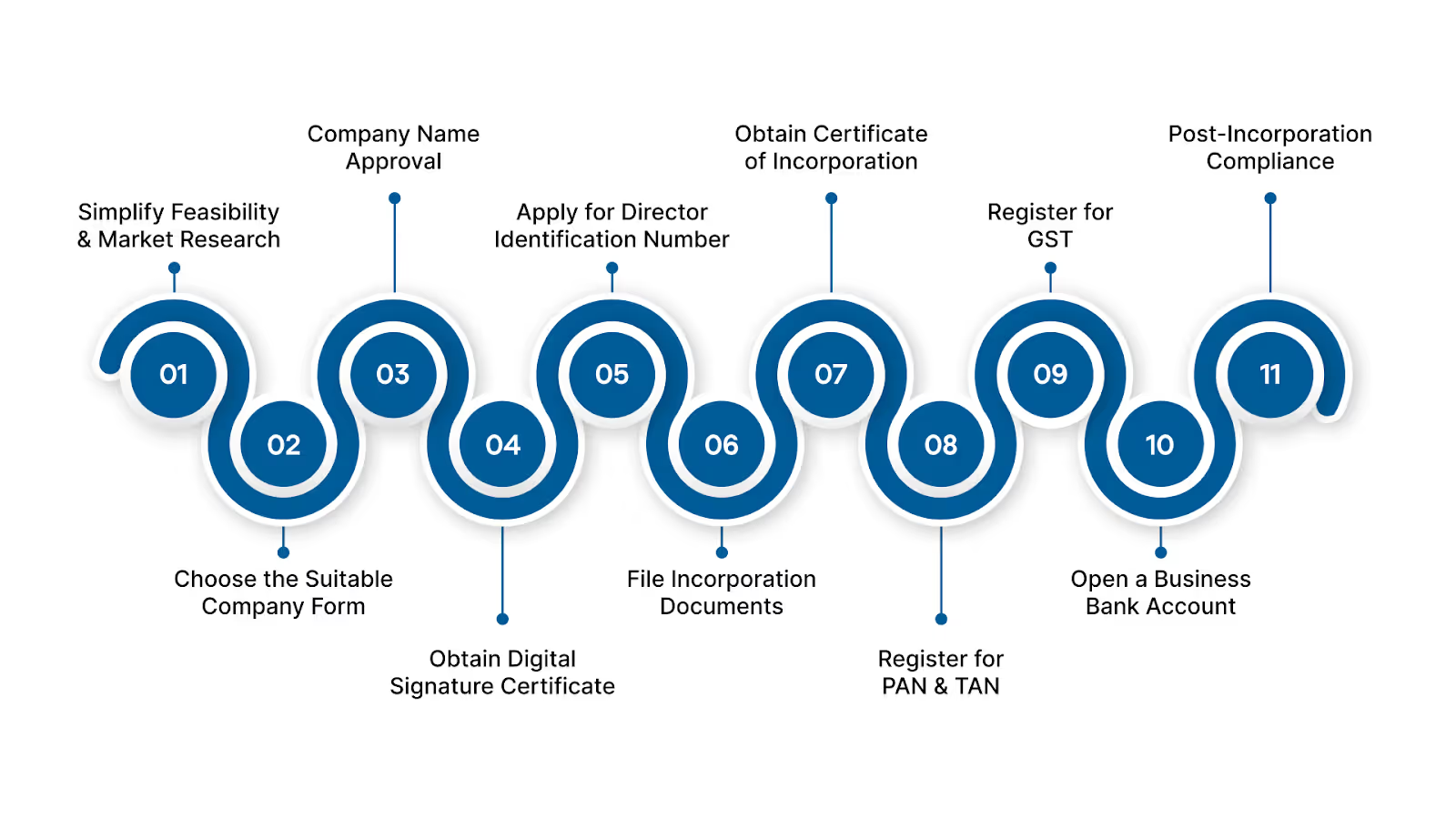
Starting a business in India offers compelling opportunities for U.S. investors, but the path to success can seem complex without clear direction. It takes 12-18 days to register a business, but the process involves multiple steps. From selecting the right structure to meeting legal and compliance requirements, each stage requires careful attention.
Fortunately, many sectors allow up to 100% Foreign Direct Investment (FDI) through an automatic route, eliminating the need for prior government approval. While the regulations are welcoming, the complexity of local laws, taxes, and compliance requirements can make the process tricky.
This blog will guide you through the essential steps to set up a business in India. We’ll provide actionable insights to simplify the process, covering the legal framework and cost considerations, and setting up a one-person company. Let’s get started.
Key Takeaways
100% FDI: U.S. investors can fully own businesses in India, with 100% Foreign Direct Investment (FDI) allowed in most sectors under the automatic route.
Business Structures: Options such as Private Limited Companies, One-Person Companies (OPCs), and LLPs offer flexibility based on ownership preferences and liability concerns.
Legal Requirements: Ensure compliance with necessary tax registrations (PAN, TAN, GST), and obtain a Digital Signature Certificate (DSC) and Director Identification Number (DIN).
Costs: Starting a business in India typically costs between ₹12,000 – ₹30,000 ($132 – $330), depending on the company type and professional fees.
Compliance and Maintenance: Ongoing compliance with Indian regulations, including annual filings and tax returns, is essential to maintain good standing in India’s business environment.
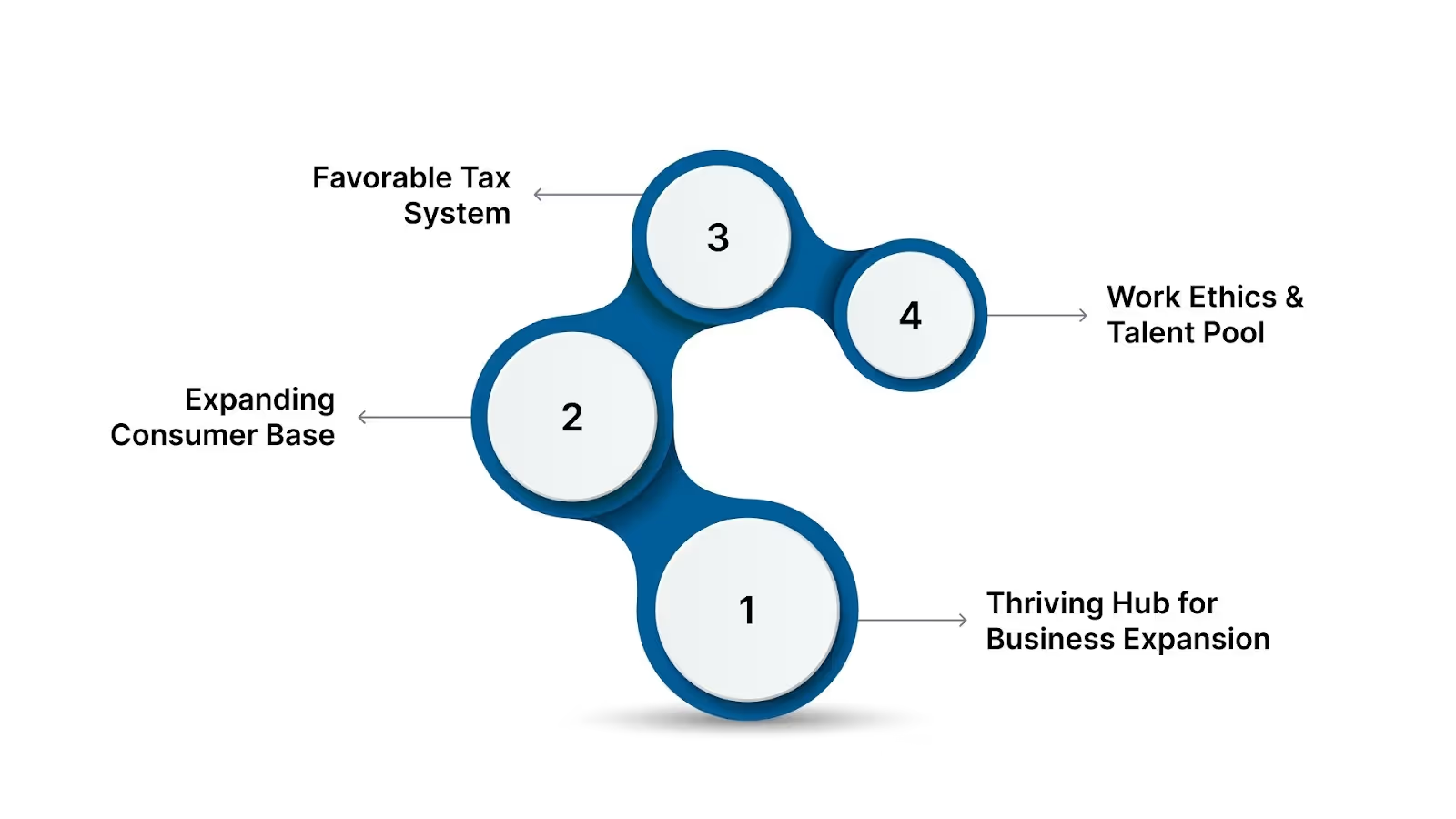
Advantages for Foreign Companies to Set Up in India
Alt text: Advantages for Foreign Companies to Set Up in India
India offers an array of compelling advantages for foreign companies looking to establish themselves in one of the world’s most dynamic and rapidly growing markets.
1. Thriving Hub for Business Expansion
India offers immense opportunities for global companies, driven by its steady economic growth and growing consumer market. With a forecasted 6.8% GDP growth in 2025, India remains one of the fastest-growing major economies globally, offering a favorable environment for business expansion.
FDI inflows exceeded $50 billion in FY 2024-25, a 13% increase from the previous year. In Q1 FY 2025-26, FDI rose 15%, signaling investor confidence, especially in the tech sector. With strong GDP growth and rising FDI, India is a dynamic and promising market for global business expansion and investment opportunities.
2. Expanding Consumer Base
India, with a population exceeding 1.4 billion, is the fourth-largest economy in Asia and presents vast opportunities for foreign companies. Its large and youthful population, with a median age of just 28, ensures an energetic workforce and growing consumer base.
For U.S. manufacturers, this demographic advantage translates into a ready labor pool and a growing market for products. In addition, India’s expanding education and skill development programs ensure a steady supply of specialized talent for manufacturing needs.
3. Favorable Tax System
India boasts a network of tax treaties designed to support international business. Recent updates to tax codes and the introduction of GST have simplified operations for foreign investors. This reform makes tax compliance smoother and more predictable, encouraging further investment in the country.
This change is similar to the U.S. Tax Reform Act of 1986, which streamlined the tax system by reducing brackets and eliminating certain deductions. Just as the reform aimed to simplify tax compliance, India’s GST creates a more business-friendly environment by reducing administrative burdens for foreign investors.
4. Work Ethics and Talent Pool
The Indian workforce is known for its hardworking, innovative spirit, with a large proportion of the population in the working-age group (15-64 years). This factor, combined with a pool of talent in fields such as IT, engineering, and pharmaceuticals, gives foreign businesses a competitive edge in scaling operations efficiently.
By taking advantage of these key benefits, U.S. companies can position themselves for success in one of the world’s most promising markets. VJM Global’s comprehensive business setup, tax planning, and compliance services ensure an efficient entry into the Indian market, tailored to your specific needs.
Now, let’s explore the key government policies that support the setup of international businesses.
- 100% FDI allowed in sectors like electronics, textiles, and automobiles. - Simplified licensing and approval processes. - Promotion of industrial clusters.
Provides reduced entry barriers and access to local resources in key sectors.
Ease of Doing Business (EODB)
- Improved World Bank ranking - Simplified business registration processes. - Single-window clearance for permits and licenses.
U.S. businesses can launch operations faster with streamlined approvals.
FDI Policies
- 100% FDI in sectors like e-commerce and infrastructure. - Automatic routes for sectors like IT and telecom. - Relaxed norms for joint ventures.
Attracts foreign capital by removing bureaucratic hurdles in high-demand sectors.
Start-Up India
- 3-year tax exemptions for eligible startups. - Easier patent filings and reduced fees. - Government-backed funding.
Ideal for U.S. startups seeking financial support and quick market access.
PLI Schemes (Production-Linked Incentive Schemes)
- Incentives for production in electronics, pharmaceuticals, and renewable energy. - Incentives based on incremental production.
Supports cost savings for U.S. manufacturers and promotes tech transfer to India.
Digital India
- E-governance promotion. - Increased broadband and Wi-Fi services. - Development of smart cities with advanced IT infrastructure.
International businesses can utilize India’s growing digital ecosystem.
Special Economic Zones (SEZs)
- Tax holidays for businesses in SEZs. - Exemption from customs duties on imports. - Simplified regulations and compliance.
U.S. businesses can benefit from tax exemptions and reduced operational costs.