Are you planning to expand your water business operations into India but are unsure where to begin? India presents one of the world's fastest-growing packaged water markets, offering significant cost advantages and access to skilled manufacturing professionals. The Indian market offers significant opportunities, with per capita consumption being much lower than the global average, highlighting vast untapped potential.
Knowing how to start a water business in India requires understanding complex regulatory frameworks, licensing requirements, and investment considerations that can determine your venture's success. This blog will guide you through how to start a profitable water business in India, including compliance requirements, licensing procedures, investment planning, and market opportunities.
Quick Summary
强制性许可包括 FSSAI、BIS (ISI)、污染控制委员会许可及营业执照。
成熟运营的利润率通常在 15% 至 30% 之间。
由于市政供水质量欠佳及健康意识提升,市场需求持续增长。
高端定位和批量供应渠道提供了更高的盈利机会。
The Industry Overview: A Booming Essential
India's packaged water market presents a significant growth opportunity, driven by increasing health awareness, urbanization, and the growing demand for safe drinking water. As the industry continues to grow, new businesses entering the market can capitalize on this demand.
The water industry's growth potential in India is vast, with rising demand and opportunities for new businesses to gain a foothold. As consumption increases, entrepreneurs can tap into an ever-growing market, creating substantial profits while contributing to public health and safety.
With the market landscape clear, let’s move on to a structured roadmap that shows exactly how you can establish and grow your water business in India.
Step-by-Step Guide on How to Start a Water Business in India
Starting a water business in India offers tremendous potential, given the country's growing demand for clean, packaged drinking water. However, it's crucial to follow a structured approach to understand legal requirements, operational challenges, and market competition. Throughout this section, you'll find important steps on how to start a water business in India, including market research and plant setup.
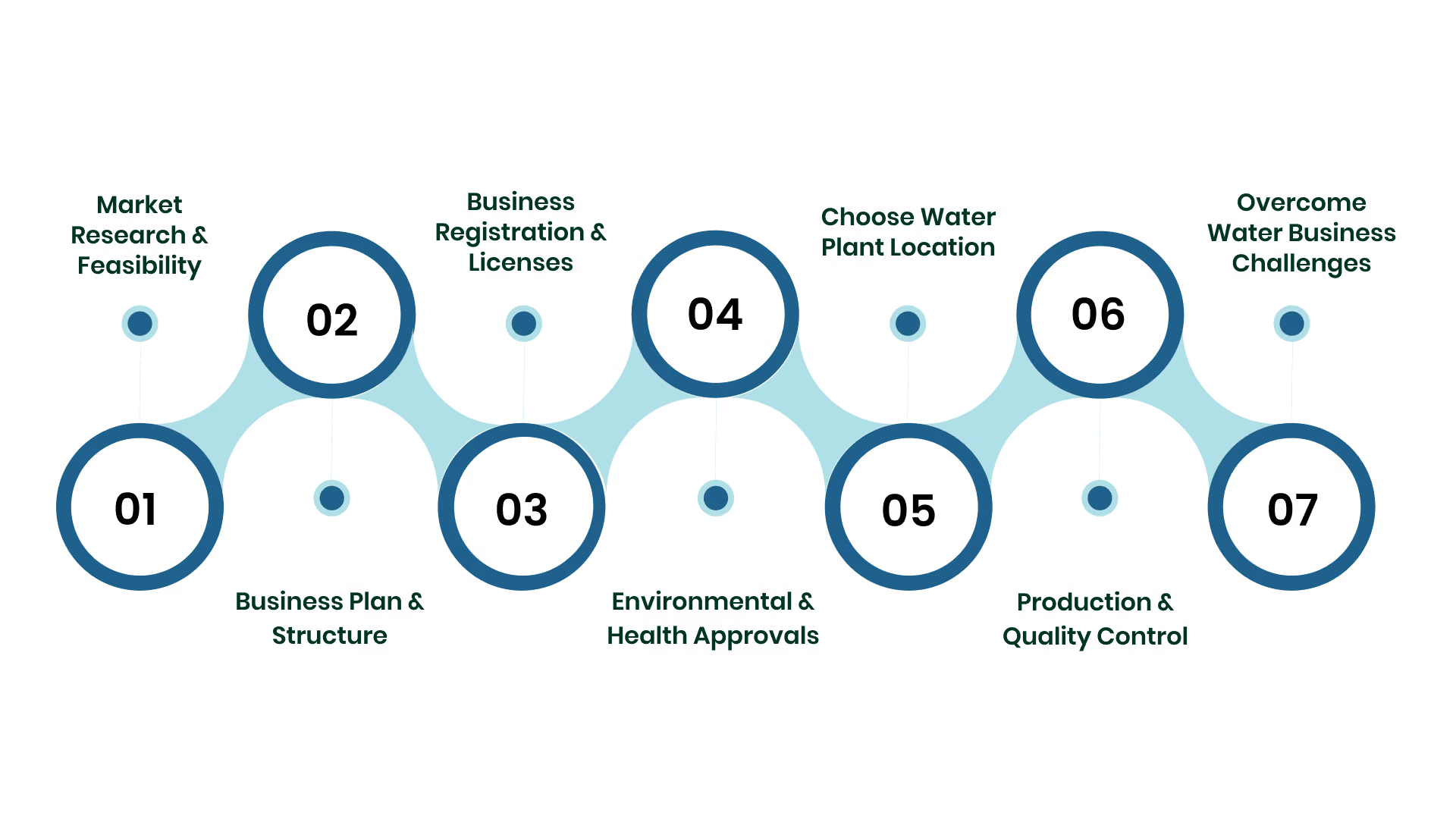
Step 1: Conduct Market Research & Feasibility Study
Before jumping into the water business, start by understanding the market dynamics.
BIS 认证: 您需要获得印度标准局 (BIS) 的认证,以确认您的包装水符合安全标准。没有此认证,您在印度销售瓶装水即属违法。
Step 4: Obtain Necessary Environmental and Health Approvals
In addition to business registration, you must adhere to environmental regulations and water safety guidelines to ensure your plant operates legally.
Pollution Control Board Approval: As water purification involves waste management and potentially harmful chemicals, you will need approval from the state-level Pollution Control Board. This will certify that your plant's processes comply with environmental standards, including waste disposal.
Water Source Permission: You must obtain permission to use water from a particular source, such as groundwater or a river. The local government or relevant authorities must approve the water source to ensure it's sustainable and meets quality standards.
Step 5: Select the Ideal Location for Your Water Plant
The location of your plant is crucial to both your operational success and long-term sustainability.
Proximity to Water Sources: Choose a location close to reliable water sources, whether groundwater, lakes, or rivers, to minimize transportation costs and ensure steady access to raw water.
Transport and Distribution Links: A plant must be strategically located near key transport networks, such as highways, to facilitate the flow of raw materials and finished products. Proximity to distribution centers and retailers is vital for maintaining efficient delivery.
Cost Considerations: Land and utilities costs vary by location. Urban centers may offer better access to markets but come with higher land and operational costs. Rural areas may have lower costs, but could pose logistical challenges. Balance your cost structure with the potential market demand when choosing your location.
Step 6: Establish Production and Quality Control Systems
The next step is setting up the production process after your business has been registered and the plant location has been secured.
Water Purification Technology: Invest in the latest water purification systems, including reverse osmosis (RO) and UV filters, to ensure your product meets safety standards. Implement stringent quality checks to maintain water purity and taste.
Packaging Equipment: Choose bottling and packaging equipment that suits your production scale. Automated systems are ideal for large-scale operations, while semi-automated systems may be more cost-effective for smaller plants.
Quality Assurance Processes: Set up quality control systems to ensure your water consistently meets regulatory standards. Regular testing for contaminants, as well as ensuring the right pH and mineral content, is essential for consumer trust.
Step 7: Overcome Common Challenges in the Water Business
While the water business offers substantial potential, you will face several challenges along the way. Identifying these challenges early and having strategies to mitigate them is essential.
Regulatory Compliance: India has strict regulations governing the water industry, and ensuring compliance with them can be complex. Engaging with legal and business consultants, like VJM Global, can help you comply with these requirements efficiently.
Sourcing and Purifying Water: Finding a reliable, sustainable water source can be difficult in some regions. Additionally, maintaining high-quality purification standards is essential to building consumer trust.
Competition: The water industry in India is competitive, with major players like Bisleri and Aquafina dominating the market. To differentiate your product, focus on quality, niche markets, and unique packaging or water products like alkaline or flavored water.
Need an India subsidiary? We handle FDI approvals, taxation, and local compliance.
Following the setup steps, you'll need to secure a detailed checklist of documents and licenses that safeguard both your business and your consumers.
Documents and Licenses Required for Setting Up a Profitable Water Business
For successful entry into the Indian water business, it is necessary to manage a tightly regulated environment that protects both consumers and the environment. As you plan your operations, securing the right licenses and documentation is crucial for legal compliance, market access, and consumer confidence. Here are the key ones:
FSSAI License: This license is now the key mandatory registration for any business involved in producing, packaging, or selling packaged drinking water in India. The type of license depends on your business size, and compliance involves regular testing of every batch of water in an FSSAI-approved laboratory to verify it is free from contaminants.
Water Source Permission: Legal extraction and usage of water require permissions from the appropriate authorities. The Central Ground Water Authority (CGWA) issues No Objection Certificates (NOCs) for groundwater usage in commercial operations. Failure to secure these permits can lead to penalties or operational shutdowns. Understanding local water sourcing laws and maintaining exact permissions are vital steps.
Pollution Control Board Approval: Your water treatment and bottling plant must comply with environmental norms overseen by the State Pollution Control Board (SPCB). Under the Extended Producer Responsibility (EPR) rules governed by the Central Pollution Control Board, you can obtain a Consent to Establish and Consent to Operate license.
These regulatory approvals collectively ensure that your water business operates within legal frameworks, safeguarding public health and the environment. Additionally, municipal trade licenses, factory licenses (where applicable), and GST registration complete your compliance checklist and enable smooth business functions. Keeping meticulous documentation and timely renewals of these licenses avoids interruptions and builds consumer trust in your brand.
Legal compliance sets the foundation, but your profitability will ultimately depend on choosing the right mix of water products for your target audience.
Product portfolio decisions significantly impact profitability when determining how to start a water business in India. Market segmentation allows targeting different customer needs and price points effectively.
Q. What licenses are required for a water business in India?
A. Key licenses include BIS certification, FSSAI approval, water source permission, and Pollution Control Board approval.
Q. Can I start a water business with limited investment?
A. Yes, starting small with a limited-scale water purification plant is possible. During the initial phase of your business, you can manage costs while your business grows.
Q. How can I ensure my water business complies with all legal and financial regulations in India?
A. Ensuring compliance with local regulations, such as obtaining necessary licenses and certifications, is crucial. Working with experts like VJM Global can help you manage the legal and financial requirements, ensuring your business stays on the right track as it grows.
Q. How can I make my water business stand out in India?
A. Offering unique packaging, superior water quality, and a targeted marketing strategy will help differentiate your brand in the competitive market.


%20(15).avif)
.avif)




