Introduction
Miss the Corporation Tax registration deadline and HMRC will issue penalties starting at £200 — plus interest on any unpaid tax. Yet many new directors don't realise this is a separate obligation from incorporating with Companies House. Any UK limited company, or foreign company with a UK branch, must register with HMRC within 3 months of starting to trade.
This guide covers who must register, the step-by-step process, key deadlines, and what to expect once HMRC processes your registration — written for new limited company directors, international businesses setting up a UK entity, and first-time filers.
Key Takeaways
- Register within 3 months of starting to trade — not from incorporation
- Complete registration online via your HMRC Business Tax Account using Government Gateway credentials
- Have your company registration number, UTR, trading start date, and accounting period end date ready before you begin
- File a Company Tax Return (CT600) and pay Corporation Tax even if you owe nothing
- Late registration or filing triggers penalties starting at £200, rising to £1,000 or more for prolonged delays
What is Corporation Tax and Who Needs to Register?
Corporation Tax is a tax charged by HMRC on the taxable profits a company or association earns in each accounting period. The company pays it directly — not individuals themselves.
Who must register:
- UK limited companies
- Foreign companies with a UK branch or office
- Unincorporated associations such as clubs or co-operatives
Who doesn't: Sole traders and partnerships pay income tax through Self Assessment instead, not Corporation Tax.
Current Corporation Tax rates:
- Small profits rate: 19% for taxable profits up to £50,000
- Main rate: 25% for taxable profits above £250,000
- Marginal Relief: Applies to profits between £50,000 and £250,000 — companies can claim this relief to reduce their effective rate, which tapers gradually from 19% to 25%
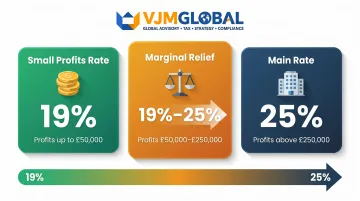
Knowing which rate applies to your company is a key first step — it also determines how HMRC calculates what you owe once you're registered. For context, the UK's 25% main rate is the lowest in the G7, which is worth noting if your business has cross-border operations.
When Do You Need to Register for Corporation Tax?
The 3-month registration deadline starts when the company starts trading — not when it's incorporated with Companies House.
HMRC defines "starting to trade" to include:
- Issuing invoices
- Advertising services
- Buying stock or inventory
- Renting premises
- Employing staff
- Earning interest on investments
Many directors assume the clock starts at incorporation — it doesn't. The deadline only begins once a qualifying business activity takes place.
Example: A company incorporated in January that doesn't issue its first invoice until March has until June to register. The deadline runs from March, not January.
Dormant Companies
If your company is incorporated but not yet trading, you can notify HMRC that it's dormant. Dormant companies are not required to file a Corporation Tax return until they become active.
That dormant status ends the moment your company earns interest, receives rent, or executes a contract — and the 3-month registration window opens immediately.
How to Register for Corporation Tax: Step-by-Step
Most companies register online through HMRC's Business Tax Account (BTA). Non-UK incorporated companies and unincorporated associations follow a different process: see HMRC's guidance for unincorporated associations and overseas companies.
What You'll Need Before You Start
Gather this information before starting your registration:
- Company registration number from Companies House
- Date trading started (this becomes the start of your first accounting period)
- Accounting period end date (when annual accounts are made up to)
- Registered office address
- Government Gateway user ID and password
- Unique Taxpayer Reference (UTR) — a 10-digit number issued by HMRC after incorporation, sent by post to your registered address
If your UTR hasn't arrived 15 working days after incorporation, you can request it online.
Step 1: Sign In or Create a Government Gateway Account
Sign in to your HMRC Business Tax Account using your Government Gateway credentials. New users must create an account first — you'll need your company registration number handy.
If your UTR still hasn't arrived by this point, call the HMRC Corporation Tax helpline before proceeding.
Step 2: Add Corporation Tax to Your Business Tax Account
Once signed in:
- Select "Services you can add" in the left-hand menu
- Locate "Corporation Tax"
- Select "Enrol for service"
HMRC will send an activation code by post — typically within 10 working days (up to 21 days for international addresses). You must use this code to complete enrolment.
Critical: Check your registered office address is correct before starting. All HMRC letters go to this address.
Step 3: Enter Company Details and Confirm Your Accounting Period
Enter the following details:
- Company registration number
- Date trading began (start of first accounting period)
- Date annual accounts are made up to
HMRC uses these details to determine your filing and payment deadlines automatically.
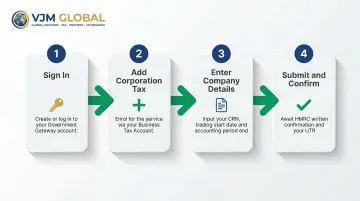
Step 4: Submit and Await Confirmation
Once submitted, HMRC confirms registration and sets your Corporation Tax record. You'll receive written confirmation including:
- Your UTR (if not already issued)
- Assigned tax office
- Deadline for paying Corporation Tax
Store your UTR securely. You'll need it for all future Corporation Tax filings and payments.
What Happens After You Register for Corporation Tax?
Registration creates two key ongoing obligations:
1. File a Company Tax Return (CT600) within 12 months of the end of your accounting period
2. Pay any Corporation Tax owed by 9 months and 1 day after your accounting period ends
These are separate deadlines. Filing must happen even if your company makes a loss or owes nothing.
The Company Tax Return (CT600)
The CT600 calculates your taxable profits after allowable deductions and reliefs, then determines the amount of tax owed. You must file using HMRC-recognised commercial software or online services — accounts and the CT600 are submitted together.
Paying Your Corporation Tax Bill
Approved payment methods:
- Online or mobile banking (Faster Payments or CHAPS)
- Direct Debit
- Debit or corporate credit card
- At your bank or building society
Critical: Use your 17-character Corporation Tax payment reference when making payment. This reference changes each accounting period, so verify you're using the correct one; using the wrong reference can delay or misallocate your payment.
Tax Reliefs and Allowances
Several reliefs can directly reduce your Corporation Tax bill:
- Annual Investment Allowance (AIA): Claim up to £1 million on plant and machinery
- R&D Tax Credits: The merged R&D Expenditure Credit scheme provides a 20% credit on qualifying R&D costs; R&D-intensive SMEs can access Enhanced R&D Intensive Support (ERIS)
- Other reliefs: Capital allowances on equipment, loss relief, and more
Getting these reliefs right requires careful record-keeping and timely filing. VJM Global has supported 250+ UK businesses with CT600 preparation, deadline management, and relief claims — helping companies stay compliant without missing out on what they're owed.
Common Mistakes and Penalties to Avoid
Confusing Incorporation with Corporation Tax Registration
The most common mistake: assuming that registering with Companies House automatically registers you for Corporation Tax. It doesn't. The BTA enrolment step must be completed separately within the 3-month trading deadline.
Late Filing Penalties
HMRC's penalty structure for late filing (returns with filing dates from 1 April 2026):
| Time After Deadline | Penalty |
|---|---|
| 1 day late | £200 |
| 3 months late | Another £200 |
| 6 months late | 10% of unpaid tax |
| 12 months late | Another 10% of unpaid tax |
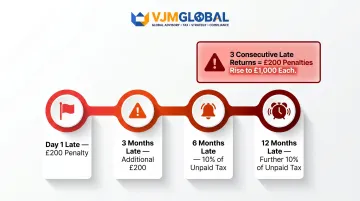
If your returns are late 3 times in a row, the £200 penalties increase to £1,000 each.
HMRC also charges daily interest on late payments — currently 7.75% (from 9 January 2026).
The Dormant Company Trap
Companies classified as dormant can lose that status the moment they earn interest, receive rent, or execute a contract. Directors who don't monitor this closely can inadvertently breach the 3-month deadline without realising trading has begun.
Using the Wrong UTR
Your personal UTR and company UTR are separate numbers. Using the wrong one creates payment allocation errors and delays. Two related points to keep in mind:
- Confirm you're using the company UTR — not your personal one — for all Corporation Tax payments
- If you pay Corporation Tax from personal funds, record it as a director's loan in company accounts
Foreign-Incorporated Companies
For foreign-incorporated companies operating in the UK, the registration process differs and involves specific HMRC forms for non-resident companies. VJM Global works with non-UK businesses on exactly this — handling cross-border tax compliance, HMRC correspondence, and registration requirements for companies entering the UK market.
Frequently Asked Questions
Do I need to register for tax in the UK?
Yes. Any company doing business in the UK — whether UK-incorporated or a foreign company with a UK branch — must register for Corporation Tax with HMRC within 3 months of starting to trade, in addition to any other applicable taxes such as VAT or PAYE.
What does Corporation Tax registration actually set up?
Registering brings your company into HMRC's system and establishes your accounting period, payment deadlines, and filing obligations. It's also a legal requirement — without it, HMRC has no basis to issue your Unique Taxpayer Reference (UTR) or accept your Company Tax Return.
How to file tax for limited company in the UK?
A limited company must file a Company Tax Return (CT600) to HMRC within 12 months of its accounting period end, using HMRC-approved software, and pay any Corporation Tax owed by 9 months and 1 day after the period ends.
What tax do I pay as a ltd company owner in the UK?
The company pays Corporation Tax on its profits. As an owner-director, you may also owe income tax on salary and dividends through Self Assessment — these are separate obligations with rates that vary based on how you draw income.
Does a UK limited company have to be VAT registered?
VAT registration is mandatory only when taxable turnover exceeds the current VAT threshold of £90,000, but companies can also register voluntarily below the threshold. VAT registration is separate from Corporation Tax registration.
What happens if I miss the Corporation Tax registration deadline?
HMRC can issue financial penalties starting at £200 if you miss the registration deadline, and late registration can delay your first Company Tax Return. Register as soon as possible and ensure your records are current from the date trading began.