Introduction
Dubai has emerged as one of the most strategic expansion destinations for Singapore businesses, offering direct access to a market of over 2 billion consumers across the GCC, Africa, and South Asia. The bilateral relationship is robust: UAE-Singapore bilateral merchandise trade reached S$23.6 billion in 2023, with the UAE ranking as Singapore's largest trading partner in the MENA region.
Choosing the wrong registration type is a costly mistake — one that can set a business back months and tens of thousands in avoidable fees. The structure you select determines where you can trade, how much tax you'll pay, and whether you can sponsor employees.
This guide covers every Dubai registration option available to Singapore businesses in 2026: how Mainland, Free Zone, and Offshore structures differ, and how to choose the right one from the start.
Key Takeaways
- Dubai offers three registration jurisdictions: Mainland (unrestricted UAE trading), Free Zone (tax-optimised international operations), and Offshore (holding structures only)
- 100% foreign ownership is now permitted across nearly all Dubai Mainland sectors since 2021 law reforms
- Free Zones deliver 0% corporate tax on qualifying income — the preferred structure for Singapore trading and SaaS businesses
- Offshore structures suit holding companies and asset protection but cannot conduct day-to-day UAE business
- Your best structure depends on target market, business activities, headcount, and UAE expansion timeline
Why Singapore Businesses Are Choosing Dubai for Expansion in 2026
Dubai and Singapore share DNA as global financial and logistics hubs. Both operate low-tax regimes, maintain world-class infrastructure, and position themselves as gateways to broader regions. For Singapore companies seeking Middle East, African, or South Asian market access, Dubai offers a structurally familiar environment — common-law influenced commercial courts, a strong regulatory framework, and a expatriate-friendly business culture.
The regulatory framework supporting this expansion has strengthened significantly. The GCC-Singapore Free Trade Agreement (in force since September 2013) eliminates up to 99% of tariffs on Singapore exports to the UAE, and the Singapore-UAE Double Taxation Avoidance Agreement removes the risk of double taxation on cross-border income.
While a bilateral Comprehensive Economic Partnership Agreement (CEPA) hasn't been signed yet, the UAE formally expressed interest at the June 2023 Singapore-UAE Joint Committee Meeting — signaling closer economic ties ahead.
Beyond the treaty framework, the financial conditions in 2026 are compelling on their own terms:
- 0% personal income tax and a 9% corporate tax rate (effective June 2023), with Free Zone exemptions for qualifying entities
- AED pegged to the USD at AED 3.6725 — no currency risk for dollar-denominated businesses
- No foreign exchange controls and unrestricted profit repatriation
- Fast registration timelines — days for Free Zone entities, 2-4 weeks for Mainland structures

Types of Company Registration in Dubai
Every Dubai company registration falls under one of three primary jurisdictions: Mainland, Free Zone, or Offshore. Within each jurisdiction, you must then select a legal structure (LLC, FZE, Branch Office, etc.). Both the jurisdiction and the legal structure must align with your business model from incorporation—switching later involves significant cost and administrative effort.
Mainland Company Registration
A Dubai Mainland company is an entity registered with the Department of Economic Development (DED) that can conduct business anywhere in the UAE without geographic restriction. This includes direct sales to UAE consumers, government contracts, and operations across all seven Emirates.
Key legal structures for Singapore businesses:
Limited Liability Company (LLC): The most common Mainland structure. Following Federal Decree-Law No. 32 of 2021, an LLC can now be held by a single shareholder (including a single non-UAE shareholder), replacing the older requirement of two or more shareholders. Liability is limited to capital contribution, and 100% foreign ownership is permitted in most sectors.
Branch Office: Allows a Singapore parent company to operate in Dubai as an extension of its existing legal entity without forming a separate company. The branch does not require a UAE national service agent under current law, and profits are directly attributed to the parent entity.
The 2020–2021 Commercial Companies Law reform removed the historical requirement for a 51% UAE national partner in most sectors. A small list of strategic activities still requires local partnership:
- Security, defence, and military activities
- Telecommunications services
- Banking, exchange, financing, and insurance
- Commercial agencies and distributorships
- Hajj and Umrah organizing
Who should choose Mainland registration:
- Singapore businesses targeting UAE consumers directly
- Companies pursuing government or public sector contracts
- Retail, hospitality, or physical services businesses scaling across the Emirates
- Businesses requiring unlimited visa quotas tied to physical office space
Free Zone Company Registration
A Dubai Free Zone company is established within one of Dubai's 30+ designated economic zones, each governed by its own regulatory authority rather than the DED. Free Zones were originally created to attract foreign investment through 100% ownership, tax exemptions, and streamlined registration.
Key legal structures:
- FZE (Free Zone Establishment): Single shareholder, limited liability
- FZCO (Free Zone Company or FZ-LLC): Two or more shareholders, limited liability
- Branch of Foreign Company: Singapore parent operates directly within the Free Zone
Free Zone trade restriction: Free Zone companies cannot directly trade on the UAE Mainland. To reach UAE-based customers, you must either:
- Appoint a Mainland-registered distributor, or
- Establish a separate Mainland entity
Goods moved from a Free Zone into the Mainland are subject to customs duty. Free Zone entities can, however, freely conduct international trade — including with Singapore.
Financial benefits:
- 0% import/export duties within the zone
- 100% profit repatriation with no currency controls
- Potential 0% corporate tax under Qualifying Free Zone Person (QFZP) status
Ministerial Decision No. 229 of 2025 defines qualifying activities for QFZP status:
- Manufacturing and trading qualifying commodities
- Holding shares (minimum 12-month holding period)
- Fund management and wealth management
- Headquarter services to related parties
- Logistics and ancillary activities
To maintain QFZP status, non-qualifying revenue must not exceed 5% of total revenue or AED 5,000,000 — whichever is lower. Breaching this threshold triggers loss of QFZP status for that tax period and the following four periods.
Singapore business profiles best suited for Free Zone registration:
- Technology and SaaS companies serving international clients
- Trading and import/export firms using Dubai as a regional hub
- Consulting and professional services businesses
- Fund managers, wealth advisors, and financial services firms
- Any business primarily serving non-UAE clients
Notable Free Zones for Singapore businesses:
- DMCC (Dubai Multi Commodities Centre): The dominant choice for commodities and trading. Over 26,000 member companies by end of 2025, including 4,000+ technology companies and 3,600+ energy companies. World's largest hub for diamond trade.
- DIFC (Dubai International Financial Centre): Designated financial services Free Zone, regulated by the Dubai Financial Services Authority (DFSA). Required for licensed fund management, wealth management, and investment advisory activities.
- IFZA (International Free Zone Authority) and RAKEZ (Ras Al Khaimah Economic Zone): Cost-effective options for general business activities, with entry-level packages starting around AED 12,000–15,000 (confirm current pricing directly with each authority).
Offshore Company Registration
A Dubai Offshore company is a non-resident entity incorporated to conduct business entirely outside the UAE. Offshore companies cannot obtain UAE trade licences, cannot maintain a physical UAE office, and cannot sponsor employee visas. The most commonly used offshore jurisdiction for Singapore businesses is RAK International Corporate Centre (RAK ICC), established under Decree No. 4 of 2016.
Primary use cases for Singapore businesses:
- Holding company to own UAE Free Zone or Mainland subsidiaries
- Intellectual property protection and licensing
- Managing international investments and cross-border structuring
- Facilitating transactions between Singapore and Gulf operations
- Estate and wealth planning
Important limitation: Since a 2011 Dubai Land Department circular, only offshore companies registered with Jebel Ali Free Zone Authority (JAFZA) can register property with the Dubai Land Department. RAK ICC companies cannot own Dubai property directly.
Where offshore registration falls short: Choosing offshore when you actually need to operate, hire, or transact within the UAE is one of the most costly mistakes Singapore businesses make. Offshore structures exist solely for holding, IP, and international transactions — not UAE market operations. If your business needs to generate UAE-based revenue, you need a Free Zone or Mainland entity instead.
Key Differences at a Glance: Mainland vs. Free Zone vs. Offshore
| Feature | Mainland LLC | Free Zone (FZE/FZCO) | Offshore (RAK ICC) |
|---|---|---|---|
| Foreign Ownership | 100% (except restricted sectors) | 100% | 100% |
| Can Trade in UAE Mainland | Yes, unrestricted | No (requires distributor or branch) | No (international only) |
| Physical Office Required | Yes (mandatory) | Varies (flexi-desk options available) | No (not permitted) |
| UAE Residency Visa Eligibility | Yes | Yes | No |
| Corporate Tax Position | 9% on profits above AED 375,000 | 0% on Qualifying Income (QFZP); 9% otherwise | 9% (subject to CT registration) |
| Best For | Direct UAE market access | International trade, regional HQ | Holding structures, IP, investments |
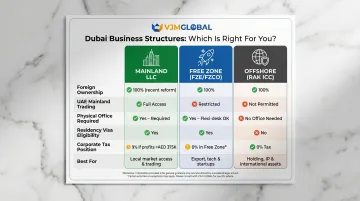
The fundamental choice comes down to your market access needs. Two scenarios drive the decision:
- Selling directly to UAE-based customers without a distributor — Mainland registration is required.
- Using Dubai as a base for international trade or serving non-UAE clients — Free Zone is usually the better-structured option for tax efficiency.
How to Choose the Right Registration Type for Your Singapore Business
Before engaging any registration authority, answer these four questions:
1. Who are your customers—UAE-based or international?
If you're selling primarily to UAE consumers or businesses, you need Mainland. If your customers are outside the UAE (including Singapore), or you're operating a regional headquarters serving multiple markets, Free Zone is the better fit.
2. Do you need a physical UAE presence, or will a virtual/flexi-desk office suffice?
Mainland requires a physical office. Many Free Zones offer flexi-desk or virtual office options at lower cost, suitable for businesses with small teams or those primarily operating remotely.
3. How many employees will you hire locally, and do you need UAE residency visas?
Both Mainland and Free Zone entities can sponsor employee visas. Offshore cannot. Mainland visa quotas are typically tied to office space size. Free Zone visa quotas vary by zone and licence package.
4. Is this entity a trading/operating company or a holding/investment structure?
Operating companies belong in Mainland or Free Zone. Holding companies, IP entities, and pure investment vehicles can use Offshore or Free Zone structures depending on tax planning objectives.
Tax Planning Considerations for Singapore Businesses
Singapore operates a territorial tax system—foreign-sourced income remitted to Singapore may be exempt if certain conditions are met. Dubai's 9% corporate tax (with Free Zone exemptions for QFZP entities) means the structure you choose has direct implications for your effective tax rate and how the entity interacts with Singapore's tax obligations.
This is not a DIY decision. Singapore businesses should seek advice from a firm experienced in both Singapore and UAE taxation before finalising their registration type. VJM Global provides cross-border tax advisory covering transfer pricing, DTAA optimisation, and international tax structuring for Singapore–UAE operations.
Activity Restriction Factor
Free Zone licences are tied to approved activity lists, and not every activity is available in every zone. Regulated sectors require extra scrutiny:
- Financial services — verify MAS-equivalent licensing requirements with the relevant Free Zone authority
- Healthcare and education — activity approvals vary significantly across zones
- Legal services — subject to strict UAE professional licensing rules regardless of zone
Singapore businesses should confirm their specific activity is licensable in their chosen jurisdiction before committing to a zone.
Growth Trajectory Consideration
If you plan to scale UAE headcount, open physical retail locations, or pursue government contracts, start with Mainland — or build a dual-structure approach (Free Zone + Mainland branch) into your plan from day one.
Changing jurisdictions after incorporation is expensive: it involves re-registration, new licences, contract migrations, and substantial professional fees.
Decision shortcut for most Singapore SMEs: If your primary goal is international trade or a regional headquarters, start with a Free Zone LLC in a reputable zone. If your primary goal is UAE market penetration from day one, go directly for a Mainland LLC with 100% foreign ownership. Offshore suits neither operating scenario.
Common Mistakes Singapore Businesses Make Before Registering in Dubai
Three patterns consistently trip up Singapore businesses before they've even opened their first UAE bank account.
Choosing a Free Zone on Cost Alone
Selecting a Free Zone based on price without verifying whether it supports your required business activity, offers credible banking relationships, or is recognised by your sector's regulatory body is a common and costly error. Budget zones can create downstream compliance problems that far exceed the initial savings.
Underestimating the Post-Registration Compliance Burden
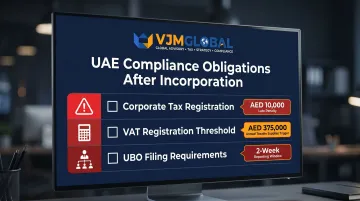
The UAE's regulatory environment operates across multiple authorities simultaneously — a sharp contrast to Singapore's ACRA-centric model. Key obligations include:
- Corporate tax registration: Mandatory for all entities; late registration carries an AED 10,000 penalty
- VAT registration: Required once annual taxable supplies exceed AED 375,000
- UBO filings: Required under Cabinet Decision No. 109 of 2023, with changes reportable within two weeks
Note: Economic Substance Regulations (ESR) filing requirements were cancelled by Cabinet Decision No. 98 of 2024 for financial years ending after 31 December 2022. The UAE Corporate Tax regime has superseded ESR as the primary regulatory framework.
Overlooking Document Authentication Requirements
Singapore acceded to the Hague Apostille Convention on 16 September 2021, but the UAE is not a member. A Singapore apostille alone is not accepted. ACRA documents require full consular legalisation through three sequential steps:
- Singapore Academy of Law apostille
- UAE Embassy in Singapore authentication
- UAE Ministry of Foreign Affairs attestation
Allow 2–4 weeks for this process if not arranged in advance.
Conclusion
Dubai's three registration jurisdictions—Mainland, Free Zone, and Offshore—serve distinct purposes. The right choice for a Singapore business depends on whether you're targeting UAE customers (Mainland), international markets (Free Zone), or pure holding and investment activity (Offshore).
2026 is a strong year for Singapore businesses to enter Dubai. Several structural advantages have aligned:
- 100% foreign ownership is now standard across most sectors following the 2021 Commercial Companies Law reform
- The GCC-Singapore FTA is in force, eliminating up to 99% of tariffs on qualifying goods
- The UAE's corporate tax framework is stable and navigable with the right professional support
- Free Zone QFZP structures offer legitimate 0% tax pathways for qualifying activities
Entity selection directly shapes your market access, tax liability, compliance burden, and ability to scale — getting it wrong at incorporation is significantly harder to unwind than getting it right from the start. Seek guidance from advisors with hands-on experience in both Singapore and UAE regulatory environments. VJM Global's cross-border tax and advisory services support Singapore businesses navigating international expansion, including transfer pricing, DTAA optimization, and dual-jurisdiction structuring.
Frequently Asked Questions
What are the types of companies in Dubai?
Dubai company types fall under three jurisdictions: Mainland, Free Zone, and Offshore. Within these, common legal structures include LLC (Mainland), Branch Office (Mainland or Free Zone), Free Zone Establishment (FZE), Free Zone Company (FZCO), and offshore International Business Companies (IBC).
What is a Category 3 company in the UAE?
"Category 3" refers to a licensing classification used by certain UAE Free Zone authorities, notably DIFC for financial firms. Category 3C licences cover firms that manage assets, advise on financial products, or manage collective investment funds. It is not a general Dubai company type but a specific regulated activity licence category.
Can a Singapore company own 100% of a Dubai business?
Yes. Singapore companies can own 100% of a Dubai Mainland LLC in most sectors under Federal Decree-Law No. 32 of 2021. Full foreign ownership has always been available in Free Zones and for offshore structures.
Do Singapore businesses need a local UAE partner to register in Dubai?
Not for most sectors. The 2021 law reform eliminated the local partner requirement across the majority of Mainland activities. Strategic sectors—oil and gas, defence, telecommunications, banking, and insurance—may still require partial local ownership.
What is the cheapest way for a Singapore business to set up in Dubai?
Free Zones such as RAKEZ, IFZA, or UAQ Free Trade Zone offer the most affordable entry points, with packages starting around AED 12,000–15,000 all-in (fee schedules change annually, so confirm current rates directly). Costs rise with additional visa quotas and office space requirements.
How long does company registration in Dubai take for a Singapore business?
Free Zone registrations typically complete in 3–7 business days; Mainland registrations take 2–4 weeks. Singapore-sourced documents require apostille, UAE embassy legalisation, and MOFA attestation—budget an extra 2–4 weeks if these aren't prepared in advance.