Accounting Periods in India: What Singapore Businesses Should Know

Published on:
May 8, 2026

Table of contents

Talk to Us
Thank you! Your submission has been received!
Oops! Something went wrong while submitting the form.

One Firm,
Global Solutions

We support cross-border business with confidence and clarity.
Book a Call

Introduction

Singapore businesses expanding into India encounter an immediate regulatory hurdle: India's financial year runs from April 1 to March 31, not the January-to-December calendar year most Singapore companies use. That gap creates real compliance friction — not just a scheduling inconvenience.

When your Singapore parent closes its books on December 31 but your Indian subsidiary runs on an April-March cycle, you face three months of reporting lag and misaligned tax deadlines. Intercompany reconciliation, consolidated reporting, and statutory filings all require careful coordination across both jurisdictions.

This guide breaks down India's accounting period rules, how they compare to Singapore's framework, and what your finance team needs to manage the dual-reporting reality from day one.

TLDR: What Singapore Businesses Need to Know

  • India's financial year runs April 1 to March 31, legally mandated under the Companies Act, 2013 and Income Tax Act, 1961
  • Singapore allows flexible year-ends (though most use January–December), creating up to a 9-month reporting gap with Indian subsidiaries
  • Foreign companies cannot freely choose a different financial year in India: April–March is mandatory for most registered entities
  • The misalignment creates dual reporting cycles, reconciliation gaps, and separate compliance calendars that require a dual compliance calendar
  • Key deadlines: advance tax (June 15, Sept 15, Dec 15, Mar 15), corporate tax return (Oct 31), AGM filings (within 6 months of year-end)

India's Financial Year Explained: The April to March Cycle

India's financial year (also called the fiscal year or accounting year) is a 12-month period beginning April 1 and ending March 31 of the following calendar year. For example, FY 2025-26 runs from April 1, 2025 to March 31, 2026.

This cycle is legally mandated under Section 2(41) of the Companies Act, 2013, which defines "financial year" as the period ending on March 31 every year. The Income Tax Act, 1961 reinforces this through its definitions of "Previous Year" and "Assessment Year."

Previous Year vs. Assessment Year

India's tax system uses two distinct concepts that commonly confuse Singapore finance teams:

  • Previous Year: The financial year in which income is earned (April 1 to March 31)
  • Assessment Year: The following year in which that income is taxed and assessed

For example, income earned in FY 2025-26 (the Previous Year) is assessed and taxed in AY 2026-27 (the Assessment Year). This lag differs sharply from Singapore's system, where income is assessed in the same year it's earned.

Historical Origins

The April-March cycle dates to 1867, when the British colonial government aligned India's fiscal calendar with the British Exchequer's accounting period. This timing also coincided with India's agricultural harvest season — harvests occurred October through March, giving the government a clearer revenue picture by April. India retained the cycle post-Independence — administrative and budgetary systems had already been built around it.

Exceptions and Special Cases

While most Indian companies follow the April-March year, limited exceptions have existed historically. The Companies Act, 2013 significantly narrowed these by mandating a uniform financial year for all registered companies.

Key points on exceptions:

  • MNC subsidiaries previously aligned with parent-company calendars (e.g., January-December)
  • Nestle India used a January-December year until 2023, then transitioned to April-March via a 15-month transition period (January 1, 2023 to March 31, 2024)
  • Foreign companies and exempted entities may have specific provisions — covered later in this article

The Union Budget Connection

Understanding this framework makes one more element critical: the Union Budget. India's government presents it in February — before the financial year begins — meaning tax changes take effect before your planning cycle closes.

Rate adjustments, depreciation rules, and compliance requirements announced in the budget typically apply from April 1. For Singapore businesses, this means a February budget announcement can shift your India tax exposure, transfer pricing assumptions, or filing deadlines with roughly six weeks' notice. Building a budget-monitoring step into your Q1 calendar is worth the effort.

Singapore vs. India: How the Two Accounting Periods Differ

Core Framework Comparison

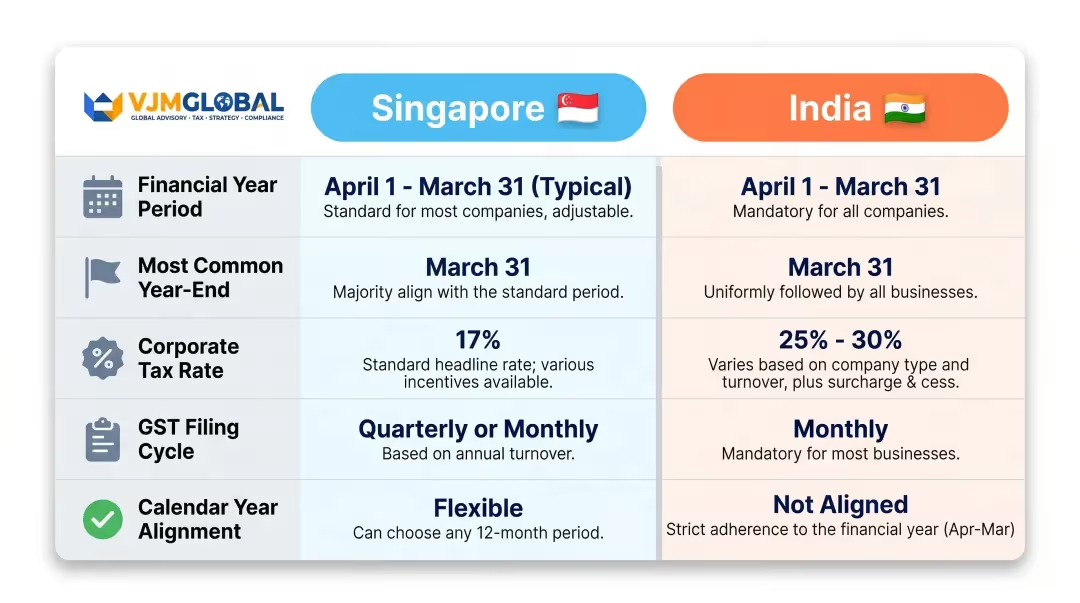
AspectSingaporeIndiaFinancial Year PeriodFlexible — companies choose any 12-month periodMandatory April 1 to March 31Most Common Year-EndDecember 31 (many companies)March 31 (all registered companies)Corporate Tax Rate17% flat rate22%-30% domestic; 40% for foreign companiesGST Filing CycleQuarterly (Form GST F5)Monthly GSTR-3B; quarterly/annual reconciliationAligns with Calendar YearOptional (company's choice)No — ends March 31

For Singapore parent companies with Indian subsidiaries, that difference in year-end dates creates real consolidation and reporting challenges — not just administrative ones.

The Consolidation Problem

A Singapore holding company closing its books on December 31 must consolidate an Indian subsidiary that only closes on March 31 — creating a three-month reporting gap.

Under IFRS 10 and SFRS(I) 10 (Singapore Financial Reporting Standards - International), this three-month gap is the maximum permitted for consolidation purposes. Companies typically handle this by:

  • Preparing interim management accounts from the Indian entity as of December 31 for consolidation
  • Using March 31 audited figures in the following reporting period with appropriate disclosures
  • Building a parallel internal reporting layer that tracks both calendars

Whichever approach is used, accounting policies must be consistent across both entities, and any material transactions occurring between the two year-ends must be identified and adjusted in the consolidated accounts.

Tax Year Terminology Gaps

Singapore has no separate "Assessment Year" concept. Income is assessed in the year it's earned. In India, the Previous Year/Assessment Year distinction means a company earning income in FY 2025-26 only sees tax assessment in AY 2026-27.

Singapore finance teams reviewing Indian tax provisions in intercompany accounts need to account for this lag — failing to do so can result in tax liabilities being misattributed to the wrong period, distorting both provisions and intercompany reconciliations.

GST Compliance Burden

Singapore GST returns are typically filed quarterly. India's GST requires:

  • GSTR-3B: Monthly summary return (or quarterly under QRMP scheme for smaller taxpayers)
  • GSTR-1: Monthly/quarterly outward supply details
  • GSTR-9: Annual return due December 31 of the following year

The Indian GST calendar doesn't follow the financial year cleanly — returns span calendar months, creating year-round compliance obligations that Singapore businesses must staff continuously.

The frequency of Indian GST filings also has a knock-on effect on transfer pricing documentation, since intercompany invoices feeding those returns must be priced consistently throughout the year.

Transfer Pricing Implications

When Singapore entities transact with Indian subsidiaries, transfer pricing documentation in India must cover the April-March financial year. Singapore's transfer pricing documentation follows the Singapore financial year.

Singapore businesses must ensure their intercompany pricing policies and documentation cover both periods and are reconciled — especially where pricing or margins change during the year. Form 3CEB (India's TP audit report) is due October 31 of the Assessment Year, covering the Indian financial year.

Critical Compliance Dates in India That Singapore Businesses Cannot Miss

Advance Tax Installments

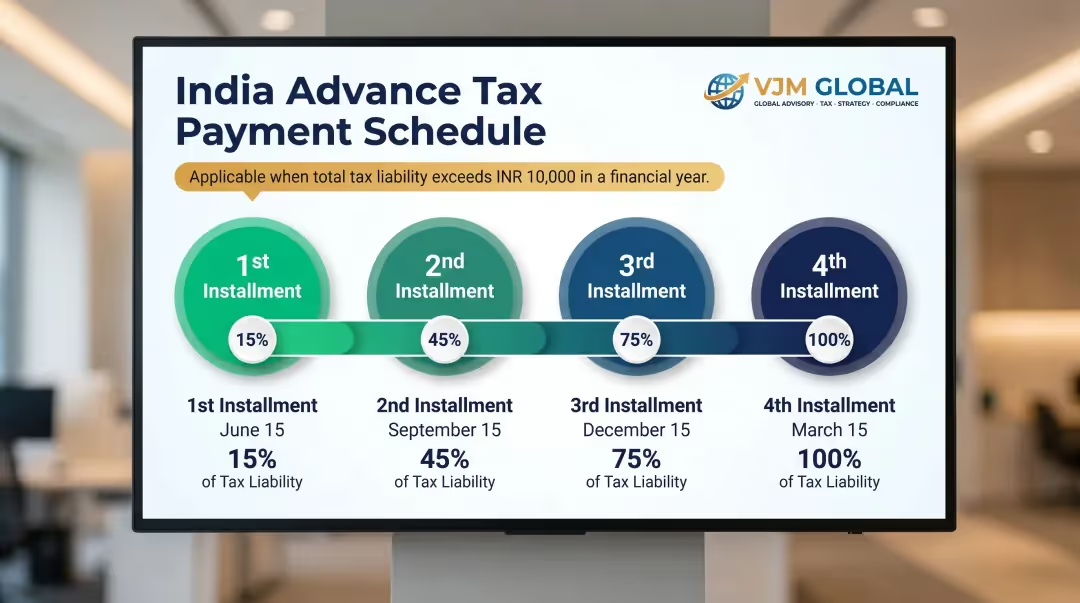
If total tax payable for the year exceeds INR 10,000, companies must pay advance tax in four quarterly installments:

InstallmentDue DateCumulative % of Tax Liability1stJune 1515%2ndSeptember 1545%3rdDecember 1575%4thMarch 15100%

Missing these payments attracts interest of 1% per month under Sections 234B and 234C of the Income Tax Act. This differs from Singapore's tax-at-assessment model and catches many Singapore businesses off guard when they first enter India.

TDS (Tax Deducted at Source) Returns

Quarterly TDS return filing deadlines:

QuarterPeriodTDS Return Due DateQ1Apr-JunJuly 31Q2Jul-SepOctober 31Q3Oct-DecJanuary 31Q4Jan-MarMay 31

Applicable forms include Form 24Q (salary TDS), Form 26Q (non-salary payments), and Form 27Q (payments to non-residents).

Corporate Income Tax Returns

  • Companies requiring audit: October 31 of the Assessment Year
  • Companies with transfer pricing obligations: November 30 of the Assessment Year

ROC (Registrar of Companies) Filings

Indian subsidiaries must file annual returns, financial statements, and board resolutions with the Ministry of Corporate Affairs:

  • AGM (Annual General Meeting): Must be held within 6 months of financial year-end (by September 30)
  • Financial statements (Form AOC-4): Must be filed within 30 days of the AGM (not 60 days)
  • Annual return (Form MGT-7): Must be filed within 60 days of the AGM

Late filing of AOC-4 and MGT-7 attracts INR 100 per day with no maximum cap, plus additional penalties under Section 450 for continuing contraventions.

Branch and Liaison Office Requirements

For Singapore companies operating through a branch or liaison office (not an incorporated subsidiary):

  • Liaison offices: Must file Annual Activity Certificate (AAC) by September 30 each year with RBI through authorised dealer banks
  • Branch offices: Must file income tax returns (Form ITR-6) and undergo statutory audit

Faceless Assessment System

One more compliance dimension worth flagging: India now conducts tax assessments digitally with no in-person hearings. Singapore businesses should:

  • Maintain complete digital records
  • Respond promptly to assessment notices (deadlines can be as short as 30 days)
  • Retain documentation for the standard three-year reassessment period (extendable to five years in cases involving high-value escaped income)

Navigating Dual Reporting: When Your Singapore Parent and Indian Subsidiary Follow Different Fiscal Years

Why the April–March vs. January–December Gap Creates Real Work

The Indian subsidiary's standalone financial statements run April–March, while the Singapore parent's consolidated group accounts typically run January–December. This mismatch isn't unique to India — the UK and Australia also use non-January fiscal years — but it requires structured internal processes.

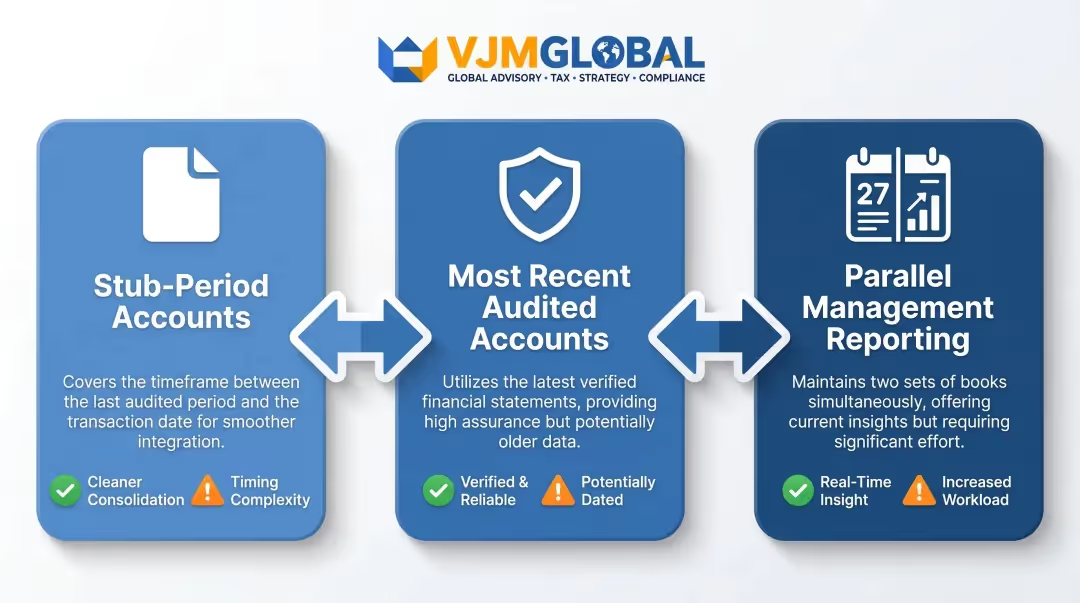
Three Ways Singapore Groups Handle the Year-End Mismatch

  1. Stub-period accounts — Prepare interim financials for the Indian entity aligned to the group year-end. More work upfront, but produces the cleanest consolidation.
  2. Most recent audited accounts — Consolidate using the March 31 audited figures with proper disclosure of the period mismatch. Under IFRS 10/SFRS(I) 10, the gap between reporting dates must not exceed three months and must remain consistent year to year. Significant intervening transactions (January–March) must be adjusted.
  3. Parallel management reporting — Build an internal system that tracks Indian entity performance on both fiscal calendars simultaneously. Maximum visibility, but requires disciplined data management.

Singapore group auditors will require disclosure of the different financial year in consolidated accounts — and this same mismatch carries into your planning cycle.

Budget and Forecasting Implications

When a Singapore business budgets on a January–December basis, the Indian subsidiary's plan spans two Indian financial years: January–March closes one FY, and April–December opens the next. Indian management teams plan and are incentivized on the April–March cycle, which can pull local priorities out of sync with group targets.

Manage this gap deliberately through:

  • Map KPIs explicitly to both calendar cycles so targets translate cleanly
  • Run quarterly reviews that cross-reference performance under both fiscal years
  • Clarify upfront which fiscal year drives local incentives vs. group reporting
  • Document any mid-year budget restatements when Indian FY closes in March

First-Year Rules and Special Cases for Foreign Companies Setting Up in India

First Accounting Period Rules

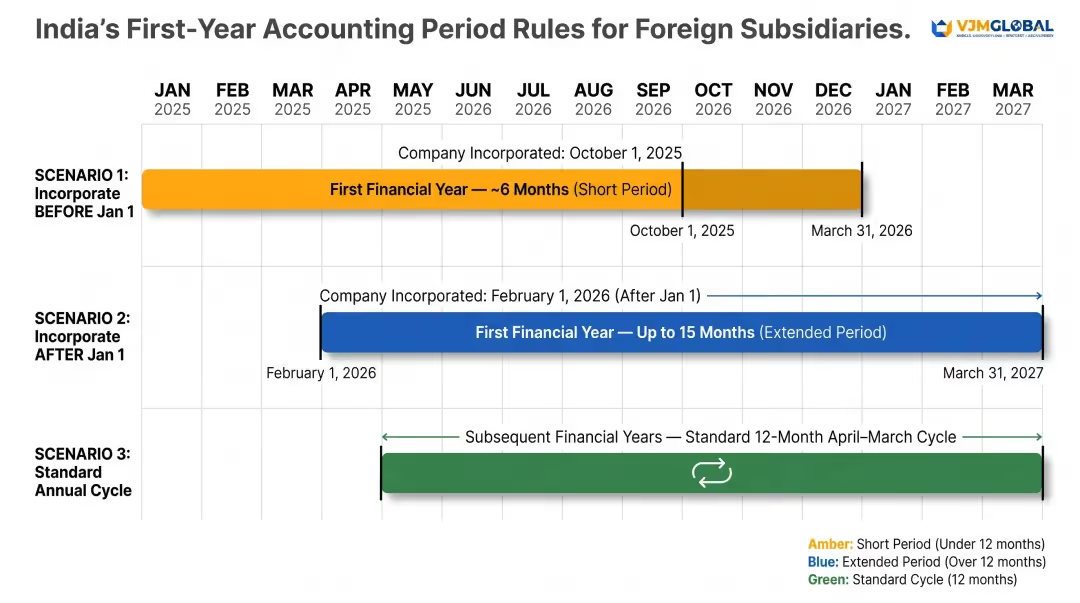
When a foreign company incorporates a subsidiary in India, the first financial year can be shorter or longer than 12 months, but it must end on March 31.

Under Section 2(41) of the Companies Act, 2013:

  • A company incorporated in October 2025 has a first financial year running October 2025 to March 31, 2026 (short period of approximately 6 months)
  • If incorporated after January 1, the first financial year may extend up to approximately 15 months to the following March 31
  • The second and subsequent years run April 1 to March 31 (full 12-month periods)

This means the first set of Indian audited accounts may cover fewer than 12 months, which must be clearly communicated to Singapore parent company stakeholders.

Liaison and Project Offices

Foreign companies operating through liaison or project offices (not incorporated entities) have separate accounting and reporting requirements under FEMA and RBI regulations:

  • Liaison offices: Cannot engage in commercial activity; must file Annual Activity Certificate by September 30
  • Project offices: Operate for specific contracts; must maintain project-specific documentation and file income tax returns
  • Eligibility: Liaison office parent companies must demonstrate profitability for three preceding years and net worth of at least USD 50,000

Exception for Foreign-Parented Companies

Section 2(41) provides a limited exception: companies that are holding, subsidiary, or associate companies of foreign-incorporated entities may apply to the Regional Director to follow a different financial year for consolidation purposes.

Two specific scenarios where this applies:

  • IFSC subsidiaries: Companies under the International Financial Services Centre may follow their holding company's financial year without government approval
  • Other foreign-parented entities: Require a formal Regional Director application before deviating from the standard cycle

In practice, most Singapore-owned Indian subsidiaries will operate on the standard April-March cycle.

RBI's July-June Cycle

The Reserve Bank of India historically used a July-June accounting year. Effective April 1, 2021, the RBI shifted to April-March to align with the government's fiscal year. For Singapore businesses, this alignment means your Indian subsidiary's financial year, the government's fiscal calendar, and RBI banking cycles now all run on the same April-March timeline — reducing one layer of reconciliation complexity.

Frequently Asked Questions

What is a 12-month accounting period called?

A 12-month accounting period is commonly called a "financial year" or "fiscal year." In India specifically, this period runs from April 1 to March 31 and is also called the "previous year" in income tax terminology.

What is the current financial year in India?

FY 2025-26 runs from April 1, 2025 to March 31, 2026. The corresponding Assessment Year is AY 2026-27, which is when income earned during FY 2025-26 is assessed and taxed.

When did FY 25 start?

FY 2024-25 (often referred to as FY 25) started on April 1, 2024 and ended on March 31, 2025. The term "FY 25" can cause confusion depending on whether the start year or end year convention is used.

Does Singapore follow the same financial year as India?

No. Singapore does not mandate a specific financial year — Singapore-incorporated companies can choose any 12-month period as their financial year. Many use January 1 to December 31, which differs from India's mandatory April 1 to March 31 cycle, creating a reporting mismatch for Singapore businesses with Indian subsidiaries.

Can a foreign company in India use a different accounting period?

Under the Companies Act, 2013, companies registered in India — including subsidiaries of foreign companies — are required to follow the April 1 to March 31 financial year. Limited exceptions exist for specific entity types such as IFSC companies, but flexibility is very restricted.

What are the key tax deadlines in India for companies with foreign parents?

Key deadlines to track:

  • Corporate income tax return: October 31 (November 30 for transfer pricing cases)
  • Advance tax installments: June 15, September 15, December 15, and March 15
  • Quarterly TDS returns: July 31, October 31, January 31, and May 31

Missing these deadlines triggers interest at 1% per month plus accumulating penalties.

Need expert support navigating India's accounting period and compliance requirements? VJM Global specializes in helping Singapore businesses establish and operate in India. With over 30 years of experience, we provide comprehensive business setup, tax compliance, dual-calendar management reporting, and ongoing accounting services tailored for cross-border operations. Contact us at [email protected] or +91 98915 76441 to discuss how we can help your Singapore business succeed in India.

VJM Global
探索 VJM Global 的专家家见解、提示和最新动态
Know More About The Author

Recent Blogs