How to Balance Books for Small Business Owners Expanding From US to India

Published on:
December 11, 2025

Table of contents

Talk to Us
Thank you! Your submission has been received!
Oops! Something went wrong while submitting the form.

One Firm,
Global Solutions

We support cross-border business with confidence and clarity.
Book a Call

Small business owners expanding from the US to India often work through separate accounting calendars, mixed settlement timings, and region-specific tax rules. When entries move across two systems, even minor timing differences can influence reports, cash visibility, and month-close accuracy. Learning how to balance books for a small business in this structure becomes a practical requirement rather than a routine task.

Many owners manage frequent vendor activity in India alongside bank movements in the US, which creates added pressure on documentation, reconciliation, and currency tracking. Understanding how to balance books for a small business across both regions helps maintain clarity over actual payable positions, revenue timing, and compliance-linked records.

In this guide, you will see how these steps fit together for accurate, dependable bookkeeping from the US to India.

Key Takeaways

  • India GST bills require place-of-supply tags and RBI-based conversion rates to avoid mismatches during GST return checks.
  • Accurate revenue posting depends on settlement reports, not bank credit dates, especially when US payouts land before platform confirmations.
  • Cross-border bookkeeping demands separate ledgers for India- and US-linked expenses to prevent incorrect tax treatment.
  • A fixed month-close routine with GST checks by the 10th and US subscription audits prevents period shifts across regions.
  • VJM Global supports cross-border bookkeeping by managing GST credits, multi-currency entries, bank feed syncing, and audit-ready document control.

What Balancing Books Means for Small Business Owners From the US to India

What Balancing Books Means for Small Business Owners From the US to India

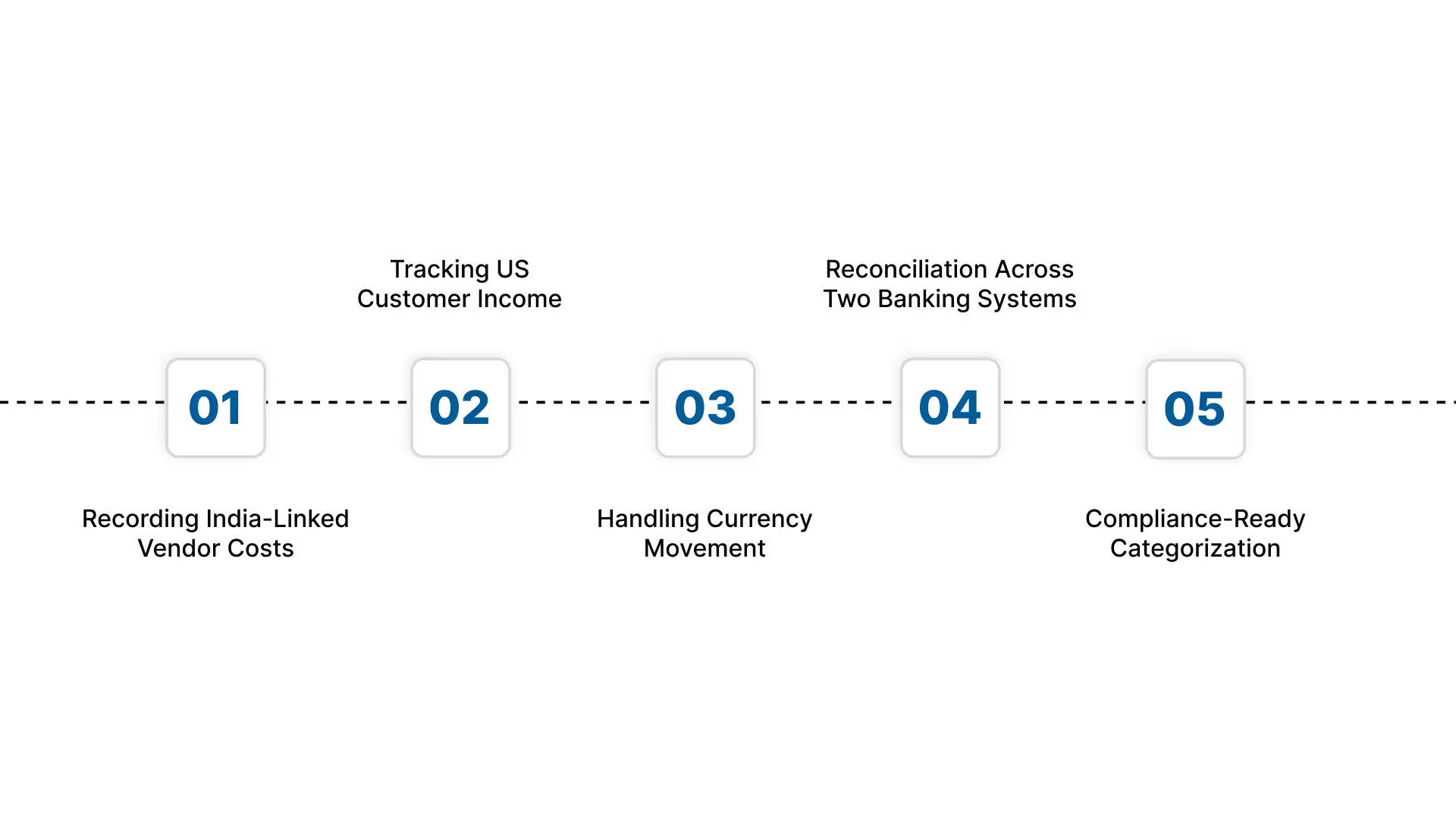
Small business owners operating from the US to India work with two accounting calendars, different cut-off rules for expense recognition, and varied bank settlement timings. Balancing books in this structure supports accurate month-close routines, reliable cross-border cash tracking, and clean data for tax filings in both countries.

  • Recording India-Linked Vendor Costs: Captures invoices tied to GST-registered vendors with correct bill dates, place-of-supply tags, and exchange-rate conversion based on the transaction day.
  • Tracking US Customer Income: Logs card, ACH, and digital platform payouts using settlement summaries and posts them to supported accounting systems so revenue is recorded in the correct period.
  • Handling Currency Movement: Applies the appropriate conversion rate (RBI reference or the actual bank rate) to avoid overstated receivables or understated expenses.
  • Reconciliation Across Two Banking Systems: Matches entries with US bank statements, Indian current accounts, and payment-gateway ledgers to detect timing gaps such as T+2 or T+3 settlements.
  • Compliance-Ready Categorization: Categorizes expenses using a US-friendly chart of accounts while applying India-specific groups such as GST credit-eligible and non-credit-eligible items.

Managing these cross-region entries sets the foundation for the practical steps that follow, where each action focuses on keeping US and India records aligned during month-close.

If you want to refine your cross-border bookkeeping structure even further, review these detailed methods in Top Bookkeeping and Accounting Practices for US Law Firms.

How to Balance Books for Small Business in a Simple Way

How to Balance Books for Small Business in a Simple Way

Balancing books for small business operations from the US to India involves handling entries across two banking systems, multiple settlement cycles, and different tax rules. The process requires tight control over timing, currency records, and documentation so monthly numbers stay accurate.

This structure shows how to balance books for small business owners who need clean, verifiable data for both regions, with VJM Global available for support when cross-border entries become complex.

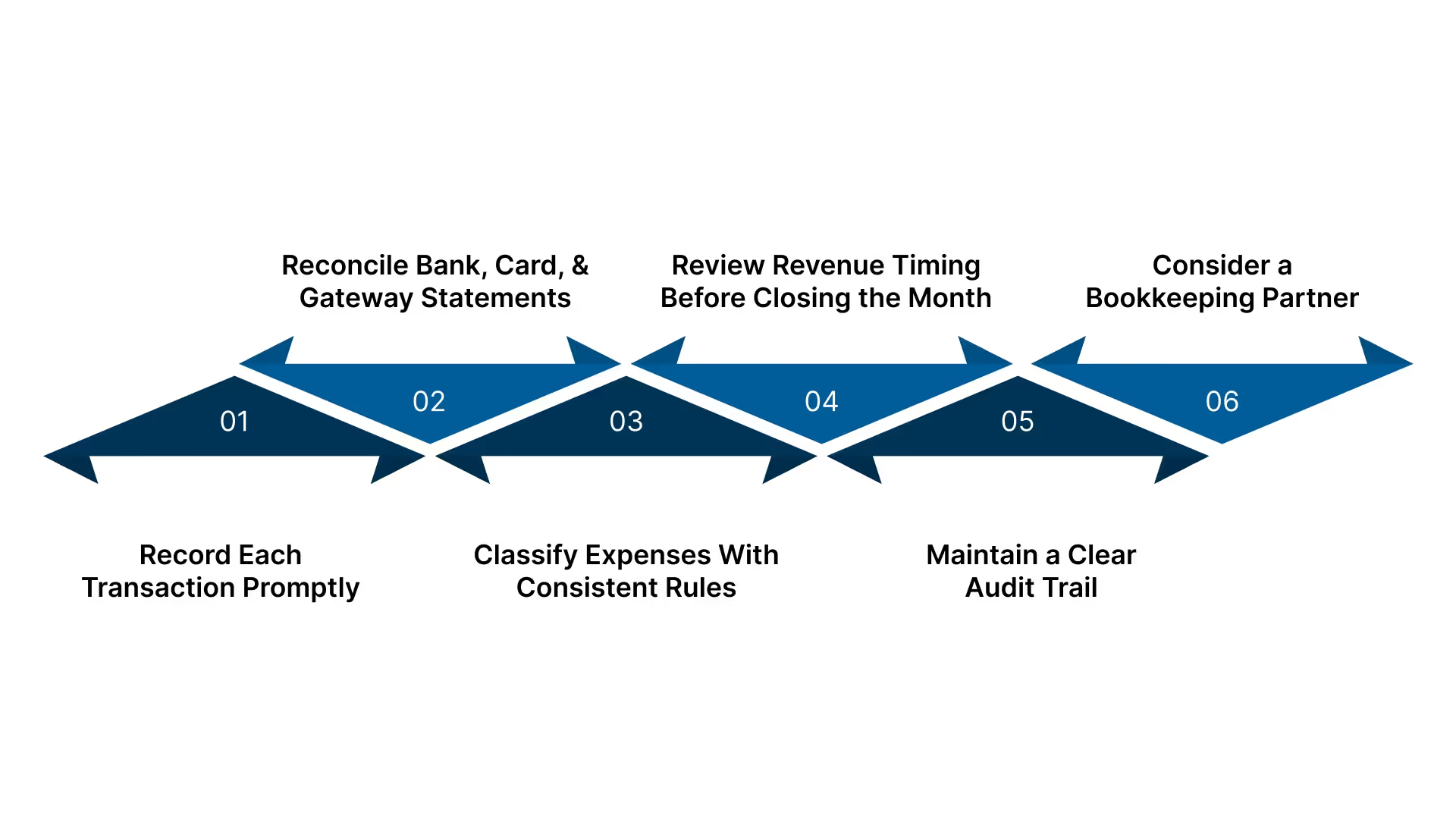
Step 1: Record Each Transaction Promptly

Delayed entries distort month-close accuracy, especially when US receipts and India vendor bills hit accounts on different days.

Key Details

  • Capture Settlement-Based Income: Record payouts only after verifying daily settlement summaries from the payment processor, rather than at the time of sale, to keep revenue in the correct period.
  • Enter GST-Tagged India Bills Correctly: Input vendor invoices with place-of-supply tags, GST breakup, and the exchange rate applied on the bill date.
  • Document Payment Trails: Assign UTR numbers for India payments and confirmation IDs for US transfers to support later reviews.

Step 2: Reconcile Bank, Card, and Gateway Statements

Reconciliation reveals differences between book entries and actual bank movement, which is common when businesses operate across both regions.

Key Details

  • Match Each Entry With Source Records: Check every book entry against US bank feeds, Indian current account statements, and payment-gateway logs.
  • Identify Timing Gaps: Flag differences created by T+1 or T+2 settlement cycles instead of marking entries as cleared prematurely.
  • Verify Currency Effects: Confirm whether the bank applied a mid-market, RBI reference, or card-network rate and adjust records accordingly.

Step 3: Classify Expenses With Consistent Rules

Correct classification helps owners see true spending patterns and prepares books for US and India compliance reviews.

Key Details

  • Distinguish India GST-Credit Purchases: Separate bills eligible for GST credit from non-credit expenses so month-end reconciliations match GST records.
  • Tag Cross-Border Charges Clearly: Mark whether a bill was paid through a US card, US bank, or Indian account, so accounts payable stay accurate.
  • Label Software and Subscription Costs Properly: Map recurring SaaS costs to the correct US chart-of-accounts category, especially when billed in foreign currency.

Step 4: Review Revenue Timing Before Closing the Month

Many small businesses using online platforms see income posted in books before deposits land, which leads to period mismatches.

Key Details

  • Check Cutoff Reports: Use end-of-month payout reports from each platform to confirm which deposits qualify for the current period.
  • Match Platform Activity With Bank Credits: Confirm that the bank received funds on the date the platform lists; some US banks post credits a day later.
  • Verify Outstanding Customer Invoices: Review AR aging to avoid recording unpaid invoices as completed income.

Step 5: Maintain a Clear Audit Trail

A structured audit trail reduces corrections during US tax prep and India GST reviews, especially for cross-border entries.

Key Details

  • Store Bill and Receipt Files With Date Tags: Save files by month and vendor, including GST details and US invoice numbers, so they match book entries.
  • Maintain Conversion Evidence: Keep screenshots or statements showing the conversion rate used for each India-related transaction.
  • Record Reviewer Notes: Maintain approval comments for high-value vendor payments or cross-border transfers for future audit checks.

Step 6: Consider a Bookkeeping Partner

Cross-border bookkeeping can strain small teams. A provider like VJM Global helps owners maintain accuracy across both US and India records.

Key Details

  • Support for Mixed Banking Structures: VJM Global handles entries for US banks, Indian current accounts, and multi-currency platforms without period confusion.
  • Structured Month-Close Process: The team manages cutoff checks, reconciliation cycles, and document reviews on a steady schedule.
  • Cross-Border Compliance Awareness: Bookkeeping stays aligned with US accounting practice and India GST requirements, so records remain audit-ready.

With the core workflow in place, the following guidance highlights targeted actions that address common cross-region entry issues small businesses face each month.

For structured bookkeeping across US and India operations, VJM Global can organize your GST-linked vendor bills, multi-currency entries, and month-close routines with accuracy. Reach out to our team to get started.

Practical Tips to Balance Books for Small Business Owners

Balancing books for US–India operations involves coordinating GST-linked vendor bills, multi-currency entries, payout cycles, and bank posting differences. These five tips focus on exact bookkeeping actions that keep records clean and audit-ready.

  • Set Fixed Monthly Review Dates: Confirm India GST vendor bills by the 10th, review US subscription renewals on their charge dates, and lock a single cutoff window for all month-close activity.
  • Use Consistent Currency Conversion Rules: Apply the RBI reference rate on the invoice date for every India-linked transaction; store the rate source, screenshot, and conversion calculation with each bill.
  • Reconcile High-Volume Channels First: Start with the accounting file carrying the most entries in QuickBooks, Xero, or FreshBooks. Match recorded transactions with bank feeds, check settlement timing from linked merchant accounts, confirm fee deductions separately, and validate payout reference numbers before reviewing lower-volume sources.
  • Create Clear AP and AR Validation Steps: Match India supplier bills with POs, check GST credit eligibility, avoid duplicate bill numbers, review overdue customer invoices, and confirm whether India remittances require Form 15CA/CB.
  • Maintain a Structured Evidence Folder: Store GST PDFs by vendor and month, attach UTR numbers and ACH trace IDs to entries, save payout reports for each platform, and archive all documents used for currency conversions.

Once these controls are in place, the remaining gap often comes from bandwidth, which is where selecting a partner capable of handling cross-region entries becomes crucial.

For owners looking to strengthen daily financial control across regions, you can review the advantages outlined in Why Hire a Bookkeeper for Your Small Business.

From bookkeeping to audit prep, we handle it all. Discover how outsourcing can work for you.

Selecting a Bookkeeping Partner for Small Business Growth From the US to India

Selecting a Bookkeeping Partner for Small Business Growth From the US to India

Small businesses working between the US and India rely on accurate handling of GST-tagged vendor bills, multi-currency entries, and US-bank-linked payouts. A suitable bookkeeping partner must manage these cross-region complexities without shifting periods or misclassifying expenses. These criteria help owners assess real capability rather than surface-level experience.

  • Cross-Region Entry Accuracy: The partner should record India-linked bills with correct tax attributes, post them using the proper conversion method, and align US income entries with the actual payout cycle.
  • Control Over Multi-Currency Workflows: They must track currency movement at the transaction level, post gains or losses in the right period, and maintain clean separation between India-sourced and US-sourced expenses.
  • Expertise With Core Accounting Platforms: The team should know how to work inside modern accounting systems, map categories correctly, and resolve sync inconsistencies without modifying original bank or payment data.
  • Structured Month-Close Framework: The partner should follow a defined routine covering bill cutoffs, subscription reviews, reconciliation orders, and closing dates so periods do not drift between US and India accounts.
  • Document Control and Audit Preparedness: They must store bills, rate evidence, and payment identifiers in a structured format and prepare review-ready packets that support tax checks, lender reviews, and internal oversight.

After evaluating what a capable partner should manage across US and India workflows, the next step is seeing how VJM Global addresses these exact requirements in practice.

If you’re considering expanding your accounting structure across regions, you may find additional clarity in The Benefits of Choosing Accounting and Bookkeeping Services in India for International Companies.

How VJM Global Supports Small Business Bookkeeping From the US to India

Small businesses managing accounts across the US and India need a partner who can work with GST-linked vendor bills, multi-currency entries, and US-bank-connected platforms without creating period mismatches.

VJM Global provides structured bookkeeping support designed for owners who require accuracy across two compliance systems and consistent control over month-close routines.

  • Cross-Border Bookkeeping Control: VJM Global records India GST bills with correct place-of-supply tags, applies the appropriate RBI-based conversion rate, and syncs entries with US bank feeds.
  • Platform Expertise Across QB, Xero, and FreshBooks: The team manages chart-of-accounts mapping, cleans sync mismatches, and verifies that each platform’s bank feed reflects accurate settlement dates.
  • Structured Month-Close Framework: VJM Global follows fixed cutoff rules, reconciles high-volume accounts first, validates GST credits by the 10th, and reviews US subscription renewals on their charge dates.
  • Accounts Payable and Receivable Accuracy: The team matches India supplier bills with supporting documents, checks GST credit eligibility, prevents duplicate bill numbers, and tracks overdue US invoices with aging reports.
  • Document-Ready Audit Preparation: Vendor folders include GST PDFs, UTR references, ACH trace IDs, payout evidence, and month-close packets that support lenders, auditors, and future compliance checks.

Outsource your bookkeeping and save time without compromising accuracy. Let us handle the books.

Final thoughts!

Managing entries across US bank feeds, India GST bills, and multi-currency conversions requires a defined structure. Applying how to balance books for small businesses across both regions supports accurate month-close routines, dependable records, and compliance readiness.

VJM Global assists owners with GST-tagged vendor bills, chart-of-accounts mapping in QuickBooks or Xero, reconciliation cycles, and audit-focused documentation. With this support, you can apply how to balance books for small business confidently while expanding operations from the US to India.

For structured bookkeeping support across both regions, contact VJM Global today.

FAQs About Balance Books

1. How does currency conversion affect how to balance books for small business operations from the US to India?

Currency differences can shift revenue or expense values if the wrong rate is applied. Use the RBI reference rate on the transaction date and store evidence of the rate used for every India-linked entry.

2. Does GST classification in India change how to balance books for small business owners with US operations?

Yes. India GST bills must be coded with correct place-of-supply tags and credit eligibility. Incorrect tags lead to mismatches during GST return checks and month-close reviews.

3. How should small businesses record income when US payouts hit the bank earlier than platform settlement reports show?

Record income based on verified settlement data, not bank credit alone. This prevents posting revenue in the wrong period and keeps AR and payout reconciliation accurate.

4. What bookkeeping adjustments are required when a single vendor supplies both US and India branches?

Create separate ledgers for each region. India invoices require GST details and exchange-rate conversion, while US invoices must follow local chart-of-accounts and banking timelines.

5. How does payment evidence improve how to balance books for small business activity across two regions?

Adding UTR numbers for India payments and ACH trace IDs for US payments prevents duplicate entries, simplifies reconciliation, and strengthens audit trails.

Recent Blogs

Contact Us

We'd love to hear from you! Please fill out the form and we'll get back to you as soon as possible.