
Dormant Companies in Company Law: What U.S. Business Owners Should Know 

Published on:
June 12, 2023

Table of contents

Talk to Us
Thank you! Your submission has been received!
Oops! Something went wrong while submitting the form.

One Firm,
Global Solutions

We support cross-border business with confidence and clarity.
Book a Call

For U.S. businesses with operations in India, a dormant company might seem like a non-issue, especially when operations are temporarily paused. However, with approximately 150,000 dormant companies in India, many are either inactive or used to hold valuable assets and intellectual property for future projects. 

While your company may not be actively trading, the legal, tax, and regulatory responsibilities don’t just disappear. Dormant companies can pose significant risks, including the accumulation of unnecessary fees, tax liabilities, and compliance issues that may affect your company's legal standing and reputation.

This blog will explore what it means to have a dormant company in India, highlighting the legal obligations, tax implications, and potential risks U.S. business owners should be aware of. Let’s get started. 

Key Takeaways

  • Dormant Company Status: A dormant company in India remains legally registered but does not engage in significant business activities. It's used to hold assets or intellectual property for future use.
  • Dormant Companies Must Comply: Even when inactive, dormant companies must meet certain filing and compliance requirements, including submitting annual returns and maintaining accurate records.
  • Reactivation Is Key: U.S. business owners with dormant companies in India must reactivate their entities to resume operations. Failing to do so can result in penalties or legal complications.
  • Legal and Tax Obligations: Dormant companies in India must file tax returns (ITR-6) annually, even if they have no income or transactions.
  • Strategic Business Value: Keeping a dormant company provides flexibility, whether for protecting assets, restructuring, or preparing for future business activities. 

What is a Dormant Company?

In India, as per Section 455 of the Companies Act, 2013, a dormant company is one that has no significant accounting transactions during its financial year. While the company isn’t generating income or involved in day-to-day business operations, it remains registered with government authorities.

The concept of dormancy exists for businesses that may not be operating at the moment but require their legal existence to remain intact for future use. This status applies to companies in a holding pattern, undergoing restructuring, or waiting to commence operations at a later date.

For U.S. business owners with operations in India, a dormant company serves a similar function as an inactive business or corporation in the U.S. The main difference is that U.S. regulations don't formally recognize a "dormant company" status; instead, they often use terms like inactive, delinquent, or suspended based on the business's compliance status.

Also Read: Why India is Ideal for International Business Expansion

Now that we know what a dormant company is, let’s look at the criteria that qualify a company for official recognition as dormant in India.

What Makes a Company Dormant?

What Makes a Company Dormant?

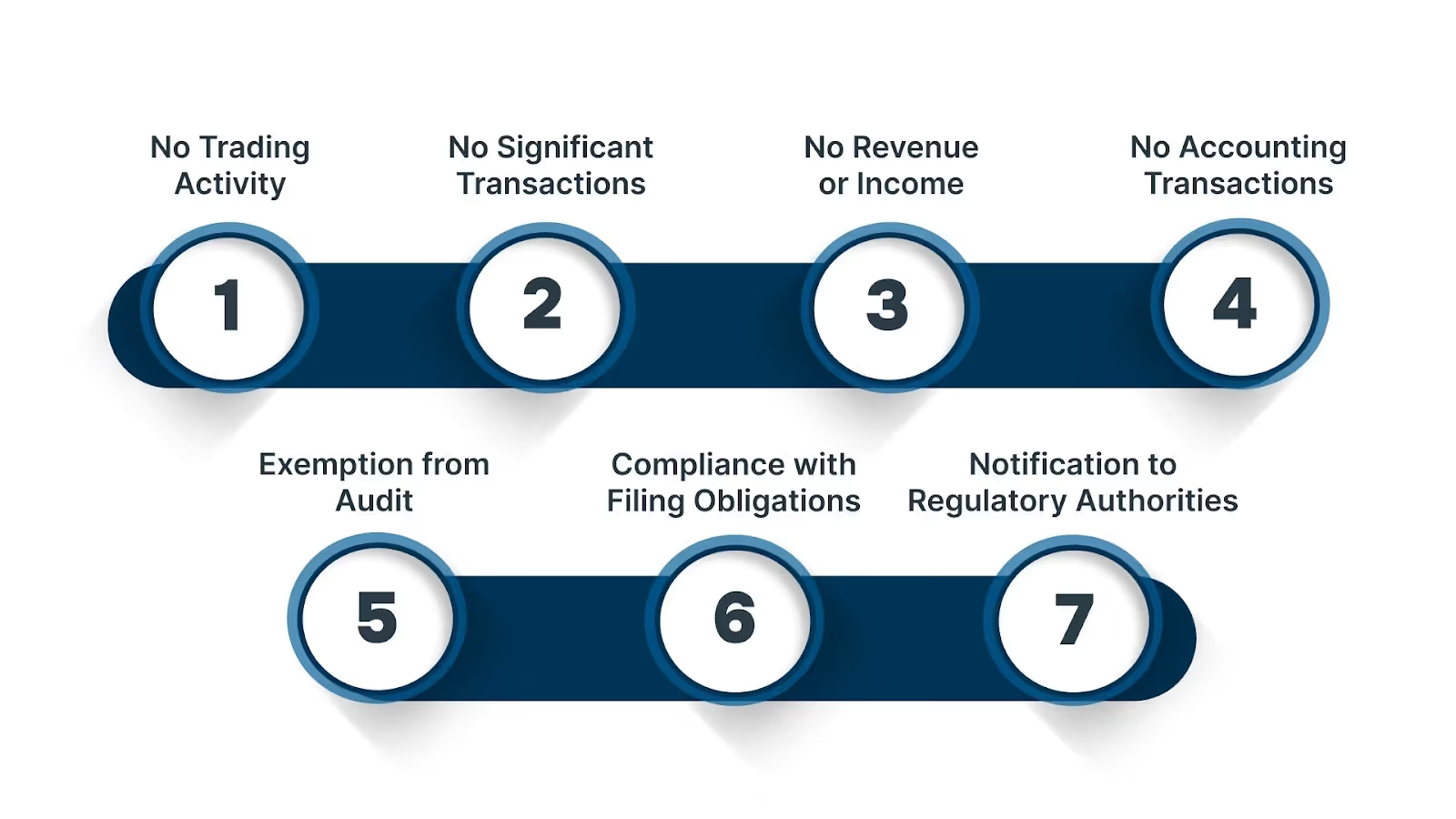
A dormant company typically remains in this state while waiting for future use or market conditions. For a company to be classified as dormant, the following criteria must be met:

  • No Trading Activity: The company must not engage in buying or selling goods or services for financial gain.
  • No Significant Transactions: The company should not have undertaken major financial activities, such as loans, purchases, or sales.
  • No Revenue or Income: A dormant company should not have generated any revenue or income during its dormant period.
  • No Accounting Transactions: Only essential transactions for compliance, such as paying the annual fee or maintaining a registered office, are allowed.
  • Exemption from Audit: Dormant companies are generally exempt from audit requirements, though this varies by jurisdiction.
  • Compliance with Filing Obligations: Dormant companies must still file certain documents, like an annual return or confirmation statement, to ensure their information remains up to date.
  • Notification to Regulatory Authorities: In some cases, the company must notify the regulatory authorities of its dormant status through a specific form or letter.

While dormant companies offer a way to maintain a legal entity with minimal operational responsibilities, businesses must stay on top of their compliance requirements to avoid unnecessary risks or complications.

You might wonder why a company would opt for dormancy in the first place. Let’s explore the reasons businesses choose this status and how it can benefit U.S. companies.

Why Would You Choose Dormancy?

Opting for dormant status can be a strategic decision to help businesses manage transitional phases without losing valuable assets. Here are some common reasons businesses choose dormancy:

  • Protecting Company Name and Brand: Dormancy allows businesses to safeguard their name and brand from competitors. By maintaining the company’s registration, you keep exclusive rights to your business identity.
  • Restructuring or Pausing Activities: During periods of change, such as a sabbatical, restructuring, or leadership shifts, a dormant status provides space to plan without dissolving the company.
  • Safeguarding Intellectual Property: A dormant company is a strategic tool for protecting intellectual property, trademarks, or patents, particularly when a business is preparing for future ventures.
  • Retaining Flexibility for Future Ventures: Starting fresh can be time-consuming. Keeping a company dormant allows you to bypass the paperwork and setup costs required for a new entity when you're ready to resume operations.
  • Waiting for Investment or Funding: Startups often go dormant while awaiting funding. This approach lets businesses focus on preparing for and pursuing the right opportunities without the pressure of running active operations.
  • Managing Economic or Market Downturns: In challenging economic times, dormancy can help reduce operational costs and conserve resources while waiting for the market to improve, ensuring long-term sustainability.

Dormancy offers flexibility and control during uncertain or transitional periods, ensuring your business is ready to act when the right opportunity arises.

If you’re considering dormancy for your company, it’s essential to follow the correct procedure. Let’s explore this in detail. 

Procedural Formalities to Get the Status of a Dormant Company

Procedural Formalities to Get the Status of a Dormant Company

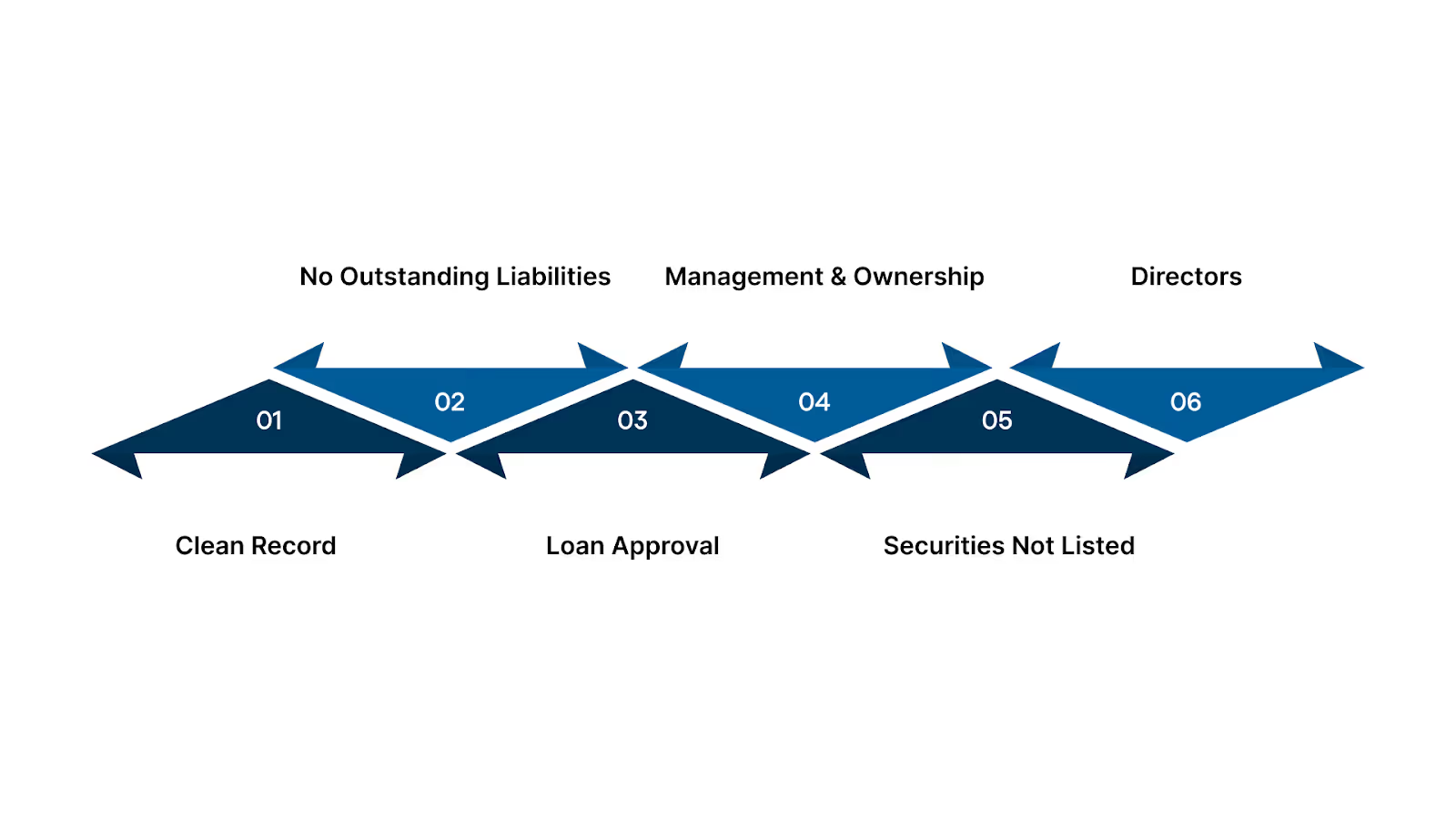
To apply for dormant company status in India, certain conditions must be met, including that the company is in good standing and free of pending obligations. Here’s an overview of the key requirements:

  • Clean Record: The company should have no pending inspections, investigations, or legal actions against it. There should be no active prosecutions under any law.
  • No Outstanding Liabilities: The company should not have any unpaid deposits or defaulted payments, including loan principal or interest.
  • Loan Approval: If the company has outstanding loans (secured or unsecured), it must obtain the lender’s concurrence. This should be submitted with Form MSC-1.
  • Management and Ownership: There should be no disputes in the management or ownership of the company. A certificate confirming this should be attached to the application.
  • Securities Not Listed: The company’s securities should not be listed on any stock exchange, either in India or abroad.
  • Directors: The minimum number of directors must be maintained, 2 for private companies and 3 for public companies. A one-person company needs at least one director.

Completing the necessary formalities helps U.S. business owners maintain their dormant company’s compliance and legal standing for future use.

At VJM Global, we offer end-to-end support in managing dormant companies, from handling the paperwork for dormant status applications to ensuring ongoing compliance with Indian tax laws. Our team specializes in cross-border compliance, tax filings (including ITR-6), and corporate governance, making the process seamless for U.S. businesses. Get in touch today.

Once a company is dormant, there are still responsibilities to uphold. Let’s discuss the ongoing compliance requirements that must be met to keep your dormant status intact.

Compliance Requirements for a Dormant Company

Getting dormant status approved is only the first step. A dormant company in India still has specific responsibilities that must be followed to maintain its legal standing. 

1. Maintain Registered Corporate Status

A dormant company is still a legally registered entity. Directors must keep the company in good standing by ensuring all statutory requirements are met, from maintaining a registered office to updating key records.

2. Protect and Manage Company Assets

If the dormant entity holds assets such as intellectual property, real estate, or investments, the owners must safeguard them during the period of inactivity. Dormancy does not remove accountability for asset management.

Even without business activity, the company must follow relevant laws. This includes meeting any sector-specific rules if the dormant entity belongs to a regulated industry.

3. File the Annual Dormant Return (Form MSC-3)

Every dormant company must file Form MSC-3 within 30 days after the end of each financial year. The filing includes:

  • Financial position statement
  • Director details
  • Shareholding structure
  • Registered office information
  • Auditor information (if applicable)

If an auditor is appointed, the MSC-3 return must include the auditor’s report on the dormant company’s financial statements, even where there are no significant transactions.

4. Maintain Accurate Records

The company must keep accurate books, including:

  • Any minimal transactions
  • Director and shareholder records
  • Minutes of meetings
  • Statutory registers

Keeping these updated ensures smooth reactivation or dissolution later.

7. File Annual Income Tax Return (ITR-6)

Private and public companies in India that do not claim exemption under Section 11 must file ITR-6 each year. This applies even when a company has no business activity or income during the financial year. This requirement is similar to the requirement that U.S. entities file IRS returns each year, including zero-activity filings, to remain compliant.

Even without active operations, directors must ensure the company meets all requirements under the Companies Act, 2013. 

Step-by-Step Process to Declare a Company Dormant

To declare a company dormant, business owners must follow a clear set of steps to ensure compliance with Indian regulations and maintain the company’s legal standing.

  • Board Resolution: The board must pass a resolution to declare the company dormant. This resolution should explain the reasons for dormancy and authorize the application.
  • Update Financial Statements: Ensure all pending financial statements and statutory filings are up-to-date before applying for dormant status.
  • File the Application: Submit Form MSC-1 to the Registrar of Companies (RoC), along with the required documents such as the board resolution, updated financial statements, and a certificate confirming dormancy.
  • Payment of Fees: There may be applicable fees for filing a dormant status application, which vary by jurisdiction.
  • Confirmation of Dormant Status: The RoC will review the application, ensuring it meets the requirements of Section 455 of the Companies Act, 2013. If satisfied, they will issue a Certificate of Dormant Status, and the company will be officially entered into the register of dormant companies maintained by the RoC.
  • Ongoing Compliance: Even as a dormant entity, the company must continue filing annual returns and paying the applicable fee to maintain its legal status.
  • Legal and Professional Guidance: Seeking legal and professional advice is crucial to ensure compliance with the relevant regulations and to avoid missing any important steps in the process.

Managing Dormant Company Bank Accounts

A dormant company bank account is one that hasn’t had any transactions, such as deposits, withdrawals, or payments, for an extended period. Banks may classify these accounts as dormant for regulatory purposes, including to prevent fraud and money laundering.

Once a company’s account becomes dormant, access is often restricted, and the account holder may be required to provide updated information to reactivate the account. In some cases, additional fees may be imposed, and specific steps need to be followed to reactivate the account, depending on the bank's policy and jurisdiction.

Need Help Managing Your Dormant Company in India?
At VJM Global, we make it simple for U.S. businesses to handle dormant company status in India. Whether it's filing Form MSC-1, staying compliant with Indian regulations, or managing tax and legal obligations, we've got you covered. Contact us now.

If you’re ready to restart operations, here’s how you can reactivate your dormant company and get back to business smoothly.

How to Make a Dormant Company Active: Step-by-Step Process

How to Make a Dormant Company Active: Step-by-Step Process

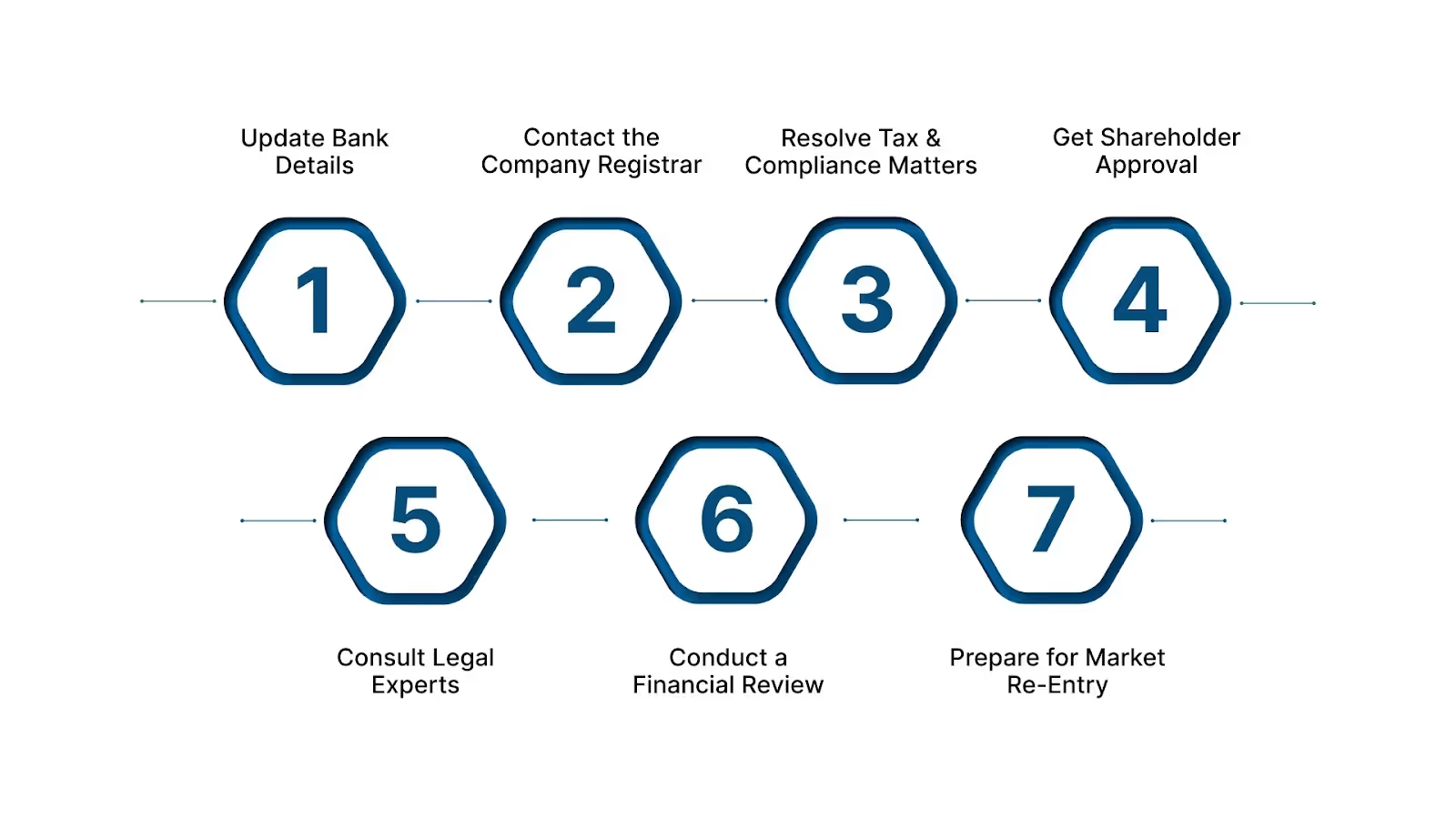
Reactivating a dormant company is essential when you're ready to resume operations. If you fail to reactivate before resuming trade, you could face serious compliance issues, penalties, or even harm your company's reputation. Here's how to get your dormant company back on track:

1. Update Bank Details

  • Ensure Current Information: Make sure the bank has the latest contact details and provide documentation proving your authority to manage the account.
  • Clear Any Pending Fees: Pay off any overdue fees or charges associated with the dormant account to restore it to active status.

2. Contact the Company Registrar

  • Submit Required Documentation: Reach out to the company registrar or the relevant government body to update your company’s registration.
  • Ensure All Filings Are Current: Submit any overdue filings, such as annual reports, to keep your company’s registration up to date.

3. Resolve Tax and Compliance Matters

  • File Overdue Tax Returns: Ensure that any pending tax returns are filed and any outstanding liabilities are settled.
  • Compliance Check: Confirm that your company complies with all local regulations, including necessary permits or business licenses.

4. Pass a Board Resolution and Get Shareholder Approval

  • Hold a Board Meeting: Organize a board meeting to approve the reactivation and document the resolution.
  • Shareholder Approval: If required by your company’s structure, arrange a shareholder meeting to formalize the reactivation decision.

5. Consult Legal Experts

It's advisable to consult a lawyer familiar with corporate law in your jurisdiction to ensure you meet all legal requirements and complete the necessary paperwork.

6. Conduct a Financial Review

Conduct a comprehensive audit to assess your company's current financial position and ensure all records are accurate. Review and update your business plan to align with your company’s new goals and market strategies.

7. Prepare for Market Re-Entry

  • Craft a Marketing Strategy: Develop a targeted marketing plan to reintroduce your company’s products or services.
  • Reconnect with Customers: Reach out to past clients to let them know your company is back in business.
  • Notify Stakeholders: Inform employees, vendors, and partners about the reactivation, any operational changes, and how this impacts their involvement.

After reactivating your company, it's crucial to stay on top of regular filings and compliance requirements to keep your business in good standing. 

Following these steps helps to smoothly transition your dormant company back into operation, ensuring you remain compliant and ready for growth. 

Also Read: How to Create an Exit Plan for Your Business: The Complete Guide

Handling a dormant company doesn’t have to be overwhelming. Let VJM Global help you tackle the complexities of dormant company compliance and reactivation.

Manage Your Dormant Company with VJM Global’s Expertise

Managing the responsibilities of a dormant company in India can be challenging for U.S. business owners, and VJM Global simplifies the process with expert services personalized for your needs:

  • Comprehensive Dormant Company Compliance: We ensure your dormant company meets all legal and tax requirements in India, preventing penalties and ensuring continued compliance.
  • Cross-Border Tax and Regulatory Filing: Our team helps manage all necessary filings, including ITR-6, ensuring compliance with both Indian and U.S. tax laws.
  • Ongoing Compliance Support: From annual returns to financial statements, we help you maintain the dormant status while avoiding costly legal complications.
  • Strategic Business Insights: We advise U.S. business owners on the best steps to take, whether you plan to keep your company dormant or reactivate it later.
  • Efficient Offshore Solutions: VJM Global provides cost-effective accounting, audit, and compliance services for U.S. companies with dormant subsidiaries in India.

At VJM Global, we help you manage your dormant company in India with ease and ensure compliance across jurisdictions. 

Wrapping Up

Managing a dormant company in India may seem straightforward, but the legal, tax, and compliance responsibilities can be complex for U.S. business owners. Whether you’ve temporarily paused operations or are holding assets through a dormant entity, it’s crucial to stay on top of regulatory requirements to avoid legal complications. 

By understanding the rules and maintaining compliance, you can ensure your company is in good standing and prepared for future business growth or reactivation when the time is right.

At VJM Global, we specialize in helping U.S. business owners manage dormant companies in India, ensuring full compliance with Indian regulations and U.S. tax laws. Get in touch to learn how we can support your dormant company in India and ensure smooth compliance across borders.

FAQs

1. What is a dormant company under Section 455 of the Companies Act 2013?

A dormant company, as defined under Section 455 of the Companies Act 2013, is one that is legally registered but not carrying out any significant business activities or trading. It may still hold assets or intellectual property for future use, but has minimal operational activity.

2. What is the maximum time limit for a dormant company?

A dormant company can remain inactive for up to 5 consecutive financial years. After this period, it must either apply to return to active status or face removal from the Registrar of Companies’ records, which could lead to its dissolution.

3. What happens if a dormant company is not reactivated within 5 years?

If a dormant company isn't reactivated within 5 years, the Registrar of Companies can strike it off the register, resulting in its dissolution and loss of legal standing.

4. Is GST Registration required for a dormant company?

GST registration is required only for a dormant company if it holds taxable assets, such as leased property. Otherwise, GST registration can be surrendered during dormancy, provided the company isn't conducting any taxable transactions.

5. Can a dormant company change its registered office address?

Yes, a dormant company can change its registered office address. It must file INC-22 with the Registrar of Companies, just like an active company would, to update its records and maintain compliance.

CA Kavit Vijay
Kavit Vijay, partner in the firm has 15 year’s experience in Audit and Assurance. He heads Audit and Assurance division of firm. He is specialized in:
Know More About The Author

Recent Blogs

Contact Us

We'd love to hear from you! Please fill out the form and we'll get back to you as soon as possible.