For U.S. companies moving goods across the country and around the world, logistics is one of the biggest cost centers on the books. In 2024 alone, logistics expenses in the United States surpassed $2.6 trillion, representing roughly 8.8 % of GDP, as firms contended with higher inventory levels, transportation costs, and shifting supply chains.
Those dollars add up fast: transportation and inventory together often account for the majority of logistics spend nationwide. When these costs aren't properly tracked and managed, businesses lose visibility into where money actually goes, can misallocate resources, and leave profitability on the table.
This is where logistics accounting moves from bookkeeping to business strategy. It's not just about recording transactions. It's important to understand cost behavior, reveal inefficiencies, and guide decisions that actually reduce expenses and protect margins.
In this guide, we'll answer the practical questions U.S. businesses are searching for right now, including how to cut waste without compromising service. By the end, you'll have 10 concrete, proven logistics accounting practices that you can start applying this year.
Logistics accounting is a specialized branch of financial management that focuses on tracking, analyzing, and reporting costs associated with logistics operations. It goes beyond general bookkeeping by adding a granular lens to supply chains, giving detailed insight into where money is being spent and how it influences profitability.
In practical terms, logistics accounting encompasses all aspects of the movement and storage of goods, including freight charges, fuel costs, labor, carrier payments, and inventory valuations. These costs are then categorized and analyzed to support budgeting, forecasting, and performance insights across the entire logistics cycle.
U.S. logistics is enormous. The market size is estimated to reach nearly $2 trillion by 2025, driven by e‑commerce expansion, rapid delivery demands, and technological adoption.
But growth brings complexity. Logistics costs are dominated by a few key drivers that can quickly erode margins if not accounted for accurately:
Without logistics‑specific accounting processes, U.S. businesses often lack visibility into expense drivers, leading to inaccurate cost allocation, pricing errors, and decisions based on incomplete data.
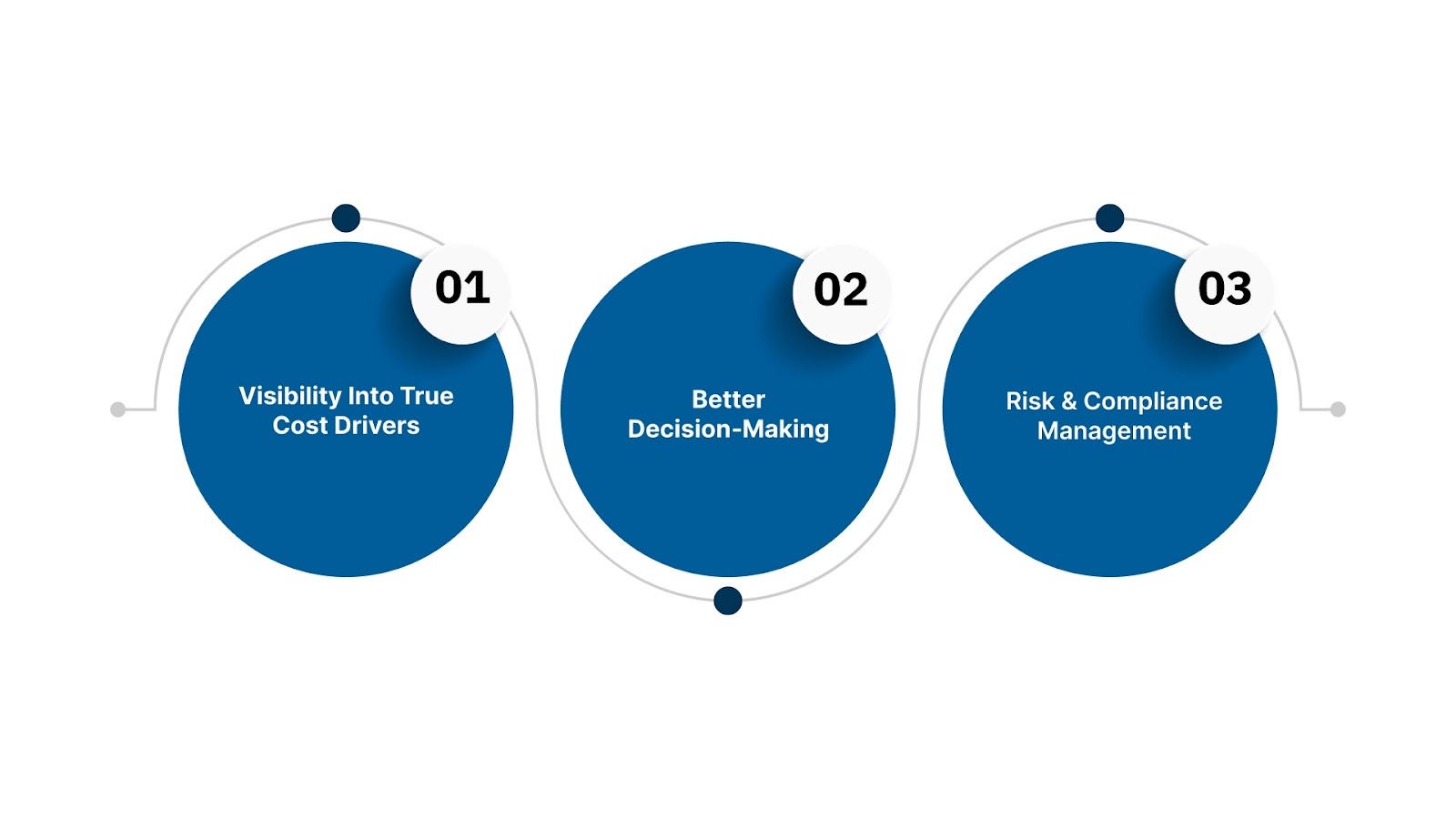
Practical logistics accounting gives companies more than just numbers on a ledger. It provides actionable insights that influence operational and strategic decisions:
Also Read: Key Differences Between Bookkeeping and Accounting Explained
Standard accounting keeps the books and ensures compliance, but logistics accounting provides contextual clarity for supply chain costs. It answers questions like:
This targeted focus helps finance and operations teams work from the same data set and aligns financial planning with real‑world logistics dynamics.
Suggested Read: How to Manage Accounting for Small Businesses
As market expectations evolve, with customers demanding faster delivery and tighter pricing, the companies that succeed will be those that manage logistics costs with precision and foresight.
So, to keep you ahead, let's walk through 10 proven accounting practices and improve financial clarity in your logistics operations.
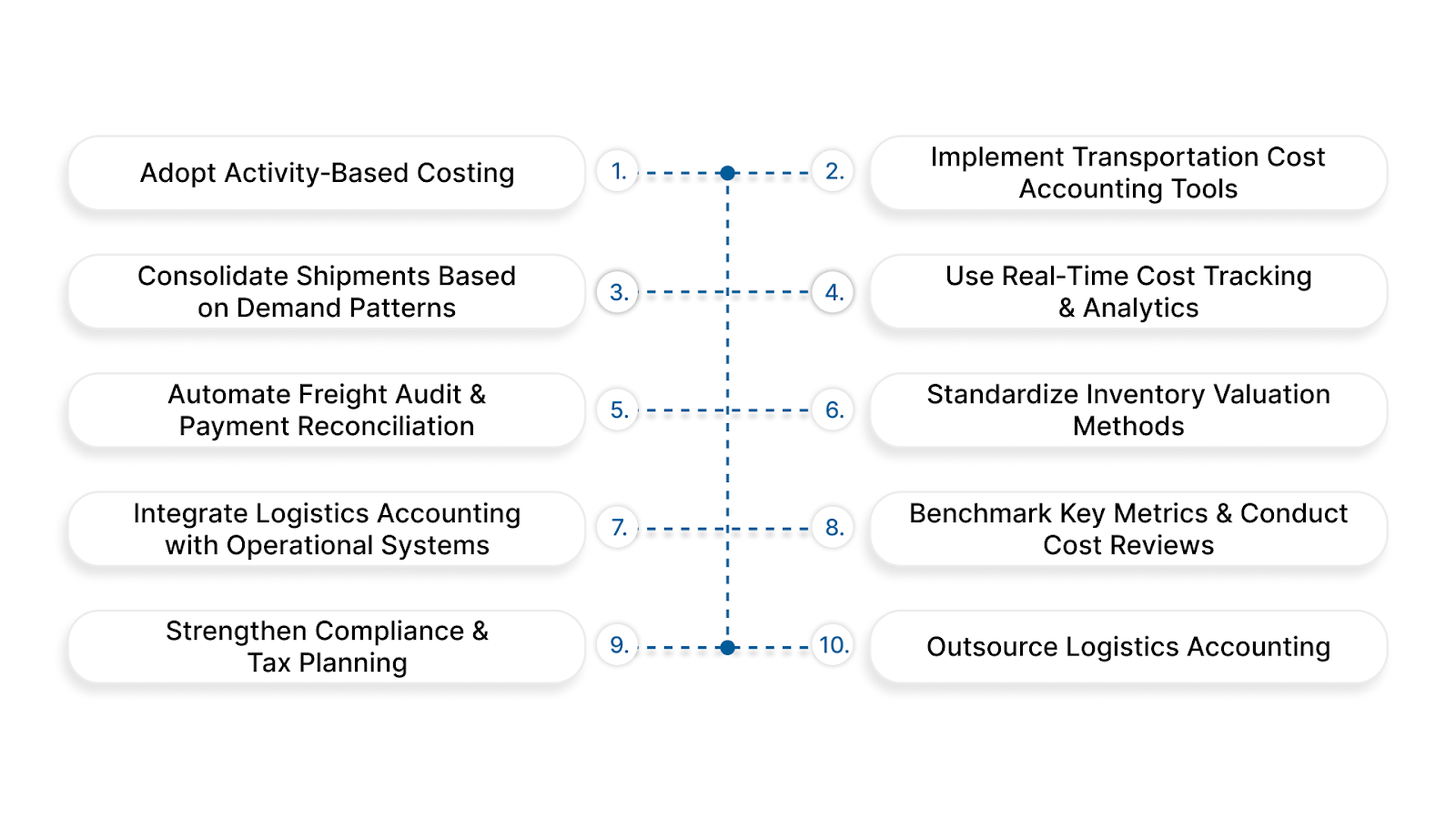
Today, U.S. businesses need more than just basic financial oversight to stay competitive. They require strategic accounting practices that not only track costs but also actively identify opportunities to cut waste and drive efficiency.
As we move into 2026, these accounting practices will be the key to getting significant cost savings, from smarter transportation management to reducing hidden costs in warehousing and inventory.
Most traditional accounting systems allocate indirect costs broadly, obscuring where logistics dollars are actually spent. Activity‑Based Costing (ABC) breaks down costs by specific activities, for example, cost per shipment, cost per warehouse transaction, or cost per route segment.
Why does this matter?
Transportation often accounts for a majority of logistics expenses. Good transportation cost accounting isn't just tracking invoices; it's a systematic process of collecting, analyzing, and allocating transportation costs against shipments, customers, and modes.
With modern ERP, Transportation Management Systems (TMS), and cost‑reporting modules, companies can:
Accurate freight cost allocation improves pricing decisions and supports smarter carrier negotiations.
Fragmented shipments increase handling, paperwork, and freight charges. Consolidation, in which smaller loads are combined into full truckloads, often substantially trims transportation costs without sacrificing service levels.
Take a hypothetical situation:
Static monthly reports tell you "what" happened, not "why." Real‑time accounting dashboards powered by data from TMS, WMS (warehouse management systems), and inventory platforms let finance and logistics teams spot cost anomalies as they occur.
For example:
Real‑time visibility compresses the feedback loop, enabling rapid corrective action rather than reactive accounting reviews weeks later.
Manual freight invoice validation is slow and error-prone and can have high error rates if not audited systematically. Automated freight auditing tools reconcile carrier bills against shipping logs and contracts, flagging overcharges for review.
This practice:
Over time, automation reduces both operational workload and leakage in logistics expenses.
Inventory accounting isn't just a warehouse function. It directly influences balance sheets and working capital. Choosing and consistently applying appropriate valuation methods (like FIFO vs. weighted average) ensures that the financial cost of inventory aligns with business and tax strategy.
U.S. logistics firms that harmonize inventory valuation across sales channels like retail, wholesale, and e‑commerce can expect fewer reconciliation gaps and more accurate working‑capital forecasts.
Silos between accounting and logistics systems are expensive. When financial teams must manually import freight, warehouse, or inventory data into accounting software, errors increase and insights lag.
Integrated systems offer:
The result is faster close cycles and better cross‑functional decision-making.
Useful metrics in logistics accounting include:
Benchmarking these metrics against internal history, and, where available, against industry peers, helps companies identify anomalies and iterate on cost‑reduction strategies.
Tip: Set quarterly reviews of these KPIs with senior leadership; this keeps logistics cost performance in executive conversations.
Accounting for logistics isn't just about tracking numbers; it also intersects with tax and regulatory compliance. Misallocating costs or failing to capture duties, surtaxes, or cross‑border tax implications can lead to penalties, interest, and unexpected liabilities.
Best practices here include:
Precise tax treatment can directly lower effective logistics costs by reducing year-end surprises.
For many U.S. businesses, including tiny and midsize firms, outsourcing logistics accounting can deliver significant savings - often 15 % to 30 % in operational costs versus maintaining an entirely in‑house team.
Outsourcing entitles companies to:
This is especially relevant for businesses expanding cross‑border or seeking advanced freight auditing and cost analytics without building that capability internally.
Each of the practices above does more than tidy up the ledger. This financial clarity will directly influence bottom‑line logistics expenses.
Ready to put these best practices into action? VJM Global offers excellent outsourcing services for logistics accounting, allowing you to focus on driving growth while we ensure your financial processes are efficient and compliant.
Reach out now for a free consultation and learn how we can optimize your logistics costs!
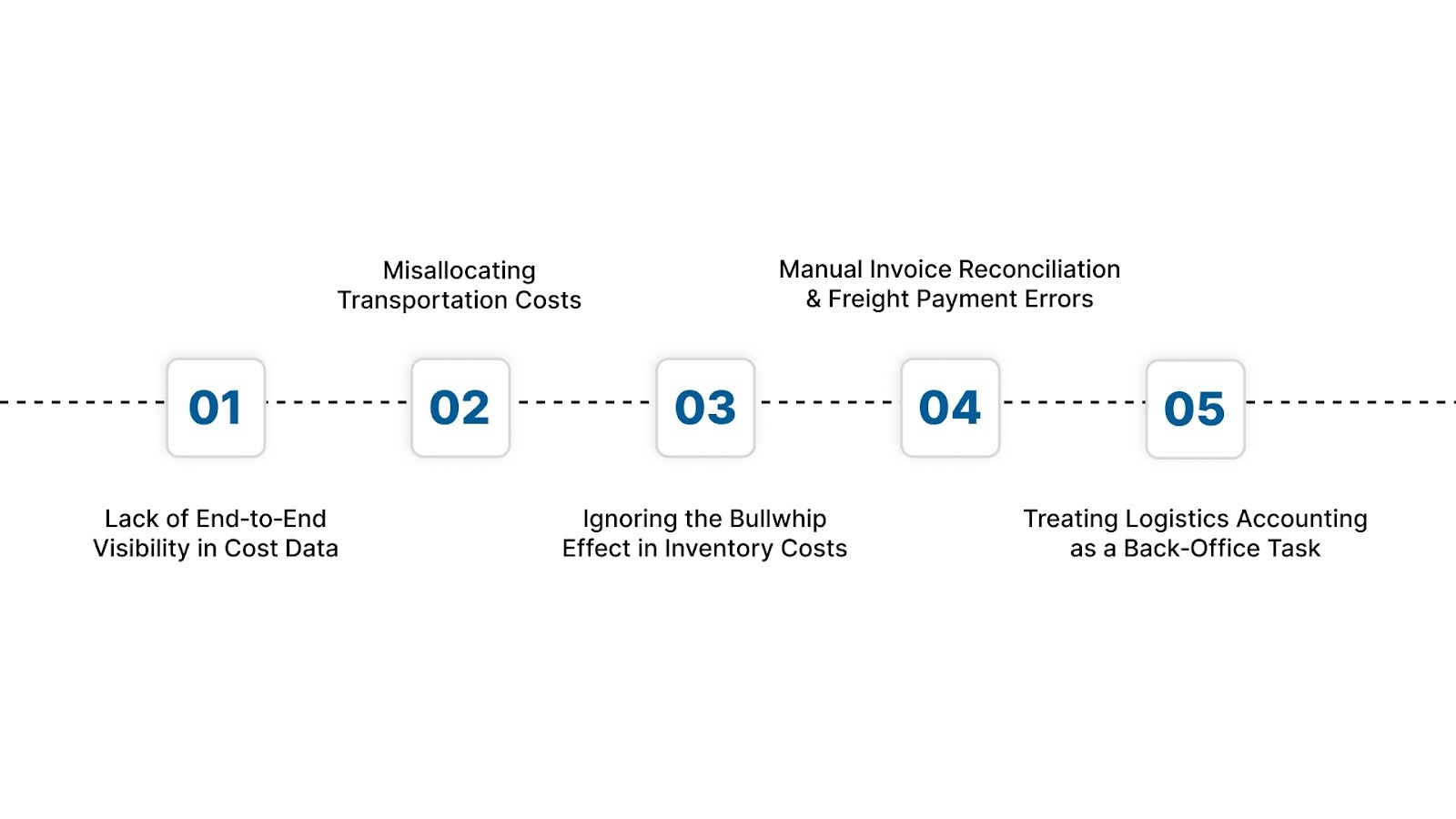
In logistics accounting, minor errors often snowball into major financial and operational problems. These mistakes don't just distort your books but can erode profitability, disrupt supply chains, and complicate compliance.
Below are the most impactful pitfalls U.S. logistics leaders face today:
Fragmented systems and disjointed data sources can hide where logistics costs truly lie. Without end‑to‑end visibility, finance teams miss crucial cost drivers that could be easily optimized, like hidden freight surcharges or warehouse inefficiencies. This lack of insight often leads to inaccurate budgeting, poor forecasting, and misplaced resources.
Freight costs often involve fuel surcharges, accessorial charges, and route premiums that get lost in the shuffle. Misallocating or lumping these costs together can lead to underreporting or overreporting on key logistics expenses, distorting proper cost margins.
A small spike in demand can ripple upstream, creating inventory fluctuations that tie up working capital, raise storage costs, and even require rush shipments. Known as the bullwhip effect, this phenomenon increases both inventory holding costs and logistics overheads, leading to higher overall expenses.
Freight invoices are notorious for containing errors, from incorrect weight billing to missed discounts or duplicate charges. Manual invoicing increases the risk of overlooking such discrepancies, which can lead to overpayment and lost savings opportunities.
When logistics accounting is treated as a transactional task rather than a strategic one, valuable insights are often missed. This siloed approach leads to delays in addressing cost anomalies and leaves logistics teams disconnected from financial goals.
Avoiding these five mistakes will not only improve cost visibility but also allow businesses to make more data-driven decisions, ultimately protecting margins and increasing profitability in 2026.
Also Read: What Are the Key Considerations in Accounting for Startup Costs
As logistics operations grow more complex in 2026, effective accounting practices are essential for staying competitive. Optimizing your logistics accounting processes can be the key to efficient savings, improving decision-making, and driving operational efficiency.
At VJM Global, we specialize in helping U.S. businesses understand the complexities of logistics accounting, providing tailored services to ease financial management and ensure compliance.
Here's how we can support you:
Partner with VJM Global today to improve your logistics accounting processes, enhance cost visibility, and ensure compliance, so you can confidently mitigate the challenges of 2026 and beyond.
Contact us now to learn how we can help structure and simplify your operations and save costs across the board!
Logistics accounting tracks all financial transactions tied to the movement and storage of goods. It includes transportation charges, warehousing costs, inventory handling, packaging fees, and related operational expenses. It helps businesses understand where logistics dollars are going and which cost areas need attention.
To catch cost inefficiencies early, logistics accounting metrics should be reviewed at least monthly, and key performance indicators should be analyzed quarterly to identify trends and inform forecasting. Real‑time dashboards can further improve visibility between formal reviews.
Yes. Outsourcing to specialists can reduce overhead (like salaries, training, and tools) while providing expertise in detailed cost tracking and compliance. You can save more efficiently than fully in‑house teams, especially when handling complex freight finance and cross‑border compliance.
Freight auditing verifies carrier bills against shipment records to catch errors such as incorrect weights, duplicate charges, or missed discounts. Since freight invoices often contain cost discrepancies without systematic review, freight audit automation directly reduces overpayments and improves cost accuracy.
General accounting focuses on overall financial reporting and compliance, while logistics accounting specifically tracks and analyzes costs tied to the supply chain, such as transportation, storage, and inventory movements. This targeted focus gives businesses precise insight into logistics cost drivers.