

%20(15).avif)
从美国在印度注册一人公司(OPC)是一个重大的机遇。然而,从海外进行复杂的注册流程可能会让人感到不知所措。您必须独自应对陌生的法律和远程办理程序,这种复杂性往往会延误市场准入并增加成本。
一人公司(OPC)结构正是为应对这一挑战而设计的。它允许单一创业者运营一个企业实体。这种模式提供有限责任保护和正式的企业地位,让您无需任何合伙人即可掌控整个公司。
本指南将引导您了解在印度注册 OPC 的流程。我们将概述相关步骤、所需文件及合规要求,帮助您高效地从美国建立起您的企业形象。
一人公司(OPC)是印度的一种企业商业结构,允许个人注册并管理一家公司。该法律框架由《2013年公司法》定义。OPC 被视为独立于其所有者的法人实体。
在这种商业模式下,您的个人资产将得到保护。公司的债务和责任与您的个人财务是分开的。这种结构结合了独资企业和公司的优势,让您在获得企业地位的同时享有有限责任保护。
您是 OPC 的唯一股东和董事。该结构对最低实缴资本没有要求。您必须在注册过程中指定一名提名人,以便在您无法履行职责时由其管理公司。
了解 OPC 模式后,一个关键问题就是资格认定。印度政府对谁可以成立该实体设定了具体标准。
印度法律对一人公司的资格有明确规定。唯一股东必须是自然人,且必须是印度公民才能注册 OPC。外籍人士不能担任成员或提名人。目前,作为印度公民的居住地要求已变得更加灵活。
近期的规则变更简化了相关要求。身为印度公民的非居民印度人(NRI)现在也可以注册 OPC。这一变化使得海外创业者更容易采用这种结构。
您不能将现有的合伙企业转换为 OPC。某些商业活动也不符合资格,包括银行、保险和基于投资的金融服务。未成年人不得成为公司的成员或提名人。
任何印度公民,无论其居住状态如何(居民或非居民),均可在印度注册 OPC。
外国公民/外籍人士不能在印度注册 OPC。
在确认资格后,您应该考虑其优势。OPC 结构为独立创业者提供了多项具体益处。
不确定自己是否符合 OPC 的所有条件?让 VJM Global 为您的情况提供个性化评估。 立即联系我们。
另请阅读: 从美国外包税务准备工作至印度:2025年注册会计师指南
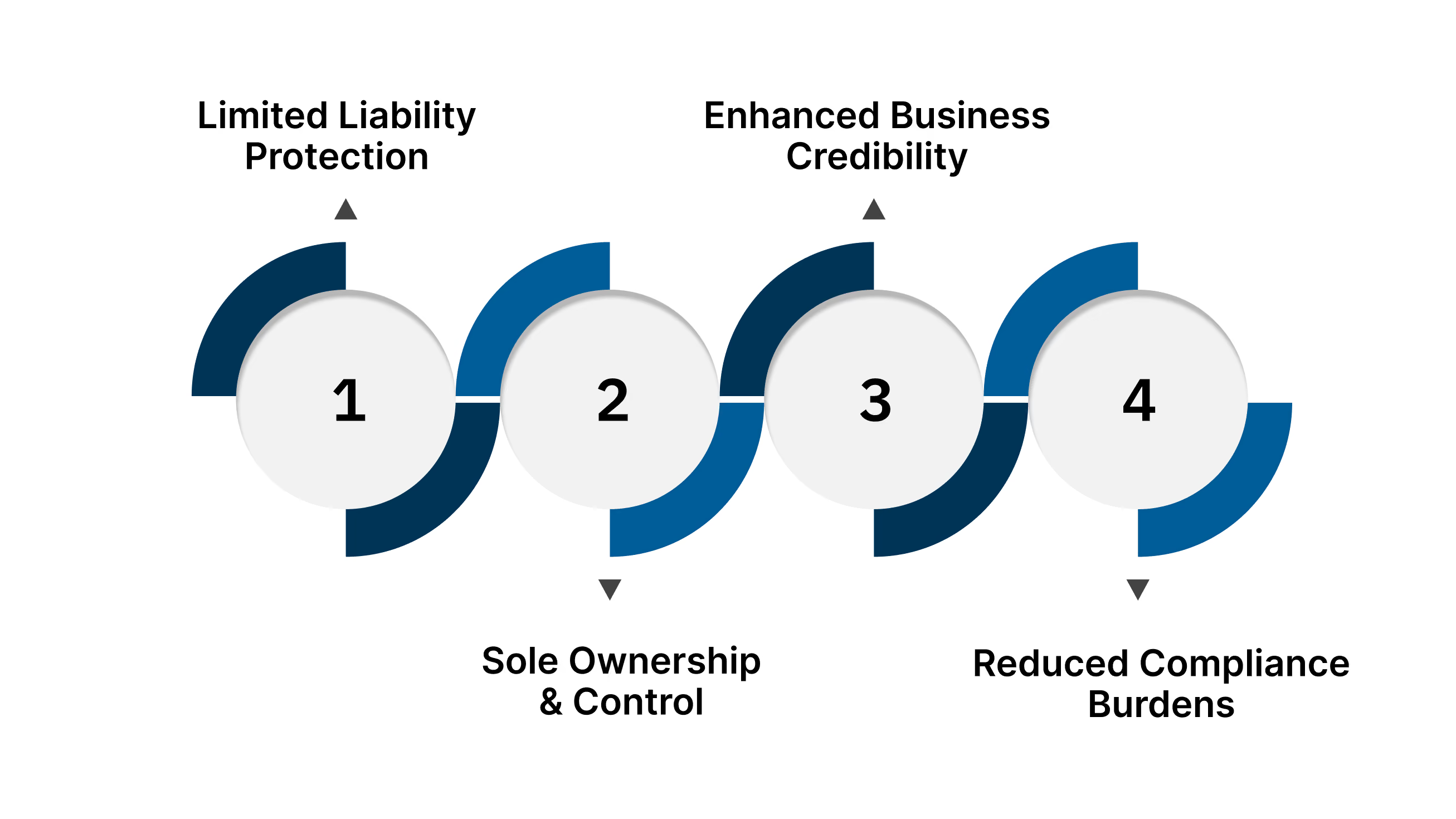
OPC 结构为独立创业者提供了独特的优势。它为您的业务运营提供了正式的企业框架。这些优势有助于支持业务增长、提升信誉并简化合规流程。了解这些优势将有助于您评估其是否适合您的创业项目。
Your personal assets remain separate from company debts. This protects your savings and property from business-related financial risks. The company is a distinct legal entity from you as an individual. Your financial responsibility is limited to your investment in the company.
You retain complete control over all company decisions. There is no need to consult partners or a board of directors. You are the sole shareholder and director of the entity. This allows for quick and unified management of the business.
An OPC carries more weight than a sole proprietorship. Clients and partners often perceive registered companies as more stable. The 'Pvt. Ltd.' suffix in the company name builds trust. This can improve your standing with vendors and financial institutions.
An OPC faces fewer mandatory filing requirements than a private limited company. The annual compliance process is generally simpler and more straightforward. You are not required to hold an annual general meeting. This reduces your administrative workload throughout the year.
These benefits make a strong case for choosing the OPC model. You must next verify that you meet all the detailed eligibility conditions.
另请阅读:从容解决税务债务:美国企业的减免方案
Before you begin the registration process, you must confirm your eligibility. The criteria are specific and defined by Indian company law. Meeting these requirements is mandatory for a successful OPC incorporation from the US. This ensures your application proceeds without legal complications.
You must meet the following key eligibility conditions:
The sole member must be an Indian citizen. The residency rule now accommodates Non-Resident Indians. The previous 182-day residency requirement has been relaxed. Your Indian citizenship is the primary requirement.
You must appoint a nominee during the company incorporation. This nominee must also be an Indian citizen. They will take over the company if you become incapacitated. Their written consent is a mandatory part of the application.
Your OPC must have a registered office address in India. This can be a commercial or residential property. All official correspondence will be sent to this address. Proof of address is required for registration.
The proposed name for your OPC must be unique. It cannot be identical to any existing company or trademark. The name must adhere to the guidelines in the Companies Act 2013. The name approval is a distinct step in the process.
Once you confirm you meet the criteria, you can gather the necessary paperwork. Proper documentation is fundamental for a successful application.
延伸阅读:解锁内部审计外包的优势
Gathering the correct documents is a critical step for OPC registration. You must provide proof of identity, address, and business location. All foreign documents require notarization and apostille authentication. This preparation ensures a smooth application process with the Indian authorities.
You will need to provide the following documents:
After incorporation, your OPC must adhere to ongoing legal obligations. Understanding these compliance requirements is crucial for long-term operations.
Operating an OPC requires adherence to specific statutory obligations. These ongoing requirements maintain your company's legal standing in India. Managing them from the US demands awareness of Indian corporate law. Timely compliance prevents penalties and ensures smooth business operations.
You must prepare and file financial statements annually. These documents include a balance sheet and a profit and loss account. An auditor must review these statements if mandated by turnover. The filings are submitted to the Registrar of Companies.
Your OPC must file a corporate income tax return each year. This is separate from your personal tax filings in the US. The return must be filed by the specified due date. Maintaining accurate financial records is essential for this process.
You are required to maintain specific statutory registers. These records detail company directors, members, and meeting minutes. The registers must be kept at your registered office in India. They must be available for inspection by authorities.
You must hold at least two board meetings each financial year. The gap between these two meetings cannot be less than ninety days. Minutes of the discussions and decisions must be properly recorded. These records are part of your company's official documentation.
Knowing your future duties allows you to focus on the initial setup. The registration itself is a clear, multi-stage digital process.
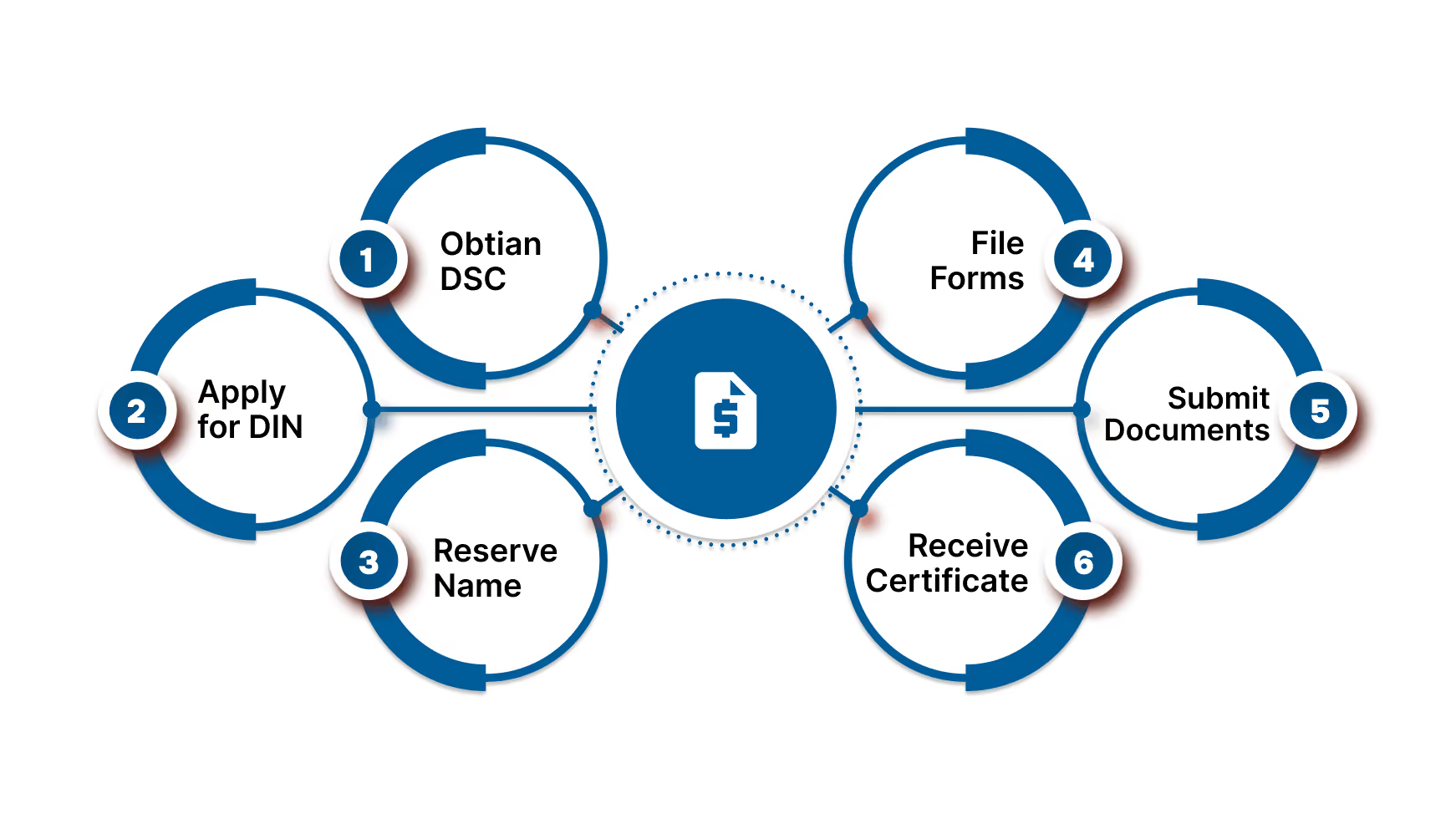
The registration of an OPC from the US follows a defined digital pathway. You will primarily interact with the Indian Ministry of Corporate Affairs portal. This process requires careful preparation of digital signatures and documents.
Proper execution of each step leads to the timely issuance of your Certificate of Incorporation.
Your first action is to secure a Class 3 Digital Signature Certificate. This DSC serves as your online signature for all official forms. You must obtain it from a government-certified agency in India. This is non-negotiable for all subsequent digital filings.
You need a Director Identification Number to act as the company director. You apply for this unique number using Form DIR-3. This form requires your digital signature and supporting identity documents. The DIN is approved directly by the Ministry of Corporate Affairs.
You must select and reserve a unique name for your OPC. This is done by submitting Form SPICe+ PART-A on the MCA portal.
After name approval, you must file Form SPICe+ PART-B and Form INC-12. These forms consolidate the entire incorporation application.
You will attach all required documents to the online forms. The supporting documents include identity proofs, address verification, and nominee consent. The Registrar of Companies will meticulously review the entire application. They may request clarifications or additional information if needed.
The Registrar issues this certificate upon approving your application. This document legally confirms the birth of your One-Person Company. It includes your Corporate Identity Number (CIN). You can now legally commence your business operations in India.
Executing each step of the registration incurs specific fees. Budgeting for these costs is an important part of your planning.
Simplify the multi-stage registration process from the US. Inquire about VJM Global's comprehensive OPC incorporation service. Get in touch today to learn more.
Also read: Understanding Management Audit: Definition and Key Uses
Understanding the financial outlay for OPC registration helps you plan effectively. The total cost includes government fees and essential professional services. These fees are mandatory for the legal establishment of your company. Budgeting for these expenses prevents unexpected delays.
The primary costs for OPC registration are outlined below:
The Ministry of Corporate Affairs charges a fee for incorporation. This fee is based on your company's authorized share capital. The overall cost of OPC registration in India typically ranges between INR 5,000 and INR 20,000.
It depends on various factors like professional service fees, authorised capital, and location. Government fees generally constitute a significant portion of the total cost.
You must obtain a Class 3 DSC from a certified provider. The cost for this digital signature ranges between INR 500 and INR 1,500. It is a one-time cost for the director and the nominee. This is valid for one to two years.
Engaging a consultancy involves professional fees. These fees cover document preparation, application filing, and liaison work. The cost for these services varies based on the service provider. This support is crucial for a seamless registration from the US.
You should account for costs like notarization and apostille of documents. There may also be charges for a registered office address facility. Initial compliance, such as obtaining a PAN and TAN, may have minor fees. These are essential for commencing operations.
Financial planning should also account for potential procedural hurdles. Being aware of common challenges helps you avoid them.
Registering an OPC from a different country presents specific logistical and legal hurdles. Being aware of these potential issues allows for better preparation and planning. Proactive management of these challenges helps prevent delays in your company formation. Professional guidance is often critical to navigate this process smoothly.
You may encounter the following common challenges:
All your supporting documents require notarization and apostille attestation. This authentication process verifies your documents for use in India. It can be time-consuming to complete from abroad without local assistance. The procedure must follow the Hague Apostille Convention guidelines.
The entire registration is conducted online through the MCA portal. You may face difficulties with time zone differences for verifications. Coordinating with notaries and service providers remotely adds complexity. A reliable digital workflow is essential for success.
Indian company law has specific requirements for name approval and forms. Minor errors in form-filling can lead to outright rejection. Understanding the specific compliance triggers for an OPC is also important. These nuances are often unfamiliar to those outside the Indian system.
You must provide proof of a registered office address in India. Finalizing a lease and obtaining a No Objection Certificate can be difficult. This is especially true when you are not physically present in the country. This step often requires local support to arrange.
You can mitigate these potential issues with a proactive strategy. Adopting a few best practices will make the process significantly smoother.
Also read: How to Start a Profitable Water Business in India
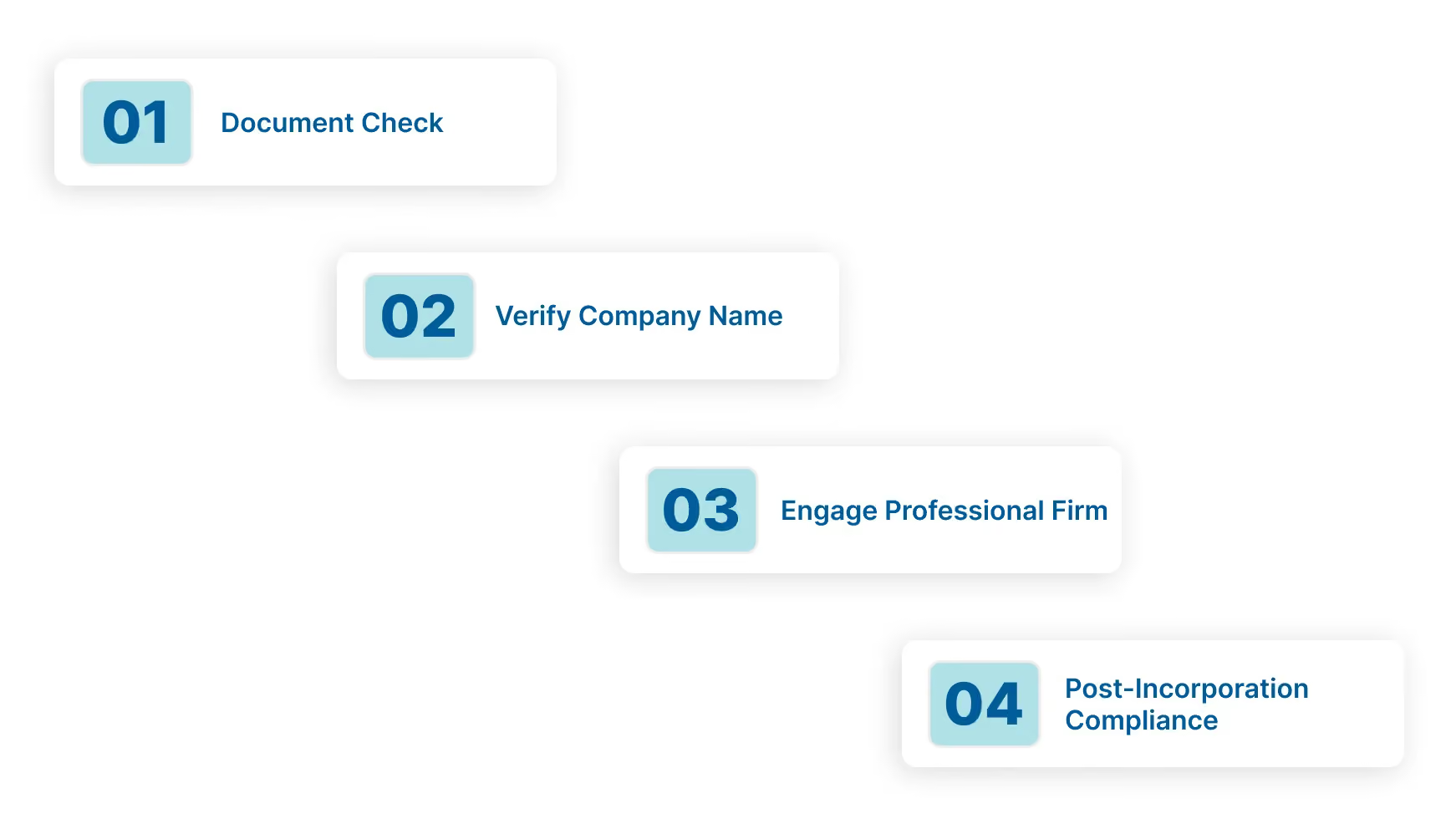
从一开始就采取战略性方法可以显著改善您的体验。这些做法有助于避免常见的错误和程序延误。对于从美国管理此流程的企业家来说,这些建议尤为宝贵。
周密的规划使远程注册变得更易于管理且可预测。以下建议将指导您的准备和执行工作:
请提前核实您所有的个人和商业文件。确认您的护照和其他身份证明在整个流程期间均有效。确保所有文件符合特定的格式和公证要求。这可以防止因文件问题在最后一刻被当局驳回。
在 MCA 门户网站上对名称的可用性进行初步搜索。选择一个既能反映您的业务又具有唯一性的名称。避免使用与现有商标或公司过于相似的名称。独特的名称会增加快速获批的可能性。
与 VJM Global 等专门从事跨境注册的公司合作。他们在印度公司法方面的专业知识可为每一步提供关键指导。他们可以处理文件认证并与政府机构联络。这种支持将最大限度地减少您的直接行政负担。
在收到注册证书后,请立即了解您持续的法定义务。这包括申请 PAN、TAN 以及开设公司银行账户。建立一套维护法定登记册和满足申报截止日期的系统。尽早进行合规规划可防止未来的法律纠纷。
在专家支持下实施这些做法最为有效。VJM Global 旨在为美国客户提供此类精准指导。
从美国管理 OPC 注册流程涉及复杂的障碍。您必须处理文件认证、远程程序以及不熟悉的法规。操作 MCA 门户网站并满足所有法律标准可能会很困难。这些挑战往往会导致申请延误和合规问题。
VJM Global 为从美国到印度的 OPC 注册提供了结构化的解决方案。我们公司负责处理从初步文件准备到最终注册的整个流程。我们帮助您精准地在印度建立企业形象。我们的服务旨在为您节省时间并防止代价高昂的错误。
我们的方法包括以下几个关键特点:
我们专注于帮助美国企业和企业家扩展到印度市场。我们的团队既了解美国的商业惯例,也熟悉印度的监管标准。这种双重专业知识使注册过程更加高效和明智。我们架起了连接两种商业环境的桥梁。
我们代表您管理整个注册工作流程。我们的服务包括文件准备、申请提交以及与当局的联络。我们还协助您在印度获得注册办公地址。这种端到端的支持为您简化了整个体验。
Our service extends beyond the initial company registration. We provide ongoing guidance for your statutory and tax compliance obligations. This includes assistance with annual filings and regulatory changes. Our goal is to ensure your company remains in good legal standing.
Partnering with VJM Global provides a clear and managed pathway for your business entry into India.
Establishing a One-Person Company in India from the US is a structured process. It requires careful attention to eligibility, documentation, and specific procedures. Understanding the compliance requirements and potential challenges is also crucial.
This guide provides a foundational roadmap for your business expansion journey. VJM Global specializes in simplifying this cross-border incorporation for you. Our expertise in Indian corporate law and experience with US clients is a key advantage.
We manage the complex administrative and regulatory tasks on your behalf. This allows you to focus on your core business planning and strategy.
Contact VJM Global today to discuss your specific OPC registration requirements.
An Indian citizen is eligible to start an OPC, regardless of their residential status. This now includes Non-Resident Indians (NRIs). Foreign nationals and other corporate entities cannot form an OPC.
The primary advantage is limited liability protection. In an OPC, your personal assets are separate from the company's debts. A sole proprietorship offers no such legal distinction.
Yes, an OPC can receive foreign direct investment if it meets certain conditions. The investment must comply with the Foreign Exchange Management Act (FEMA) regulations. The company must also be classified as an "eligible startup" by the DPIIT.
Conversion is mandatory if your average annual turnover exceeds two crore rupees for three consecutive years. Your paid-up capital exceeding fifty lakh rupees will also trigger a requirement for conversion.
The nominee's role is to take over the management of the OPC if the sole member becomes incapacitated or passes away. Their written consent is a mandatory part of the incorporation process.
The entire process typically takes two to three weeks after document submission. This timeline depends on the speed of government approvals and the completeness of your application. Professional assistance can help streamline the timeline.




